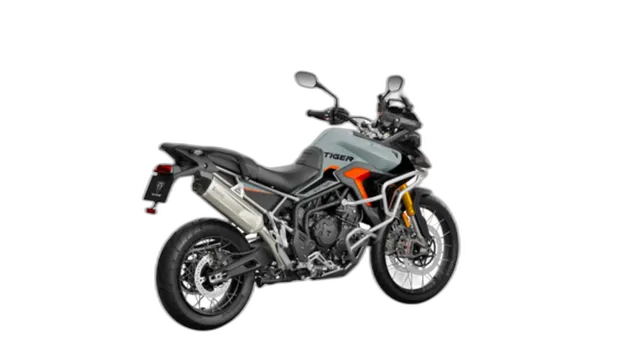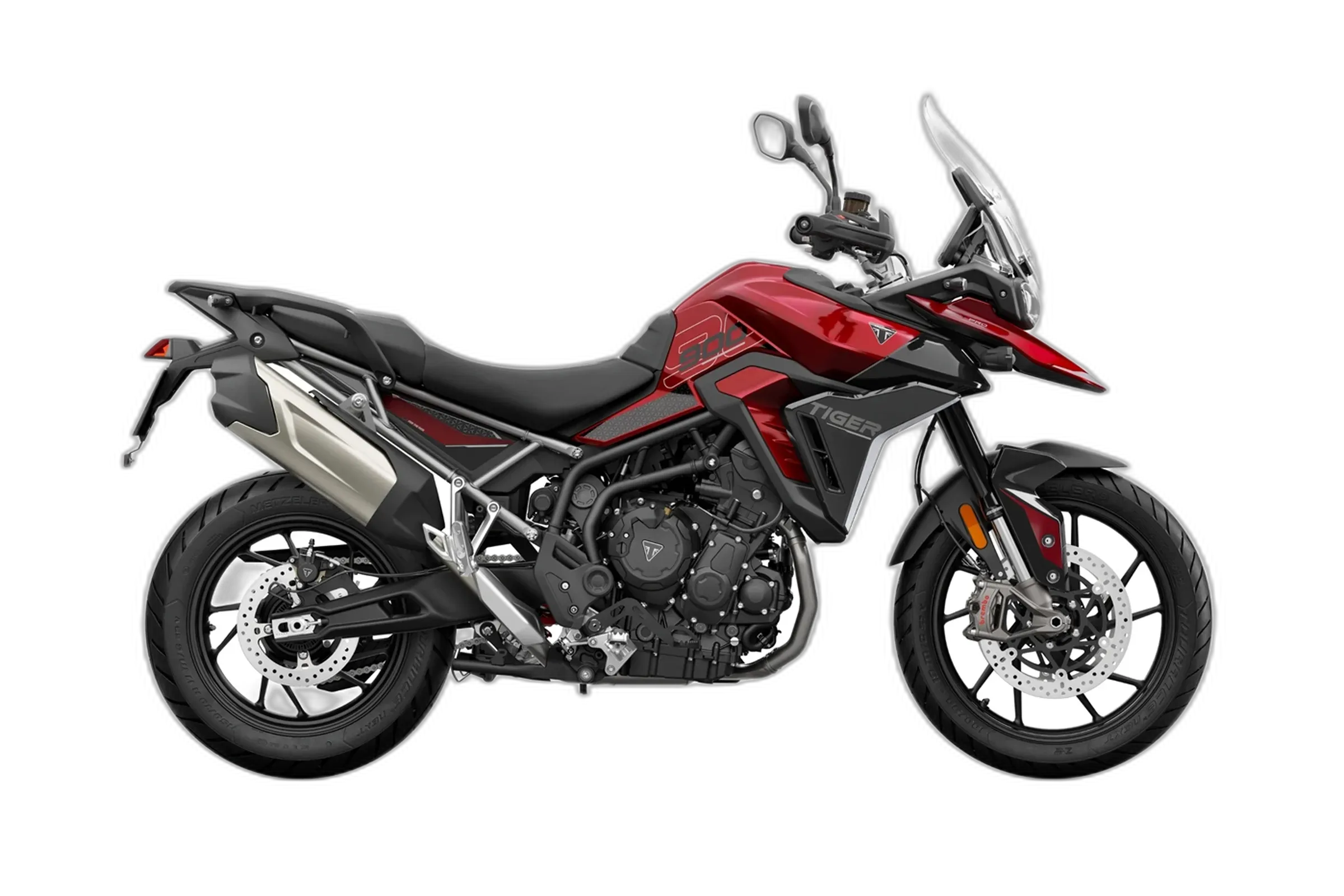

Triumph Tiger 900 (C080-GTPro) — Adventure
Triumph press archive

2024 · Adventure · A variant of the Tiger 900

Tiger 900 GT Pro (C080-GTPro)

Differences between the standard Tiger 900 and the GT Pro

4.5 / 5 NastyNils Rating · against its class

The Triple That Travels Easy

The Machine's Character

The GT Pro sits at the road-leaning end of Triumph's mid-size adventure line, and the 888 cc T-plane triple is what gives it identity. The uneven firing order hands you twin-like drive from low in the rev range, then keeps pulling to 108 hp at 9,500 rpm, with 66 lb-ft landing at 6,850. Around that engine sits a properly complete package: electronic suspension, Brembo Stylema calipers, cornering ABS, traction control, ride modes, a quickshifter that works both up and down, cruise control, a TFT running My Triumph Connectivity and navigation, tire-pressure monitoring, and a windscreen you adjust by hand.

On the road it behaves like a tall, comfortable sport-tourer rather than a dirt bike wearing luggage. The 19-inch front and 17-inch rear cast wheels, 7.1 in (180 mm) of front travel and 6.7 in (170 mm) at the rear are calibrated for pavement, graded gravel and the occasional easy forest road, not for technical terrain. At 483 lb (219 kg) wet it stays manageable at walking pace, and the 32.3 in (820 mm) seat is adjustable for height. The honest caveat is electrical: a small number of these bikes have thrown faults that needed a dealer, and one of them stopped the engine.

Hard Numbers

Spec sheets don't ride bikes, but they set the baseline.

Show full specs & equipment Hide specs & equipment
Key specifications
Power 108 hp (80 kW) @ 9,500 rpm
Torque 66 lb-ft (90 Nm) @ 6,850 rpm
Displacement 888 cc
Engine Inline-three
Cooling Liquid-cooled
Gearbox 6-speed
Final drive Chain
Fork Upside-down (USD)
Front brake 320 mm
Front tire 100/90-19
Rear tire 150/70-17
Wheelbase 61.3 in (1556 mm)
Ground clearance 6.7 in (170 mm)
Front travel 7.1 in (180 mm)
Rear travel 6.7 in (170 mm)
Seat height 32.3 in (820 mm)
Wet weight 483 lb (219 kg)
Fuel capacity 5.3 gal (20 L)
Fuel economy 50 mpg (US)

Equipment check

Chassis

  • Electronic Suspension Standard
  • Front Suspension Adjustable Standard
  • Rear Suspension Adjustable Standard
  • Cruise Control Standard

Comfort

  • Heated Grips Standard
  • Adjustable Windscreen Standard
  • Adjustable Seat Height Standard
  • Luggage System Optional

Connectivity

  • TFT Display Standard
  • Smartphone Connectivity Standard
  • Navigation My Triumph Connectivity System Integrated navigationHandsfree phone integration Standard
  • Tire Pressure Monitoring (TPMS) Standard

Drivetrain

  • Quickshifter Standard
  • Slipper Clutch Standard

Lighting

  • LED Headlight Standard

Safety

  • ABS Standard
  • Cornering ABS Standard
  • Traction Control Standard
  • Ride Modes Triumph Ride-by-Wire Throttle Maps Selectable ride modesRefined throttle response Standard

Signature Tech

The named systems that set this bike apart — and what each one does for you.

Braking

  • Brembo Stylema Caliper Standard
    • Stronger consistent braking
    • Brake fade resistance
    • Firm brake lever feel
    • Agile weight reduction

What the Tiger 900 GT Pro Adds — Differences vs the Standard Tiger 900

The Tiger 900 GT Pro (C080-GTPro) builds on the standard Tiger 900: the upgraded hardware, the key spec changes and where its character shifts. The full ride, specs, scoring and verdict are all right here on this page.

Equipment the GT Pro adds vs the standard Tiger 900

Now standard
Tire Pressure Monitoring (TPMS)

Premium hardware the GT Pro brings

  • Suspension Electronic Suspension Semi-active electronic suspension that adapts its damping on the move — the standard runs conventional, manually-set suspension.
  • Transmission Quickshifter Down An up-and-down quickshifter for clutchless downshifts; the standard blips on upshifts only.
  • Transmission Quickshifter Up A quickshifter for clutchless upshifts the standard goes without.

How the GT Pro shifts the character

Where the GT Pro does more
  • More suspension adjustment to dial in
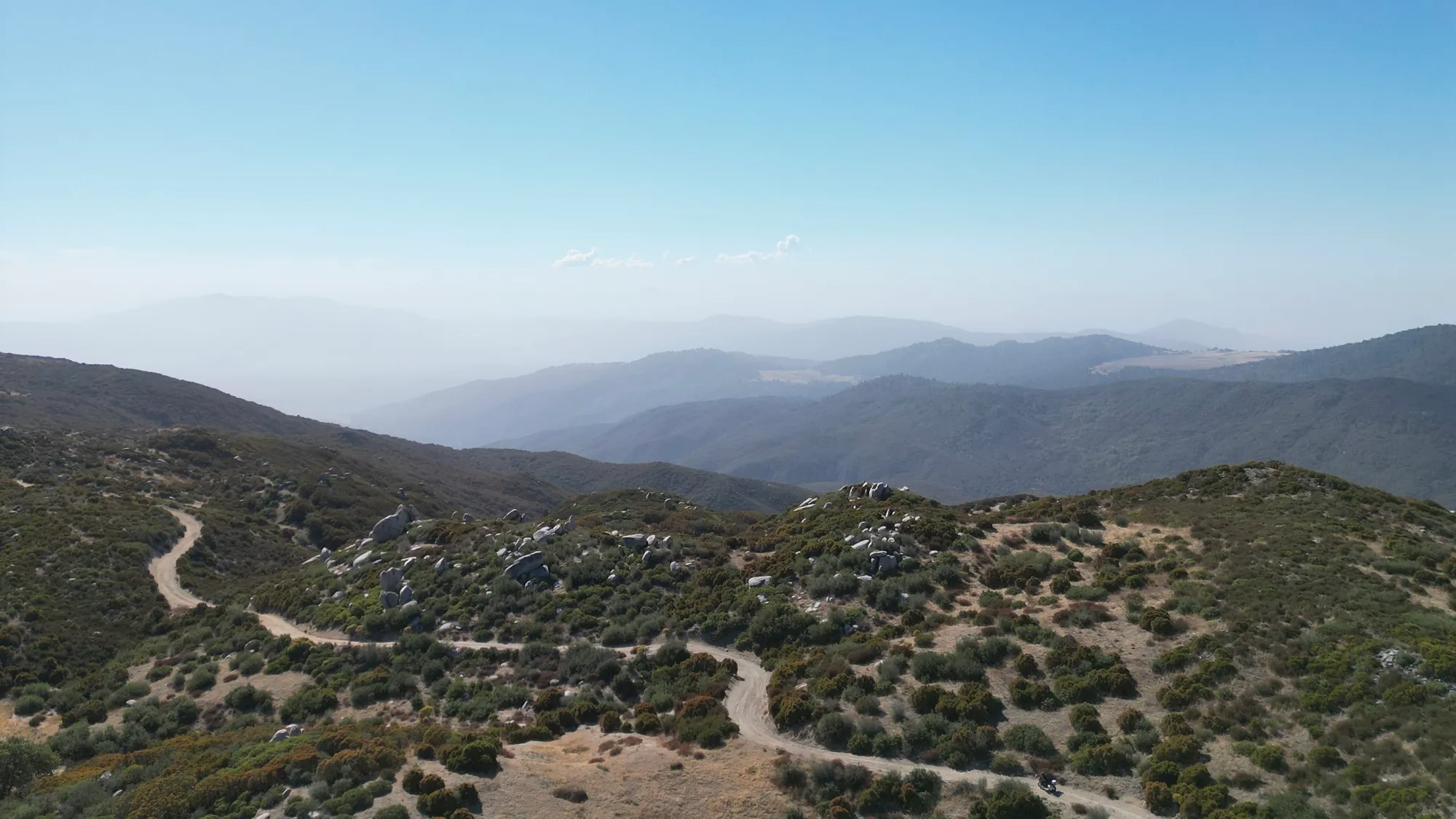
Aerial drone view of Palomar Divide Road winding through chaparral-covered mountain ridges in San Diego County. Multiple S-curve sections descend through sparse vegetation with distant valley views visible in the haze. Gravel and packed-earth surface.

The Truth on the Street

Over the years I've pieced this bike's reputation together from paddock conversations, owner chats at club nights, and the messages riders send me after a season in the saddle. On the Tiger 900 GT Pro the picture is unusually consistent. The engine is what people talk about first, the road manners and equipment earn steady praise, and the complaints gather around vibration, weight, price and a few suspension and brake details.

The triple nobody else offers

No subject comes up more often than the engine. Owners say the T-plane triple has a character that no parallel-twin or V-twin in the middleweight adventure class can match, combining low-rev punch with the appetite for revs of an inline three. Riders who came from the 2020–2023 bike say the 2024 update made the engine stronger and smoother, with a broader spread of torque and a noticeably crisper throttle in Sport mode. Smooth is the word owners keep using. It pulls cleanly off the bottom, surges near the top, and riders credit the new damped handlebar mounts with keeping it refined.

Sharp on tarmac, loaded with kit

On pavement, owners describe a planted, agile bike that feels best in fast sweepers. They say the 19-inch cast front and road-biased setup make it sportier than the Rally Pro. The suspension gets credit for soaking up bumps without going vague in corners. The Brembo Stylema calipers draw some of the strongest praise of all: huge stopping power and precise feel, and many riders rank them among the best brakes in the class. Equipment is the other recurring theme. Owners point to the heated rider and pillion seats, heated grips, electronically adjustable rear preload, tire-pressure monitoring, quickshifter, cornering ABS and traction control, cruise control and the 7-inch TFT with connectivity. They say the electronics are easy to learn and make long days less work, and many feel the list compares well on value with similarly priced rivals.

Buzz, bulk and a few gaps

Vibration is the most common gripe. Some owners say the T-plane's uneven firing order sends more low-rpm vibration through the pegs and bars than a conventional triple, especially at sustained highway speeds. A smaller group reports a handlebar buzz around 5,000 rpm that gets tiring on long slogs, even with the damped mounts. The rear suspension draws comment too. The electronics adjust preload only, with the settings remembered, but damping stays mechanical, and riders note that some rivals at similar money offer fuller semi-active damping. Owners also say the bike is heavier than its parallel-twin competition, and they feel it when maneuvering at low speed. Price comes up as well, since this trim sits near the top of the middleweight adventure range. A few riders add that the rear brake bites abruptly with little modulation, and that the fork has no preload adjustment and can feel overwhelmed on rough roads or under hard braking.

Known issues

  • Throttle hesitation when opening from closed

    fuel system occasional

    On higher-mileage examples, some owners report a stumble or hesitation on initial throttle opening, potentially due to fouled injectors, throttle-body contamination, or ECU fueling issues.

  • Brake rubbing, TPMS and damper warnings after chain adjustment

    brakes rare

    A single report of a new 2024 GT Pro developing rear disc rubbing, groaning front brakes, persistent tyre pressure warnings and a damper error light after a routine chain slack adjustment. The cause is undiagnosed; it may indicate a linked-brake interference or sensor harness issue.

  • Transmission Fault and engine shutdown

    electrics rare

    Owner experiences 'Transmission Fault' warning, followed by engine shutdown and TCS error. Dealer replaced throttle control sensor, but issue recurred with additional electrical failures (no start, TFT blank). Fault codes include P154, P06A4, P1135.

The Expert Benchmark

Where this Triumph Tiger 900 pulls ahead of — or falls behind — its rivals on the numbers, and the typical bike in its class on character.

What kind of bike this is — character vs. the class

This bike Class average

The shape of the Triumph Tiger 900 — numbers and character vs. the average Adventure

Head-to-head: Triumph Tiger 900 vs. its rivals

The Long-Haul Verdict

Forget spec-sheet bragging. Here's who the Tiger 900 is actually built for.

Aerial view of a winding asphalt road cutting through volcanic terrain on La Gomera, Canary Islands. The road curves through sparse green vegetation with rocky volcanic peaks visible in the background and a settled valley to the left. Clear lane markings, dry climate, partly cloudy sky.

Best motorcycle for Moab?

Straight answer: this isn't your bike. Cast wheels, road-spec travel and 483 lb make slickrock and deep sand hard work. Look at the spoked-wheel, longer-legged end of the Tiger range instead.

Made for Bar M / Kane Creek · Imperial Sand Dunes · Johnson Valley OHV Area
Best touring motorcycle for long distance?

This is where the GT Pro earns its keep. Cruise control, an adjustable windscreen, a 5.3 gal tank at 50 mpg and real load capacity make big western routes, two-up and fully packed, genuinely easy.

Made for Beartooth Highway · Blue Ridge Parkway · Going-to-the-Sun Road

Best motorcycle for Highway 1?

Day rides of 200 to 400 miles on roads like the Blue Ridge suit it perfectly. You get sport-tourer pace and comfort, plus the ground clearance to shrug off broken pavement most tourers hate.

Made for Black Hills · Blue Ridge Parkway · Cherohala Skyway

What's new versus the previous generation

If you're cross-shopping the older generation, here's what changed.

Triumph Tiger 900 (C701-GTPro)

Previous generation · 2020–2023

Triumph Tiger 900 (C701-GTPro)

The Grand Tourer With Character

Compare to the previous model →

Alternatives to the Triumph Tiger 900

If this one isn't quite the fit, these are the bikes worth riding back-to-back against it.

Any price note compares both bikes at the same age — the youngest age both have on the used market — against this Triumph Tiger 900. “cheaper/pricier” is what that bike costs second-hand, not how worn it is.