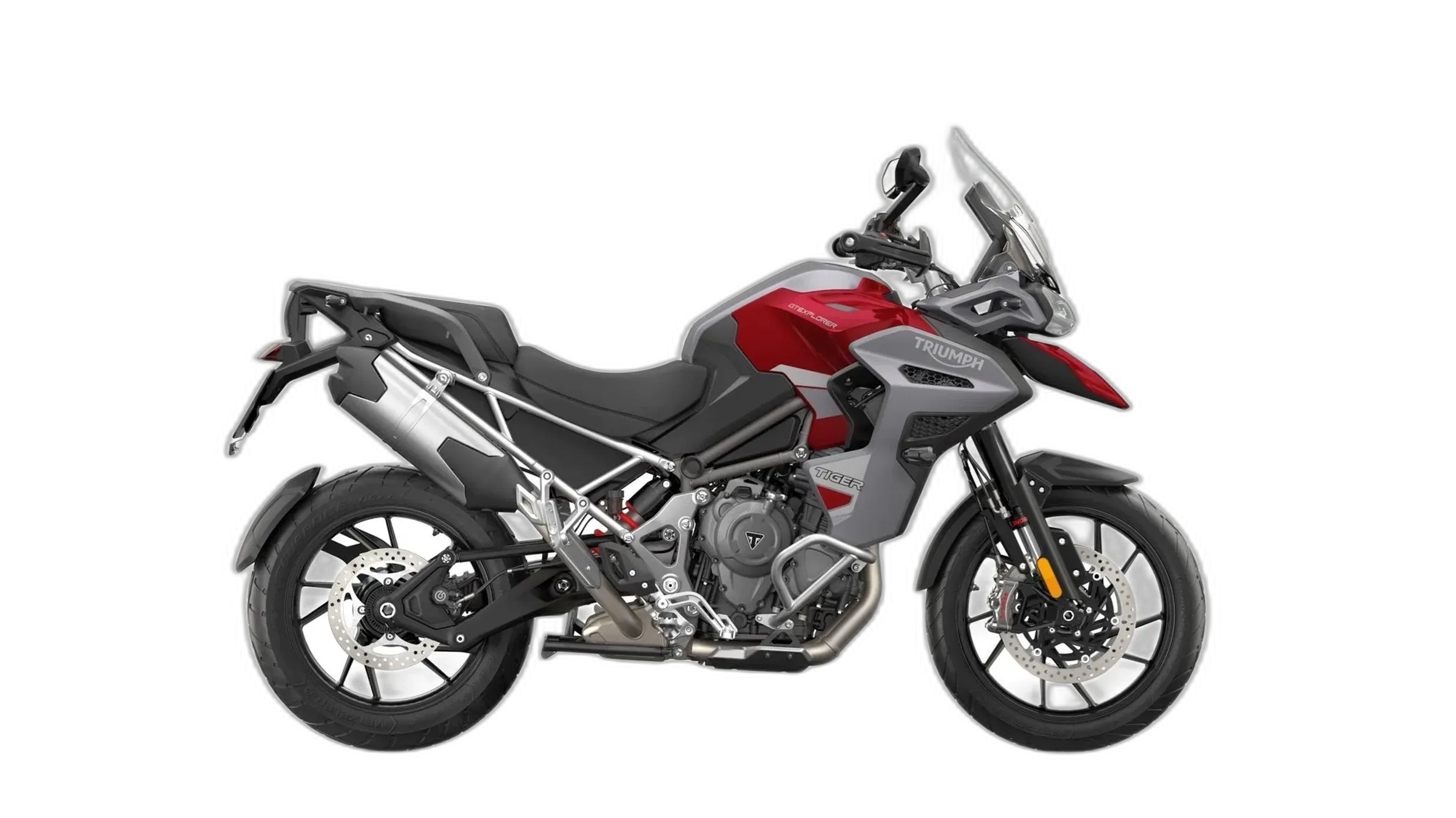

Triumph Tiger 1200 GT (PV01-Explorer) — Adventure
Triumph press archive

2023 · Adventure · A variant of the Tiger 1200 GT

Tiger 1200 GT Explorer (PV01-Explorer)

Differences between the standard Tiger 1200 GT and the Explorer

5 / 5 NastyNils Rating · against its class

Tech-Loaded Triple for Distance

The Machine's Character

Triumph's road-biased flagship adventure bike is built around a 1160 cc inline-three with an uneven firing order, and that single decision shapes the whole machine. You get 148 hp at 9,000 rpm and 96 lb-ft at 7,000 rpm, delivered with a pulse that feels closer to a big twin low down and pure triple once it opens up. Around it sits electronically adjustable Showa suspension, cornering ABS, traction control, ride modes, a quickshifter working both ways, and a 7.9 gal (30 L) tank. Shaft drive, a 19-inch front, and 7.9 in (200 mm) of travel at both ends put it squarely in the long-haul adventure class rather than the touring-bike class.

This is a bike for riders who measure trips in days, not hours. The tank alone rewrites how you plan a route, and the seat, the screen, and the riding position hold up long after the fuel light would have stopped something smaller. It rides lighter than 562 lb (255 kg) suggests once rolling, and the electronics stay in the background instead of demanding attention. The honest caveat: at 33.5 in (850 mm) the seat is tall, the weight is real at walking pace, and early bikes have shown enough electronic gremlins that a full software history matters when you buy used.

Hard Numbers

Spec sheets don't ride bikes, but they set the baseline.

Show full specs & equipment Hide specs & equipment
Key specifications
Power 148 hp (110 kW) @ 9,000 rpm
Torque 96 lb-ft (130 Nm) @ 7,000 rpm
Displacement 1160 cc
Engine Inline-three
Cooling Liquid-cooled
Gearbox 6-speed
Final drive Shaft
Fork Upside-down (USD)
Front brake 320 mm
Front tire 120/70-19
Rear tire 150/70-18
Wheelbase 61.4 in (1560 mm)
Front travel 7.9 in (200 mm)
Rear travel 7.9 in (200 mm)
Seat height 33.5 in (850 mm)
Wet weight 562 lb (255 kg)
Fuel capacity 7.9 gal (30 L)

Equipment check

Chassis

  • Electronic Suspension Standard
  • Front Suspension Adjustable Standard
  • Rear Suspension Adjustable Standard
  • Cruise Control Standard

Comfort

  • Heated Grips Standard
  • Adjustable Windscreen Standard
  • Adjustable Seat Height Standard
  • Luggage System Optional

Connectivity

  • TFT Display Standard
  • Smartphone Connectivity Standard
  • Navigation Standard
  • USB Charging Port Standard
  • Tire Pressure Monitoring (TPMS) Standard

Drivetrain

  • Quickshifter Standard
  • Slipper Clutch Standard

Lighting

  • LED Headlight Standard
  • Cornering Lights Standard

Safety

  • ABS Standard
  • Cornering ABS Standard
  • Traction Control Standard
  • Ride Modes Standard

What the Tiger 1200 GT Explorer Adds — Differences vs the Standard Tiger 1200 GT

The Tiger 1200 GT Explorer (PV01-Explorer) builds on the standard Tiger 1200 GT: the upgraded hardware, the key spec changes and where its character shifts. The full ride, specs, scoring and verdict are all right here on this page.

Premium hardware the Explorer brings

  • Lighting Cornering Lights Cornering lights that fill in the dark as you lean, where the standard runs fixed beams.
  • Transmission Quickshifter Down An up-and-down quickshifter for clutchless downshifts; the standard blips on upshifts only.
  • Transmission Quickshifter Up A quickshifter for clutchless upshifts the standard goes without.

Hard spec differences

SpecStandard Tiger 1200 GTExplorerΔ
Wet weight 529 lb 562 lb +33 lb
Fuel capacity 5.3 gal 7.9 gal +2.6 gal

How the Explorer shifts the character

Where the Explorer does more
  • More miles between fuel stops
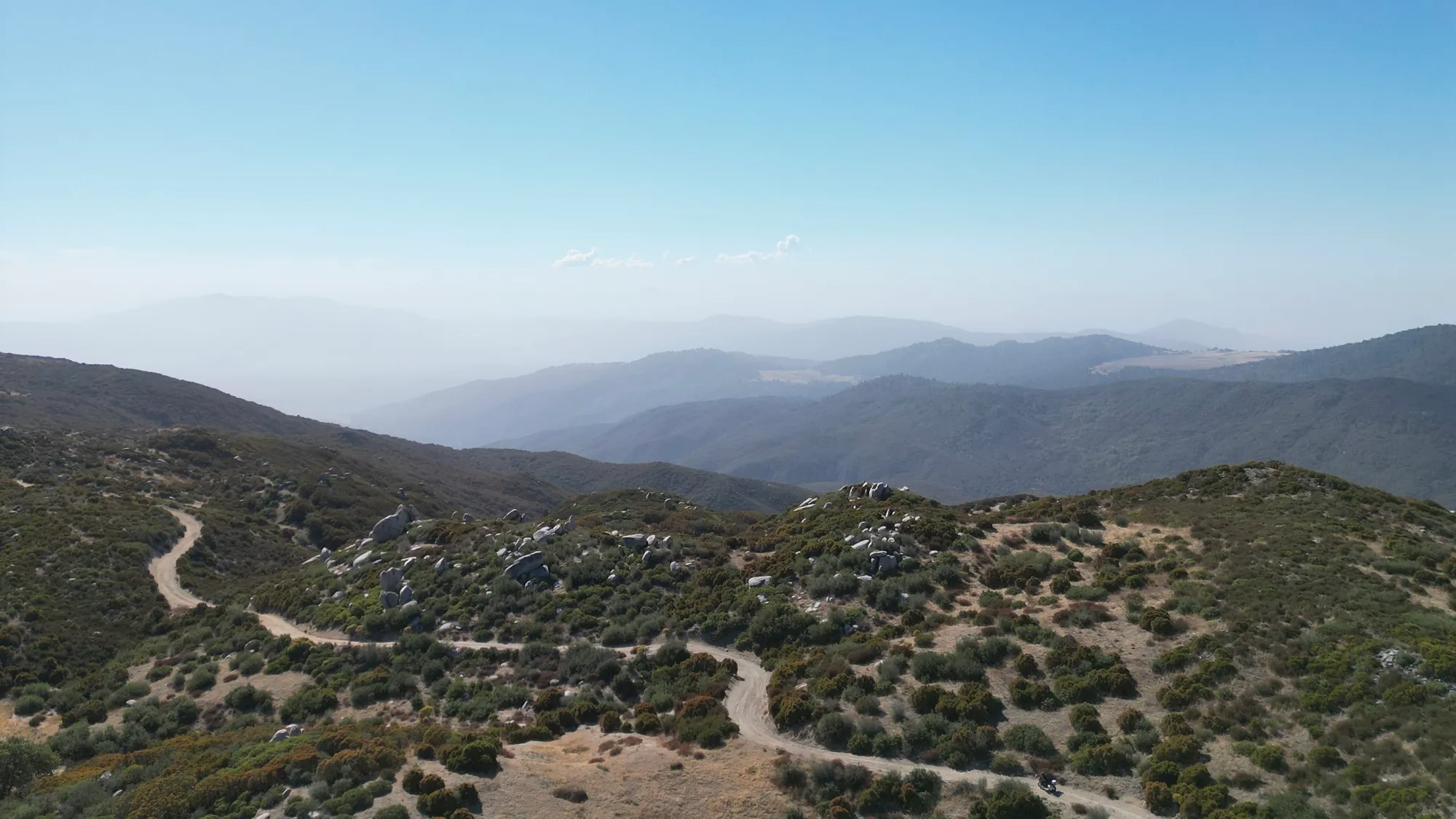
Aerial drone view of Palomar Divide Road winding through chaparral-covered mountain ridges in San Diego County. Multiple S-curve sections descend through sparse vegetation with distant valley views visible in the haze. Gravel and packed-earth surface.

The Truth on the Street

This stretch of the guide isn't my riding. It's what has come back to me from riders over the years: pit lane talk, owners catching me at bike nights, and the notes that land in my inbox once somebody has put a season on a machine. Pooled together, the reports on the Tiger 1200 GT settle into a consistent pattern. Warm on how it rides and how far it carries you, cooler on vibration and on the screen.

What Riders Notice In Corners

The line that repeats most often concerns how it changes direction. Owners moving up from the earlier generation raise it almost every time: less muscle needed to tip it in, and no nervousness once it is over. The electronic Showa damping is named right alongside that. Riders describe broken pavement being taken out of the equation while the bike stays composed, and a good number call it the biggest step forward here. Approval for the engine runs just as consistently. It is the pull from low in the rev range they mention first, the way it keeps going at the top, and a character they say sets it apart in this class. Two caveats travel with it: some riders find the throttle in Sport sharper than they want in traffic, and a few describe slack in the driveline low in second gear that makes town work untidy.

Long Days And Numb Hands

Riders who count trips in days are consistent about the seat. It still works at the end of a long one, they say, for the passenger as much as the rider, with the upright stance and the weather protection taking much of the credit. That goodwill runs out at a particular speed. Once the pace settles on the highway, vibration works into the contact points, and plenty of owners report losing feeling in their fingers before the next stop. Rear vision suffers at the same time. Riders say the mirror image smears once they are moving quickly, leaving them less sure of what is behind them than they would like.

The Screen And The Small Stuff

Riders rate the breadth of equipment highly, up with the premium end of the class, and most of the grumbling is about how it behaves rather than what is fitted. The display takes the brunt. Owners call it slow to wake up, with too much scrolling to reach something as basic as the odometer. Phone pairing comes up almost as often, with connections that will not hold. A smaller group has no use for the built-in turn-by-turn directions, which they say run behind the bike's real position and give no map to check against. The rear-facing radar draws a similar shrug, described as more novelty than help, the warning light barely going dark in moving traffic. Owners who ordered the heated seat report a long wait for warmth and not much of it once it arrives. One gripe sits outside the software. The wheel sizes are unusual enough to thin out the tire choice, which stings for anyone with a favorite.

Known issues

  • Hill hold control fails to release automatically

    brakes occasional

    On some early production models, the hill hold function does not disengage automatically when pulling away, requiring manual intervention.

  • Clutch engagement requires high effort when cold

    drivetrain occasional

    Owners report that when the engine is cold, shifting from first to second gear requires excessive pressure. The issue appears to resolve once the fluids are at operating temperature.

  • Exposed wiring around the throttle grip

    bodywork rare

    Some bikes exhibit visible, unprotected coloured wiring near the throttle assembly, a cosmetic quality control issue noted by owners and reviewers.

  • Engine randomly stalls at low speeds

    engine occasional

    Owners report unexpected engine cut-out when pulling away or coming to a stop. A software update from the dealer typically resolves the issue.

  • TFT display failures

    electrics rare

    A small number of owners have experienced blanking or malfunctioning TFT dashboards necessitating replacement under warranty.

  • Key fob recognition issues

    electrics occasional

    The keyless system may intermittently fail to recognize the fob, leaving the rider unable to start the bike. A backup start procedure is available.

The Expert Benchmark

Where this Triumph Tiger 1200 GT pulls ahead of — or falls behind — its rivals on the numbers, and the typical bike in its class on character.

What kind of bike this is — character vs. the class

This bike Class average

The shape of the Triumph Tiger 1200 GT — numbers and character vs. the average Adventure

Head-to-head: Triumph Tiger 1200 GT vs. its rivals

The Long-Haul Verdict

Forget spec-sheet bragging. Here's who the Tiger 1200 GT is actually built for.

Aerial view of a winding asphalt road cutting through volcanic terrain on La Gomera, Canary Islands. The road curves through sparse green vegetation with rocky volcanic peaks visible in the background and a settled valley to the left. Clear lane markings, dry climate, partly cloudy sky.

Best motorcycle for Moab?

Be honest with yourself here. This is a big, shaft-driven road-biased ADV with 7.9 in (200 mm) of travel, capable on graded dirt and fire roads, but slickrock and deep sand ask for something far lighter.

Made for Bar M / Kane Creek · Imperial Sand Dunes · Johnson Valley OHV Area
Best touring motorcycle for long distance?

This is your bike. The 7.9 gal (30 L) tank, the adjustable screen and seat, and suspension that handles a passenger and luggage make Beartooth and Going-to-the-Sun a single relaxed day.

Made for Beartooth Highway · Blue Ridge Parkway · Going-to-the-Sun Road

Best motorcycle for Highway 1?

For 200 to 400 mile days on Blue Ridge or Highway 1, the upright seating and 148 hp triple give you sport-touring pace with a view over the traffic and no bagger compromises.

Made for Black Hills · Blue Ridge Parkway · Cherohala Skyway

Alternatives to the Triumph Tiger 1200 GT

If this one isn't quite the fit, these are the bikes worth riding back-to-back against it.

Any price note compares both bikes at the same age — the youngest age both have on the used market — against this Triumph Tiger 1200 GT. “cheaper/pricier” is what that bike costs second-hand, not how worn it is.