
Triumph Daytona 600 (MY2003) — Supersport

2003–2005 · Supersport · Buyer's Guide

Daytona 600 (MY2003)

4 / 5 NastyNils Rating · against its class

British Steel, Composed At Pace

The Machine's Character

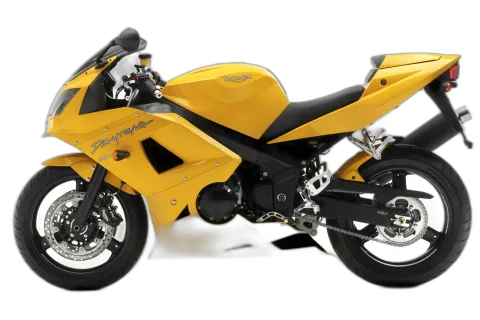
The Daytona 600 is Triumph's serious entry into the supersport class: a 599 cc liquid-cooled inline-four in an aluminum twin-spar frame, with adjustable suspension at both ends. It makes 112 hp and 50 lb-ft, which leaves it slightly down on peak power against the sharpest bikes in the class. That's not the point here. The engine is tuned for a broad, accessible powerband with real mid-range and a smooth rush at the top, and the chassis was good enough to take an Isle of Man TT Junior win in 2003. The design is its own, too: it borrows from nobody. Very British!

This is a supersport that works on the street, not just on a circuit, and that makes it easy to recommend to the right rider. It suits you if you're experienced and want precision and feedback more than a spec-sheet win. Be honest about what it isn't, though: there's no ABS and no traction control. The only rider aid is you. No slipper clutch or steering damper either. It also has its known weak spots. The gear linkage can be imprecise, the plastic fuel fittings under the tank can crack when you lift it, and switches and connectors cause electrical trouble. Check all three before you buy. No exceptions.

Hard Numbers

Spec sheets don't ride bikes, but they set the baseline.

Show full specs & equipment Hide specs & equipment
Key specifications
Power 112 hp (84 kW)
Torque 50 lb-ft (68 Nm)
Displacement 599 cc
Engine Inline-four
Cooling Liquid-cooled
Gearbox 6-speed
Final drive Chain
Front brake 308 mm
Front tire 120/70-17
Rear tire 180/55-17
Seat height 32.1 in (815 mm)
Fuel capacity 4.8 gal (18 L)
Top speed 160 mph (257 km/h)
Fuel economy 29 mpg (US)

Equipment check

Chassis

  • Front Suspension Adjustable Standard
  • Rear Suspension Adjustable Standard

The Voice of Experience

Portrait of NastyNils

The test ride

Your right hand notices it first: the throttle has a short throw as standard, so small inputs land fast and exactly where you want them. There's more room on this bike than you expect from a 600, and with the seat at 32.1 in (815 mm) you settle in quickly instead of fighting the riding position. It tips in with little effort and tells you plainly what's going on underneath you. That feedback is what stays with me: you always know where you stand. Cornering clearance is generous, and you'll run out of nerve before you run out of lean. In town it threads through gaps easily, and out on a fast stretch it sits calm and steady. It feels light and honest. Good company!

Rated point by point — where it earns its keep

My own 0–100 score for this bike against the class, area by area — the marker on each bar is the class average.

With a steering head this steep, I expected a nervous bike in the corners. I got the opposite: the Daytona tracks through a turn with real stability and doesn't wander. The rubber surprised me too. The Pirelli Diablos are street tires, yet at the circuit launch they gave me serious grip, and I never felt the need for anything stickier to find out what this bike can do. Good pairing!

I rode it hard on a demanding circuit, and the limit I found was mine, not the bike's. Whenever I thought I'd reached the edge, the Daytona still had more to give, and that headroom sits well beyond what the average rider will ever ask of it. It looks the part in its own way too: visually distinctive, and you won't mistake it for anything else in the segment. Plenty in reserve!

What I keep coming back to is the moment just past the apex. I crack the throttle open and the engine answers right away with clean power: no hesitation, no hiccup to ride around. That changes how you treat the second half of a corner. You stop feeding it in carefully and start going for it early. Trust it!

I kept moving my braking marker later, deep into the turn itself, and the front never got upset about it. It stays settled the whole way in. On a technical track that builds confidence quickly, and once you have it, you keep finding more corner to use. Addictive!

My comfort notes on this bike come down to a single detail at the right grip: the throttle comes with a short throw from the factory. There's less travel between closed and wide open, so your inputs are quicker and more precise when it matters. Small thing, real effect.

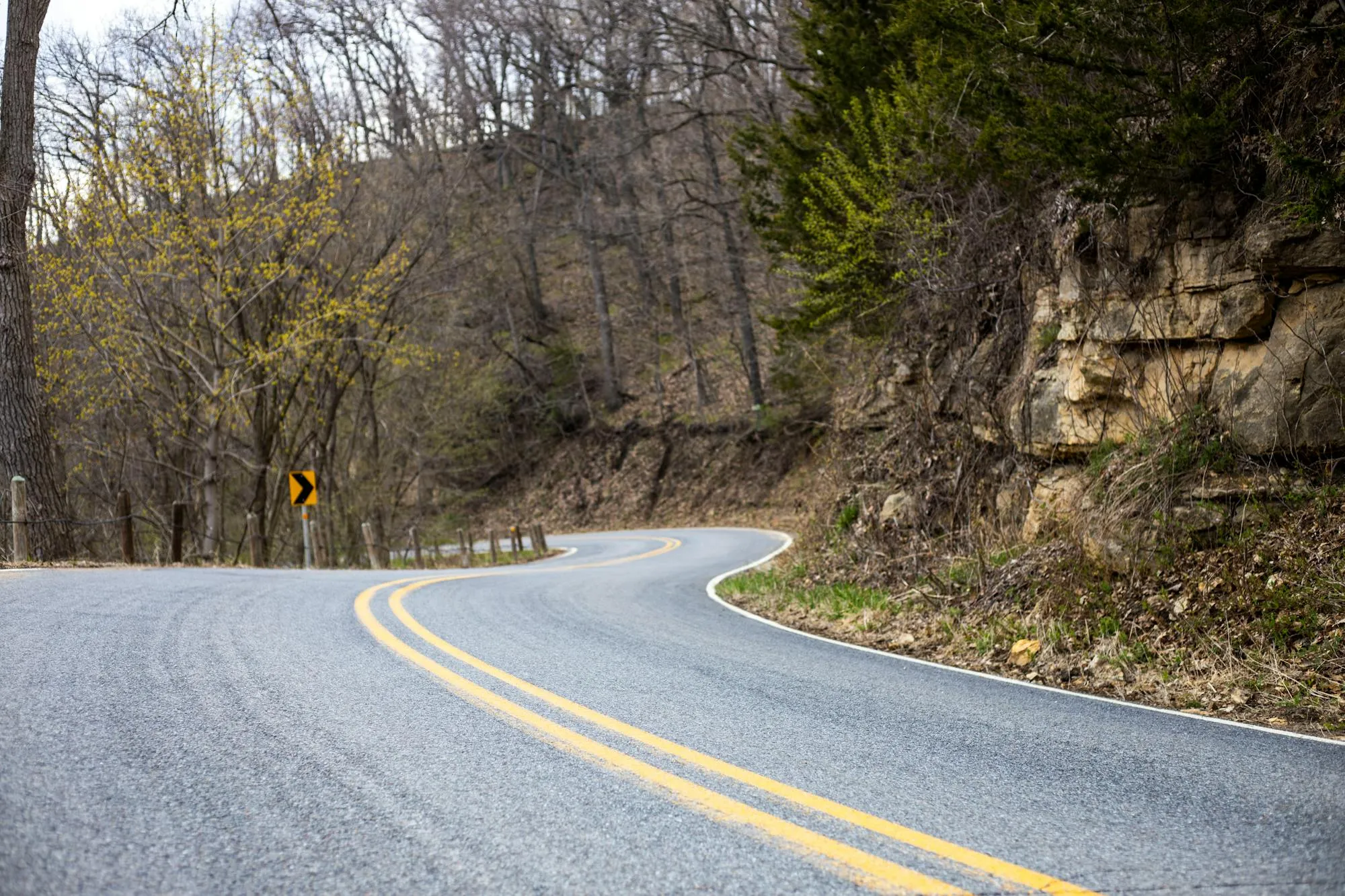
A winding two-lane asphalt road in the Appalachian mountains, photographed in dry daylight. Yellow double-center line markings guide through a series of tight left-hand curves. Dense deciduous and evergreen forest flanks both sides; a rock cut is visible on the right. The road surface and geometry suggest a technical, high-traffic riding corridor popular with motorcyclists.
Chris Flaten / Pexels

The Truth on the Street

I've spent years listening to Daytona 600 riders: in paddocks, at club nights, in owner chats, and in the emails and messages they send me directly. The pattern is consistent. They praise an accessible engine, forgiving handling and real comfort, and complain about mixed reliability and the gearbox.

The forgiving side of a 600

The engine gets the most praise. Riders consistently describe it as less rev-dependent than the sharpest 600s: it's willing from low revs, stays smooth through the mid-range and comes alive above 6,500 rpm. On twisty roads, owners call the handling stable, precise and more forgiving than the razor-sharp Japanese track bikes. Several also rate it among the most comfortable 600 supersports for longer rides. Unusual for this class!

Niggles, notchy shifts, divisive looks

Reliability is the loudest complaint. Owners report a mix of niggles, from oil leaks and failing clutch cut-out switches to electrical glitches. Not every bike is affected, but its reputation for robustness lags behind the Japanese rivals. The gearbox comes up nearly as often: riders call the action notchy, and the later 650 got an improved linkage and clutch. A smaller group finds the angular early-2000s design old-school next to sleeker contemporaries. Opinions split.

Known issues

  • Fragile plastic fuel tank connectors

    fuel system rare

    The quick‑disconnect fuel fittings under the tank are prone to cracking when the tank is lifted, potentially causing leaks. Metal aftermarket replacements are available.

  • Clunky gearbox and false neutrals

    drivetrain common

    The standard gear linkage on the 600 can be imprecise, often causing missed shifts and false neutrals. Aftermarket rearsets or upgrading to the 650‑spec linkage helps. Check for smooth operation during test rides.

  • Electrical gremlins

    electrics occasional

    Erratic warning lights, high idle, and intermittent starting problems are often traced to faulty clutch or sidestand cut‑out switches, corroded connectors, or a failing regulator/rectifier. Thoroughly check all electrical functions before buying.

  • Overheating in traffic

    cooling occasional

    Some owners note that the coolant temperature can rise quickly in stop‑and‑go conditions, occasionally approaching unsafe levels. The issue is more common in hot weather and may indicate a failing radiator fan or thermostat.

  • Clutch cut‑out switch failure

    electrics occasional

    The switch can become sticky or wear, leading to no‑start conditions. Often a simple clean or replacement restores function, but it can be misdiagnosed as a more serious problem.

The Expert Benchmark

Where this Triumph Daytona 600 pulls ahead of — or falls behind — its rivals on the numbers, and the typical bike in its class on character.

What kind of bike this is — character vs. the class

This bike Class average

The shape of the Triumph Daytona 600 — numbers and character vs. the average Supersport

Head-to-head: Triumph Daytona 600 vs. its rivals

The Handshake Score

Forget spec-sheet bragging. Here's who the Daytona 600 is actually built for.

A scenic view of Angeles Crest Highway winding through rugged Southern California canyon terrain. Rocky mountainsides with golden earth tones frame the asphalt road with tight sweeping curves. Double yellow center line visible, sparse vegetation along the shoulders, clear blue sky with white clouds. Daylight, dry conditions. Iconic location for canyon-road enthusiasts.
Josh Sorenson / Pexels

Best motorcycle for Angeles Crest?

For canyon runs this fits: light on its feet, stable on line and full of feedback. The ride through city traffic is the catch, because it can run hot in stop-and-go on a warm day.

Made for Angeles Crest Highway · Coronado Trail / US 191 · Highway 1 / Big Sur
Best motorcycle for Tail of the Dragon?

If you ride tight corners to get better, not faster, you'll like how it holds a line and talks to you. Plan on sorting the gear linkage: a false neutral between corners is no fun.

Made for Back of the Dragon · Blue Ridge Parkway · Cherohala Skyway

Best motorcycle for Laguna Seca?

You'll find your limit before the bike's, and the stock tires are good enough to start. Know what you're signing up for: no slipper clutch, no quickshifter, and no ABS or traction control.

Made for Barber Motorsports Park · WeatherTech Raceway Laguna Seca · Circuit of the Americas