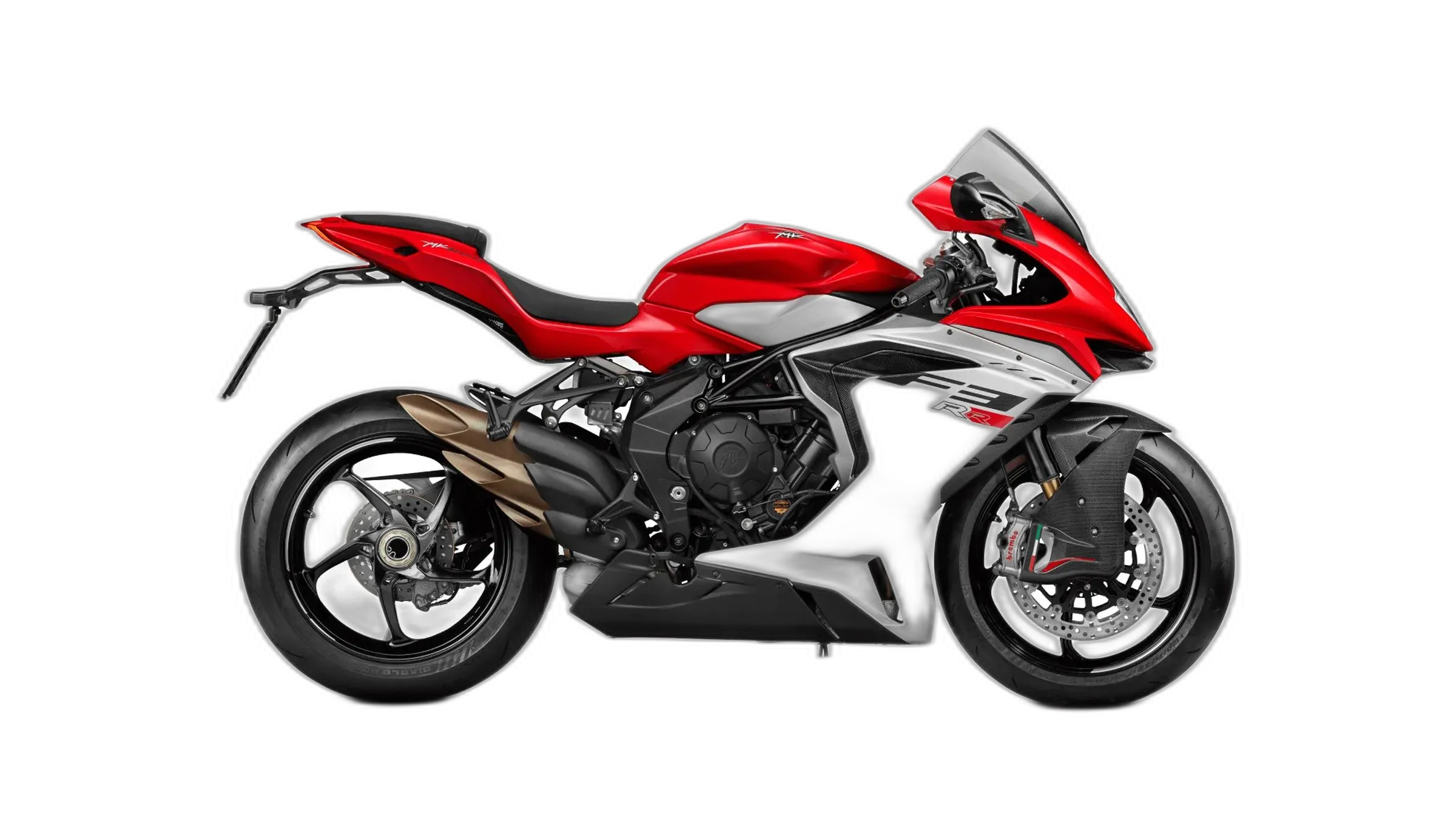

MV Agusta F3 800 (MY2013-RR) — Supersport
MV Agusta press archive

2022–2026 · Supersport · A variant of the F3 800

F3 800 RR (MY2013-RR)

Differences between the standard F3 800 and the RR

4.5 / 5 NastyNils Rating · against its class

Italian Triple, Razor Sharp

The Machine's Character

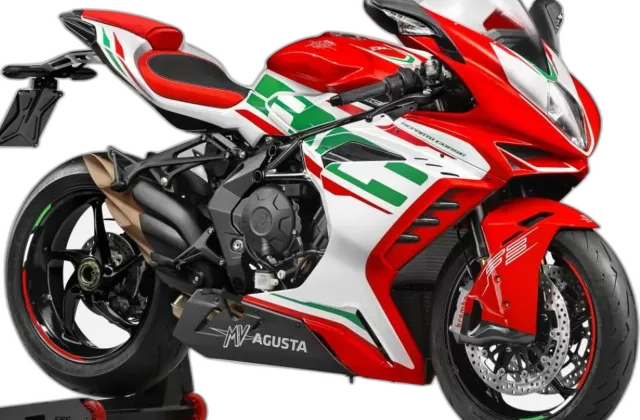
The F3 800 RR is MV Agusta's middleweight supersport, built around a 798 cc inline-three in a steel trellis frame. The triple makes 147 hp at 13,000 rpm and 65 lb-ft at 10,100 rpm, and the whole bike weighs 424 lb (192 kg) wet. Brembo Stylema calipers work on a 12.6 in (320 mm) front brake, and both fork and shock are adjustable. Cornering ABS, traction control and ride modes make up the rider aids. The quickshifter is standard and works on both upshifts and downshifts. And then there's the design: this is an object of desire first. Pure MV!

Read the figures and the purpose is clear: peak torque arrives at 10,100 rpm and peak power at 13,000 rpm, so this engine is built to be kept spinning. The chassis hardware points the same way, toward lean angle, precision and feedback at speed rather than relaxed cruising. A 32.7 in (830 mm) seat, a 4.4 gal (16.5 L) tank and standard cruise control keep it a road bike, but the priorities are obvious. It's for the experienced rider who wants a sharp, exclusive machine for fast corners and doesn't justify the purchase with a spreadsheet. Emotion comes first.

Hard Numbers

Spec sheets don't ride bikes, but they set the baseline.

Show full specs & equipment Hide specs & equipment
Key specifications
Power 147 hp (108 kW) @ 13,000 rpm
Torque 65 lb-ft (88 Nm) @ 10,100 rpm
Displacement 798 cc
Engine Inline-three
Cooling Liquid-cooled
Gearbox 6-speed
Final drive Chain
Fork Upside-down (USD)
Front brake 320 mm
Front tire 120/70-17
Rear tire 180/55-17
Seat height 32.7 in (830 mm)
Wet weight 424 lb (192 kg)
Fuel capacity 4.4 gal (16.5 L)
Top speed 149 mph (240 km/h)
Fuel economy 37 mpg (US)

Equipment check

Chassis

  • Front Suspension Adjustable Standard
  • Rear Suspension Adjustable Standard
  • Steering Damper Optional

Connectivity

  • TFT Display Standard
  • Smartphone Connectivity Standard

Drivetrain

  • Quickshifter Standard
  • Slipper Clutch Standard

Lighting

  • LED Headlight Standard

Safety

  • ABS Standard
  • Cornering ABS Standard
  • Traction Control Standard
  • Ride Modes Standard
  • Wheelie Control Standard
  • Launch Control Standard

Signature Tech

The named systems that set this bike apart — and what each one does for you.

Braking

  • Brembo Stylema Caliper Standard
    • Stronger consistent braking
    • Brake fade resistance
    • Firm brake lever feel
    • Agile weight reduction

What the F3 800 RR Adds — Differences vs the Standard F3 800

The F3 800 RR (MY2013-RR) builds on the standard F3 800: the upgraded hardware, the key spec changes and where its character shifts. The full ride, specs, scoring and verdict are all right here on this page.

Premium hardware the RR brings

  • Transmission Quickshifter Down An up-and-down quickshifter for clutchless downshifts; the standard blips on upshifts only.

Hard spec differences

SpecStandard F3 800RRΔ
Top speed 167 mph 149 mph -18 mph
Seat height 31.7 in 32.7 in +1.0 in

How the RR shifts the character

Where the RR does more
  • A richer, more connected tech suite
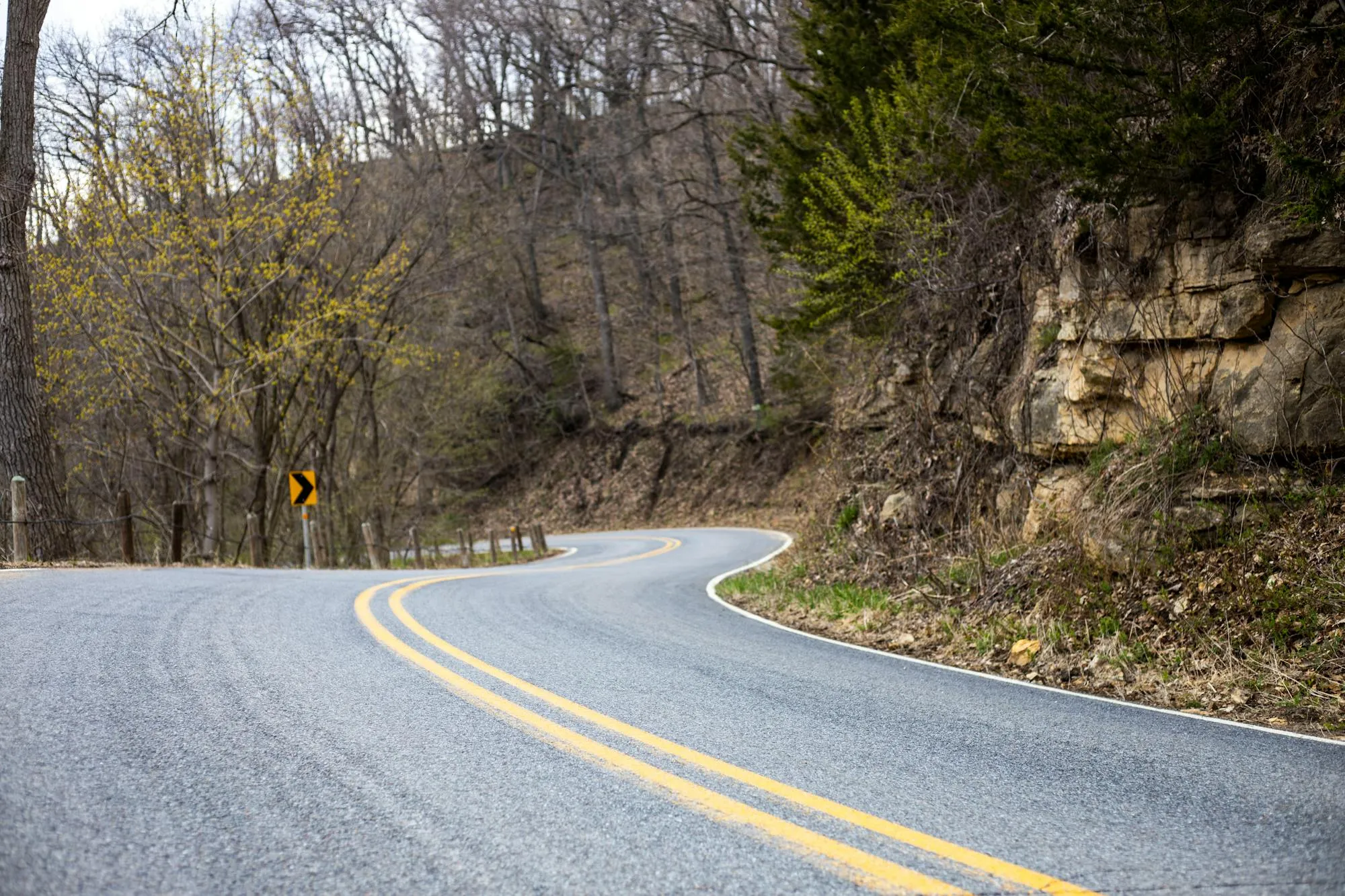
A winding two-lane asphalt road in the Appalachian mountains, photographed in dry daylight. Yellow double-center line markings guide through a series of tight left-hand curves. Dense deciduous and evergreen forest flanks both sides; a rock cut is visible on the right. The road surface and geometry suggest a technical, high-traffic riding corridor popular with motorcyclists.
Chris Flaten / Pexels

The Truth on the Street

I've spent years listening to people who live with these bikes: in paddocks, at club nights, in owner chats and in the emails and messages you send me directly. For the F3 800, that chatter lines up in a clear pattern. Riders rave about the triple, the chassis and the looks, and their complaints center on price, finish and comfort over a full day.

The triple that leads every conversation

The engine comes up first, and most often. Riders consistently describe a rush of power that's explosive yet refined, with strong pull from the midrange and a top end that still rewards you for revving it out. Owners who know the 675 keep pointing at the same thing: the 800 has noticeably more in the middle, and the frantic character up top hasn't gone anywhere. The sound gets nearly as much airtime as the power. People call it a mechanical, race-bred howl, and the word that keeps turning up is addictive. Engine first, every time.

A 600's reflexes in Italian dress

Right behind the engine comes the chassis. Riders consistently call the F3 light, compact and precise, a bike that rewards high corner speed and feels more like a 600 than a literbike. Stability through corners gets the same praise, and the word confidence shows up a lot. The brakes follow: owners describe the Brembo monobloc calipers as strong and progressive, with plenty of feel on the road and at the track. Then there's the way it looks. The sculpted fairing with its winglets, the single-sided swingarm and the finish turn heads, riders say, and some credit the winglets with real downforce at speed. The Marzocchi and Sachs suspension gets filed under the same heading: premium parts on an exotic Italian bike. A few owners also find the riding position roomier than they expected from a supersport, helped by the tall screen. Not what you'd guess!

Where owners start to grumble

The gripes are fewer, but they're consistent. Price leads: riders point out that the F3 costs significantly more than its Japanese competitors and that it can stretch the budget. Just as often you hear about fit and finish. Owners say it's improved, yet still short of the Japanese benchmark, with minor niggles turning up along the way. Taller riders push back on the roomy-cockpit reports: over 6 ft (183 cm), some find the pegs too high and the reach too aggressive for all-day use. A couple of individual remarks round it out. One is that the suspension, excellent on smooth pavement, turns harsh on bumpy back roads and lets the bike skip and jitter. Another is a distinct notch in the lever travel of the front and rear brake before they bite, even though the stopping power itself is reliable. Small things, but they get mentioned.

Known issues

  • Throttle hesitation / lean stumble at high mileage

    fuel system occasional

    On higher-mileage units, some owners experience a hesitation or lean stumble during initial throttle opening, often traced to dirty fuel injectors, a clogged throttle body, or a failing sensor. ECU remapping or a thorough cleaning resolves it.

  • Sprag clutch wear / starter noise

    engine occasional

    The starter sprag clutch can wear prematurely, causing a grinding or screeching noise during starting. Some owners install an upgraded sprag clutch preventively.

  • Weak battery and ground cable issues

    electrics common

    The stock battery is marginal for cold starts, and the ground cable connection can degrade, causing hard starting or electrical gremlins. Upgrading the battery and cleaning/replacing the ground strap are common fixes.

  • Valve spring failure leading to valve drop

    engine rare

    Valve springs can fail, causing a valve to drop into the cylinder, resulting in catastrophic engine damage. Reported on low-mileage bikes, including second-generation engines.

  • Rear master cylinder failure

    brakes occasional

    The rear brake master cylinder can fail, leading to loss of rear braking. Often repaired under warranty.

The Expert Benchmark

Where this MV Agusta F3 800 pulls ahead of — or falls behind — its rivals on the numbers, and the typical bike in its class on character.

What kind of bike this is — character vs. the class

This bike Class average

The shape of the MV Agusta F3 800 — numbers and character vs. the average Supersport

Head-to-head: MV Agusta F3 800 vs. its rivals

The Handshake Score

Forget spec-sheet bragging. Here's who the F3 800 is actually built for.

A scenic view of Angeles Crest Highway winding through rugged Southern California canyon terrain. Rocky mountainsides with golden earth tones frame the asphalt road with tight sweeping curves. Double yellow center line visible, sparse vegetation along the shoulders, clear blue sky with white clouds. Daylight, dry conditions. Iconic location for canyon-road enthusiasts.
Josh Sorenson / Pexels

Best motorcycle for Angeles Crest?

You're the best fit here. A 424 lb (192 kg) triple with adjustable suspension and cornering ABS is built for weekend canyon work. Cruise control helps on the ride out.

Made for Angeles Crest Highway · Coronado Trail / US 191 · Highway 1 / Big Sur
Best motorcycle for Laguna Seca?

A strong match on paper: 147 hp at 13,000 rpm, Brembo Stylema calipers, a two-way quickshifter and adjustable suspension to set up. Wheelie and launch control are standard too.

Made for WeatherTech Raceway Laguna Seca · Barber Motorsports Park · Circuit of the Americas

Best motorcycle for Tail of the Dragon?

A good fit for tight, technical roads: the hardware points to precision and lean angle more than brute force. Peak torque sits at 10,100 rpm, so plan on using the gearbox and the two-way quickshifter.

Made for Tail of the Dragon · Back of the Dragon · Blue Ridge Parkway