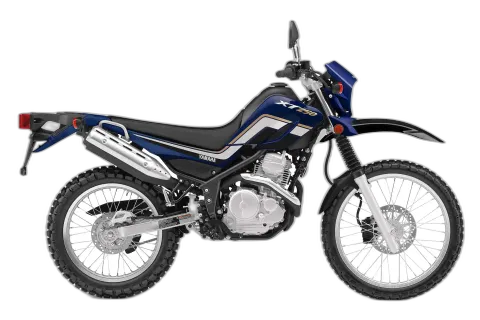
Yamaha Tricker (DG10J) — Enduro

2004–2007 · Enduro · Buyer's Guide

Tricker (DG10J)

City Toy, Featherweight Soul

The Machine's Character

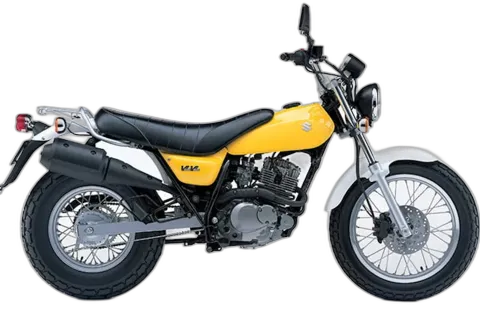
The Tricker was never built to win anything. Yamaha took a 249 cc air-cooled single, gave it a balancer shaft, and wrapped it in a trials-flavored chassis with a 19-inch front and a stubby 16-inch rear. The result is 19 hp, 14 lb-ft, and 260 lb wet. Those numbers look thin on paper and matter very little in practice. Ground clearance is 11.0 in, front travel 7.1 in, and the seat sits at 31.1 in, low enough for most riders to plant both boots. This is a machine built around the idea that fun happens under 30 mph.

It rewards smoothness. Roll into the throttle, let the flywheel carry you over a root or a curb, and the bike simply goes where you point it. Riders who value character over horsepower get a lot here: 118 mpg, easy maintenance, and the kind of simplicity that ages well because there is almost nothing on it to fail. The honest caveat is reach. Top speed is 72 mph and the tank holds 1.6 gal, so highway miles and long days are not what this bike does. Buy it as a play tool and a town bike, not as transport.

Hard Numbers

Spec sheets don't ride bikes, but they set the baseline.

Show full specs & equipment Hide specs & equipment
Key specifications
Power 19 hp (14 kW) @ 7,500 rpm
Torque 14 lb-ft (19 Nm) @ 6,250 rpm
Displacement 249 cc
Engine Single-cylinder
Cooling Air-cooled
Gearbox 5-speed
Front brake 220 mm
Front tire 80/100-19
Rear tire 120/90-16
Ground clearance 11.0 in (280 mm)
Front travel 7.1 in (180 mm)
Rear travel 6.8 in (172 mm)
Seat height 31.1 in (790 mm)
Wet weight 260 lb (118 kg)
Fuel capacity 1.6 gal (6 L)
Top speed 72 mph (116 km/h)
Fuel economy 118 mpg (US)

The Voice of Experience

Portrait of NastyNils

The test ride

First thing you notice is how little of it there is. Swing a leg over and the Tricker feels like it weighs nothing between your knees, narrow through the waist, bars set high and close, pegs low enough that you can stand up all day without folding yourself over. The balancer shaft does real work: at a steady 40 mph the bars stay clean, and the single thumps rather than buzzes. Sound is soft, almost apologetic. Air-cooled, small-bore, more sewing machine than dirt bike. Standing on the pegs and shifting your weight around is the natural way to ride it, and the bike answers immediately, tipping side to side with your hips rather than your arms. At real road pace it sits happily in fourth and fifth, holding traffic speed, feeling completely unbothered by any of it.

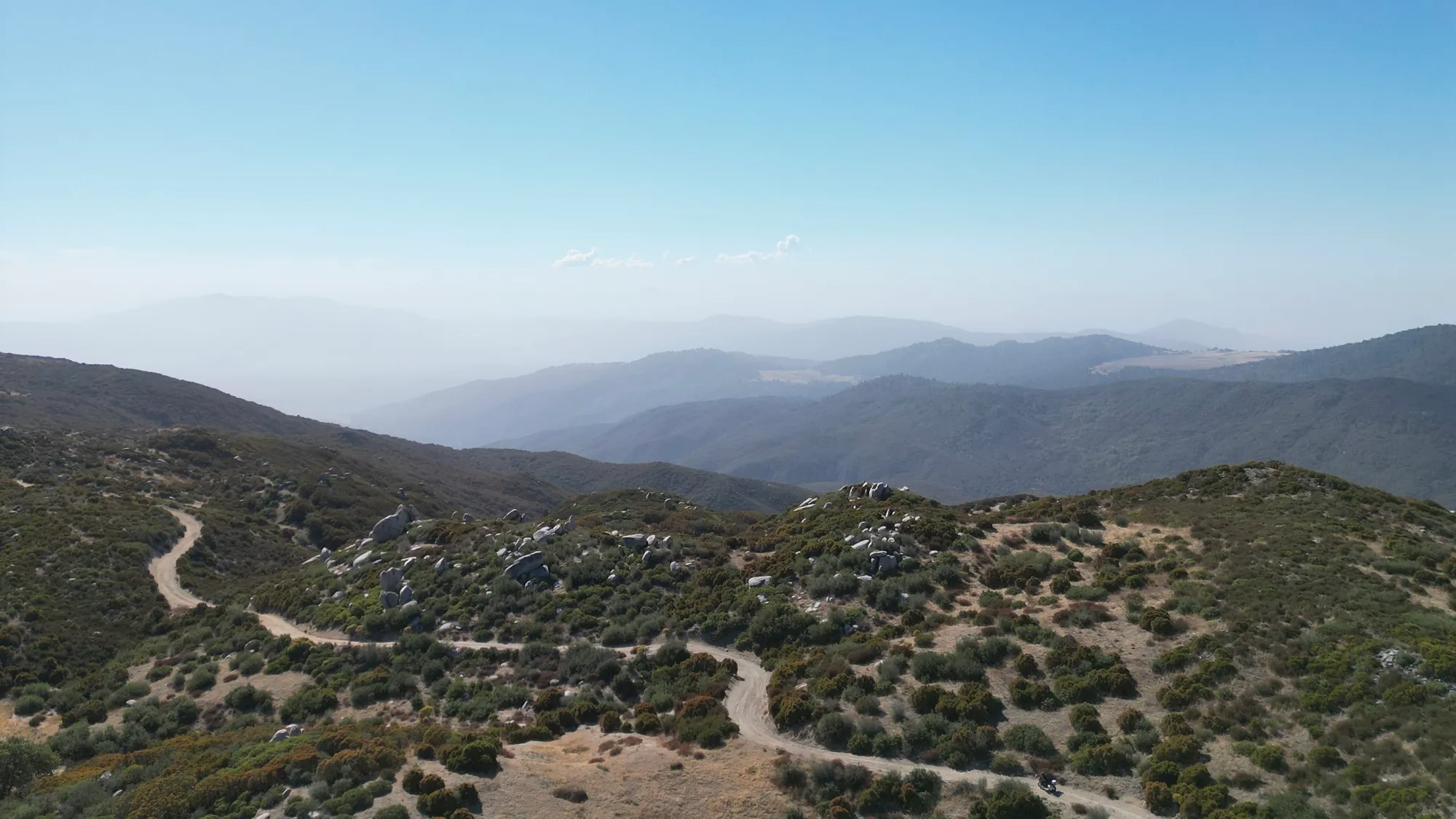
Aerial drone view of Palomar Divide Road winding through chaparral-covered mountain ridges in San Diego County. Multiple S-curve sections descend through sparse vegetation with distant valley views visible in the haze. Gravel and packed-earth surface.

The Truth on the Trail

What I know about living with a Tricker came in slowly, gathered from owner threads, from riders who stopped to talk at fuel stops and trailheads, and from the notes people still send me about a bike Yamaha stopped building in 2007. The sentiment is unusually settled. Owners talk about a machine they can shape to their own taste and steer with almost no effort, then run into the same short list of limits every time they ask it to travel.

A Bike Owners Make Their Own

The praise that comes up most often is about movement at walking pace. Riders describe wide bars, a short wheelbase and soft suspension adding up to something that changes line in city traffic or on a tight trail with barely a thought. Shorter and lighter owners say the low seat and light weight let them put both feet down and take on technical ground without worrying about dropping it. Alongside that, owners point to Yamaha's own accessory catalogue, more than two dozen parts covering protectors, graphics and trim, as an easy way to make the bike look like theirs.

Where The Patience Runs Out

The name sets an expectation the engine does not meet, and riders say so plainly: lifting the front takes revs and clutch, not throttle. Range draws the same steady criticism, with owners reporting a hundred to a hundred and twenty miles between fill-ups and calling the bike impractical past town errands. Faster roads leave it buzzing at high revs with little passing power. Some owners add that the narrow saddle turns hard about half an hour in.

Known issues

  • Carburetor calibration or ignition misfire

    fuel systemoccasional

    Some owners report intermittent misfires and rough running, possibly linked to carburetor calibration or spark issues, causing hesitation and occasional stalling.

The Expert Benchmark

Where this Yamaha Tricker pulls ahead of — or falls behind — its rivals on the numbers, and the typical bike in its class on character.

What kind of bike this is — character vs. the class

This bike Class average

Head-to-head: Yamaha Tricker vs. its rivals

Alternatives to the Yamaha Tricker

If this one isn't quite the fit, these are the bikes worth riding back-to-back against it.
Any price note compares both bikes at the same age — the youngest age both have on the used market — against this Yamaha Tricker. “cheaper/pricier” is what that bike costs second-hand, not how worn it is.