
KTM 400 EXC (MY2005) — Enduro

2005–2007 · Enduro · Buyer's Guide

400 EXC (MY2005)

4.5 / 5 NastyNils Rating · against its class

Raw Enduro, Zero Compromise

The Machine's Character

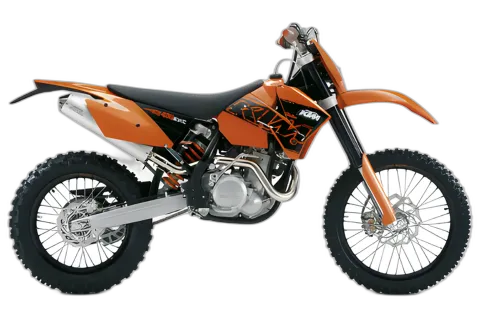
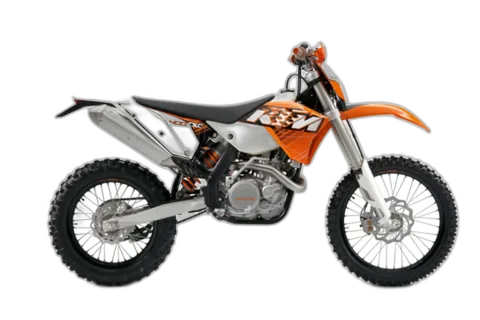
The 400 EXC sits in the sweet spot of the orange enduro range, and it gets there by ignoring the spec sheet. The 398 cc liquid-cooled single makes 49 hp, but the number tells you almost nothing about how the thing works. Power arrives smooth and linear, with usable grunt anywhere in the rev range instead of a hit that catches you out. This is a purpose-built enduro machine, not a motocross platform dressed in trail clothing, and the difference shows in the first hundred yards. The chromoly trellis frame runs oval side tubes for stiffness without weight, matched by a light, stiff swingarm.

Fully adjustable suspension front and rear, Brembo brakes, Excel rims, hydraulic clutch, electric start: all standard, none of it from an accessories catalog. Even the Competition Kit ships in the crate, with spare air filter, extra plastics, number board stickers and chain guide. The 400 is for the serious recreational enduro rider who values traction and control over horsepower bragging rights. The honest caveat is the carburetor. Pilot jets and fuel passages clog if the bike sits or runs stale fuel, and you get a rough idle, stalling without choke, or hesitation off the throttle. A proper carb clean fixes it, but plan on doing it.

Hard Numbers

Spec sheets don't ride bikes, but they set the baseline.

Show full specs & equipment Hide specs & equipment
Key specifications
Power 49 hp (36 kW) @ 8,500 rpm
Displacement 398 cc
Engine Single-cylinder
Cooling Liquid-cooled
Gearbox 6-speed
Final drive Chain
Fork Upside-down (USD)
Front brake 260 mm
Front tire 90/90-21
Rear tire 140/80-18
Wheelbase 58.3 in (1481 mm)
Ground clearance 15.0 in (380 mm)
Front travel 11.8 in (300 mm)
Rear travel 13.2 in (335 mm)
Seat height 36.4 in (925 mm)
Fuel capacity 2.5 gal (9.5 L)

Equipment check

Chassis

  • Front Suspension Adjustable Standard
  • Rear Suspension Adjustable Standard

The Voice of Experience

Portrait of NastyNils

The test ride

What hits you first is how little the 400 asks of your body. The clutch pull is light enough that you can still feather it cleanly in hour six, when your forearms have quit arguing and gone silent. The revised springs earn their keep there. You sit tall on this thing, 36.4 inches off the ground, with 15 inches of air under the skid area, and that height stops feeling like a problem the moment the terrain gets ugly. The digital cockpit sits right in your sightline: lap timer, dual trip meters, clock, compact and unbothered by the beating. Aluminum bars come as standard kit. Steep climbs are where the memory sticks. Things that look unsurvivable from the bottom simply get dispatched, and the chassis stays settled while you do it. No squirm, no argument.

Rated point by point — where it earns its keep

My own 0–100 score for this bike against the class, area by area — the marker on each bar is the class average.

The changes for this generation were not a badge swap. New spring rates and damping went in at both ends, the fork gained better sealing against dust, and the geometry at the shock mount moved to match. The chassis traded round side tubes for an oval profile, which bought stiffness without a gram of weight, and the swingarm came back lighter and stiffer in the same round of work. Under me none of that reads as four separate items. It reads as a bike that puts its weight down and leaves it there. Steep, technical ground is where I lean on it hardest, and the four-stroke character keeps the rear hooked up and the chassis calm when the ground stops making sense. Traction, and the effort it takes to steer, both belong to a smaller machine than this one. That is what you get when a bike is drawn as an enduro from the first line instead of converted out of a motocross platform, and I can feel the compromises that are missing.

There is exactly one thing to say here, and it is a good thing. The brake hardware is Brembo, fitted at the factory, at a grade several rival manufacturers still park in the accessory catalog and leave you to discover on your own. On the EXC it is simply what the bike arrives wearing. That takes a line item out of the first year of ownership and, more to the point, it takes out the compromise you would have been riding around until you got to it.

Durability on this bike comes down to what the factory decided to spend money on. The thicker friction plates in the clutch are the headline for me, because that is the component a hard season chews through first, and this one is still doing its job at the point where the old one would be giving up. Around it sits equipment specified to last rather than to hit a number: Excel rims, hydraulic clutch actuation, adjustment available at both ends of the suspension, a starter button. None of it arrived in a box after the fact.

The sensible math in this range pointed at the smaller motor, and I had that worked out before I threw a leg over anything. A few meters on the 400 finished the argument for me. I bought it against my own reasoning and never once wanted the decision back. That is what capability means on this machine. Not a figure you can defend in an argument at the bar, but the quiet knowledge that everything under you was built around the riding rather than around where it lands on a comparison chart.

What I keep coming back to is how rarely this motor startles me. Open it at any point on the trail and what comes back is proportional to my wrist, with nothing lurking in the middle of the delivery waiting to catch me out. There is grunt available wherever I happen to be in the revs, which on rough ground is usually not where I meant to be. It never spikes and it never washes out, and in a lineup where the bigger singles keep sharpening up year on year, that makes it the one I would ride.

Two things stand out and neither of them has anything to do with the seat. Start with the controls. Aluminum bars and a digital cluster come on the bike, where much of the competition either leaves them off the build or writes them onto the invoice, and the display earns its place instead of sitting there looking modern. Then the clutch. Lighter springs mean I can still meter drive precisely at the far end of a hard day, when my forearms have gone from tired to useless, and the reworked internal cooling and oil supply stop that lever feel from fading as the years pile up.

The real measure here is how much of your first weekend you do not have to spend shopping. The instrument covers the jobs an event day actually asks of it, timing laps, holding two distances at once, telling me the time, in a housing light and tough enough to belong on a competition bike. And the crate around the motorcycle is not empty: second air filter, spare plastics, number board stickers, chain guide. That is close to the exact list you would otherwise be writing out the week before you first ride it in anger.

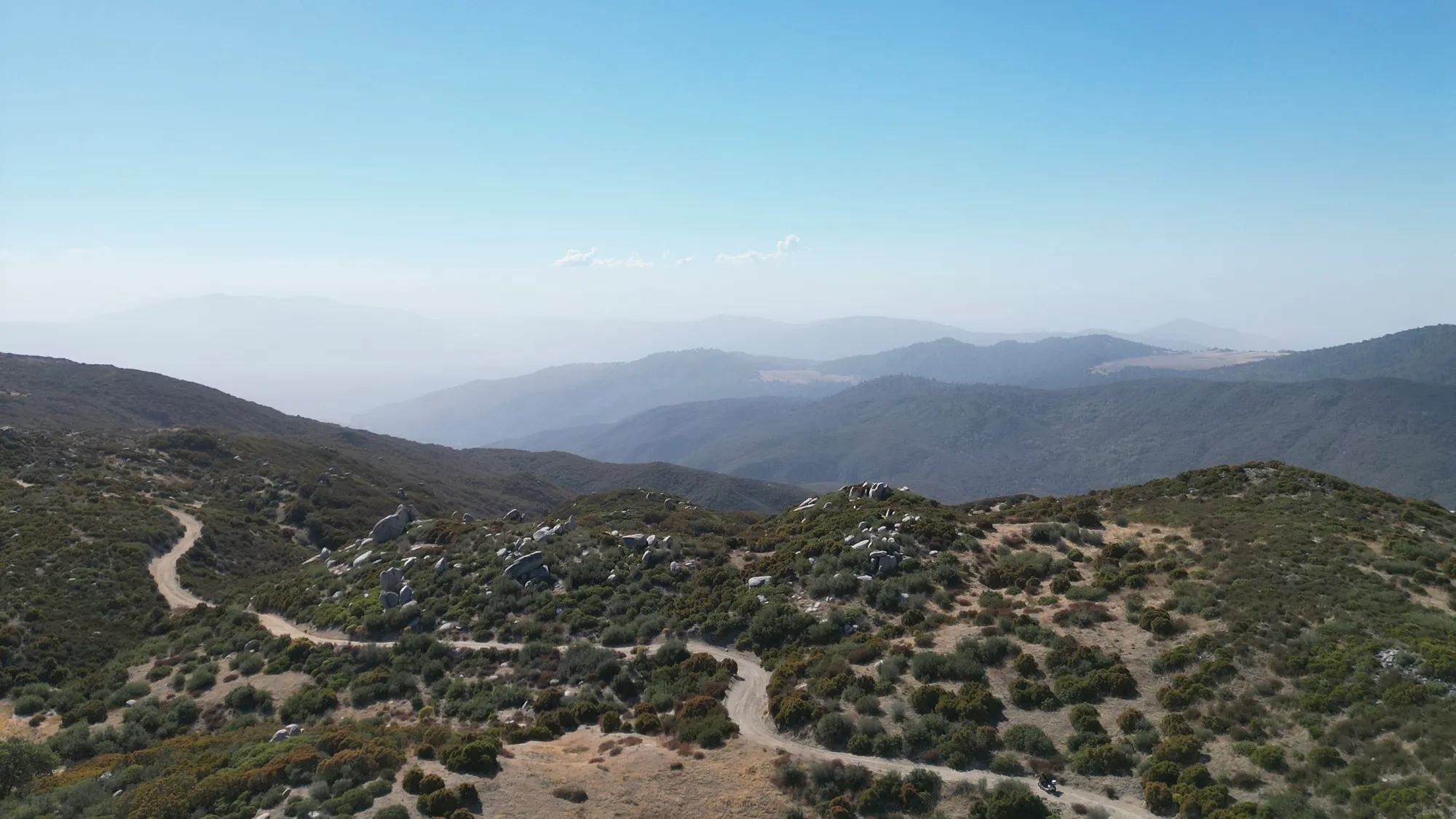
Aerial drone view of Palomar Divide Road winding through chaparral-covered mountain ridges in San Diego County. Multiple S-curve sections descend through sparse vegetation with distant valley views visible in the haze. Gravel and packed-earth surface.

The Truth on the Trail

Known issues

  • Carburetor clogging and stalling at idle

    fuel system occasional

    Pilot jets and fuel passages are prone to clogging if the bike sits or uses stale fuel, causing a rough idle, stalling without choke, or hesitation when opening the throttle. A thorough carb cleaning and fresh fuel usually resolves the problem.

The Expert Benchmark

Where this KTM 400 EXC pulls ahead of — or falls behind — its rivals on the numbers, and the typical bike in its class on character.

What kind of bike this is — character vs. the class

This bike Class average

Head-to-head: KTM 400 EXC vs. its rivals

The 'Should I Buy It?' Score

Forget spec-sheet bragging. Here's who the 400 EXC is actually built for.

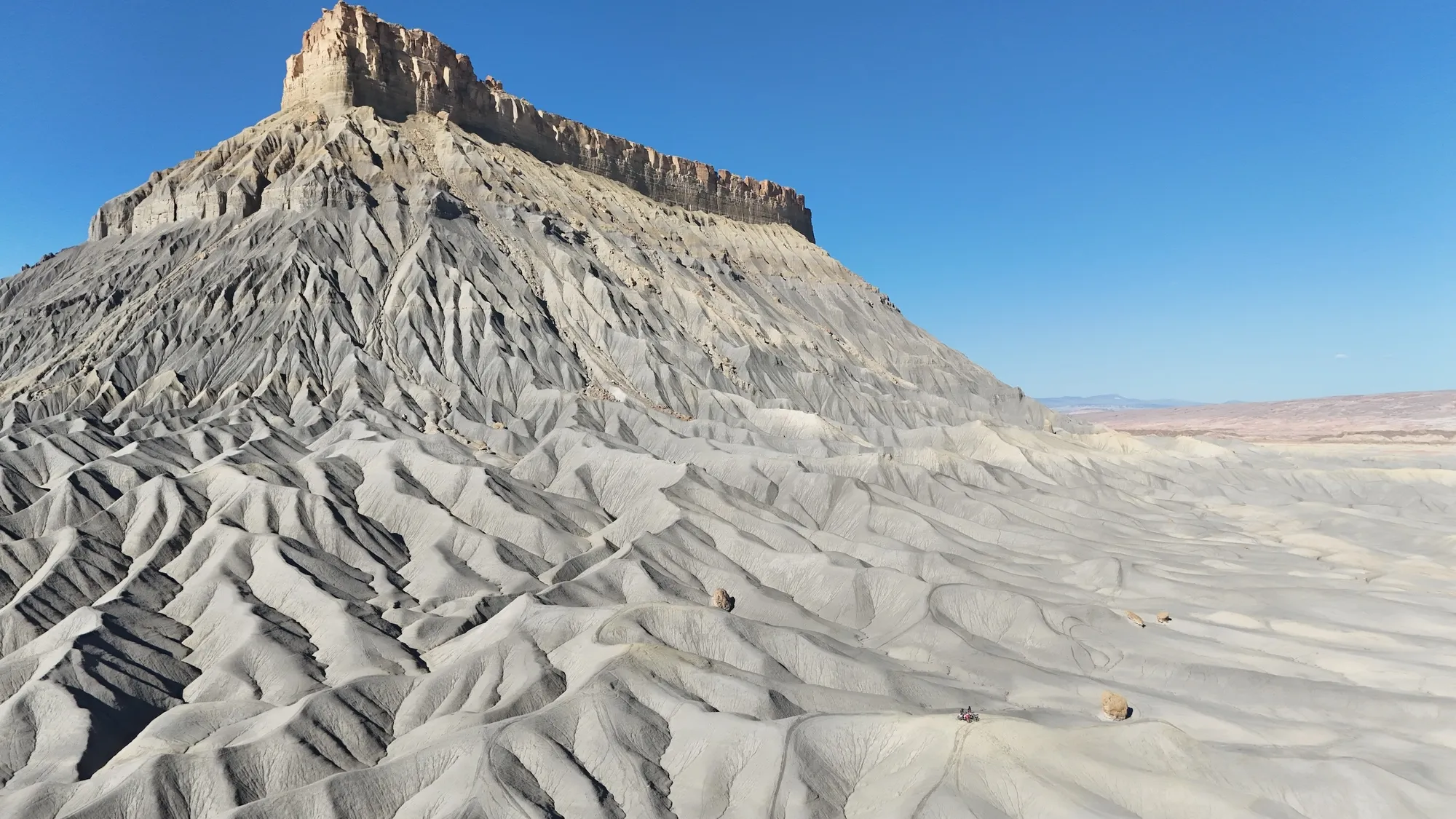
Factory Butte in Utah's high desert badlands, captured in daylight under clear blue sky. The formation's distinctive multi-colored strata and steep erosional gullies dominate the frame. Arid terrain with minimal vegetation stretches across the foreground and background. Typical American Southwest landscape.
NastyNils / Nastynils.com

Best motorcycle for Moab?

Slickrock and sand reward smooth throttle and precise lines, and that is exactly what this bike is built around. For day trips into genuinely hard terrain, the 400 is one of the best tools you can pick.

Made for Bar M / Kane Creek · Imperial Sand Dunes · Johnson Valley OHV Area
Best motocross bike for Loretta Lynns?

It will hold its own on a motocross track, but understand what you are buying: an enduro machine with enduro gearing and flywheel mass, not a purpose-built MX weapon.

Made for Carnegie State Vehicular Recreation Area · Fox Raceway at Pala · Glen Helen Raceway

Best motorcycle for BDR routes?

It will clear any BDR section that stops a heavier bike, but the 2.5 gal tank and hard seat mean multi-day logistics get complicated. Great for the technical days, punishing on the transit miles.

Made for AZBDR — Arizona Backcountry Discovery Route · California BDR South · COBDR — Colorado Backcountry Discovery Route

Alternatives to the KTM 400 EXC

If this one isn't quite the fit, these are the bikes worth riding back-to-back against it.