·

Suzuki V-Strom 800 DE (MY2024) — Adventure
NastyNils / Suzuki press archive

2024 · Adventure · Buyer's Guide

V-Strom 800 DE (MY2024)

Quiet Reliability, Rocky Mountain Proven

The Machine's Character

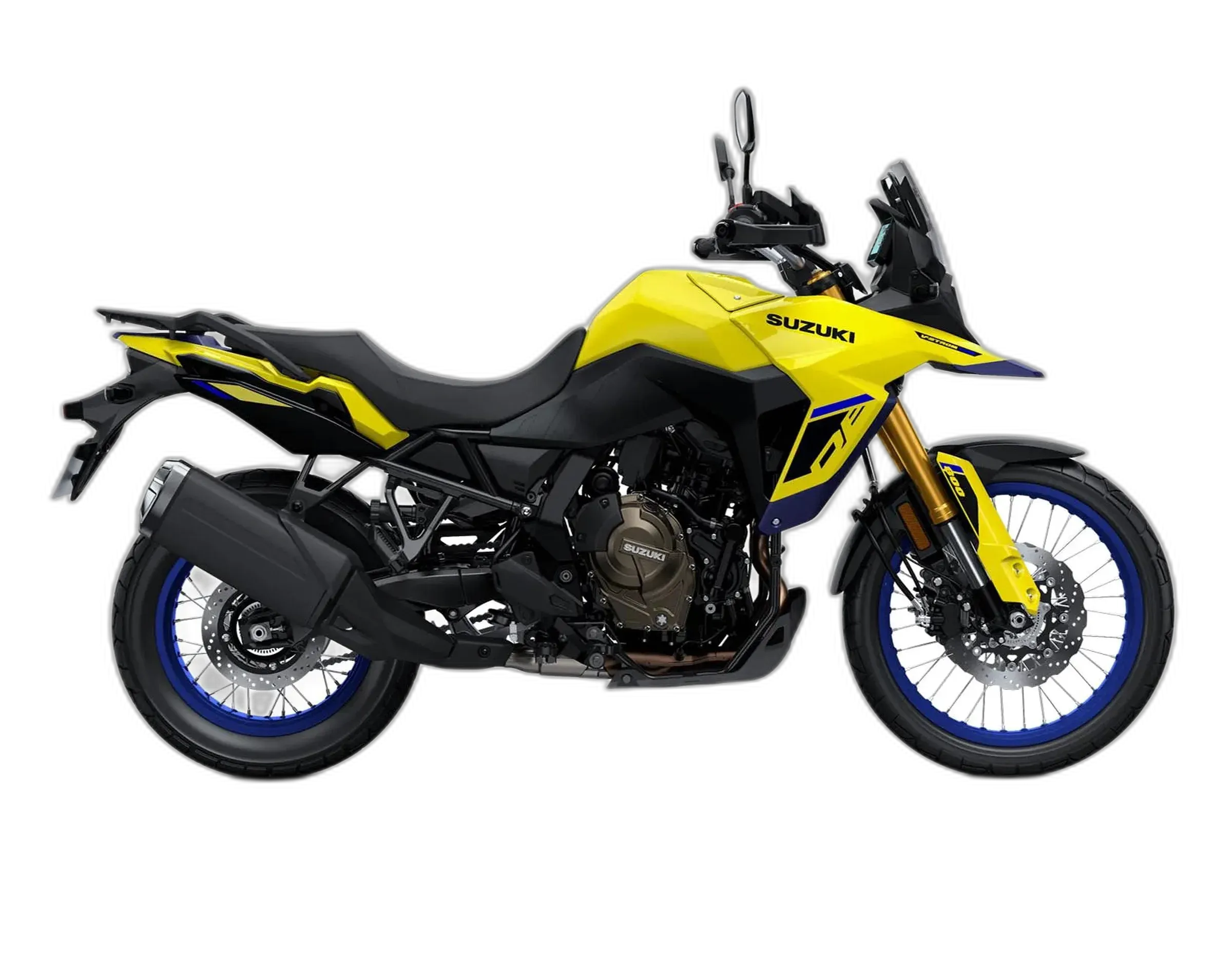
This is the first V-Strom built to head off the pavement before it heads down it. The DE in the name stands for Dual Explorer, and Suzuki means it: a new steel backbone frame, long-travel Showa at both ends, a 21-inch front wheel, and 8.7 in (220 mm) of ground clearance. The 776 cc parallel twin makes 83 hp and 58 lb-ft, sized well inside its own limits rather than wrung out for a spec sheet. A dedicated Gravel mode and a rear ABS you can switch off round out a package aimed at unpaved roads first, tarmac second.

Over a hard week of riding, this bike's defining trait is trust. It starts every cold morning, shrugs off washboard and altitude, and asks for almost nothing back beyond fuel and chain care. It runs heavier than the lean end of the class, and you feel that on tight technical ground. The electronics are thin next to the European houses, and neither heated grips nor cruise control comes standard, which stings on a pre-dawn start. Buy it if you want a middleweight that simply works, every day, loaded, miles from help. Skip it if you shop on feature lists.

Hard Numbers

Spec sheets don't ride bikes, but they set the baseline.

Show full specs & equipment Hide specs & equipment
Key specifications
Power 83 hp (61 kW) @ 8,500 rpm
Torque 58 lb-ft (78 Nm) @ 6,800 rpm
Displacement 776 cc
Engine Parallel twin
Bore × stroke 84 × 70 mm
Compression 12.8:1
Cooling Liquid-cooled
Fuel system Fuel injection
Gearbox 6-speed
Final drive Chain
Frame Steel backbone
Fork Upside-down (USD)
Front brake 310 mm
Rear brake 260 mm
Front tire 90/90-21
Rear tire 150/70R17
Wheelbase 61.8 in (1570 mm)
Ground clearance 8.7 in (220 mm)
Front travel 8.7 in (220 mm)
Rear travel 8.7 in (220 mm)
Seat height 33.7 in (855 mm)
Wet weight 507 lb (230 kg)
Fuel capacity 5.3 gal (20 L)
Fuel economy 50 mpg (US)

Equipment check

Chassis

  • Front Suspension Adjustable Showa SFF-BP (Separate Function Fork – Big Piston) Precise front end feedbackAgile weight reduction Standard
  • Rear Suspension Adjustable Standard

Comfort

  • Heated Grips Optional
  • Adjustable Windscreen Standard
  • Luggage System Optional

Connectivity

  • TFT Display Standard
  • USB Charging Port Standard

Drivetrain

  • Quickshifter Suzuki Bi-directional Quick Shift System Clutchless ridingFull throttle upshift Standard
  • Slipper Clutch Standard

Lighting

  • LED Headlight Standard

Safety

  • ABS Standard
  • Traction Control Standard
  • Ride Modes Standard

The Voice of Experience

Portrait of NastyNils

The test ride

Spend a day standing on the pegs and the case for this bike makes itself. The footpeg position lets you settle into a natural stance, and the wide bar stays planted without flutter when the surface turns ugly. The seat is the surprise: a full day down and it still isn't telling you to stop. There's enough mechanical texture coming up through the bars and pegs to know the twin is working, but it never buzzes its way into your hands or feet, even wound out for hours. The quickshifter is the real thing, precise both ways, as happy snicking up a fast paved sweeper as banging a downshift before you drop onto loose gravel. Low fuel use kept the range honest across long, empty stretches.

Rated point by point — where it earns its keep

My own 0–100 score for this bike against the class, area by area — the marker on each bar is the class average.

Hard, sustained use is the only reliability test worth anything, and this bike came back from ten days of it clean. High passes, big swings between cold dawns and baking afternoons, fully loaded, much of it well off the pavement, and the dash never lit a warning or forced an unplanned stop. At a fuel halt near the end I went hunting for trouble, checked the brakes for any fade and the tires for signs they'd crept on the rims, and found nothing loose that shouldn't be. What sticks with me is how little fuel it drank while the motor was plainly working hard over that ground. By the back half of the trip I'd stopped scanning for problems and just rode.

Spend a long day on the pegs and the bike earns its keep. The peg placement lets me find a relaxed position when I stand, the wide bar holds steady when the ground turns rough, and the seat is the real shock, still comfortable deep into the evening. The gaps show up when the weather does: no factory heated grips and no cruise control, both badly missed as a nine-hour day sheds heat, and the small screen, ideal in the dirt, runs short of protection at a sustained highway pace.

On paper the travel looks ordinary, and the hardcore enduro crowd will dismiss it before they swing a leg over. My experience ran the other way. Across days of washboard gravel, eroded forest tracks, and rocky passes where the surface kept breaking up under me, the suspension held its composure through everything I asked of it. The steel backbone frame concedes a little weight to the newest lightweight designs, but it gives back a solidity so reassuring that the bike stops asking for your attention and the line ahead gets all of it.

My most honest yardstick only shows up after a trip has tried to break you. At the end of this one, cold starts behind me, blistering afternoons, high passes, fast gravel, and switchback after switchback through the Rockies, the question was simple: would I run it all again on the very same bike? Nobody in our group hesitated. The 800 DE was the unanimous choice to head back out, and an endorsement like that isn't given, it's earned one hard mile at a time.

This is the bike I load when getting home matters more than turning heads, and most of that comes down to how it handles the daily logistics. Two operational quirks are worth knowing going in. Kill the rear ABS for a loose descent and it switches itself back on at the next ignition cycle, so the day opens with the same trip into the menu before you can roll. The saving grace is that you can drop it on the move with the clutch pulled, which is exactly what you want the instant a downhill turns slick and you've decided you need it gone right now. The riding modes behave the opposite way: whatever you leave it set to survives a restart, so the setting you actually fuss over holds, while the one you wish would stay put won't.

The thing that earns my confidence is the wrist. Crack the throttle from low rpm and the twin builds cleanly, with no abrupt jump off a closed throttle and no hesitation when the ground turns loose mid-corner, and that pickup feels identical whichever of the three modes I'm in. It's smoother than a middleweight twin has any right to be, yet there's still enough texture to know it's pulling, and after a while it just drops out of mind. Point it up a loaded, slippery grade and the low-end fills in early and steady, strong enough to climb but never so peaky at the top that it breaks the rear loose on marginal traction. I found one steep pass where I'd have taken more power, until I saw how high I was.

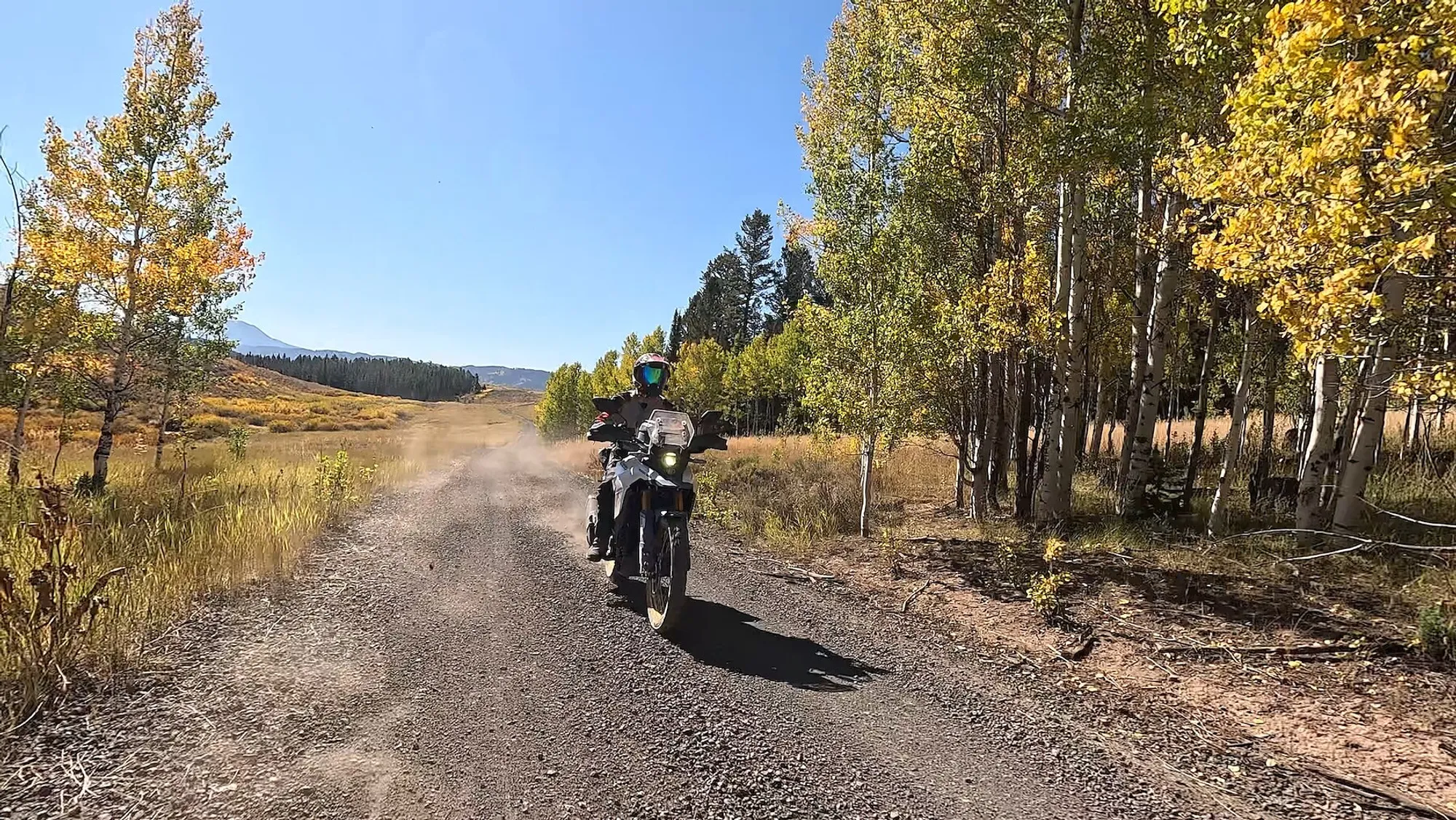
NastyNils riding a Suzuki V-Strom 800 DE on a gravel forest road in the Yellowstone area, Wyoming. Fall aspen and birch trees line the road in golden foliage. Mountains visible in the distant background. Dry, well-graded gravel surface. NastyNils wears a blue helmet and full riding gear, in focused concentration through the wilderness terrain. Daylight, clear sky.
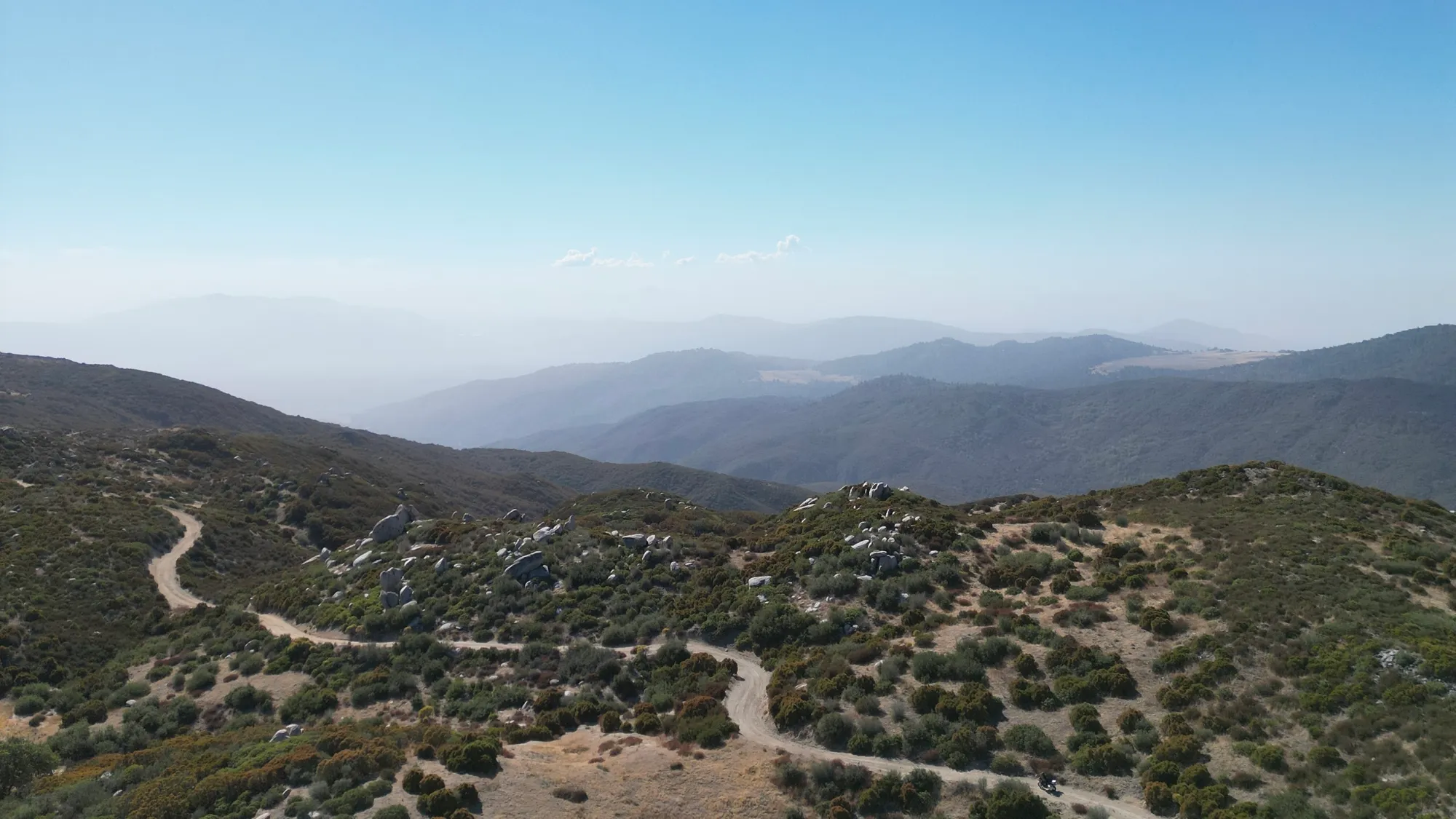
Aerial drone view of Palomar Divide Road winding through chaparral-covered mountain ridges in San Diego County. Multiple S-curve sections descend through sparse vegetation with distant valley views visible in the haze. Gravel and packed-earth surface. Clear day, no motorcycles or riders visible.

The Truth on the Street

None of this comes from my own test logs. I've pulled it together over years of reader comments, forum threads, paddock talk, and messages owners send in. For the 800 DE it runs consistent on what it does in the dirt and splits once talk turns to size and equipment.

What owners keep praising

The strongest agreement gathers around how the bike behaves off the pavement. Riders on loose ground come back to the large front wheel, the long suspension stroke at both ends, and switching the rear ABS off in Gravel mode. The twin has its own following, called smooth and easy to meter with real mid-range. Equipment value lands too: a both-ways quickshifter, adjustable fork, switchable ABS, and traction control fitted for the money.

The gripes that keep surfacing

The criticism is narrower but consistent. Reach leads it: shorter owners find the saddle tall and the chassis slim up top, with no factory part to lower it. Wind protection comes next, the modest screen letting taller riders catch turbulence at sustained highway speed. A contingent wants the cornering-aware brakes and traction control the bike goes without, carrying no inertial sensor. Weight closes it out, heavy for the class whenever the going slows to a crawl.

Known issues

  • Stock screen buffeting and vibration

    bodyworkcommon

    The OEM windshield is widely reported to produce buffeting and visible vibration at highway speeds, prompting many owners to replace it with a taller aftermarket option.

  • Side stand switch sensitivity causing stalling

    electricsoccasional

    Some owners report intermittent engine cut or refusal to start traced to a sensitive or dirty side stand switch, particularly after off-road use; cleaning or replacement resolves it.

The Expert Benchmark

Where this Suzuki V-Strom 800 DE pulls ahead of — or falls behind — its rivals on the numbers, and the typical bike in its class on character.

What kind of bike this is — character vs. the class

This bike Class average

The shape of the Suzuki V-Strom 800 DE — numbers and character vs. the average Adventure

Head-to-head: Suzuki V-Strom 800 DE vs. its rivals

The Long-Haul Verdict

Forget spec-sheet bragging. Here's who the V-Strom 800 DE is actually built for.

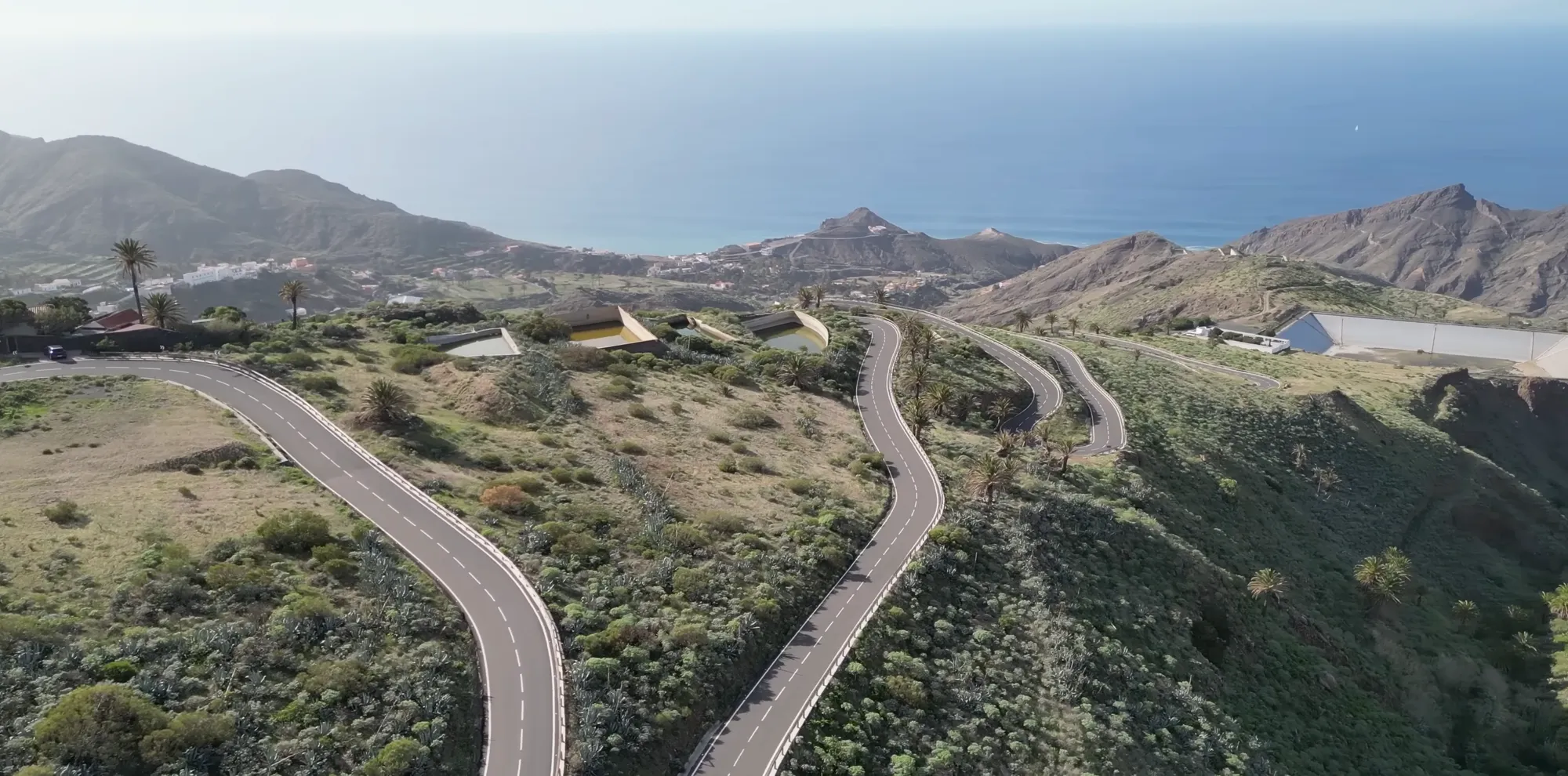
Aerial view of a winding asphalt road cutting through volcanic terrain on La Gomera, Canary Islands. The road curves through sparse green vegetation with rocky volcanic peaks visible in the background and a settled valley to the left. Clear lane markings, dry climate, partly cloudy sky. No motorcycle or rider visible.

Best motorcycle for Moab?

You ride slickrock and sand for the skill, not the scenery. The 21-inch front and Gravel mode keep up, but at 507 lb it's heavier than a true light-ADV, so the hardest lines cost you effort.

Made for Bar M / Kane Creek · Imperial Sand Dunes · Johnson Valley OHV Area
Best touring motorcycle for long distance?

Long days, full load, often two-up, weather rolling through. It starts every morning and sips fuel across the miles. Just plan on adding heated grips, cruise, and a taller screen first.

Made for Beartooth Highway · Blue Ridge Parkway · Going-to-the-Sun Road

Best motorcycle for BDR routes?

You plan real backcountry routes and value range and reliability over peak power. This is exactly that bike: trustworthy, loadable, and frugal, with the off-road reach the DE brief promises.

Made for AZBDR — Arizona Backcountry Discovery Route · California BDR South · COBDR — Colorado Backcountry Discovery Route

Stories from the saddle — the V-Strom 800 DE

First-hand articles where I ride and write about this exact bike.