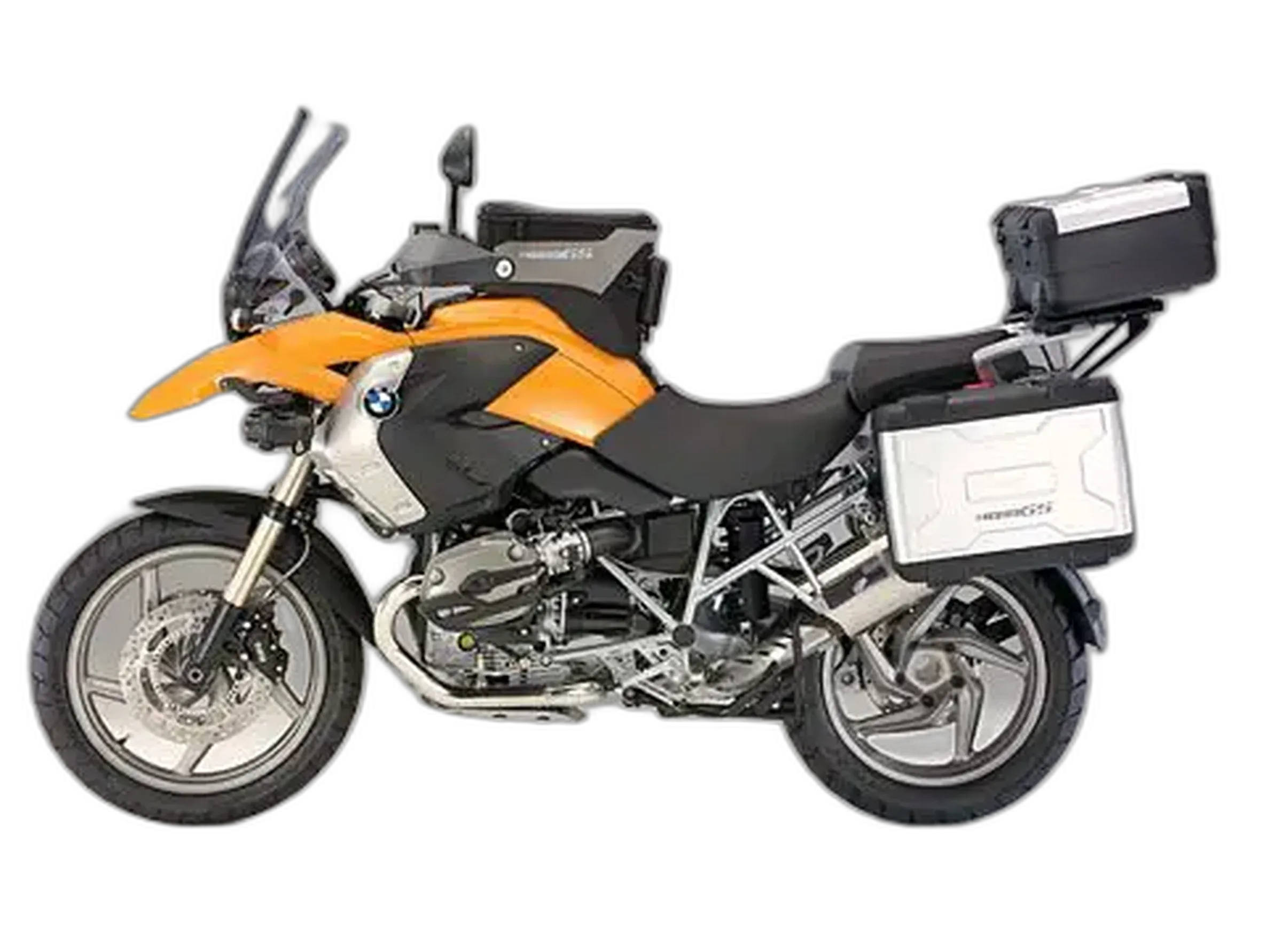

BMW R 1200 GS (MY2008) — Adventure
BMW press archive

2008 · Adventure · Buyer's Guide

R 1200 GS (MY2008)

The Switchback Whisperer

The Machine's Character

The GS runs a 1170 cc air/oil-cooled flat twin making 105 hp and 85 lb-ft, and the way it hands that over is what defines the bike. Torque shows up early and stays flat, so most of your riding happens in two or three gears with the shaft drive quietly doing its job. A Telelever front end, a 19-inch front wheel, 7.5 in (190 mm) of travel up front and 7.9 in (200 mm) at the rear put it squarely inside the adventure class rather than on its edges. BMW ESA, ASC traction control and Integral ABS Generation II were all available on the options list.

This is a travel machine first, and it ages like one. A 5.3 gal (20 L) tank at 43 mpg puts genuine 200-mile stages within reach, the pillion accommodation holds up over long days, and the luggage and parts support around this generation is about as deep as the segment gets. Servicing is straightforward for anyone willing to hold a wrench. The honest caveat: at 505 lb wet with a 33.5 in seat, it asks for a rider who can manage that mass at walking pace, and the service record on this model year needs reading carefully before money changes hands.

Hard Numbers

Spec sheets don't ride bikes, but they set the baseline.

Show full specs & equipment Hide specs & equipment
Key specifications
Power 105 hp (77 kW) @ 7,500 rpm
Torque 85 lb-ft (115 Nm) @ 5,750 rpm
Displacement 1170 cc
Engine Flat-twin (boxer)
Cooling Air/oil-cooled
Gearbox 6-speed
Final drive Shaft
Fork Telelever
Front brake 305 mm
Front tire 110/80 R19
Rear tire 150/70 R17
Wheelbase 59.3 in (1506 mm)
Front travel 7.5 in (190 mm)
Rear travel 7.9 in (200 mm)
Seat height 33.5 in (850 mm)
Wet weight 505 lb (229 kg)
Fuel capacity 5.3 gal (20 L)
Top speed 129 mph (208 km/h)
Fuel economy 43 mpg (US)

Equipment check

Chassis

  • Electronic Suspension BMW ESA (Electronic Suspension Adjustment) Damping tuning to styleAuto load leveling Optional
  • Front Suspension Adjustable Standard
  • Rear Suspension Adjustable Standard

Comfort

  • Heated Grips Optional
  • Adjustable Windscreen Standard
  • Adjustable Seat Height Standard
  • Luggage System Optional

Connectivity

  • Tire Pressure Monitoring (TPMS) Optional

Safety

  • ABS BMW Integral ABS Generation II Stronger consistent brakingFirm brake lever feel Optional
  • Traction Control Optional

The Voice of Experience

Portrait of NastyNils

The test ride

Hit the starter and the boxer rocks the whole bike sideways on its mounts before it settles into a low, offbeat pulse you feel through the pegs more than you hear through the pipe. The cylinders sit out in the airflow beside your shins, which you notice on a cold morning and think about differently in stopped traffic. Bars are wide and high, the knee bend is open, and the adjustable screen and seat height let you sort out wind and legroom in a parking lot instead of a workshop. Past 60 mph the vibration flattens into background hum and stays there for hours. What catches most riders out is how fast the bulk stops registering once the wheels are turning. Somewhere in the first hour you quit thinking about the size of it altogether.

Rated point by point — where it earns its keep

My own 0–100 score for this bike against the class, area by area — the marker on each bar is the class average.

Several of those switchbacks left me no straight to shed speed on, so I carried the lever into the change of direction itself. The GS took it without complaint. The front stayed honest under load while the bike was still crossing from one lean angle to the next, and my line held. Being able to bleed speed that deep into a transition, then turn in with the excess already gone, is not something a bike this heavy usually grants you.

I spent the first half of that day nowhere near the limit, and then the road began folding back on itself and the bike came alive. Stack hairpin on hairpin and the GS steers with a precision it has no business having at this size, the weight sitting exactly where I want it. Grab a big handful of brake, tip it in, and both arrive as one movement. It still lands on the line I picked. It also gets more out of a good tire than anything else I rode that day.

This was my first run using the optional traction control, and I decided to trust it rather than ride around it. That meant cracking the throttle well ahead of the exit, earlier than I would dare without a net underneath me. On dry, clean asphalt the system stayed quiet almost the whole day. There is enough torque under the right wrist to press the rear tire into the road, so the bike leaves a corner on grip instead of theatrics.

The bill for all of that comes due at walking pace. Our group started the morning picking through narrow city lanes, and not one rider went looking for the big BMW. The smaller machines got claimed first and I was left holding it. Down there the width and the mass are things you manage rather than forget: where you place it between parked cars, where you set a foot down, how much room you leave yourself.

What won me over across a full day was consistency. Tight chicane sequences passed with no fuss, the bike switching sides cleanly and then leaning on the rear to charge whatever came next. Hour after hour on the same mountain, that rhythm held. It never went soft, never asked for a break, never made me reset my pace to keep it happy. That kind of stamina is what separates a genuine travel machine from one that merely looks the part.

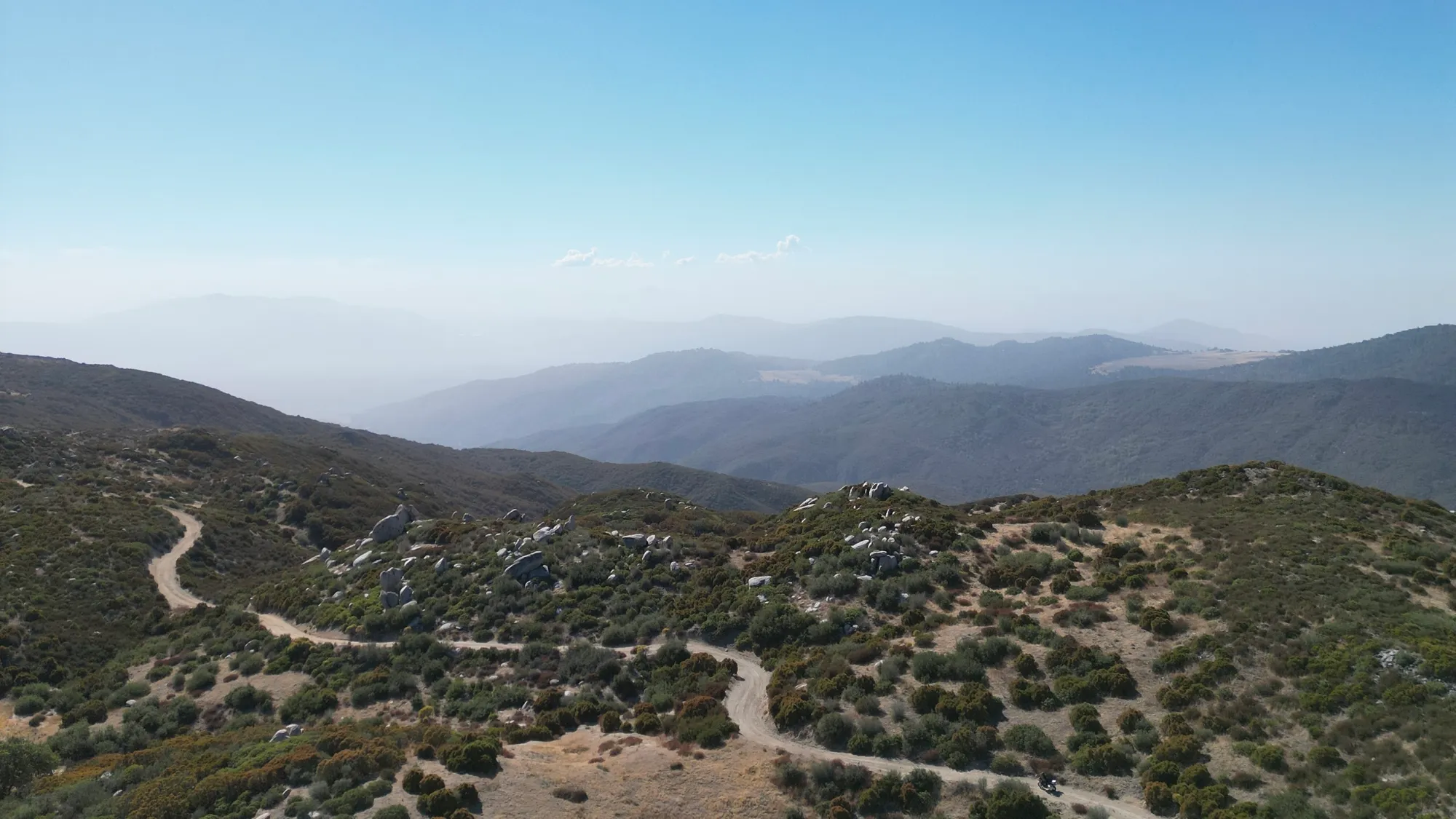
Aerial drone view of Palomar Divide Road winding through chaparral-covered mountain ridges in San Diego County. Multiple S-curve sections descend through sparse vegetation with distant valley views visible in the haze. Gravel and packed-earth surface.

The Truth on the Street

Two decades of paddock talk, club gatherings, roadside conversations and the mail owners keep sending me have built a settled picture of this GS. The praise gathers around how it rides. The doubts gather around what it takes to keep it running.

The praise riders keep repeating

Cornering comes up first almost every time. The consensus is that something this tall and heavy has no right to turn in as readily as it does, and owners line it up against machines built for that work. Comfort runs a close second, credited to the seating position, the suspension and the wind shelter on a long day. The engine draws the word easy: pull available early, unfazed by luggage, still willing at the top. Home mechanics single out the valve adjusters and the final drive.

Where the goodwill runs out

Two gripes recur. The optional electronic suspension gets reports of behaving oddly now and then, and the fuel level reading has a reputation nobody defends. The rest is money. The same jobs owners handle at home turn expensive on a dealer invoice, some of them needing factory equipment, and asking prices sit above the Japanese adventure bikes buyers look at alongside it.

Known issues

  • ABS modulator/pump failure

    brakes occasional

    The ABS hydraulic pressure modulator can fail on this non-servo Integral ABS II — the ABS warning lamp stays lit and the system drops out, while the hydraulic brakes themselves keep working normally. Out of warranty the unit is one of the priciest parts on the bike, so a clean ABS self-test at the start of a test ride is worth insisting on.

  • Gearbox intermediate shaft defect (recall)

    drivetrain rare Recall

    NHTSA campaign 08V-290 is tiny and specific: 46 model year 2008 machines across the R1200 R, R1200 GS and R1200 GS Adventure. A material defect in the transmission intermediate shaft could let the shaft break and seize the gearbox. BMW replaced the transmission on the affected bikes.

  • Fuel pump control unit sealing issue (recall)

    fuel system rare Recall

    NHTSA campaign 09V-319 covers 2006-2008 R1200 GS machines built between August 2006 and January 2008: the fuel pump control unit housing may not seal properly, so water can get in and the humid atmosphere corrodes the pump until it fails. The engine then stops running without warning. Dealers replaced the fuel pump control unit free of charge.

  • Electrical interference can switch off the ABS (recall)

    electrics rare Recall

    NHTSA campaign 09V-129 is specific to model year 2008 R1200 GS machines: high generator speeds combined with a large electrical demand can create spurious signals that corrupt the pressure sensor readings the ABS control unit relies on. The ABS then shuts itself off and lights the warning lamp; normal braking stays available. Dealers inspected and repaired the components involved.

  • Fuel pump flange can crack and leak fuel (recall)

    fuel system rare Recall

    NHTSA campaign 13V-617 covers 2005-2011 R-series machines: the fuel pump flange can develop cracks and leak fuel, which is a fire risk near an ignition source. Dealers either reinforced the flange or replaced the pump. A 2020 follow-up campaign, 20V-471, re-called the bikes that only got the support-ring remedy, so check which of the two fixes a used example actually received.

  • Front brake lines can split under vibration (recall)

    brakes rare Recall

    NHTSA campaign 10V-276 covers 2007-2009 R 1200 and K 1200 models built between August 2006 and May 2009: the routing of the front brake lines leaves them under strain from riding vibration, and a line can split and leak. If that goes unnoticed and the reservoir runs dry, the front brake can fail. Dealers fitted replacement lines with a protective sleeve.

  • Rear wheel mounting flange can crack (recall)

    chassis rare Recall

    NHTSA campaign 15V-141 covers 2005-2010 R1200GS models: the aluminium rear wheel mounting flange can crack if the rear wheel bolts are over-torqued, after which the bolts can loosen and the wheel may no longer stay secured. Dealers replaced the aluminium flange with a steel one free of charge — worth confirming on any used bike, because it is an easy campaign to miss.

  • Fuel strip sensor failure

    electrics common

    The fuel level sensor (fuel strip) commonly fails, causing inaccurate fuel gauge readings or a permanent 'empty' indication. Replacement units may also be unreliable.

  • Heated grip failure

    electrics occasional

    The heated grips — a paid option on this model year, code 519 — can stop working, usually a broken heating element or a controller fault. Minor, but frequently reported, and worth testing on a bike advertised as having them.

The Expert Benchmark

Where this BMW R 1200 GS pulls ahead of — or falls behind — its rivals on the numbers, and the typical bike in its class on character.

What kind of bike this is — character vs. the class

This bike Class average

The shape of the BMW R 1200 GS — numbers and character vs. the average Adventure

Head-to-head: BMW R 1200 GS vs. its rivals

The Long-Haul Verdict

Forget spec-sheet bragging. Here's who the R 1200 GS is actually built for.

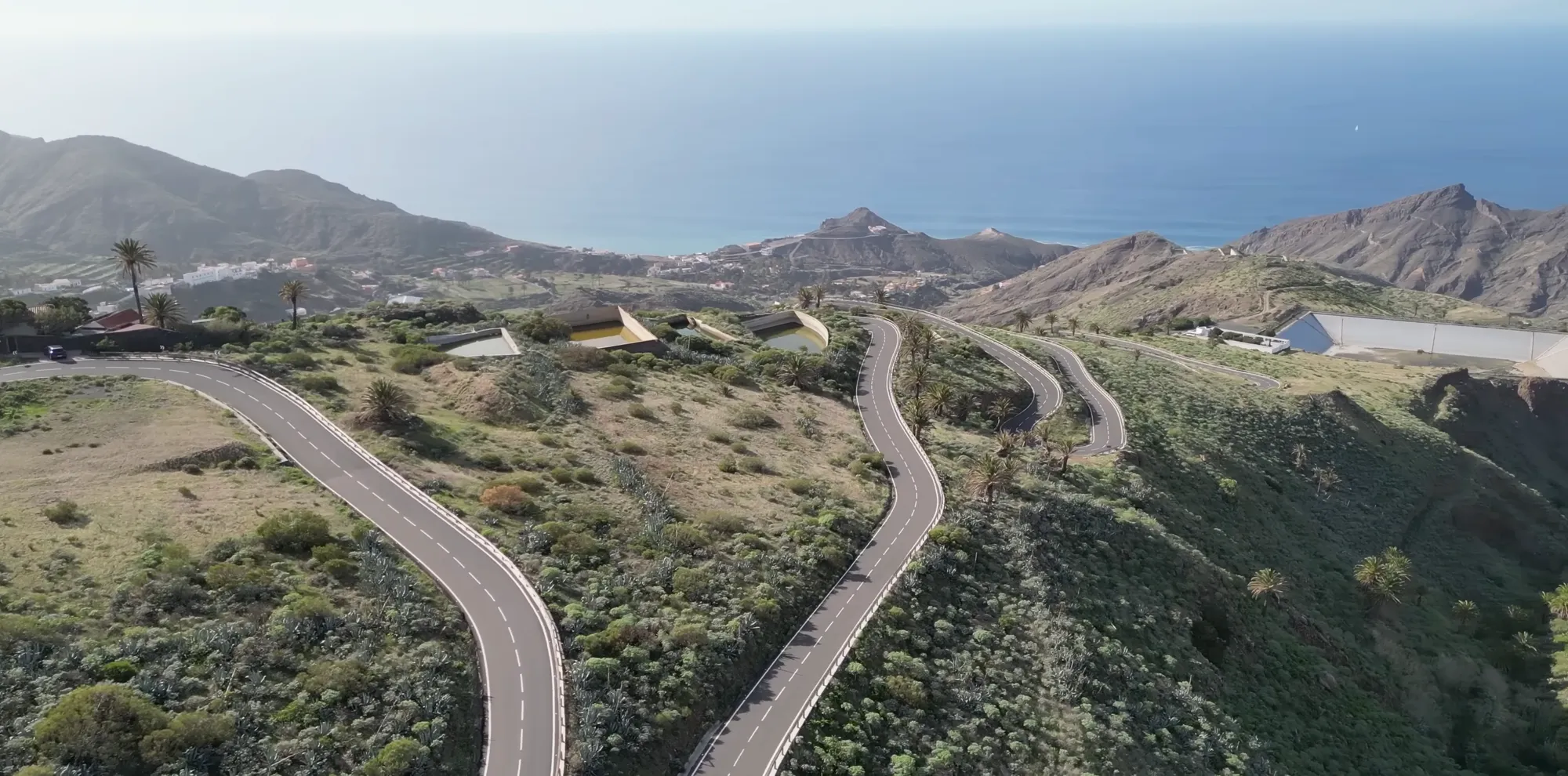
Aerial view of a winding asphalt road cutting through volcanic terrain on La Gomera, Canary Islands. The road curves through sparse green vegetation with rocky volcanic peaks visible in the background and a settled valley to the left. Clear lane markings, dry climate, partly cloudy sky.

Best motorcycle for Highway 1?

If your weekends run 200 to 400 miles of Blue Ridge or Highway 1, this fits better than the numbers suggest. It stays composed in the tight stuff and doesn't punish you on the transit miles.

Made for Black Hills · Blue Ridge Parkway · Cherohala Skyway
Best touring motorcycle for long distance?

Long days, full luggage and a passenger are what this bike is built around. Real 200-mile stages, shaft drive, comfort that lasts. Only the parking-lot mass asks anything of you.

Made for Beartooth Highway · Blue Ridge Parkway · Going-to-the-Sun Road

Alternatives to the BMW R 1200 GS

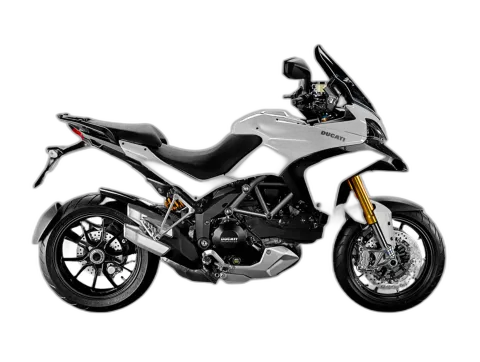
If this one isn't quite the fit, these are the bikes worth riding back-to-back against it.

Any price note compares both bikes at the same age — the youngest age both have on the used market — against this BMW R 1200 GS. “cheaper/pricier” is what that bike costs second-hand, not how worn it is.