
There is tuning that costs four figures and achieves very little. And there are adjustments that cost nothing, take less than five minutes and change how a motorcycle feels for an entire day. Yet most people ride for years on a baseline setup that came about purely by accident: however it left the dealership, or however the previous owner liked it. In Colorado I walked into that trap myself, on a rental bike where I should have known better. The mistake cost me half a day of enjoyment and the correction took two minutes.
The Stranger Who Sat There Before Me
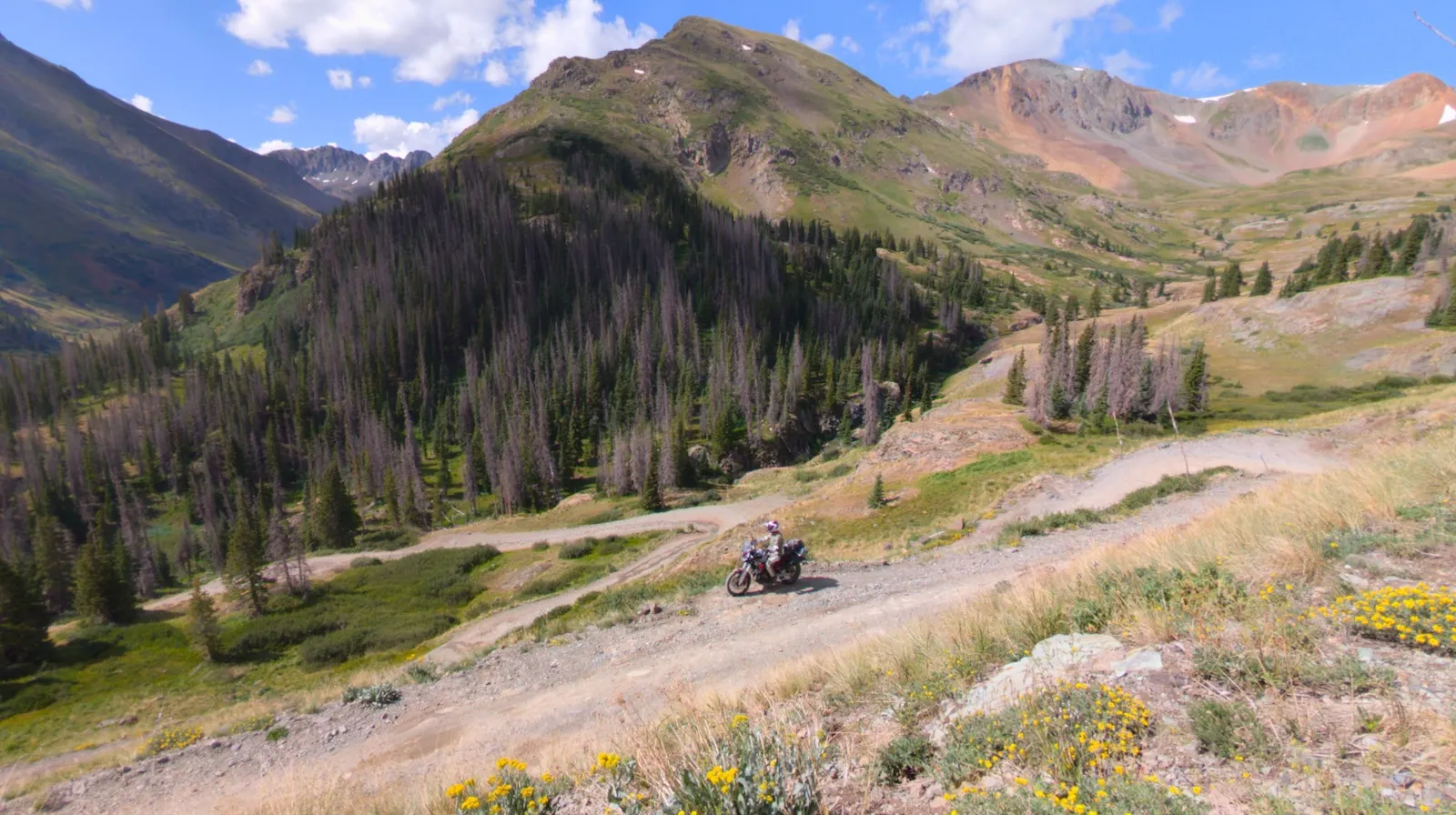
First stage of the Colorado Backcountry Discovery Route. We crossed the Continental Divide at Berthoud Pass and then spent hours on gravel, and it was not working cleanly. The bike wanted to push wide in corners instead of following the line I gave it, a feeling you happily blame on the surface because gravel feels vague anyway. At the lunch stop I did what I always do: I looked at how the suspension was actually set.
The Aprilia Tuareg 660 has a convenient hand wheel on the shock, so you do not even need tools. I have no idea who rode this machine before me, but the notion that there is an American out there who weighs less than I do seemed unlikely. So I wound in a good deal more preload, overdue anyway with luggage. The effect was immediate, and it was not about comfort but precision: no more running wide, just a clean line. A motorcycle that sags too far at the rear gets flatter at the front and pushes over the front wheel, so you end up fighting a problem you created yourself.
What Preload Actually Does, and What It Does Not
This is where a stubborn misunderstanding deserves to die. Preload does not make the spring stiffer, it does not change the spring rate at all. It changes the spring’s starting position, and with it your sag and your ride height. Wind preload in and you raise the rear, which means you are reaching into the geometry. Rake and trail determine how willingly a machine turns in and how stable it stays: the steeper the fork sits, the more easily the bike drops into lean, which is why enduros are built steep and cruisers flat.
A rear that sits too low shifts that carefully chosen layout toward cruiser territory, and you feel it instantly. Wind the preload back in and you do regain usable travel, but you do not get real resistance to hard bottoming that way, because that takes a stiffer spring or more compression damping. Which is also where the limit of the whole exercise sits. Preload can mask a spring that is too soft or too hard, but it cannot replace it. If you permanently need preload near its maximum just to reach sensible numbers, you do not have an adjustment problem, you have the wrong spring, and then it costs money.
The Only Number You Really Need
The one number you set to is rider sag: the portion of suspension travel the bike already uses up with you on board. As a rule of thumb it should be about one third of total travel. There is a second number you only need for diagnosis, static sag, measured under the weight of the machine alone, in the region of 35 to 40 mm. It tells you nothing about your setting and everything about your spring: if your rider sag only comes out right because you wound the preload a long way in while the static figure sits well off, then the spring rate is wrong and no amount of adjusting will fix it.
You can measure both without a workshop and without special tools, but you do need a helper. Mark a reference point above the rear axle, unload the rear until the wheel hangs free, and measure. Second measurement: bike on its wheels, nobody on it, which gives you the static figure. Third measurement: you in full gear with your feet on the pegs while your mate balances the bike. The difference between the first and the third is your rider sag, and there is no more science to it than that.
And because this reliably gets forgotten: sag is set at the front exactly as it is at the rear. Preload changes the attitude of the whole machine, so winding up the shock without touching the fork raises the rear and leaves the front where it was. You may have cured the push over the front wheel, but the bike now sits crooked in its own geometry. Depending on the model the fork has its own preload adjusters on top of the triple clamps, so if you add a lot at the back because there is luggage on it, go and look at the front too.
And the way back matters just as much, which plenty of people forget. You wind the preload back out when you leave the luggage at the hotel. Preload is not a setup you do once, it is a response to what you are carrying today.
The Handlebar Almost Nobody Touches
The second five-minute job is even less well known than the first. A classic tube handlebar is bent rather than straight, which means rotating it in the clamps changes its effective shape. That bend gives it almost magical properties: loosen the clamp bolts, rotate the bar a few degrees, torque it back down, done. You have changed grip height and pullback at the same time, meaning how far the grip ends point back toward you, without buying a single part and without ordering a riser. For anyone who spends a lot of time standing off-road, that is often the difference between a relaxed posture and a cramped one.
It is not a free lunch though, and that part rarely gets said. Because height and pullback sit on the same tube, every bit of height you gain is bought with less pullback. Roll the bar too far forward to get more height for standing and your wrists end up kinked, which buys you exactly the cramped forearms you were trying to avoid. The sweep itself, the angle the bend gives the grip end, does not change when you rotate, that one is fixed in the tube. So rotating is always a compromise between sitting and standing, and anyone who does both seriously looks for the position that is just about right standing up.
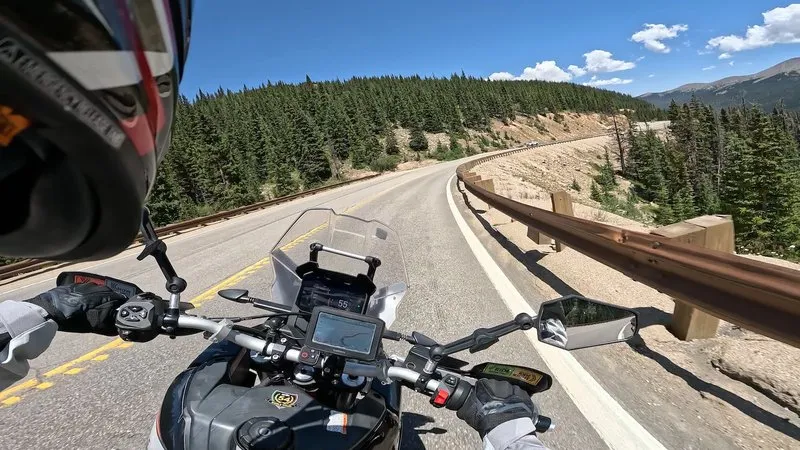
Levers come immediately after, and here is the mistake I made for years myself. You line the lever up so that the top of your arm forms a straight line. That is wrong. The line that should be straight runs through elbow, wrist, centre of the bar and lever, and the classic error is looking for it along the upper surface of the arm instead of through the axis.
Why This Counts for More Off-Road
On tarmac you can put up with mediocre ergonomics for a while, off-road you cannot. The moment you stand up, the angle between arm and handlebar changes completely, and a lever that was just about acceptable seated will kink your wrist standing. At Cumberland Pass, around 12,034 feet and unpaved, we rode a loop marked as difficult, and up there you stand for minutes at a time. If your brake lever sits too high, you either reach it late or you tense up, and both cost you what you need in the dirt: an upper body that works loosely.
That fits a recommendation I have been giving for years: brake with two fingers wherever possible. The real point is the lever setting, not the number of fingers. If you brake with two fingers, the lever has to be adjusted so that under full braking it never reaches your remaining fingers. Otherwise, in an emergency, you have a brake blocked early by your own hand. You never notice that detail as long as nothing happens, and it counts for everything in the moment when everything counts.
The Order I Recommend
Preload to suit the load first, then rotate the bar, then align the levers. In that order, because each step affects the next, and anyone starting with the levers does the job twice. One practical tip that sounds trivial and is almost never done: write down your starting values before you touch anything. How many turns from the stop the hand wheel sat, how many clicks of rebound, where the lever was.
Because the most common reason people never adjust anything is not laziness, it is the fear of not finding their way back to the setting they had before. And then the duty that must never be skipped: whenever you change anything on the levers or the bar, check that every control still works. Full lock left and right, pull the brake and the clutch, check the cables run free, torque everything down. A handlebar that fouls the tank at full lock is more dangerous than any uncomfortable seating position.
If You Want to Try This Yourself
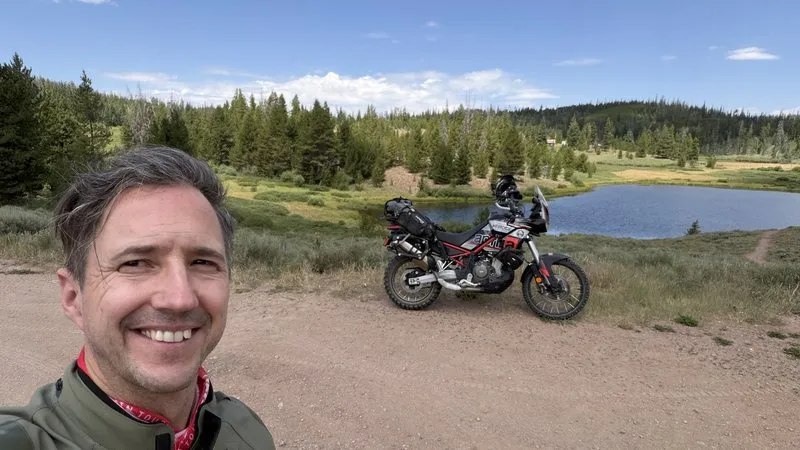
A rental bike is the best possible place to practise this, because somebody else has definitely been turning the adjusters before you. Our two Tuaregs came from Colorado Motorcycle Adventures near Denver, with programmed tracks for the 745 miles of the official route. Take five minutes on the first morning before you ride off.