
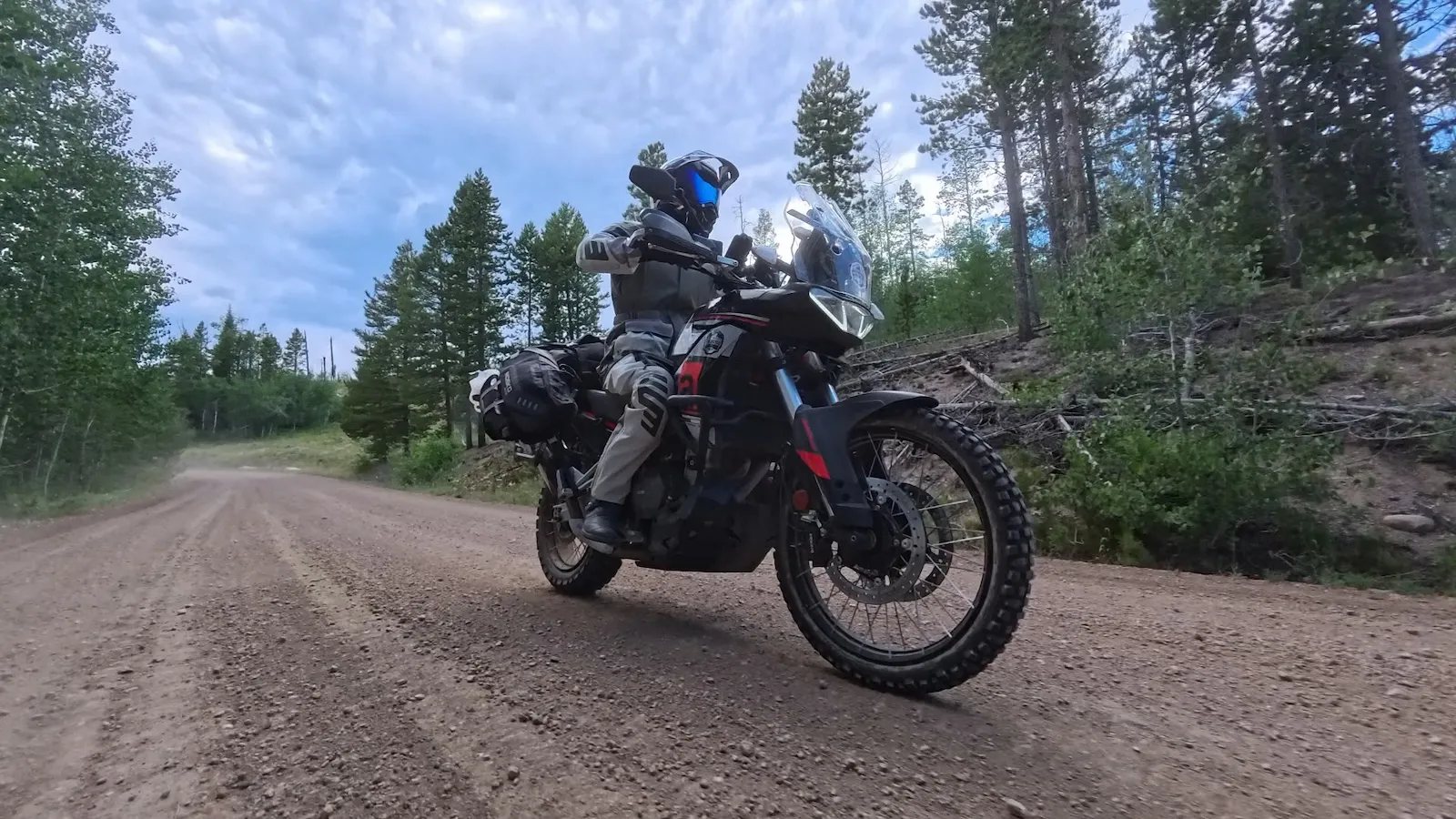
I’ll be straight with you: for the first few days in Colorado, this Aprilia didn’t win my heart. Not enough punch, neither fish nor fowl. After 1,060 miles through the Rocky Mountains, over gravel passes reaching almost 13,000 feet, I see it completely differently. This isn’t a puff piece. It’s a beating, and the Tuareg 660 surprised me by the end. Here’s where it shines and where it genuinely struggles.
The Test Bike, and Why That Matters
Let’s start with the setup, so you know what this test is worth. Our two Aprilia Tuareg 660 bikes, model year 2024, came from Colorado Motorcycle Adventures in Golden, near Denver. This wasn’t a fresh press demo. My bike showed roughly 21,000 miles of hard rental life when I picked it up. That’s exactly what makes it interesting. You’re not reading about a pampered launch bike. You’re reading about a workhorse that’s already passed through a lot of strangers’ hands.
Colorado Motorcycle Adventures is more than a rental outfit. They handed us the two Tuaregs plus the whole Colorado Backcountry Discovery Route as a mapped GPS track, the Butler map and all the logistics, and they run a big adventure fleet, route planning and guided tours on top. For an honest test that partner is ideal, because you’re carrying real luggage and covering real distance, not doing laps around a parking lot. Everything you read here comes from the saddle.
First Impression: Neither Fish nor Fowl
For the first two or three days I was skeptical. The engine is linear, but it needs revs. There’s no punchy sweet spot in the rev range that grabs you. If you’re coming off a torquey twin, it feels too polite at first. It was simply too little power for me, and I honestly figured I’d never fall for it. I’m leaving that first impression in on purpose, because the story turns.
The Turning Point Up High
What flipped me was the hard terrain. At some point you’re standing on those pegs on Cinnamon Pass at nearly 12,600 feet, loose rock under the tires, exposed switchbacks, and it’s just playfully easy to steer this bike. The traction, the precise line it holds, I haven’t had that from any other adventure bike. That’s where it rode straight into my heart.
That’s not a marketing line, that’s the moment the test tipped. The Tuareg is an adventure bike you only learn to appreciate once the going gets genuinely tough. On the high passes of the San Juans, from Cinnamon to California to Engineer Pass, all well above 12,600 feet, the chassis shows its class. Precise, forgiving, good-natured. Right where it could hurt, it gets light.
The Terrain That Made the Verdict
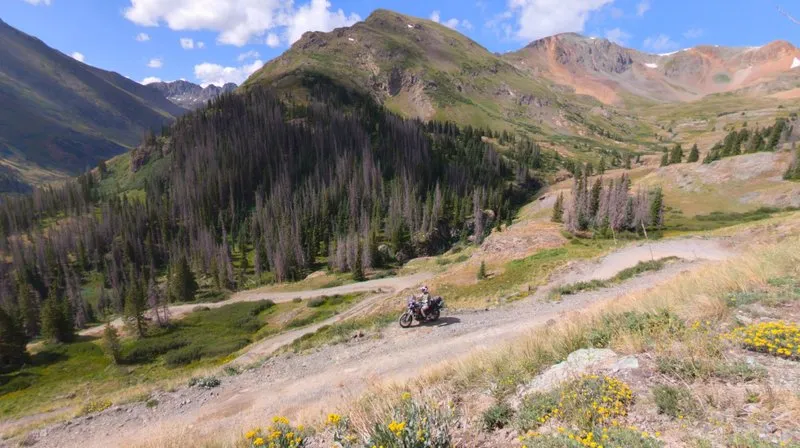
So you can weigh the verdict, here’s the ground it was earned on. The COBDR throws everything at you. Paved Cottonwood Pass tops out at 12,126 feet, the highest paved crossing of the Continental Divide, and unpaved Cumberland Pass right next door climbs to around 12,000 feet of loose gravel. Farther north, Weston and Hagerman passes both sit near 11,900 feet of rough four-wheel-drive rock. Then the crown jewels down south, the Alpine Loop passes of California at 12,930 feet, Engineer at 12,800 feet and Cinnamon at 12,620 feet. A bike that stays predictable across that spread has earned its grade. The Tuareg does, and that’s why its strengths outweigh the gripes for me.
One practical tip that pays off out here: if you’re riding loaded, set your preload. Sounds obvious, but with full touring luggage in technical terrain it’s the difference between control and fighting the bike. Two minutes at the shock, and every pass afterward thanks you.
Ergonomics: Standing All Day
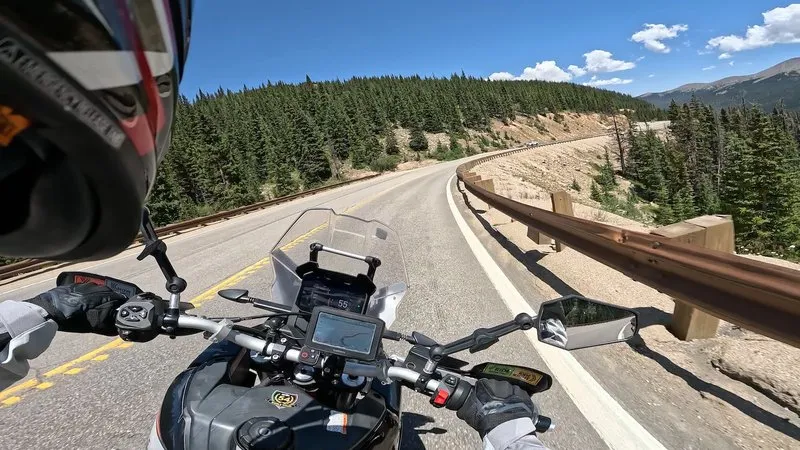
What served me best on the long stages is that you can stand and ride this thing endlessly without wearing out. The standing ergonomics are genuinely well sorted. Your knees find their grip, the bar sits right, and you fuse with the bike. On a route that keeps you in loose terrain for hours every day, that’s worth its weight in gold. Comfort like that isn’t a spec-sheet number, it’s what decides whether day six feels like day one.
That comfort has a limit, though, and it’s honest to name it. Two-up and fully loaded, the modest displacement starts to show. On the flat and on gravel you never miss it, but drag a passenger and a week of luggage up a steep, loose grade at altitude and you’ll be working the gearbox hard to keep momentum. Solo with travel luggage, the way I rode most of Colorado, it never once felt short on real-world thrust. It’s a bike that rewards a rider who reads the terrain and keeps it spinning, and punishes one who expects big-twin lag-free shove.
Range and Altitude: 121 Miles Between Fill-Ups
The number that matters most for travelers is range, and it holds up. On one day we rode 120 miles without seeing a single gas station. We were glad the Tuareg had the range for distances like that. On a hard enduro it simply wouldn’t have worked. On the Colorado BDR the biggest confirmed fuel gap is about 121 miles, and the Aprilia covers that with a reserve.
Up high you have to ride it differently. Above roughly 11,500 feet the throttle response gets noticeably doughy. Thin air costs power, that’s physics, not a flaw of the bike alone. The trick is to keep it in a higher rev range. Give it the revs and it does a fantastic job even up there. If you’re used to alpine passes under 8,000 feet, you’ll need to relearn your right hand for this altitude.
Then there’s the temperature spread that turns this ride into a materials test. Up on the pass you freeze in the rain, down in the valley the display in Durango reads 99 degrees Fahrenheit, brutal heat at around 6,500 feet. In that heat the area around your knees near the engine gets noticeably warm, and that belongs in an honest report too. But that same versatility is the core of the Tuareg. You glide long distances like on a bigger adventure bike, and the moment technical sections arrive, it’s agile and fun.
The Weak Spots I Have to Name
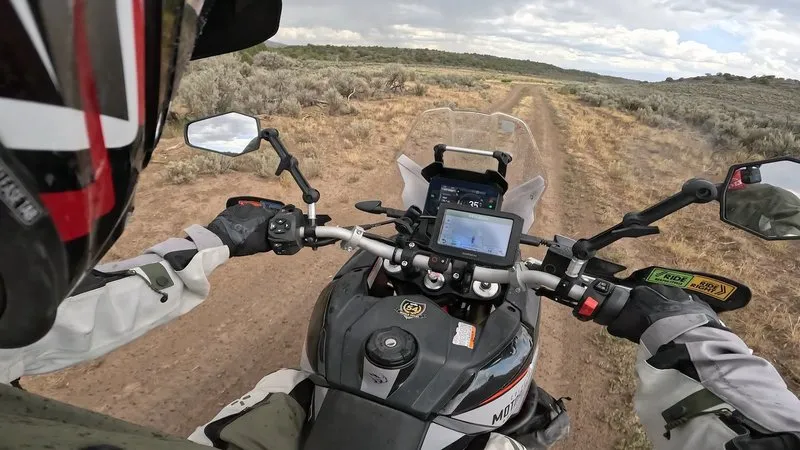
No honest test without the hard points. First, punch. Yes, it’s 80 horsepower, but it’s only 660 cubic centimeters. If you’re riding two-up and heavily loaded a lot, I’d reach for more displacement, because the punch just isn’t there. Second, the altitude mapping, that doughy response up high I already described. And third, the one that annoys me structurally: if you go down on the left side, the shift lever breaks. That’s a real weak spot, and in the dirt you do drop it now and then. On top of that, time is gnawing at the switches. Vibration and dust have already made the turn-signal switch quite fiddly. That’s part of the honest picture.
Durability: What 21,000 Miles Did to It
And yet, or precisely because of that, the biggest respect: this machine is genuinely tough. We got it with 21,000 miles, all those impacts, the vibration, the constant dust, and it took it beautifully. After our own hard touring on top of that, I have to say, hats off. For a bike that’s already seen so much rental abuse, that’s a strong statement about reliability.
Verdict
After 1,060 miles of real dirt, my verdict is nuanced and positive. The Tuareg 660 is hugely versatile. You can glide long distances like on a bigger adventure bike, and as soon as technical sections show up, it turns agile and playful. Its weaknesses are honest and namable: missing punch when loaded, doughy mapping at altitude, that vulnerable shift lever. If you can live with those and you’re after a bike for genuinely tough terrain, you get a seriously good alternative to something like the Yamaha Ténéré. The level we rode here suits this adventure bike perfectly, and the Colorado Backcountry Discovery Route is the ideal proving ground for it.