
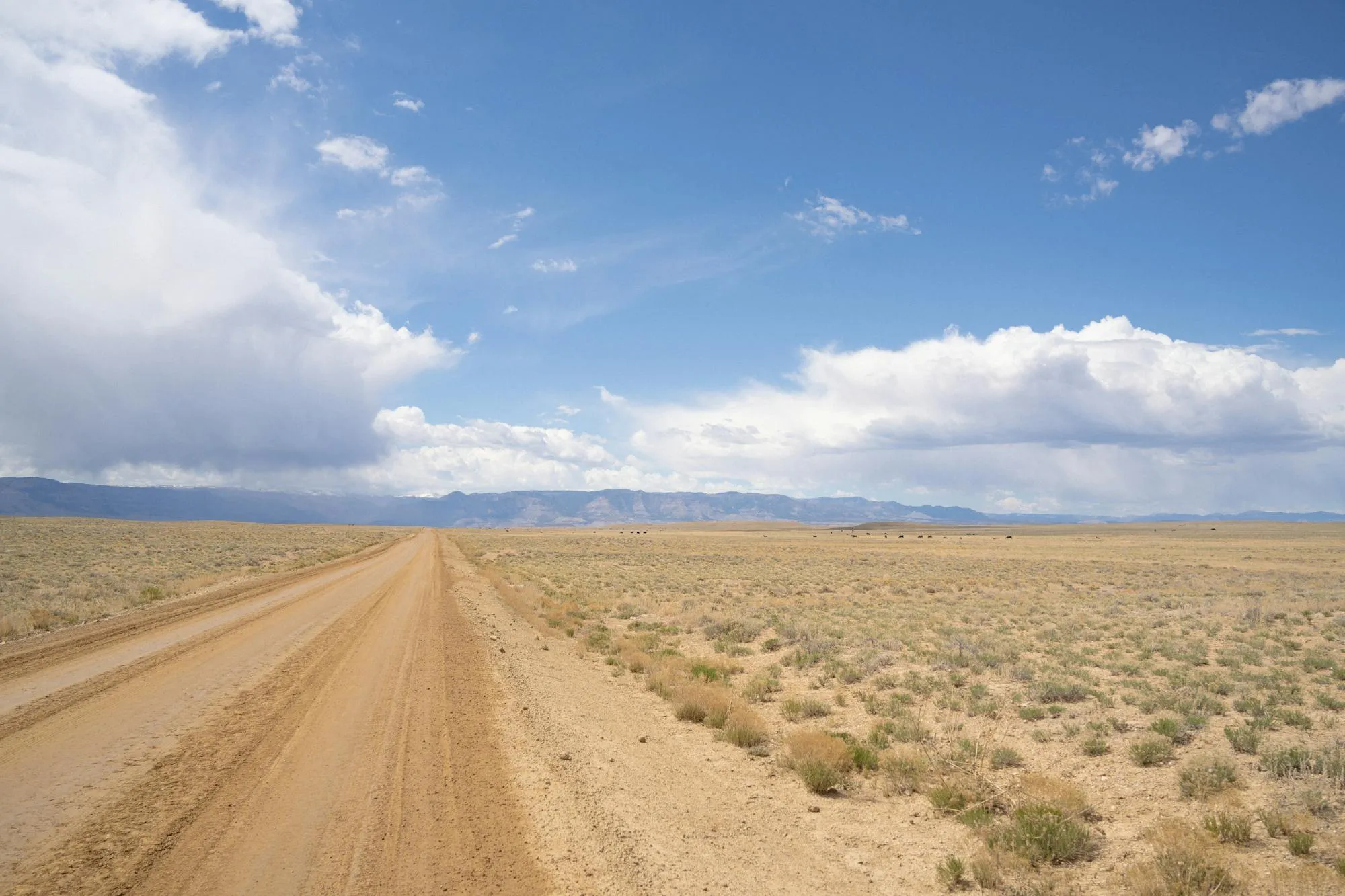
The Sahara photo has become almost a genre in itself.
A large, heavily equipped motorcycle. Dramatic desert light. Sand extending to the horizon. The rider in full gear, posed confidently beside a machine that the headline copy describes as capable of crossing continents off-road.
Look at the front wheel.
If it is 17 inches, the photo is advertising fiction. The machine is a sport tourer wearing adventure clothes. It will cross continents beautifully, on asphalt, and will be an excellent motorcycle for doing exactly that. But the front wheel tells you the engineering intent before any other specification does.
This is not cynicism about a category. It is a simple understanding of rollover physics and what wheel geometry communicates about design priority.
The Hard Rules
There are two specifications that classify an adventure motorcycle with the precision of an engineering standard. Everything else — the high fenders, the hand guards, the knobby tire options, the marketing photography featuring rocky mountain passes — is context. The specifications are law.
Rule 1: Front wheel size. A genuine adventure or enduro motorcycle requires a 19-inch or 21-inch front wheel. These sizes are not arbitrary. A larger diameter wheel rolls over surface irregularities, ruts, loose rock, and uneven terrain geometrically better than a smaller one. The physics of how a rolling wheel encounters an obstacle — how the contact patch interacts with objects taller than the wheel’s radius — is determined in large part by the wheel’s circumference relative to the obstacles it must cross.
A 17-inch front wheel is designed for pavement performance. It provides quick steering response, predictable cornering behavior, and a wide contact patch optimized for paved surfaces. These are genuine advantages. On asphalt, a 17-inch front is superior to a 21-inch.
Off-road, the relationship reverses dramatically. The 17-inch wheel requires significantly more force to mount the same obstacle. It digs deeper into soft terrain. It is more easily deflected by irregularities that a larger wheel would roll over with less drama.
The moment a touring machine is fitted with a 17-inch front wheel, it is classified — definitively, not as a matter of opinion — as a sport tourer, crossover, or what US riders increasingly call a “Mall Crawler” — a bike that looks ready for the BDR but never leaves the asphalt. The category name on the brochure does not change this. The wheel geometry determines the machine’s off-road capability — what the Germans call Geländetauglichkeit — independently of any marketing decision.
Rule 2: Suspension travel. A genuine adventure motorcycle requires more than 8 inches of suspension travel, front and rear.
Eight inches is the threshold where a motorcycle begins to have the suspension stroke necessary to absorb the repeated, compressive loads of off-road riding at meaningful pace. Sub-8-inch travel — and particularly the 6 to 7 inches that appear in the specs of many adventure-styled touring machines — works acceptably on graded gravel roads and mild forest tracks. It fails when the terrain becomes genuinely technical.
Suspension travel below 8 inches combined with a 17-inch front wheel is the definitive signature of a crossover machine. These motorcycles are superb road tourers that can handle light off-pavement diversions. They are not designed for off-road riding in any serious sense, and they should not be represented as such.
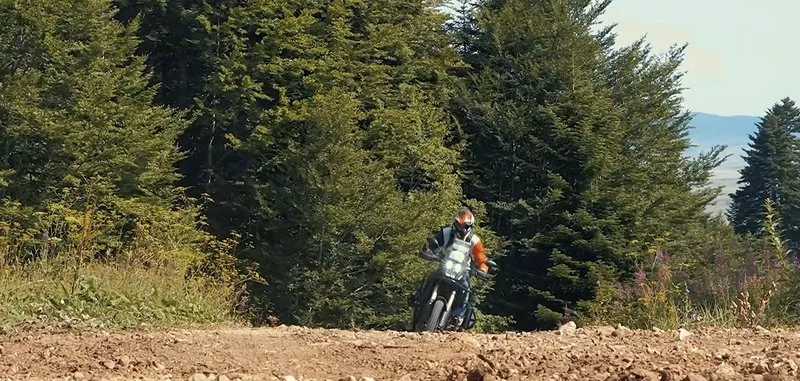
Why 17-Inch Wheels Disqualify You
The conversation about wheel size occasionally generates pushback from owners of capable-seeming machines with 17-inch fronts. The pushback usually takes the form of personal anecdotes: “I took mine through [difficult terrain] and it was fine.”
This conflates the capability of the rider with the capability of the machine. An experienced, skilled rider can take almost any motorcycle through terrain that the machine’s design does not prioritize. The question is not whether it is possible, but whether the machine is engineered for it — whether its geometry, suspension, and tire profile are designed to manage the physics of off-road riding reliably, repeatedly, and without extraordinary effort from the rider.
A 17-inch front wheel on loose terrain demands more from the rider to compensate for what the geometry cannot provide automatically. The wheel deflects where a larger wheel would roll. The contact patch breaks loose where a narrower, taller tire profile would maintain purchase. The steering requires more correction. The effort accumulates over distance. What is manageable on a short, dramatic stretch becomes tiring and risky over a full day of rough terrain.
The 19-inch or 21-inch front wheel handles this terrain with less drama because it was designed to. The larger diameter provides an inherently more stable interaction with uneven surfaces. The narrower tire profile cuts into soft terrain and finds grip where a wide road tire would float and slip. These are engineering choices that reflect engineering priorities. When those priorities are pavement performance, the manufacturer fits 17-inch wheels. When they are genuine off-road capability, the manufacturer fits 19-inch or 21-inch wheels.
The wheel is not decoration. It is the clearest single signal in the specification sheet about what the machine was actually built to do.
The Reliability Factor
Beyond the geometry requirements, a genuine adventure machine carries a reliability expectation that is categorically different from any other segment.
A sport tourer that fails on a highway is annoying. A recovery truck resolves it within a few hours. A genuine adventure motorcycle that fails on the Baja, deep into a Backcountry Discovery Route (BDR), in the Atacama, on a remote track in Mongolia, or on a forest road three days from the nearest service center is a different kind of problem entirely. The engineering brief for a real adventure machine must include the ability to survive isolation, improvised maintenance, imperfect fuel, road vibration sustained over thousands of miles of rough surface, and operational conditions far outside the envelope that European and North American road use represents.
This reliability requirement explains why the most respected adventure motorcycles in the market — the machines with genuine long-distance, remote-use track records — tend toward simpler, proven mechanical architecture. Not necessarily less sophisticated in electronic terms, but mechanically conservative in ways that allow field diagnosis, basic repairs, and sustained operation without specialized tooling or proprietary systems.
Complexity that serves performance on a paved circuit is a liability in the field. An adventure machine optimized for maximum peak power through sophisticated engine mapping, exotic materials, and aggressive tuning is solving the wrong problem. Traction and sustained low-end torque matter. Peak horsepower does not. Absolute trust matters. Sophistication for its own sake does not.
Verdict / Scorecard: Classifying Your Machine
Use this quick classification to determine what category your ADV motorcycle actually belongs to:
| Check | Result | Classification |
|---|---|---|
| Front wheel size | ≥ 19 inches | Adventure |
| Front wheel size | 17 inches | Sport Tourer / Crossover |
| Suspension travel | ≥ 8” (200 mm) | Real Adventure |
| Suspension travel | 6–7” (150–199 mm) | Light-duty / gravel only |
| Suspension travel | < 6” (150 mm) | Off-road styling only — street bike |
| Weight (ready to ride) | ≤ 500 lbs (230 kg) | Dirt-worthy |
| Weight (ready to ride) | > 500 lbs + 17” wheel | Street bike in a suit / Mall Crawler |
| Reliability record on remote routes | Established | Genuine adventure consideration |
A machine that passes all the criteria above the line is a genuine adventure motorcycle. Take it where the photos suggest. Trust it in the field.
A machine with a 17-inch front wheel is a very good motorcycle for what it was designed to do. It was not designed to do what the marketing photos suggest. Ride it on pavement with complete confidence. Do not ride it onto the Baja, into the Sahara, or down a serious BDR section expecting the brochure to have been honest.
The wheel tells you. It always has.