
I give a piece of advice about buying used that regularly annoys people, because it sounds like an excuse: inspect the seller more carefully than the motorcycle. That sounds like gut feeling replacing expertise, but it follows directly from the fact that the two most important questions about a used engine cannot be answered technically at all. Was this engine always warmed up properly, or was it tortured cold? And did it sit for months with old oil in it? You usually get the answers thousands of miles later, when they are expensive. In Colorado I spent two weeks watching exactly why that is.
The Two Questions Nobody Can Read Off a Motorcycle
That is the heart of it. You can measure brake discs, check chain slack, date the tyres, go over the frame looking for crash damage. All of that is sensible and it finds faults that cost money. But how often this engine got thrashed while cold is written nowhere. Not in the odometer, not in the paint, not in the inspection report and not in a compression test. It is written exclusively in the character of the person who sat on it before you.
Which is why my inspection order has reversed itself over the years. I used to walk up to the motorcycle and talk to the seller on the side; now it is the other way round. That is not friendliness, it is efficiency. Technical faults can be found by a workshop for the price of an hour’s labour. The history cannot be found by anybody, unless somebody tells you.
Why Cold Starts Matter This Much
This is not workshop folklore, it is tribology. When an engine sits, the oil film drains off the friction surfaces. The camshaft loses its protective film within a few hours of shutdown, and what follows is briefly direct metal contact. For the first seconds after a start the only thing between those parts is a microscopic residual film, until the oil pump has built pressure, and that phase is where wear peaks. As for what share of total engine wear that accounts for, the figures floating around run from fifty to ninety percent and none of them has a solid primary source. You do not need the number to understand the direction.
There is a trap on top of that which many riders never consider. Oil reaches operating temperature considerably later than coolant does, for several reasons: the larger volume, the different heat capacity, its position down in the sump where the airflow cools it, and the fact that it picks up heat only indirectly. Anyone who watches the water gauge and opens the throttle at 180 degrees Fahrenheit is riding on oil far colder than they think. Two minutes of impatience, repeated a few thousand times, produces a different engine, and you cannot see that difference when you go to look at it.
What Happens While Nothing Happens
The second point is even more invisible, because literally nothing is happening. Old engine oil eventually acts like acid and attacks the sensitive materials inside a modern high-performance engine. That is deliberately sharply put, but the mechanism behind it is documented: used oil carries residues of fuel, acids and moisture, and during a long standstill those attack metal parts and encourage corrosion. Oil diluted by unburned fuel also loses its lubricating and protective properties and can no longer hold wear particles and water in suspension, so they settle out as sludge.
Which is why the recommendation is unambiguous: change the oil before the winter break, not after it. And that turns into the single best screening question there is, precisely because it sounds so harmless and puts nobody on the defensive. Just ask when the oil was last changed, and whether that happened before or after the winter. The answer tells you more about the next five years than any visual inspection, and the seller will not notice that he just sat an exam.
What a 21,000-Mile Rental Bike Adds to This
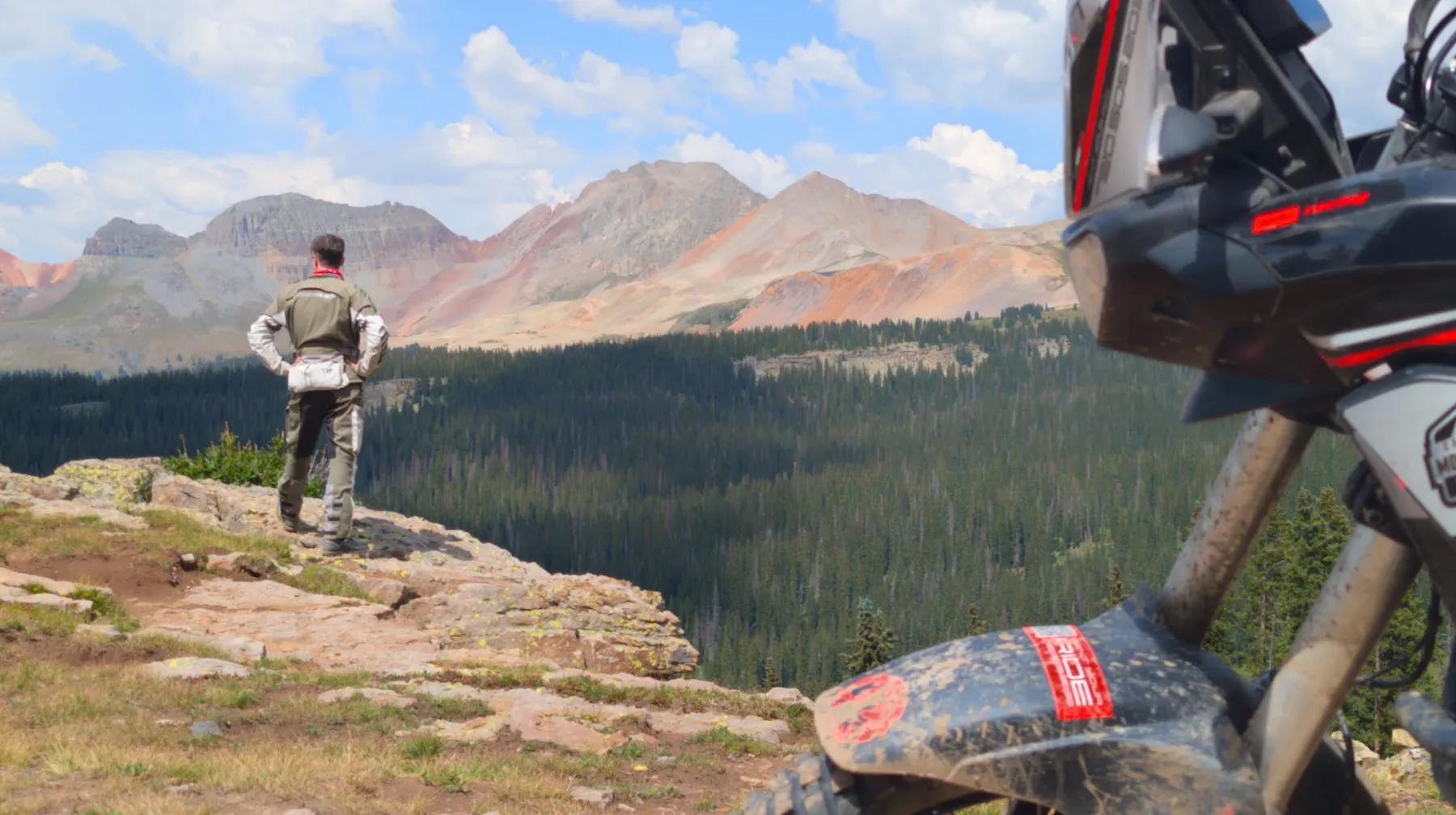
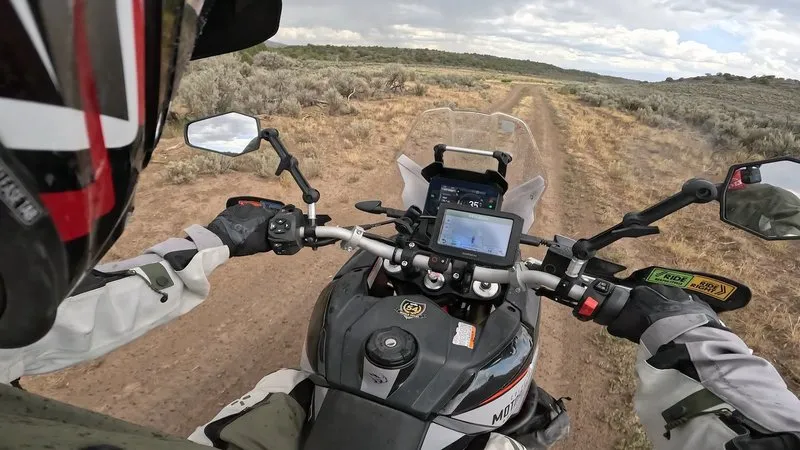
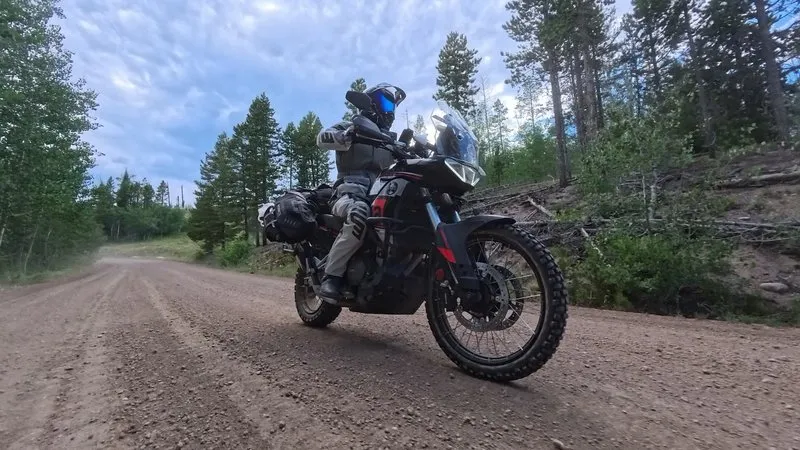
Now Colorado. We rode the Colorado Backcountry Discovery Route, officially 745 miles across six sections, and finished with roughly 1,060 miles on the clock. Both Aprilia Tuareg 660s came out of a rental fleet, mine showing 21,000 miles and the one Clemens rode 16,000. A rental bike is the most honest used motorcycle in existence, because it did not have one previous owner, it had a hundred. Nobody warmed it up, nobody lovingly winterised it, nobody worried about it. It is the worst case of exactly the thing I normally warn about.
And still, after two weeks, my verdict was that nothing rattles and nothing wobbles on it, and that it takes a serious beating and keeps going. That is the first uncomfortable conclusion, and it runs against my own warning. Modern engines tolerate far more than bar-stool wisdom claims. Anyone who rejects a motorcycle purely because of high mileage is often rejecting the wrong one, and then paying a premium for a low odometer reading that means nothing technically.
The second conclusion is the more interesting one. The wear was absolutely there, just not where people look for it. Time had been gnawing at the switchgear: the indicator switch had become fiddly and no longer worked cleanly in one direction, and the steering lock needed attention. Gearbox and suspension were unremarkable. The wear on an ignition lock tells you a great deal about how carefully somebody treats their machine. I always meant that as a character test, and in Colorado I saw it is also a pure load test: the places where human and machine touch each other age first. On a private bike they tell you about the person, on a rental about the miles, and either way more than the odometer.

The Point Where the Rental Guy Beats the Brochure
One detail stuck with me. The rental company handed us a spare gear lever without being asked, because if you go down on the left side that lever is finished. The operator already knows what is what, more precisely than any road test does, and that principle is worth real money when buying used. Anyone running a model in numbers knows its actual weaknesses better than any forum thread, because he sees them twenty times in parallel rather than once. Before you buy a specific model second hand, talk to somebody who has twenty in service: a rental outfit, a riding school, a workshop. Those people do not have opinions, they have statistics.
What I Actually Look At in the Garage
A tidy garage with a clean bike and decent photos in the advert is already a strong indicator of a reliable seller. I look at how the other vehicles are parked, whether the paperwork is sorted, whether the helmet has been looked after. That is not snooping, it is pattern recognition. Paperwork helps on top of that, but only where it can prove something: a stamped service book shows who did the maintenance, including recalls, and its entries have to line up with the odometer. What it cannot show is whether the engine was warm before things got serious.
The hardest group is not the fraudsters. It is the decent chaotics, and they do not lie when they sell. On the contrary, they sell an abused machine in complete good faith, hold eye contact and seem honest, because they are. They simply never thought about what cold starts and stale oil do. No lie detector helps against that group, only asking about process. Not: was everything fine? But: what do you do in autumn, where does it live over winter, how long do you let it warm up before you pull on the throttle? Somebody with a practised answer has a system. Somebody surprised that you would even ask does not. Both are useful information, and both take thirty seconds to collect.
When the Seller Is Not Honest
One legal point belongs here, because it dictates exactly how you close the deal. Buying a motorcycle privately in the US almost universally means buying as-is. The moment the cash changes hands, the seller’s oral promises evaporate, and state lemon laws will not save you. If a seller deliberately conceals a bent frame or a patched crankcase, your only real leverage is a meticulously detailed Bill of Sale. If they look you in the eye and swear the bike has never been dropped, you write exactly that, Seller states vehicle has never been crashed or dropped, directly onto the receipt before they sign it. That ink is your only legal backstop against fraudulent misrepresentation in a small claims court. It does not replace reading people, though, because nobody wants to spend their riding season standing in front of a judge arguing over a two-thousand-dollar engine rebuild. You just wanted the motorcycle you thought you were buying.
If You Want to Test This Yourself
Our machines and the programmed tracks came from Colorado Motorcycle Adventures near Denver, who rent to riders doing the route alone as well as running guided versions. A week on a bike with a hundred previous owners is the best possible education in how much a motorcycle tolerates, and how little of that you can read off a brochure.