
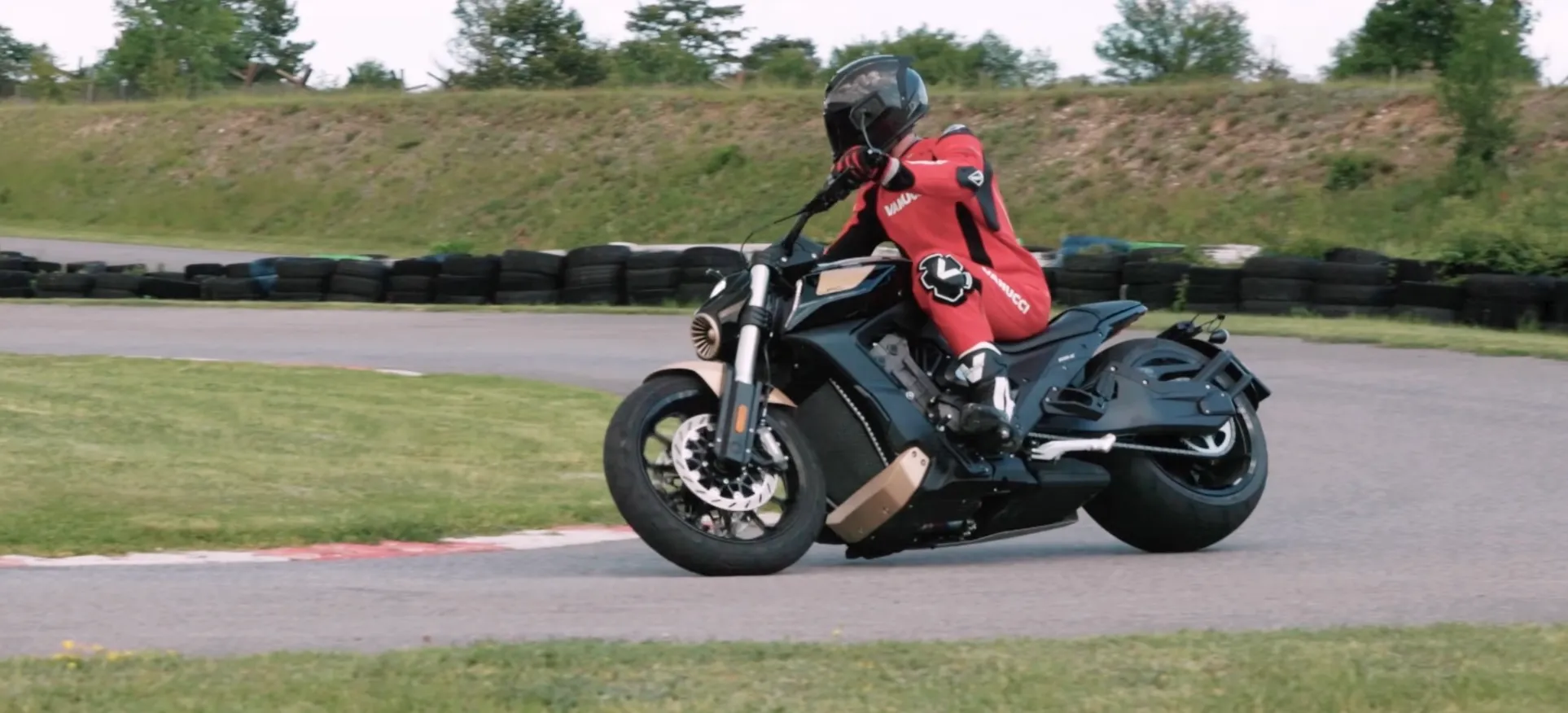
I start the engine expecting a low, lazy rumble. What comes back is a hoarse scream. I’m sitting on a wide, low cruiser with a rear tire that looks ready to steal the whole scene, and the soundtrack belongs somewhere much sportier.
I’ll admit it: the shape had already told my brain what this motorcycle ought to sound like. The Benda LFC 700 PRO didn’t cooperate. Pulling out of the tight turns at Bad Fischau, Austria, its eager four-cylinder engine makes that mismatch rather entertaining. Getting into those turns takes more persuasion. And that’s where this short track session tells you something the parked motorcycle can’t.
A cruiser that wants to scream
The engine pulls cleanly and precisely out of the corners. It likes revs, and the way it pushes forward feels unexpectedly sporty underneath all that visual bulk. The sound takes a little getting used to. Then it becomes part of the fun.
I wouldn’t buy this expecting the low-pitched beat that usually goes with a cruiser silhouette. Here’s the appeal: the engine refuses to play the same part as the styling. That makes the Benda unusual even before you get to the rear tire. On our short straights it certainly gets moving. If a rev-happy engine wrapped in an extroverted cruiser body sounds like your kind of nonsense, this is the part of the ride you’ll want to try for yourself.
The brakes back up the engine
There’s real braking hardware behind the visual drama. The Brembo brakes let me scrub speed hard, and the Benda feels stable and precise while doing it. Those are impressions from the saddle, not instrumented stopping-distance results.
That matters on a motorcycle that accelerates willingly but doesn’t change direction with the same enthusiasm. You need to get the speed down before the tight part of the corner. I liked being able to rely on the brakes for that. The engine gets its drive to the rear wheel, the brakes do their job, and the bike stays composed under deceleration. Don’t dismiss those strengths just because the package looks like it was designed to gather a crowd. They’re useful when you’re working around the rest of its character.
Air suspension can’t move every limit
Lean clearance is the bottleneck. You sit in a relaxed position, a long way from the front wheel, with the footpegs close to the pavement. The motorcycle’s width adds another restriction. In tight turns, you run out of room to lean before you can make much use of that eager engine.
The air suspension deserves credit here. It raises the bike while riding and gives you some extra clearance. You can adjust the height to suit whether you want to sit higher or need a lower position. That helps. It doesn’t erase the limits of the layout, though. I wouldn’t describe it as automatically better or worse than every other cruiser. I would tell you to pay attention to clearance on a test ride, especially if your favorite roads keep folding back on themselves.
That rear tire sends the bill to your arms
A 300-section rear tire gets attention. It also changes how you steer. There’s a strong tendency to stand up when I brake into a corner, and tipping the Benda into a tight radius takes a deliberate shove at the bar. The front tire is a 130, so neither end exactly suggests a narrow little motorcycle.
The important distinction is that it doesn’t tip in nervously or feel unpredictable. It needs effort. Smaller, more compact bikes seem to follow your eyes; this one wants a clear physical instruction through the handlebar. Cruiser riders may recognize the sensation. If you’re arriving from another bike in the 700 class, don’t assume the displacement tells you how it’ll handle. Give yourself time to feel the steering effort in tighter turns before deciding whether this particular kind of riding suits you.
I can picture it outside the casino
I’d recently been at the casino square in Velden, Austria, and that’s where my mind went. Put the Benda there and I reckon it could steal attention from motorcycles costing a whole lot more. That’s a picture in my head, not a comparison test I conducted in Velden.
The tire, the sound, the brakes and the finish all contribute to the impression. Bluntly put: this is a bike for showing up, with an engine that makes the journey entertaining. It isn’t a sporty corner-carving tool. The lack of lean clearance and the effort at the bar are real limits, not details you can wish away because the motor sounds keen. If the appearance and that strange engine personality are what you enjoy, there’s fun here. Just choose it for the ride it actually delivers.
The Benda lap alongside five historical examples
The Benda recorded 1:28.447 on CST tires at 91.4 °F asphalt temperature. Five historical examples sit ahead of it in elapsed time: the 2024 KTM 690 SMC R at 1:05.600 on Continental ContiAttack SM 2 tires, 108 °F; the 2025 Yamaha MT-07 Y-AMT at 1:07.760 on Dunlop Sportmax Q5A tires, 102 °F; the 2021 Yamaha MT-09 SP at 1:08.600 on Bridgestone Battlax S22 tires, 54 °F; the 2021 Harley-Davidson Pan America 1250 Special at 1:08.700 on Michelin Scorcher Adventure tires, 86 °F; and the 2024 Honda XL750 Transalp at 1:08.700 on Pirelli Scorpion Trail II tires, 91 °F. These are reference entries, not a current overall ranking. Always read tire choice and asphalt temperature alongside the time: both can shift the result significantly.
Ten laps to find your feet
These impressions come from a video production on the compact supermoto circuit in Bad Fischau, Austria. Tight turns and short straights let me feel how quickly I can trust a motorcycle, rather than explore its top speed. The procedure gives me ten warm-up laps before a timed flying lap, launched from a standstill just 66 feet before the timing line. Clutch control and traction during that short run-up affect the result too.
We use the Ridelink Wingman for data recording. The accompanying videos appear on the 1000PS YouTube channel, sometimes weeks after the written report. This review stands on its own. For the Benda, the useful lesson is how different confidence under braking feels from the work required at turn-in. That’s something worth understanding before you make this cruiser yours.
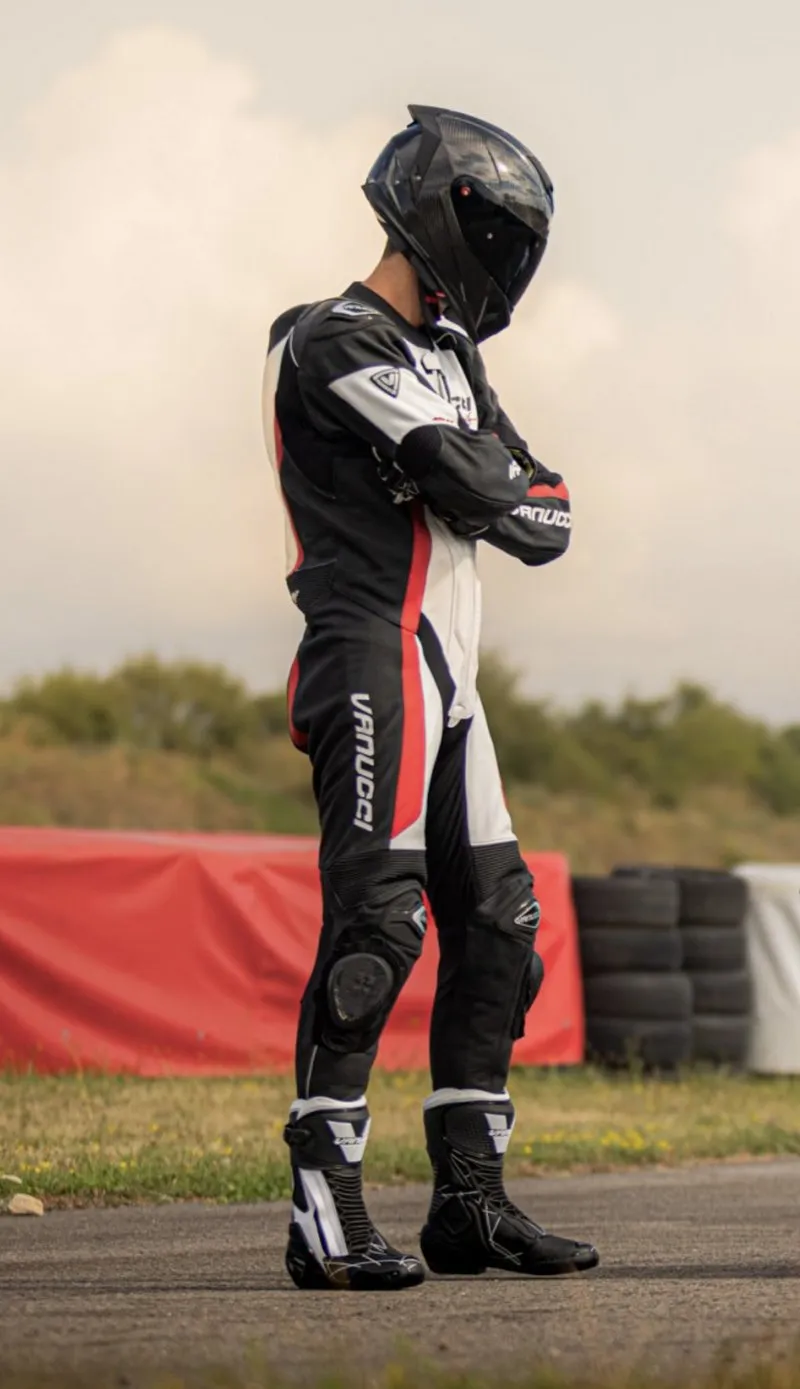
The numbers behind the shape
The supplied specifications, cross-checked against the motorcycle database, list a liquid-cooled 677 cc inline-four making approximately 86 hp at 10,300 rpm and 44.3 lb-ft at 8,600 rpm, with a six-speed transmission. Listed ready-to-ride weight is about 569 lb, seat height 27.3”, and tank capacity 4.5 US gallons. The tire sizes are 130/70-19 front and 300/35-18 rear. These are specification figures, not measurements from my track session. They describe the hardware; a test ride will tell you whether you enjoy pushing that wide rear tire around a corner as much as you enjoy looking at it.