
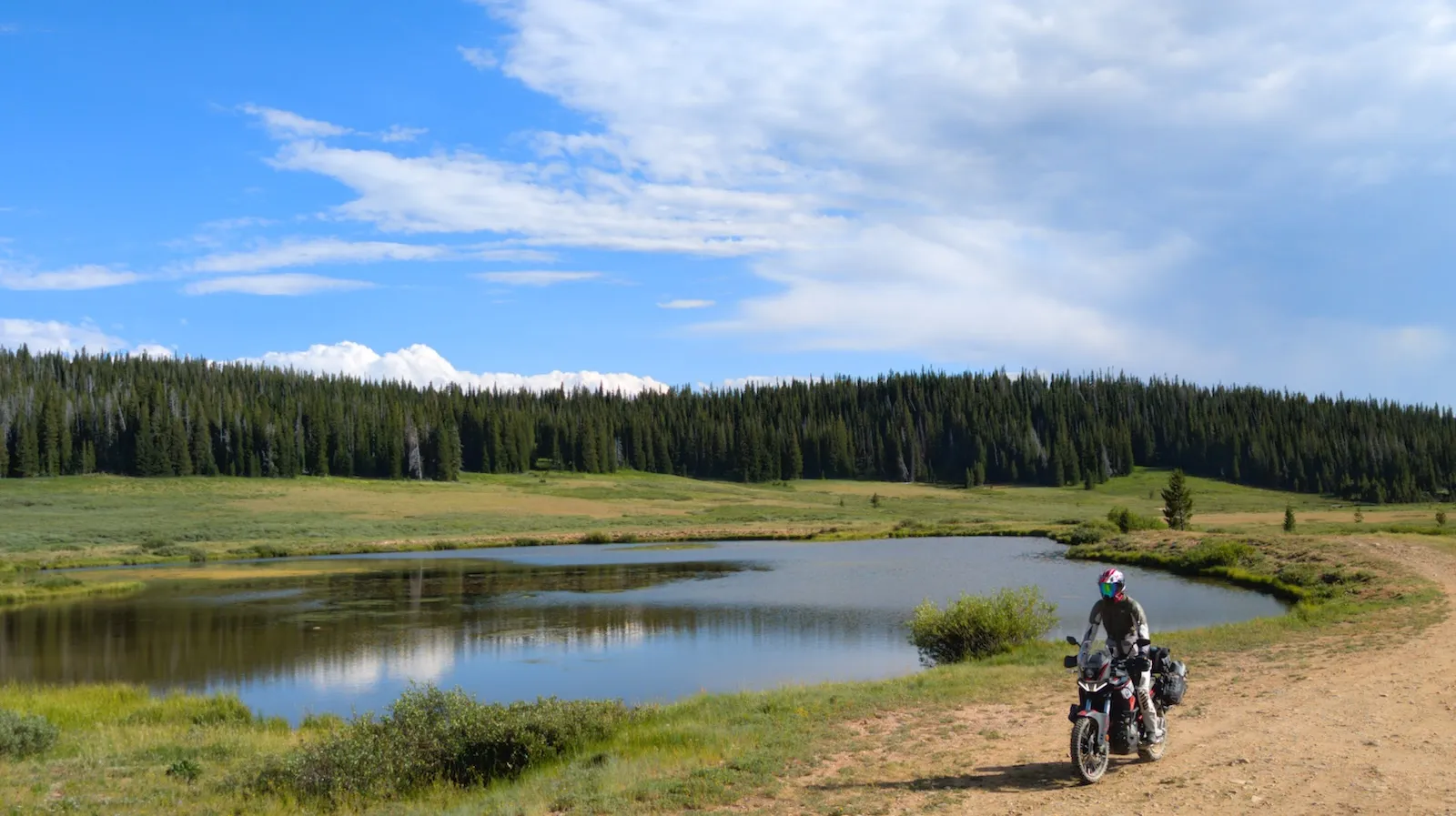
There’s one question that haunts me on every enduro trip, and it has nothing to do with tires, suspension or route planning: what do I wear? Depending on how the weather burned me last, I swing from one extreme to the other. After a freezing stage I swear by the sealed membrane suit. After a sweltering day of technical riding I never want to see anything but airy motocross gear again. After years of bouncing between those poles, it’s time for an honest reckoning. Why is this problem so much harder off-road than on the street, what can each philosophy really do, and what does my current compromise look like?
Why Off-Road Changes Everything
On the street, I settled this question for myself long ago. There I ride a three-layer laminate suit and get along surprisingly well even in serious heat. The reason is simple: on pavement you’re almost always rolling, the airflow works for you, and your body barely works at all. Only a traffic jam makes it miserable, and on my kind of tours that’s the exception.
Off-road, that math flips completely. Riding enduro terrain pushes your heart rate way up, you work the bike with your whole body, and you heat yourself from the inside. That’s the core of the problem, and the physics behind it are well understood: breathable fabrics move water vapor outward only along a temperature and humidity gradient. Under hard effort your body produces more sweat than even the best fabrics can transport, and in warm, humid air the gradient shrinks on top of it. In a tricky section at 100 or 106 degrees Fahrenheit you can rip open as many vents as you like: if no airflow pushes through them, the suit stays a sauna. That’s exactly how it got me recently in southern France, 106 degrees on the dash, rocky terrain, walking pace. The vents might as well have been painted on.
What the Membrane Really Does
To keep this from turning into membrane-bashing, let’s be fair about what a laminate actually delivers. In a three-layer laminate the membrane is bonded solidly between the outer fabric and the inner liner. Nothing shifts, nothing chafes, and the construction is tough and comparatively light. The membrane itself is an expanded fluoropolymer with billions of microscopic pores per square inch. Those pores are orders of magnitude smaller than a water droplet but far larger than a molecule of water vapor. Rain stays out, body vapor gets out, as long as that gradient is working in your favor.
Yellowstone taught me what that’s worth. The park’s visitor areas sit between 6,500 and 8,000 feet, frost is possible there in every month of the year, and summer nights routinely dip toward freezing. On our America trip back then we had subfreezing mornings and rain showers rolling through, and I made a vow right there on the bike: never again on a big trip without a Gore-Tex three-layer laminate. Back home I ordered top-shelf gear from Stadler, a German outfitter that specializes in Gore-Tex riding suits, and for cold, wet conditions a laminate like that remains irreplaceable.
It just doesn’t solve the summer problem. The honest truth after many trips: even my suits with huge zip-open vents never come close to the airiness of true motocross gear. The membrane wins in cold and rain, and it loses every time the airflow dies and your pulse climbs.
The Motocross Camp and Its Price
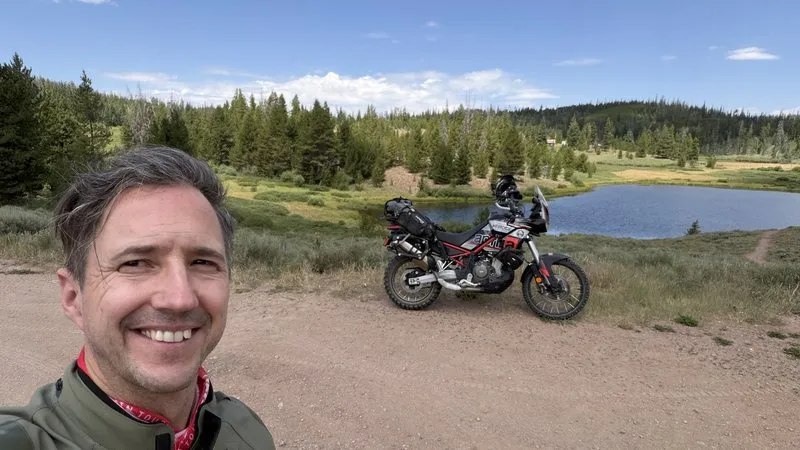
I know the other extreme just as well, because I keep tipping back into it. Motocross gear is built from light, open mesh and stretch fabrics with no waterproof layer anywhere. It’s engineered without compromise for airflow, and the protection doesn’t come from the textile but from separate armor. My setup then is a jersey over a well-ventilated armor vest. On the protection question, the standard is worth knowing: motorcycle armor is certified under EN 1621 in two levels, and Level 2 may transmit only about half the residual force of Level 1 on average. A good vest with Level 2 protectors is not a fig leaf, it’s serious protection.
On a hot working day in the dirt, that setup gets you through brilliantly. The price is just as familiar: the moment rain rolls in, you’re standing at the edge of the trail pulling on a rain shell, and against real cold your only friend is layering everything the luggage holds. The magic do-it-all suit for adventure travel, the one that works equally well in sweat-soaked technical sections and in bitter cold, I have never found. By now I believe it cannot exist, because maximum airflow and a sealed membrane contradict each other physically.
Colorado as a Field Lab
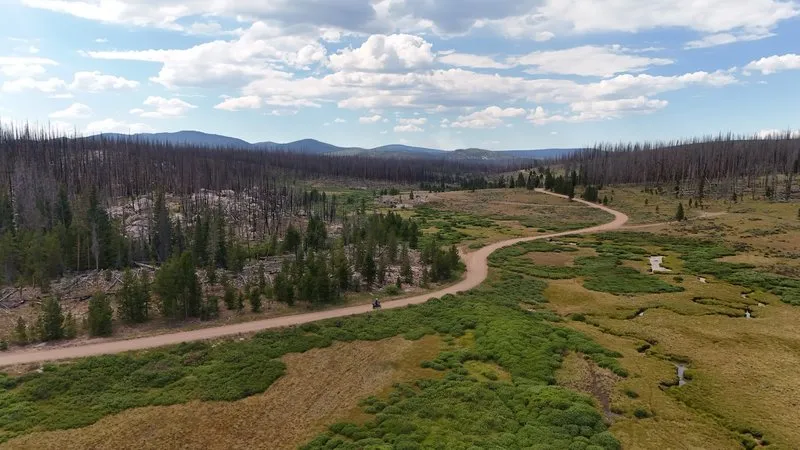
The best reality check for this dilemma so far came on the Colorado Backcountry Discovery Route. The BDR organization, a US non-profit, maps off-road routes for adventure bikes across the states and publishes the GPS tracks and maps for free; the Colorado route officially measures 745 miles. Our two Aprilia Tuareg 660s, complete with the pre-programmed route, came from Colorado Motorcycle Adventures in Golden, and if you want to study the clothing problem in the wild, there is hardly a better laboratory: this ride throws desert heat in the valley and graupel on the pass at you within the same day. Beyond the rental fleet, they handle route planning, off-road training and guided tours, which is exactly the kind of partner you want when the weather is the real opponent.
I rode Colorado in my iXS two-layer ripstop suit with big vent panels, light gray and olive. It was the most acceptable compromise in my collection so far: airy enough as long as I kept moving, and with its water-repellent construction a solid base when the rain caught us at 12,100 feet. Clemo rode next to me in the pure motocross solution, and the role reversal was a textbook lesson. When we got a bike stuck in a water hole and I worked up a serious sweat digging it out, he just smiled mildly from inside his airy kit. Up on 12,800-foot Engineer Pass and 12,620-foot Cinnamon Pass, with temperatures in the low 40s and showers building, the picture flipped completely. The head is part of the system too, by the way: off-road I deliberately wear a closed dual-sport helmet with a visor, which runs warmer than a true dirt helmet with goggles but saves me in rain and on long connecting stages.
The Colorado verdict is uncomfortable: both philosophies had their moment, and neither won the whole day. Which is exactly why I no longer believe in the one perfect suit, but in a cleverly built system.
My Plan for the Next Trip
My next attempt deliberately tips back toward airflow, but with a safety net. The plan looks like this: up top I’ll ride a ventilated armor shirt with a motocross jersey over it, maximum airflow exactly where the working body produces the most heat. As weather insurance, an ultra-compact Gore-Tex shell jacket gets strapped to the bike, lashed down within reach. When bad weather builds, I invest the two minutes and pull it on. For the pants I go the opposite way and stay with an adventure pant with a membrane and large vents, like the iXS pair I ran last time. Your legs generate less heat stress than your torso, but they catch spray, water crossings and roost first.
Whether this system ends the search, I don’t know. Most likely the gear compromise off-road remains an unsolvable problem you can only navigate more intelligently each year. But that’s what the trips are for. The new setup gets its shakedown on the next projects, and the planning list currently reads Arizona, Texas, Greece and Portugal. Stay tuned. No research project is too much effort for you.