By NastyNils·
Motorcycle comparison · Tourer vs Sport Tourer
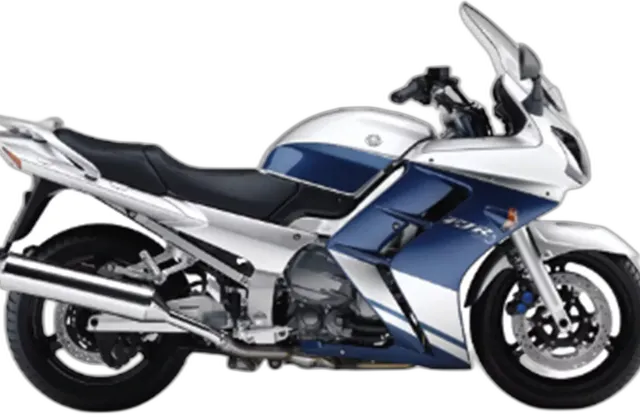
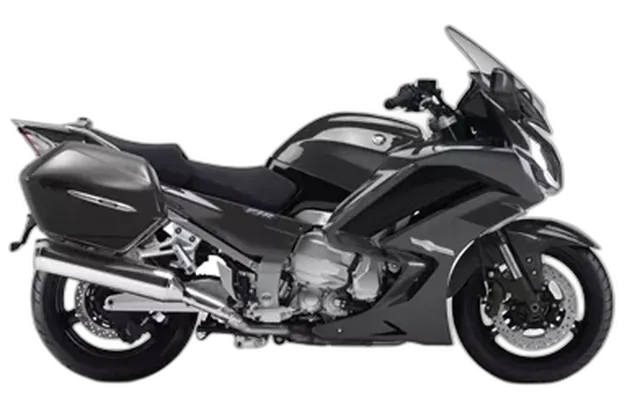
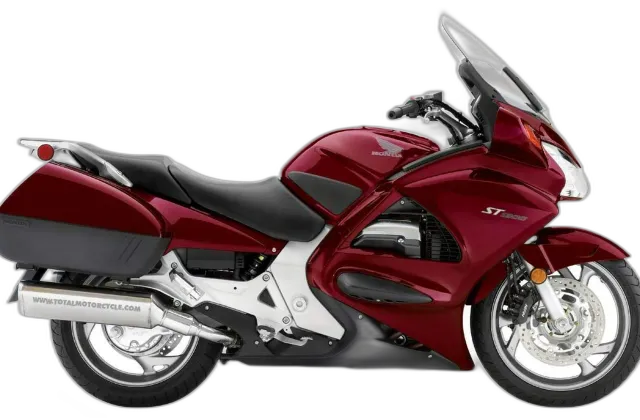
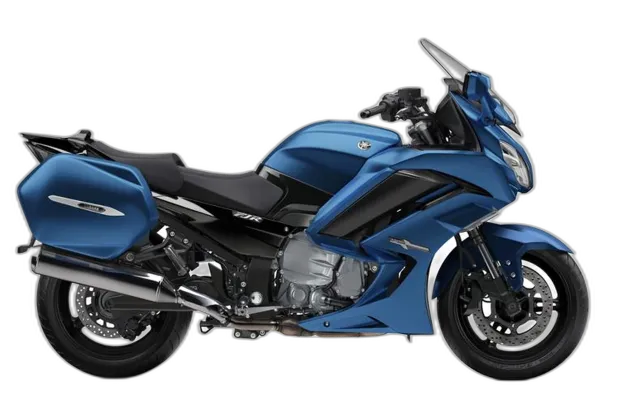
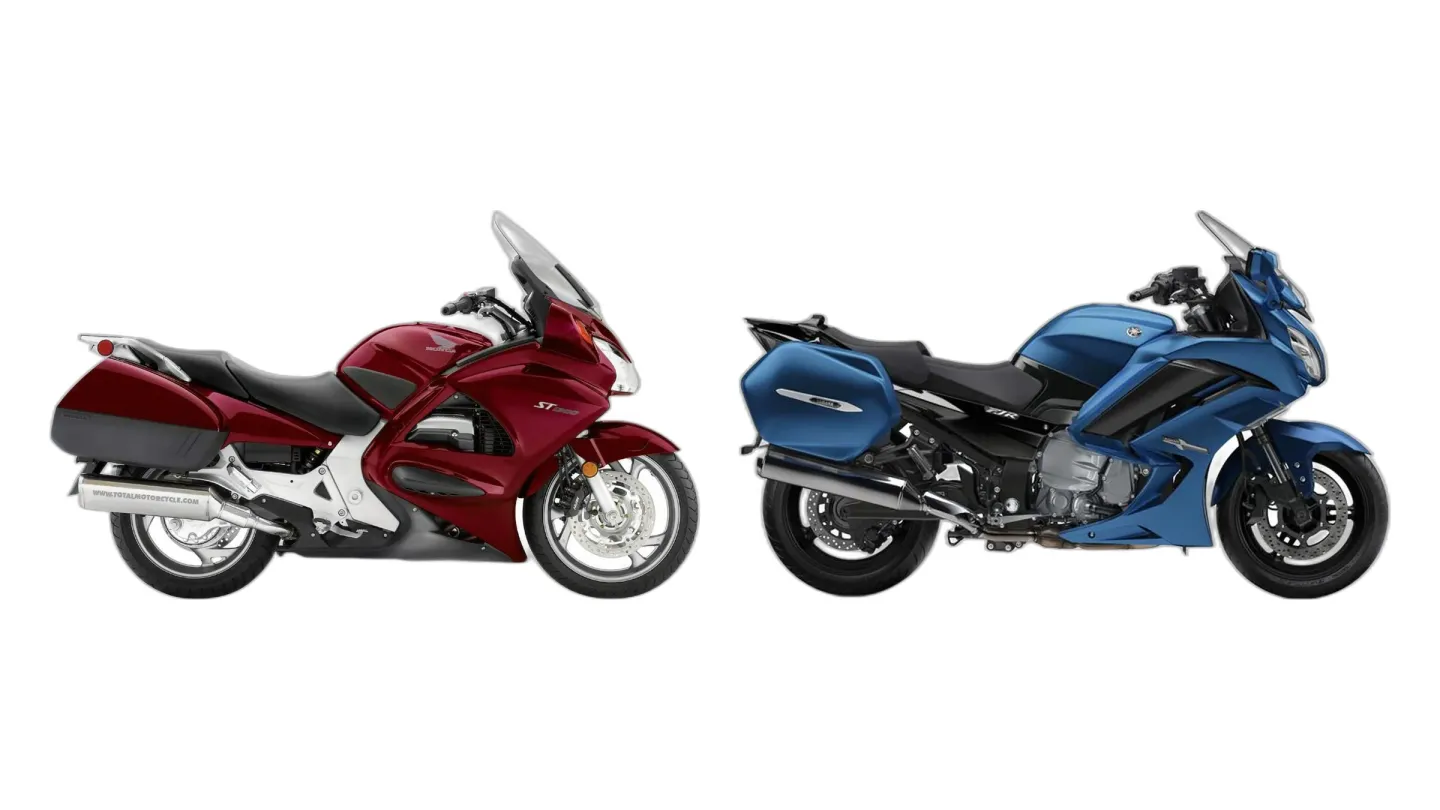
Honda ST 1300 Pan-European (ST1300) vs Yamaha FJR1300AE (MY2013)
At a steady highway clip the Honda ST 1300 Pan-European won't let a seam reach you through its plush suspension. The Yamaha FJR1300AE's four just keeps pulling from low revs.
So which one do you buy?
The FJR1300AE has the edge if…
Keeping running costs low
By a nose: FJR1300AE
Over a year of riding, the FJR1300AE noses ahead on running costs. A neglected example would wipe that out.
Sporty riding on twisty roads
Slight edge: FJR1300AE
Through a string of corners, the FJR1300AE feels a little more eager. Credit a sportier chassis and better suspension. The gap is small, so ride both.
Comfortable long-distance riding
Edges it: FJR1300AE
For big miles, the FJR1300AE edges it. That comes from more stability at speed.
What makes each one tick
ST 1300 Pan-European
Long days in the saddle don't wear you down on the ST 1300 Pan-European, with its generous weather protection and a seat built for distance. In parking lots, it's top-heavy. Once it's rolling, that heft fades, and the throttle feeds the engine's torque through a shaft drive. It racks up high mileage on basic servicing.
FJR1300AE
Fatigue doesn't build on the FJR1300AE, because its supportive seat holds you up through the miles. On the Blue Ridge Parkway, corner entry doesn't ask much of the bar, since the light chassis turns without a fight. The inline-four hums silk-smooth beneath the tank.
The Voice of Experience
What actually separates them
- The FJR1300AE has the lower wet weight: 644 lb (292 kg) vs 708 lb (321 kg).
- The FJR1300AE makes more peak power: 146 hp (107 kW) vs 126 hp (93 kW).
- The FJR1300AE makes more peak torque: 102 lb-ft (138 Nm) vs 92 lb-ft (125 Nm).
Which one for the way you ride
Daily commuting & city riding
Sits this out: ST 1300 Pan-European
Weekday traffic isn't the ST 1300 Pan-European's world, so it isn't rated here.
A confidence-building first motorcycle
Wrong job for both
Learning on either of these is the hard way. A gentler bike will make you a better rider sooner.
Who each one is built for
What's good, and what you'll live with
ST 1300 Pan-European
What owners say
Strengths
- Confident handling and powerful brakes
- High comfort levels
- Outstanding reliability and durability
- Supreme touring comfort and luggage capacity
Trade-offs
- High-speed weave controversy
- Heavy at low speeds
FJR1300AE
What owners say
Strengths
- Exceptional reliability, proven for high mileage
- Supremely comfortable long-distance mile-muncher
Trade-offs
- Wind buffeting and noise with windshield up
Known problems to check before you buy
ST 1300 Pan-European
- High-speed weave At high speeds, some bikes develop a weave or wobble, exacerbated by load, tire choice, or windscreen position. In extreme cases, this can cause loss of control.
- Rear brake hose leak (recall 11V-356) Recall 11V356000 On 2008-2010 models, the rear brake reservoir hose can get damaged from repeated suspension bottoming, causing fluid leakage and loss of rear brake.
- Electrical wiring defects (recall on early models) Recall 04V549000 Faulty wiring harness on 2003–2004 models could cause warning lights, loss of function, or fire risk. Honda recalled affected units (NHTSA 04V-549, 04V-568).
- Rear brake reservoir hose rupture (2008-2010 recall) Recall 11V356000 Repeated rear suspension bottoming can damage the rear brake reservoir hose, leading to fluid loss and rear brake failure. Honda recalled affected models to fit a revised hose.
- Coolant system issues (thermostat and leaks) Sticking thermostats can cause overheating, and occasional coolant leaks from hoses have been reported, though neither is widespread.
FJR1300AE
- Second gear may break under high-speed loads (safety recall) Recall 20V813000 On 2016-2020 models, the second gear can crack and possibly break due to stress at high rpm, leading to transmission lock-up. Yamaha recalled these bikes (NHTSA 20V813) to replace the main/drive axle assemblies and reprogram the ECU.
What they share
- Seat height
- 31.7 in (805 mm)
- Cooling
- Liquid-cooled
- Final drive
- Shaft
Where the spec sheets split
| ST 1300 Pan-European | FJR1300AE | |
|---|---|---|
| Wet weight | 708 lb (321 kg) | 644 lb (292 kg) |
| ST 1300 Pan-European | FJR1300AE | |
|---|---|---|
| Displacement | 1261 cc | 1298 cc |
| Engine | V4 | Inline-four |
| Power | 126 hp (93 kW) | 146 hp (107 kW) |
| Torque | 92 lb-ft (125 Nm) | 102 lb-ft (138 Nm) |
| ST 1300 Pan-European | FJR1300AE | |
|---|---|---|
| Fuel capacity | 7.7 US gal (29 L) | 6.6 US gal (25 L) |
| ST 1300 Pan-European | FJR1300AE | |
|---|---|---|
| Gearbox | 5-speed | 6-speed |
| Fork | Telescopic | Upside-down (USD) |
| Front tire | 120/70-18 | 120/70-17 |
| Rear tire | 170/60-17 | 180/55-17 |
| Wheelbase | 58.7 in (1490 mm) | 60.8 in (1544 mm) |
What comes fitted, what costs extra
| ST 1300 Pan-European | FJR1300AE | |
|---|---|---|
| ABS | Option | Standard |
| Traction Control | Not offered | Standard |
| Ride Modes | Not offered | Standard |
| Manually Adjustable Front Suspension | Not offered | Standard |
| Cruise Control | Not offered | Standard |
| Heated Grips | Option | Standard |
| Luggage System | Option | Standard |
Head to head, area by area
Both bikes on the same scale, one area at a time.