
Yamaha FJR1300AE (MY2013) — Sport Tourer
Yamaha press archive

2013–2021 · Sport Tourer · Buyer's Guide

FJR1300AE (MY2013)

4.5 / 5 NastyNils Rating · against its class

A Hundred Thousand Mile Machine

The Machine's Character

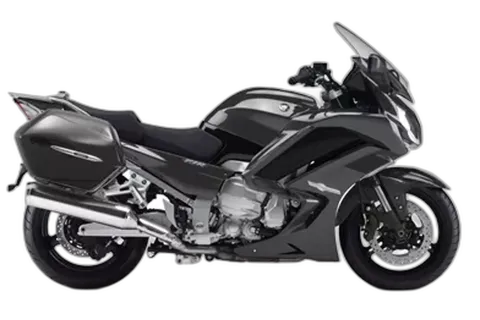
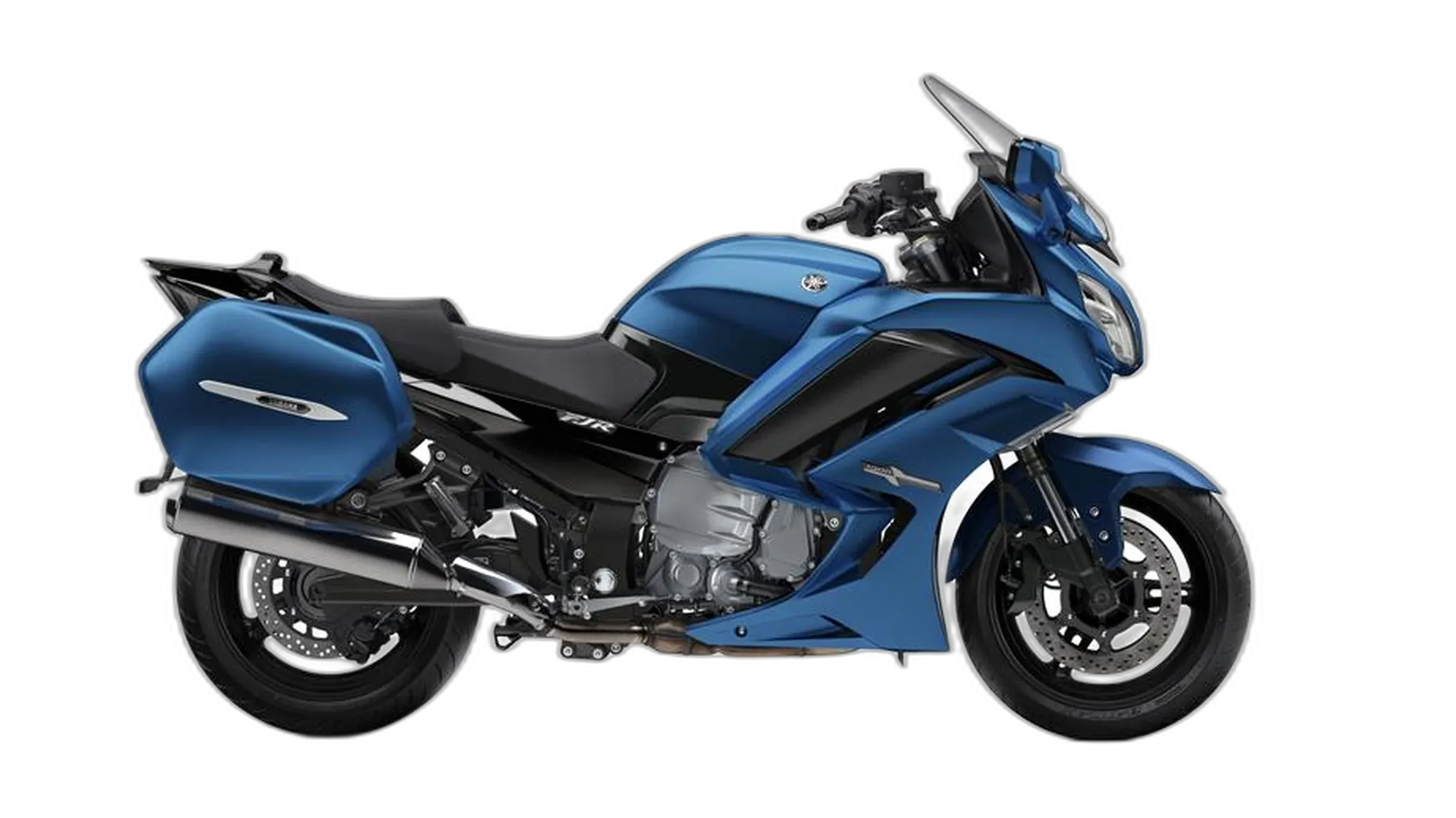
Yamaha's FJR1300AE is the fully faired, distance-first end of the range: a 1298 cc inline-four making 146 hp and 102 lb-ft, an aluminum twin-spar frame, and a shaft final drive doing the dirty work. Every choice here points at long days. The tank holds 6.6 gal, the windscreen moves electrically from a bar switch, seat height adjusts, and a center stand plus a luggage system arrive from the factory. Ride modes, traction control, ABS and cruise control are all standard, along with a slipper clutch and heated grips. The equipment list covers the parts of touring that quietly wear a rider down.

This is a machine bought for the fifth hour, not the first ten minutes. The 1298 cc four has the kind of reputation that comes from owners riding well past six figures without opening the engine, and the suspension carries enough adjustment at both ends to be set up properly for a passenger and luggage. It fits riders stitching 200 to 400 mile days together on roads like the Blue Ridge or Highway 1, solo or two-up. The honest part: 644 lb wet needs respect at walking pace, and the cockpit stays plain, with no TFT screen, no navigation, no phone pairing and no tire pressure monitoring.

Hard Numbers

Spec sheets don't ride bikes, but they set the baseline.

Show full specs & equipment Hide specs & equipment
Key specifications
Power 146 hp (107 kW)
Torque 102 lb-ft (138 Nm)
Displacement 1298 cc
Engine Inline-four
Cooling Liquid-cooled
Gearbox 6-speed
Final drive Shaft
Fork Upside-down (USD)
Front tire 120/70-17
Rear tire 180/55-17
Wheelbase 60.8 in (1544 mm)
Seat height 31.7 in (805 mm)
Wet weight 644 lb (292 kg)
Fuel capacity 6.6 gal (25 L)

Equipment check

Chassis

  • Front Suspension Adjustable Standard
  • Rear Suspension Adjustable Standard
  • Cruise Control Standard

Comfort

  • Heated Grips Standard
  • Adjustable Windscreen Standard
  • Electrically Adjustable Windscreen Standard
  • Luggage System Standard

Drivetrain

  • Slipper Clutch Standard

Lighting

  • LED Headlight Standard

Safety

  • ABS Standard
  • Traction Control Standard
  • Ride Modes Standard
Sunset over the Adriatic Sea near Primosten, Croatia. Golden hour light bathes calm water in warm tones, with a small sailboat on the distant horizon. Rocky vegetation frames the right foreground. Clear skies and gentle conditions.

The Truth on the Street

Over the years I've gathered a lot of FJR1300AE talk: conversations in the paddock, long chats with owners at fuel stops, club-night stories, and the steady stream of emails and messages riders send me directly. The picture they paint is unusually consistent. This is a machine owners praise hardest for what it does at speed and over distance, and grumble about most at walking pace.

Where the miles stop counting

Riders consistently describe a seat that holds up deep into a long day, with fatigue staying low long after other machines would have forced a stop. The inline-four draws the same comments in almost every conversation: smooth, rich with torque from low in the rev range, relaxed at a steady highway pace and still willing when the pace picks up. Owners who came off rival tourers raise another point regularly. It feels lighter than the competition to them, and the chassis lets them carry more corner speed than they expected from something this size.

Cheap to run, strong to stop

Owners talk about this one as an inexpensive big tourer to keep. It runs on regular 87 or 89 gas, service comes around every 6,000 miles, and valve checks land at 24,000-mile intervals, which keeps the shop bills predictable. Braking comes up less often, but when it does the comments run the same way: dual front discs with radial-mount four-piston calipers that stop hard and stay consistent with the bike fully loaded.

Slow speed is the sore point

The gripe that surfaces again and again has nothing to do with riding fast. Owners describe the bike as top-heavy, with the high-mounted fuel tank making parking lot turns and tight maneuvering awkward, and more than a few new owners admit to tipping it over. A recurring complaint concerns the shield. Raised at highway speeds it can buffet and generate a loud roar that some riders find wearing. A smaller number bring up the battery, tucked under the right front fairing, where charging or replacing it takes more work than an under-seat layout.

Known issues

  • Second gear may break under high-speed loads (safety recall)

    drivetrain rare Recall

    On 2016-2020 models, the second gear can crack and possibly break due to stress at high rpm, leading to transmission lock-up. Yamaha recalled these bikes (NHTSA 20V813) to replace the main/drive axle assemblies and reprogram the ECU.

  • Electrical corrosion under fuel tank

    electrics occasional

    Water can pool in the wiring area under the tank, causing corrosion of electrical connectors. Lifting the tank and inspecting/cleaning the area periodically is advised.

  • Shaft drive susceptible to water ingress

    drivetrain occasional

    The shaft drive’s breather near the headers can suck water into the system, leading to rust and premature wear. Regular stripping and greasing every 30,000 miles is recommended.

  • Engine stalling when coming to a stop

    engine occasional

    Some owners have reported the engine stalling intermittently when pulling up to a stop, possibly due to idle control or ECU mapping. Often resolved by ECU reflash or throttle body sync.

  • Premature steering head bearing wear

    chassis occasional

    Steering head bearings may develop notchiness or require replacement earlier than expected, particularly on bikes used heavily for touring. Unusual wear has been reported by some owners.

The Expert Benchmark

Where this Yamaha FJR1300AE pulls ahead of — or falls behind — its rivals on the numbers, and the typical bike in its class on character.

What kind of bike this is — character vs. the class

This bike Class average

The shape of the Yamaha FJR1300AE — numbers and character vs. the average Sport Tourer

Head-to-head: Yamaha FJR1300AE vs. its rivals

The Long-Haul Verdict

Forget spec-sheet bragging. Here's who the FJR1300AE is actually built for.

Aerial view of a winding asphalt road cutting through volcanic terrain on La Gomera, Canary Islands. The road curves through sparse green vegetation with rocky volcanic peaks visible in the background and a settled valley to the left. Clear lane markings, dry climate, partly cloudy sky.

Best motorcycle for Highway 1?

Your 200 to 400 mile days on Highway 1 or the Blue Ridge are exactly the job this bike was built around. It keeps the comfort and the pace without turning into a full bagger.

Made for Black Hills · Blue Ridge Parkway · Cherohala Skyway
Best touring motorcycle for long distance?

Loaded and two-up is where it makes the most sense: 6.6 gal between fill-ups, a screen you move on the fly, luggage and a center stand from the factory. Long weather days don't rattle it.

Made for Beartooth Highway · Blue Ridge Parkway · Going-to-the-Sun Road

Best motorcycle for Tail of the Dragon?

You get more lean angle than the size suggests, but 644 lb never disappears in tight, repeated corners. Great for a Dragon run built into a bigger day, less so if that's all you ride.

Made for Back of the Dragon · Blue Ridge Parkway · Cherohala Skyway
Alternatives to the Yamaha FJR1300AE

If this one isn't quite the fit, these are the bikes worth riding back-to-back against it.

Any price note compares both bikes at the same age — the youngest age both have on the used market — against this Yamaha FJR1300AE. “cheaper/pricier” is what that bike costs second-hand, not how worn it is.