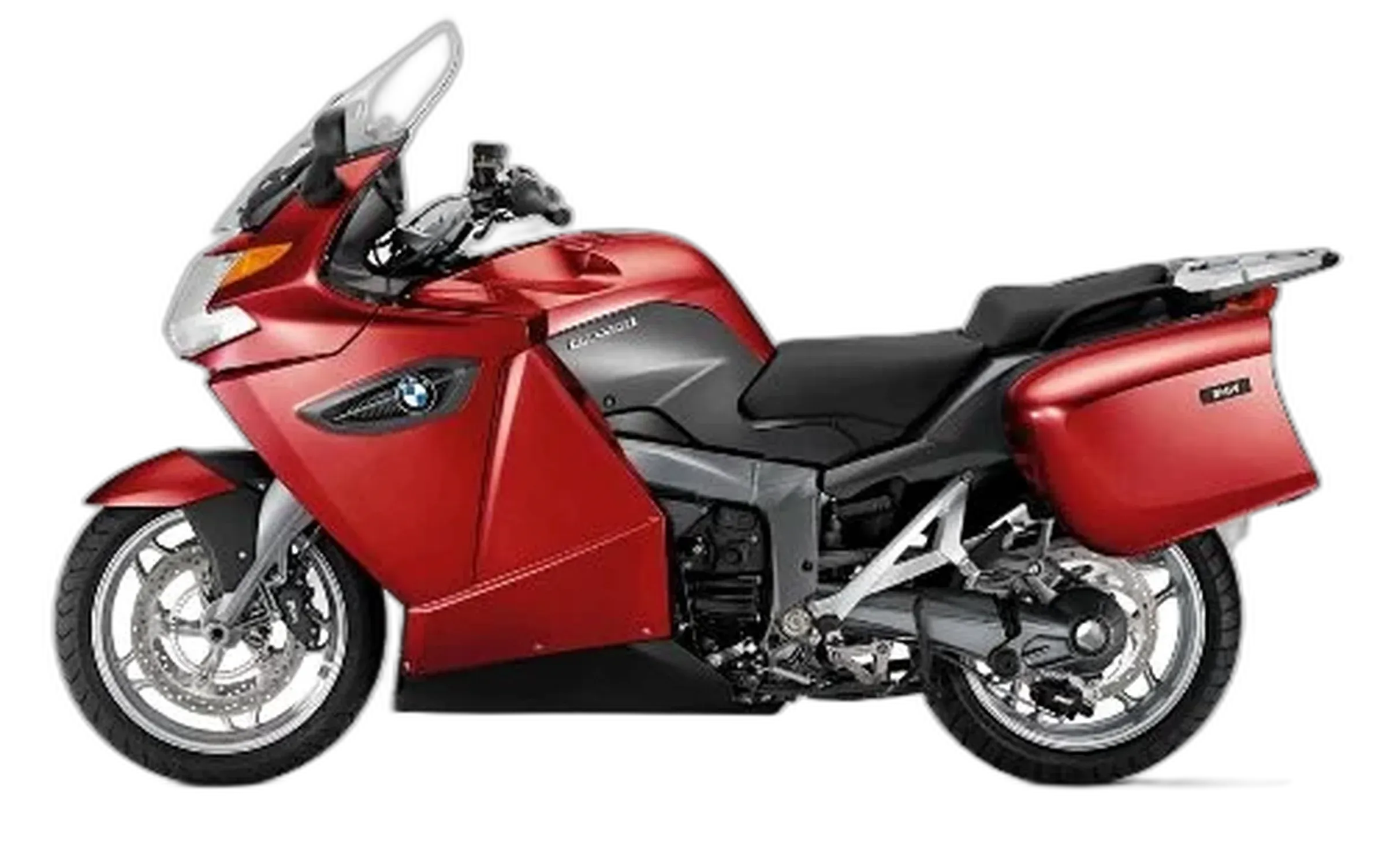

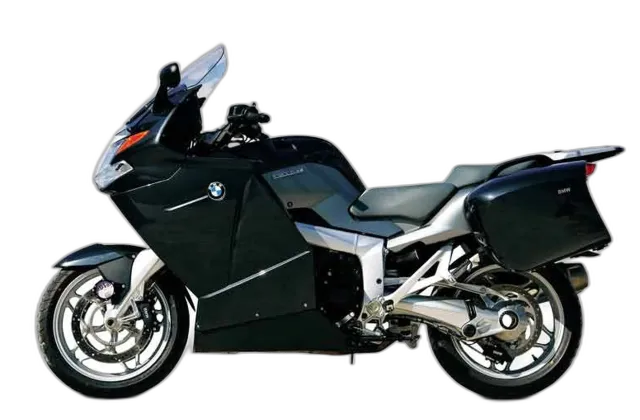
BMW K 1300 GT (K44) — Tourer
NastyNils / BMW Press

2009–2011 · Tourer · Buyer's Guide

K 1300 GT (K44)

Dead-Air Bubble, All Day

The Machine's Character

The K 1300 GT runs a 1293 cc inline-four making 160 hp and 100 lb-ft, mounted longitudinally and driving through a shaft. Smoothness defines it. Power builds without steps or stress, and a top-gear roll-on happens about as fast as you ask for it. The Duolever front end keeps a 562 lb machine composed, and with the available ESA suspension dialed in, it stays surprisingly precise for its mass. This is the comfort end of sport-touring, the bike built to add that last stretch of all-day ease a sharper machine leaves on the table.

On the road it asks for an engaged rider and rewards one. It steers with a linear, readable hand and never turns nervous at the pace real roads allow. Where it earns its keep is the long day, two-up or fully loaded, when comfort and weather protection do the heavy lifting. The honest caveat is mass. In fast back-to-back direction changes, the chicane stuff, the GT gives ground to lighter machines and you feel every pound of it. Buy this for distance and composure, not for chasing anyone through a set of tight switchbacks.

Hard Numbers

Spec sheets don't ride bikes, but they set the baseline.

Show full specs & equipment Hide specs & equipment
Key specifications
Power 160 hp (118 kW) @ 9,000 rpm
Torque 100 lb-ft (135 Nm) @ 8,000 rpm
Displacement 1293 cc
Engine Inline-four
Cooling Liquid-cooled
Fuel system Fuel injection
Gearbox 6-speed
Final drive Shaft
Frame Aluminum twin-spar
Fork Duolever
Front brake 320 mm
Rear brake 294 mm
Front tire 120/70 ZR17
Rear tire 180/55 ZR17
Seat height 31.5 in (800 mm)
Wet weight 562 lb (255 kg)
Fuel capacity 6.6 gal (25 L)
Top speed 155 mph (249 km/h)
Fuel economy 32 mpg (US)

Equipment check

Chassis

  • Electronic Suspension BMW ESA (Electronic Suspension Adjustment) Damping tuning to styleAuto load leveling Optional
  • Front Suspension Adjustable Standard
  • Rear Suspension Adjustable Standard
  • Cruise Control Standard

Comfort

  • Heated Grips Standard
  • Electrically Adjustable Windscreen Standard
  • Luggage System Standard

Connectivity

  • Tire Pressure Monitoring (TPMS) Optional

Safety

  • ABS BMW Integral ABS Generation II Stronger consistent brakingFirm brake lever feel Standard
  • Traction Control Optional

The Voice of Experience

Portrait of NastyNils

The test ride

Settle in and the first thing you notice is how little reaches you. The inline-four spins with almost no buzz through the bars or pegs, and at a cruise it's a quiet hum under the seat. Raise the screen to its top stop and the wind doesn't drop, it disappears: you sit behind a transparent wall in dead air, and the screen still adjusts at full highway speed. The position is upright and open, with cruise and the heated kit all on the left bar, no need to move your hand. On a cold evening the heated seat and grips kept me planted while the sport-bike crowd warmed their hands on engine cases. Hours stack up and you barely register them. Deep into a long day, when those riders were begging to swap, I had enough left to walk the city after the rest crawled to the bar.

Rated point by point — where it earns its keep

My own 0–100 score for this bike against the class, area by area — the marker on each bar is the class average.

What I keep coming back to is the electronic suspension. Ride with it once and a fixed setup feels like a step backward. On a long mixed route I was flipping between Comfort and Sport as the pavement changed under me, and the bike soaked up broken stretches that would have beaten me up on anything static. The heated grips and seat tune separately for rider and passenger, so neither of you is fighting the cold while the rest of the group stiffens up. And the cockpit finally makes sense: the controls you actually reach for sit close enough that your hand never leaves the bar. None of it is for show. It's the kind of equipment you stop noticing precisely because it does its job, hour after hour.

This is the one that's hard to put on a spec sheet. Ride it in a mixed group and the urge to chase the others or prove a point just isn't there. You're not winning any cool contest on a big GT, and you know it. What you get instead is the freedom to opt out of the scramble entirely. After a rough week, not needing to prove anything turns out to be its own quiet satisfaction, and this bike hands you that headspace without asking for anything in return.

Practicality on this bike is really about what's left in you at the end. It's set up so the distance comes out of the machine instead of out of you, and the difference shows up late in the day, when fatigue usually starts making your decisions for you. I finished routes with energy to spare and plans for the evening, which is not how these days normally go on something less complete. For covering real ground without paying for it the next morning, very little touches it.

The reworked fueling is the part that surprised me. Low-speed metering is clean once you're rolling, though the on/off transition right off a closed throttle can feel abrupt in slow traffic before it settles in — even so, threading this much mass through tight alleys feels far easier than the weight suggests. Off a corner it pulls without any fuss and keeps pulling. And honestly, you run out of legal road long before the motor runs out of pull. Saving any sympathy for it only starts to make sense at speeds you've no business reaching.

Point it and it commits, and it lets you know it's committing before you've finished the thought. There's no stretch of the corner where the front goes quiet on you or does something you didn't ask for. That readability is what makes it easy to string bends together at a real pace. The honest limit is quick back-to-back transitions. Ask it to flick one way and then straight back the other, and the weight finally announces itself and you cede a little ground to sharper machines.

Sunset over the Adriatic Sea near Primosten, Croatia. Golden hour light bathes calm water in warm tones, with a small sailboat on the distant horizon. Rocky vegetation frames the right foreground. Clear skies and gentle conditions.

The Truth on the Street

I've spent years listening to what K 1300 GT owners actually say, in long message threads, paddock conversations, and the steady stream of emails riders send me directly. The pattern is consistent. There's deep respect for how this bike travels, tempered by a short list of nagging faults that come up again and again.

What the long-haul crowd praises

Riders consistently come back to the same strengths. They describe an inline-four that feels effortless and free of vibration, and comfort that holds up across a full day in any weather. Many also note how well the bike disguises its bulk once it's rolling, steering with more precision than its size suggests. Owners who ordered the electronic suspension rate it highly among the available extras.

The faults owners keep flagging

The gripes are just as consistent. At walking pace the weight is the first thing mentioned, and the bike feels ponderous to maneuver in tight spots. Throttle response at small openings draws steady criticism for an abrupt on/off feel, and some riders fit aftermarket fuel controllers to smooth it. On reliability, three issues recur: a cam chain tensioner that can lose pressure and rattle, handlebar switch clusters that fail in heat, and a hot engine that often refuses to crank until the wiring is upgraded.

Known issues

  • Cam chain tensioner and guide failure

    engineoccasionalRecall

    The hydraulic tensioner can lose tension when the oil is hot and thin, causing rattling on startup or at idle. If the chain jumps teeth, it can severely damage the engine. A plastic jump guard and redesigned tensioner are available as a free warranty upgrade. Without it, catastrophic engine failure is possible.

  • Hot start difficulty due to wiring loom

    electricscommonRecall

    After coming up to operating temperature, the engine may crank very slowly or not at all. The problem is intermittent and often occurs after a fuel stop. BMW released a retrofit supplementary wiring harness (P/N 16148549916) and sometimes a new starter relay to resolve the issue. Some owners also find a new, high-spec battery helps.

  • Handlebar switch cluster failure

    electricsoccasional

    Internal resin sealing the two PCBs in the switch housings can melt when the bike is left in direct sun on a hot day. This causes random failure of indicators, windscreen adjustment, cruise control, or engine start. The only permanent fix is switch replacement.

  • Low-speed fueling jerkiness

    fuel systemcommon

    Many riders notice an abrupt on/off throttle transition, particularly in lower gears, making smooth riding in traffic challenging. Some attribute it to lean fuel mapping; aftermarket solutions like the BoosterPlug can improve response.

The Expert Benchmark

Where this BMW K 1300 GT pulls ahead of — or falls behind — its rivals on the numbers, and the typical bike in its class on character.

What kind of bike this is — character vs. the class

This bike Class average

The shape of the BMW K 1300 GT — numbers and character vs. the average Tourer

Head-to-head: BMW K 1300 GT vs. its rivals

The Long-Haul Verdict

Forget spec-sheet bragging. Here's who the K 1300 GT is actually built for.

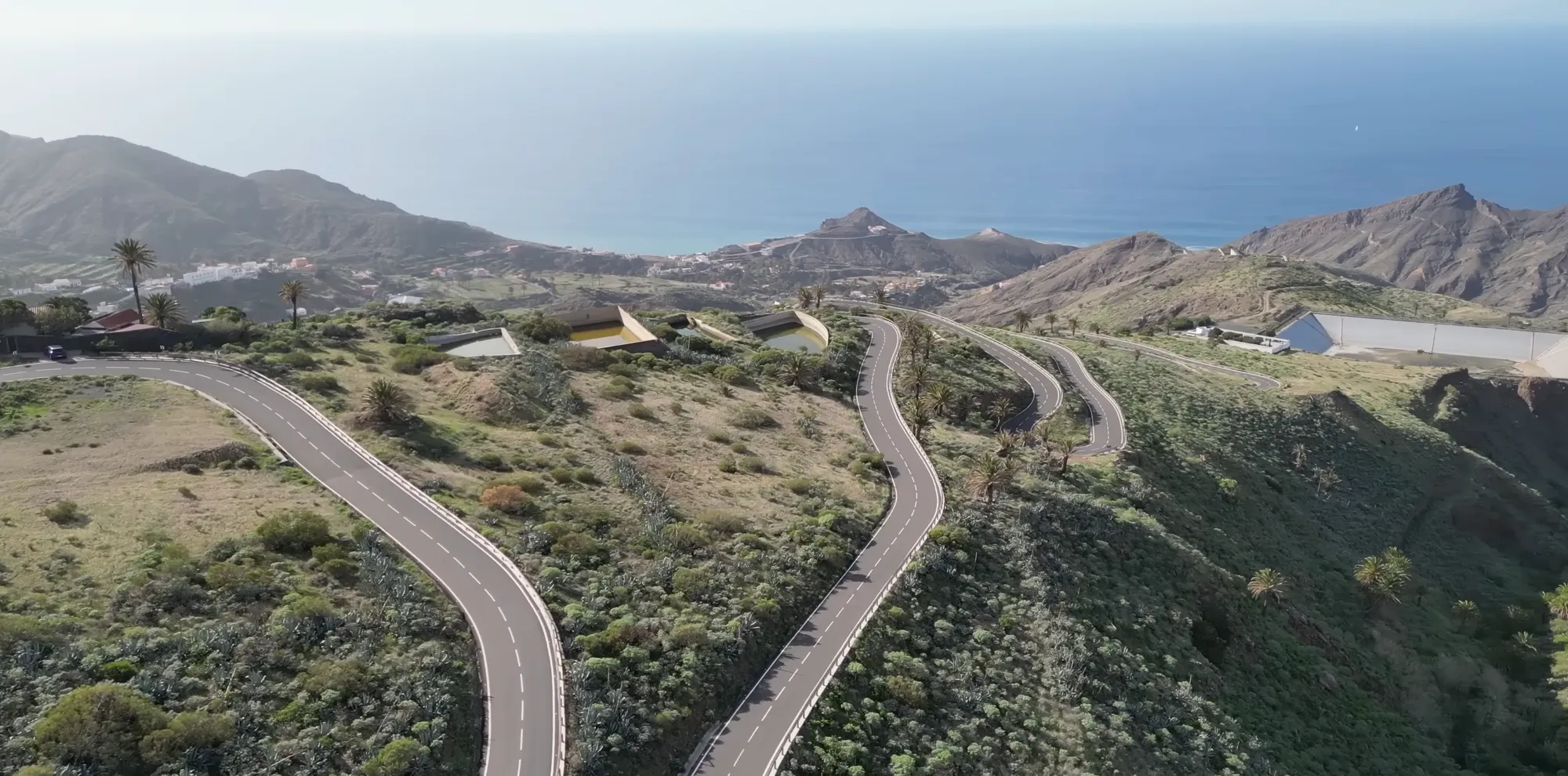
Aerial view of a winding asphalt road cutting through volcanic terrain on La Gomera, Canary Islands. The road curves through sparse green vegetation with rocky volcanic peaks visible in the background and a settled valley to the left. Clear lane markings, dry climate, partly cloudy sky.

Best motorcycle for Highway 1?

If your day links twisties, big views, and 200 to 400 miles without leaving you wrecked, the GT fits. It steers more willingly than its weight suggests and keeps you fresh long after a sharper bike would wear you down.

Made for Black Hills · Blue Ridge Parkway · Cherohala Skyway
Best touring motorcycle for long distance?

This is your bike. Loaded and two-up across big country, the GT delivers the comfort, weather protection, and shaft-drive ease that long routes demand, and it shrugs off the kind of day that flattens lesser tourers.

Made for Beartooth Highway · Blue Ridge Parkway · Going-to-the-Sun Road

Best motorcycle for Tail of the Dragon?

Be honest here. The GT steers cleanly and reads well, but on tight, rapid-fire corners its weight is a real handicap. If repeat runs at the Dragon are your whole reason to ride, something lighter serves you better.

Made for Back of the Dragon · Blue Ridge Parkway · Cherohala Skyway