By NastyNils·
Motorcycle comparison · Tourer vs Sport Tourer
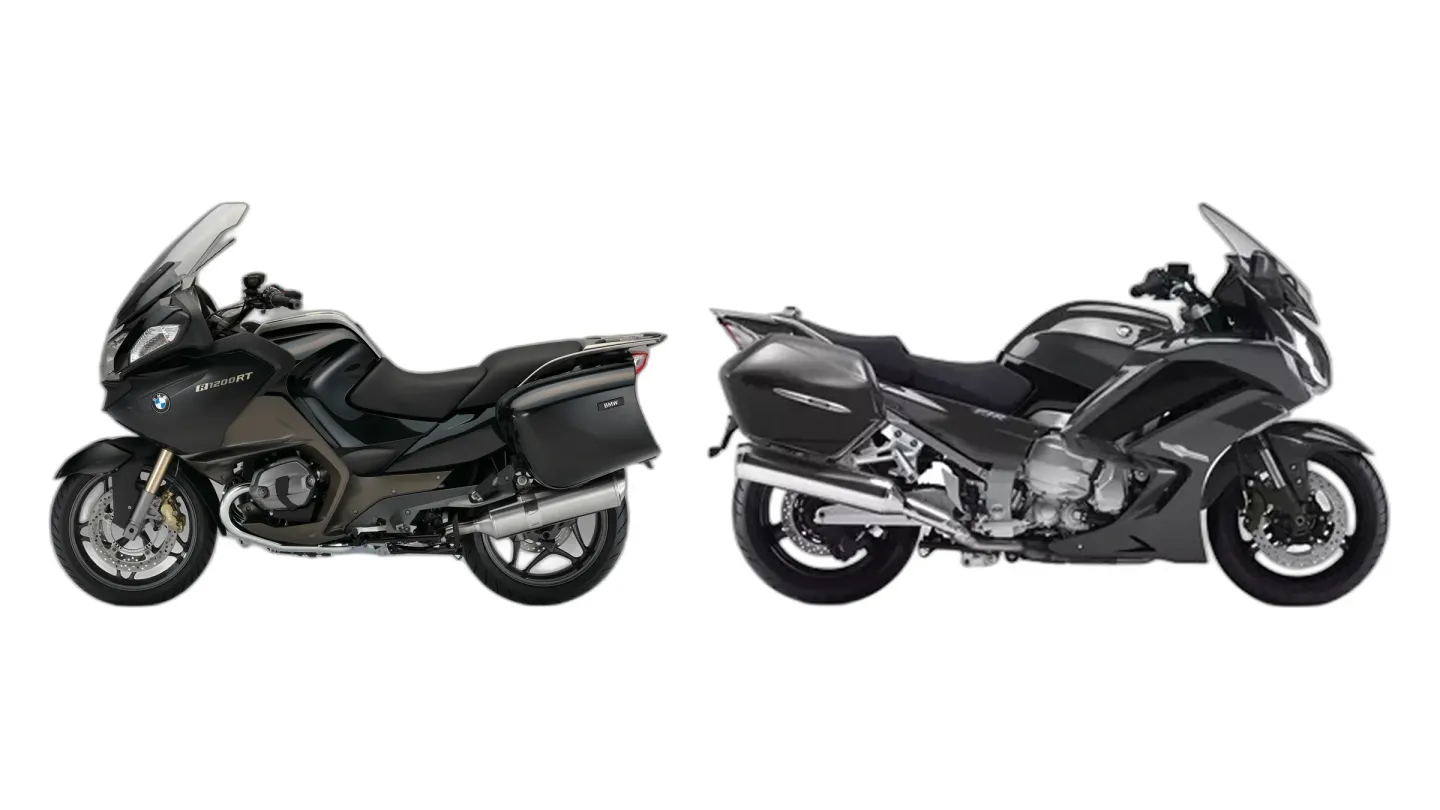
BMW R 1200 RT (K26) vs Yamaha FJR1300A (RP 23)
BMW R 1200 RT vs Yamaha FJR1300A: long days, loaded bags, one choice to make.
Roll over broken pavement on the BMW R 1200 RT and its plush suspension swallows the hit before you're aware it's there. The Yamaha FJR1300A meets that jolt with fully adjustable suspension, tuned however you've set it for comfort or for corners. The bike stays planted and holds its line.
So which one do you buy?
The R 1200 RT has the edge if…
Comfortable long-distance riding
Slight edge: R 1200 RT
Deep into a long ride, the R 1200 RT asks slightly less of your back and shoulders. Put it down to better wind protection. A small margin, and seat fit can overrule it.
The FJR1300A has the edge if…
Keeping running costs low
A touch ahead: FJR1300A
For the money you spend after the purchase, the FJR1300A nudges ahead. The gap is too small to plan a budget around.
Daily commuting & city riding
Inches ahead: FJR1300A
For the ride to work, the FJR1300A noses ahead. Credit simpler maintenance. Don't let that alone make the call.
What makes each one tick
R 1200 RT
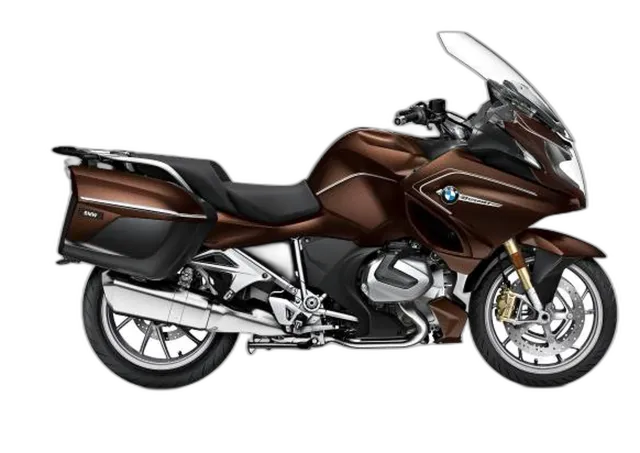
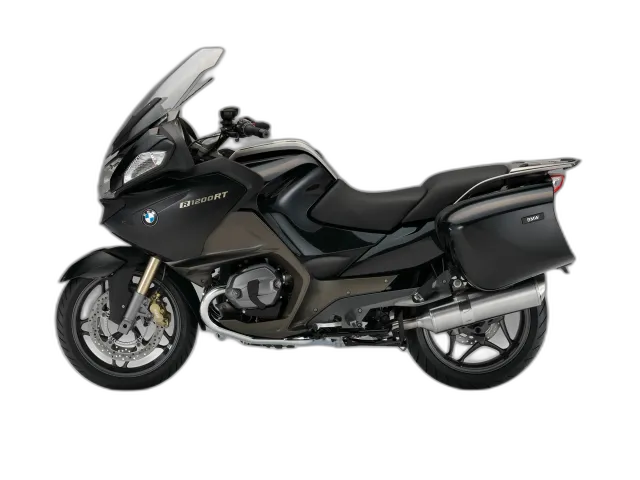
Long days pass with little fatigue behind the R 1200 RT's wide fairing, where there's a calm pocket of air even at highway speed. At corner entry, the Telelever front end turns the bike in eagerly and doesn't lose its poise with the cases loaded. Parking lots expose its tall seat. The boxer twin thrums and pulls from low revs.
FJR1300A
Highway miles don't wear on the FJR1300A, whose inline-four spins smoothly and stays relaxed at a steady pace. The throttle draws power that builds evenly through the revs. There's a rush at the top. Its bars answer a light touch once it's moving.
The Voice of Experience
What actually separates them
- The FJR1300A has the lower seat: 31.7 in (805 mm) vs 32.3 in (820 mm).
- The R 1200 RT has the lower wet weight: 571 lb (259 kg) vs 637 lb (289 kg).
- The FJR1300A makes more peak power: 144 hp (106 kW) vs 110 hp (81 kW).
Which one for the way you ride
A confidence-building first motorcycle
Neither is a natural fit
Learning on either of these is the hard way. A gentler bike will make you a better rider sooner.
They come out level on twisty roads. The better-kept used example is the smarter money.
Who each one is built for
What's good, and what you'll live with
R 1200 RT
What owners say
Strengths
- Robust and characterful boxer engine
- Impressive weather protection
Trade-offs
- Hefty weight at low speeds
- High cost of clutch and final drive repairs
- 2005-2006 servo brakes can be problematic
FJR1300A
What owners say
Strengths
- Powerful and smooth inline-four engine
- Legendary reliability and build quality
- Sporty handling and stability at speed
- Well-equipped with modern touring amenities
Trade-offs
- Heavy and cumbersome at low speeds
Known problems to check before you buy
R 1200 RT
- Fuel pump flange cracking The fuel pump flange can crack over time, allowing fuel to seep past the seal. BMW revised the part; a cracked flange is usually replaced with the improved version.
- Servo brake unit failure (2005-2006) The servo pump in the ABS modulator can fail, especially if corrosion sets in. When it fails, residual braking performance is dangerously poor. Replacement of the complete unit is the usual remedy.
- Final drive bearing/spline wear The final drive can develop oil leaks or noisy bearings, and the drive shaft splines may wear or corrode. Regular inspection and fluid changes are recommended. Failures can lead to rear wheel lock-up in extreme cases.
- Fuel pump controller failure The original silver-coloured fuel pump controller is prone to corrosion and sudden failure, leaving the rider stranded. A revised black-coated unit is more durable.
FJR1300A
No confirmed faults on file yet. That's not the same as fault-free.
What they share
- Fuel capacity
- 6.6 US gal (25 L)
- Final drive
- Shaft
- Front brake
- 320 mm
- Front tire
- 120/70-17
- Rear tire
- 180/55-17
Where the spec sheets split
| R 1200 RT | FJR1300A | |
|---|---|---|
| Seat height | 32.3 in (820 mm) | 31.7 in (805 mm) |
| Wet weight | 571 lb (259 kg) | 637 lb (289 kg) |
| R 1200 RT | FJR1300A | |
|---|---|---|
| Displacement | 1170 cc | 1298 cc |
| Engine | Flat-twin (boxer) | Inline-four |
| Cooling | Air/oil-cooled | Liquid-cooled |
| Power | 110 hp (81 kW) | 144 hp (106 kW) |
| Torque | 89 lb-ft (120 Nm) | 102 lb-ft (138 Nm) |
| R 1200 RT | FJR1300A | |
|---|---|---|
| Gearbox | 6-speed | 5-speed |
| Fork | Telelever | Telescopic |
What comes fitted, what costs extra
| R 1200 RT | FJR1300A | |
|---|---|---|
| Traction Control | Option | Standard |
| Ride Modes | Not offered | Standard |
| Cruise Control | Option | Standard |
| Tire Pressure Monitoring (TPMS) | Option | Not offered |
| Heated Grips | Option | Standard |
Head to head, area by area
Both bikes on the same scale, one area at a time.