By NastyNils·
Motorcycle comparison · Supersport
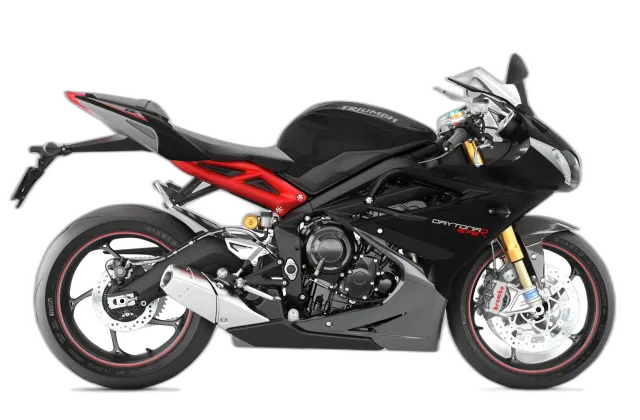
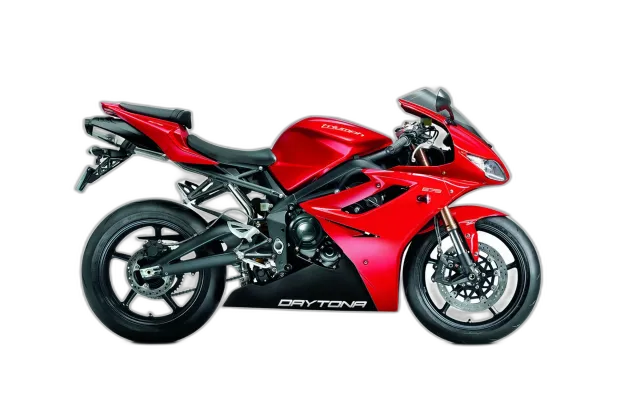
Triumph Daytona 675 (MY2013-R) vs Daytona 675 (D67LC2)
Over a rippled patch of tarmac, the 2013 Triumph Daytona 675 soaks up the hit and doesn't lose its composure. The 2009 Triumph Daytona 675 doesn't hide that ripple from you. Its Kayaba suspension sends it up the bars as feedback.
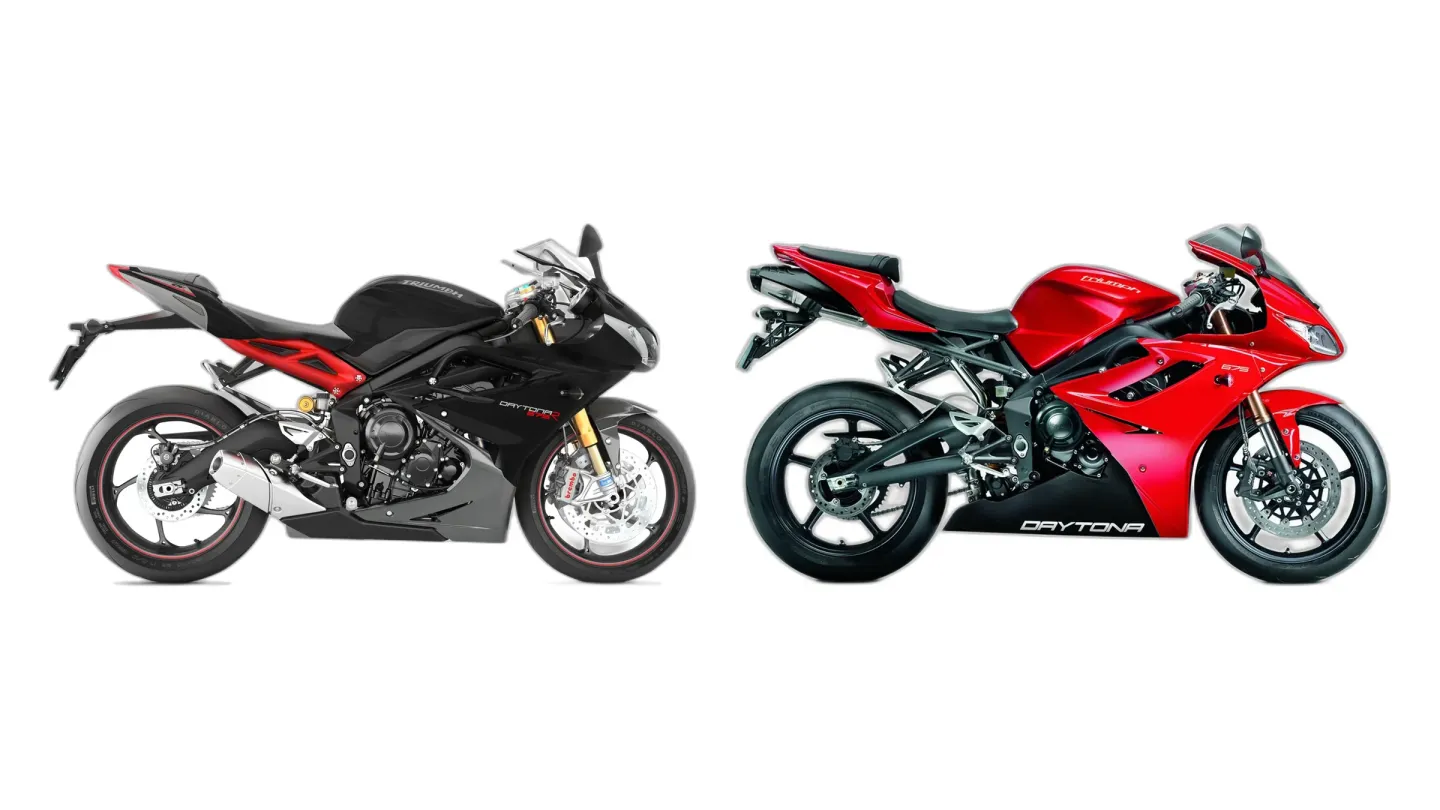
So which one do you buy?
The 2013 Daytona 675 has the edge if…
Racetrack use
Edges it: 2013 Daytona 675
The 2013 Daytona 675 pulls a nose ahead on track. Put it down to more suspension adjustment and stronger brakes. Don't count on it doing the work for you.
Sporty riding on twisty roads
By a nose: 2013 Daytona 675
Back-road fun leans slightly toward the 2013 Daytona 675. What tips it: better suspension. It's a narrow call, so trust your test ride.
What makes each one tick
2013 Daytona 675
The 2013 Daytona 675's shorter chassis gives the front tire a voice you can read, and it's still settled as the pace builds. At the limit, it doesn't punish a ragged line. A twist of the throttle brings a strong midrange shove that keeps building to a scream near the top. The intake howls down every straight.
2009 Daytona 675
The 2009 Daytona 675's narrow aluminum frame lets it flick into a corner with little effort, and the front tells you what it's doing on the way in. Tall footpegs and low-set clip-ons fold you into a tight tuck that's hard on you once a street ride stretches out. Its fat midrange means you don't have to wring it to go quick. The exhaust throbs on the exit.
Nils rode the 2009 Daytona 675 in Spain in 2008 (NastyNils Testride).
The Voice of Experience

What actually separates them
- The 2013 Daytona 675 has the lower wet weight: 406 lb (184 kg) vs 417 lb (189 kg).
- ABS: standard on the 2013 Daytona 675, not offered on the 2009 Daytona 675.
- Steering Damper: standard on the 2009 Daytona 675, not offered on the 2013 Daytona 675.
Which one for the way you ride
Comfortable long-distance riding
Look elsewhere
Neither one is built for long-haul comfort. For big miles, look at a proper tourer or sport tourer.
These two run dead level on commuting and running costs. Sit on both in the showroom and trust what your body says.
Who each one is built for
What's good, and what you'll live with
2013 Daytona 675
What owners say
Strengths
- Exceptional handling and chassis composure
- Glorious triple engine with broad powerband
- Exhilarating soundtrack and character
- Premium Öhlins suspension and Brembo brakes
- Approachable yet razor-sharp track weapon
2009 Daytona 675
What owners say
Strengths
- Addictive exhaust note
- Torquey, characterful inline-triple engine
- High-quality suspension adjustability
Trade-offs
- Cramped supersport ergonomics
- Poor fuel economy for class
Known problems to check before you buy
2013 Daytona 675
- Öhlins rear shock absorber recall (2014–2015 R models) Recall 15V255000 A recall was issued due to potential cracking of the shock absorber body. Affected units were replaced free of charge.
- Exup valve cable stretch triggers CEL The exhaust valve cables stretch over time, causing the check engine light to illuminate.
2009 Daytona 675
- Indicator stem recall (NHTSA 13V-104) Recall 13V104000 Affected 2012-2013 Daytona 675 models may have defective indicator stems that require replacement. This is a safety recall due to potential loss of turn signal functionality.
- Oil/water heat exchanger failure The oil-to-water heat exchanger can internally fail, allowing coolant and oil to mix. This can lead to engine damage if not caught early. Aftermarket delete kits are popular.
- Regulator/rectifier failure Recall 12V445000 The R/R can overheat, leading to charging system failure and potentially leaving the rider stranded. Covered by NHTSA recall campaign 12V445000 for 2006-2009 models.
- EXUP valve seizing The exhaust valve in the collector box can seize due to corrosion or carbon buildup, triggering the check engine light. Often occurs around 15,000 miles; can be freed by adjustment or removed.
What they share
- Displacement
- 675 cc
- Engine
- Inline-three
- Cooling
- Liquid-cooled
- Power
- 126 hp (94 kW)
- Fuel capacity
- 4.6 US gal (17.4 L)
- Gearbox
- 6-speed
- Final drive
- Chain
- Fork
- Upside-down (USD)
- Front tire
- 120/70-17
- Rear tire
- 180/55-17
Where the spec sheets split
| 2013 Daytona 675 | 2009 Daytona 675 | |
|---|---|---|
| Seat height | 32.7 in (830 mm) | 32.3 in (820 mm) |
| Wet weight | 406 lb (184 kg) | 417 lb (189 kg) |
| 2013 Daytona 675 | 2009 Daytona 675 | |
|---|---|---|
| Peak power at | 12,500 rpm | 12,600 rpm |
| Torque | 55 lb-ft (74 Nm) | 54 lb-ft (73 Nm) |
| 2013 Daytona 675 | 2009 Daytona 675 | |
|---|---|---|
| Fuel economy | 31 mpg (US) / 7.63 L/100 km | 32 mpg (US) / 7.24 L/100 km |
| 2013 Daytona 675 | 2009 Daytona 675 | |
|---|---|---|
| Front brake | 310 mm | 308 mm |
What comes fitted, what costs extra
| 2013 Daytona 675 | 2009 Daytona 675 | |
|---|---|---|
| ABS | Standard | Not offered |
| Steering Damper | Not offered | Standard |
| Quickshifter | Standard | Not offered |
| Slipper Clutch | Standard | Not offered |
Head to head, area by area
Both bikes on the same scale, one area at a time.