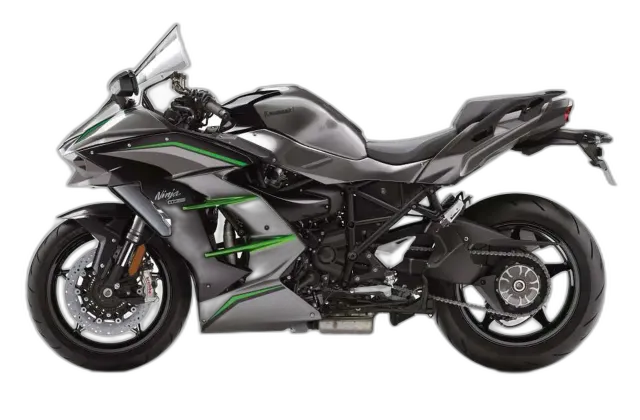
By NastyNils· ·
Motorcycle comparison · Supersport vs Sport Tourer
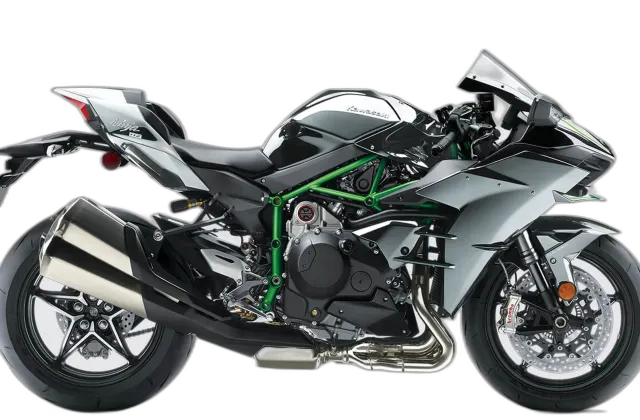
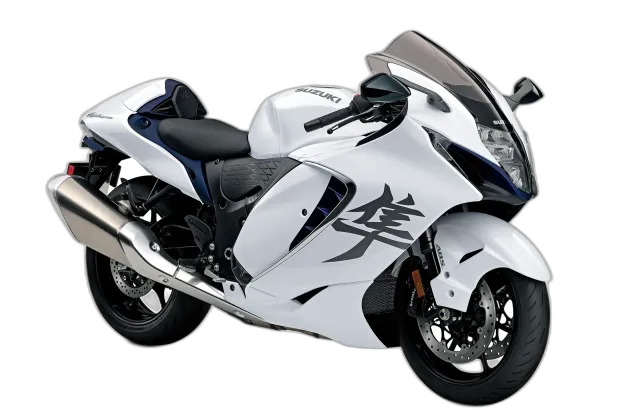
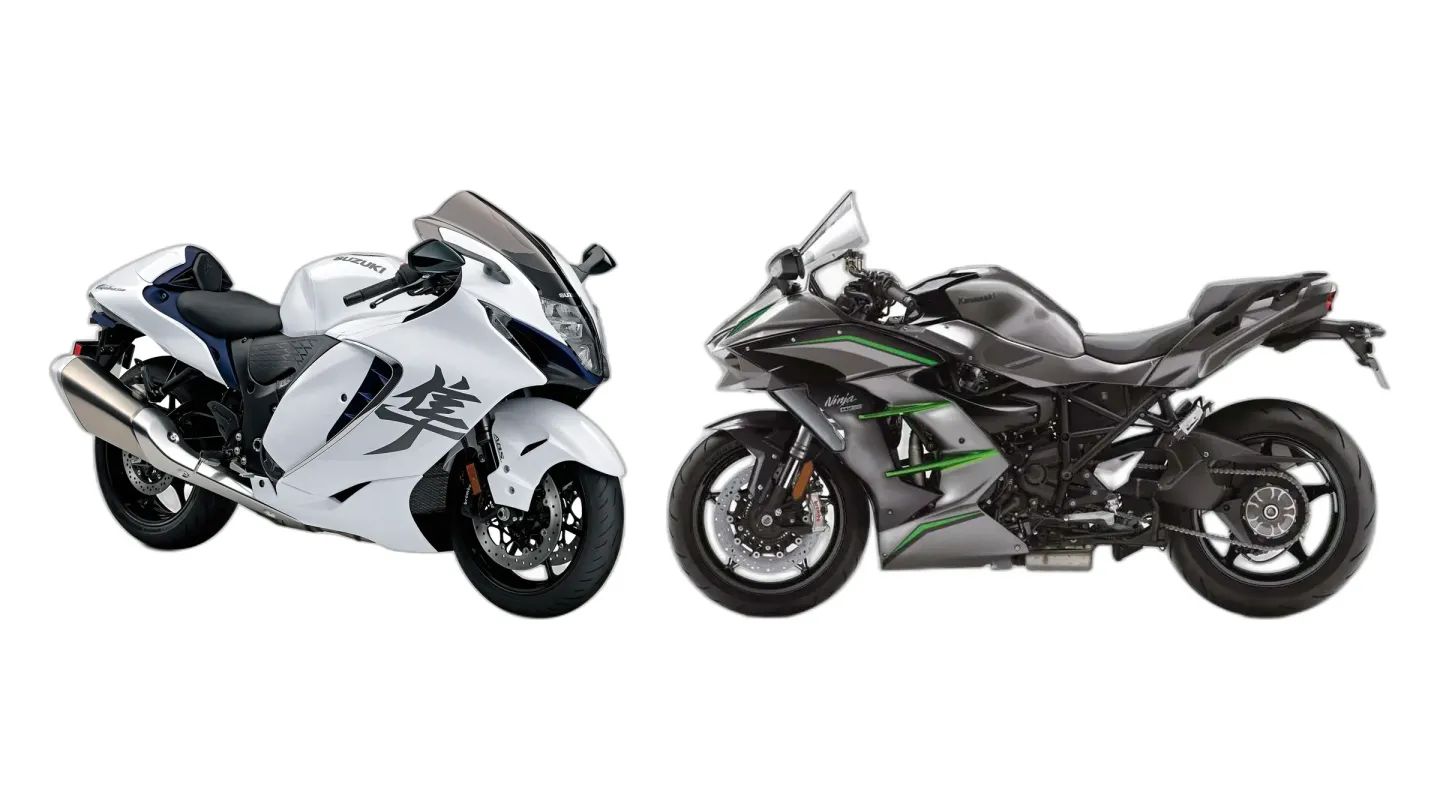
Suzuki Hayabusa (MY2021) vs Kawasaki Ninja H2 SX (MY2018-SE)
Suzuki Hayabusa vs Kawasaki Ninja H2 SX: two kinds of bike, and who each one is for.
Lean into a fast sweeper on the Suzuki Hayabusa and it won't budge, its long wheelbase pinned to the line while the suspension soaks up broken pavement. The Kawasaki Ninja H2 SX folds deeper and stays put.
So which one do you buy?
Buy the Ninja H2 SX if…
Daily commuting & city riding
By a mile: Ninja H2 SX
If most of your miles are the commute, the Ninja H2 SX is your bike. It simply does the daily job better.
The Ninja H2 SX has the edge if…
Keeping running costs low
A touch ahead: Ninja H2 SX
Over a year of riding, the Ninja H2 SX noses ahead on running costs. A neglected example would wipe that out.
Sporty riding on twisty roads
Inches ahead: Ninja H2 SX
The Ninja H2 SX is a touch more fun when the road starts bending. Just a touch.
Which one's the smarter buy
Apples and oranges
The Hayabusa and the Ninja H2 SX do different jobs, so neither is the clear better buy for the money. You're picking between a sport tourer and a supersport, not a price tag.
What makes each one tick
Hayabusa
Real work on the Hayabusa happens well short of the redline, where torque builds to 111 lb-ft (150 Nm) at 7,000 rpm. On Angeles Crest Highway, the throttle answers with creamy shove through the driveline, and you don't have to chase the tach for it. Triple-digit speeds don't rattle the chassis.
Ninja H2 SX
The wind doesn't fight you on the Ninja H2 SX, because a slight forward tilt from the saddle turns it into support well into serious highway speeds. There's a cradle for external navigation, but the mounting position forces your eyeline well below where it needs to be when running fast. Flat out at track pace, there's still headroom in the engine, and that margin keeps you calm. You'll need a firmer squeeze on the brake lever than a pure sportbike asks for to slow just as hard. The lever talks through every stop.
Nils rode the Ninja H2 SX in Portugal in 2018, and in the Czech Republic in 2022 (NastyNils Testride).
The Voice of Experience

What actually separates them
- The Hayabusa has the lower seat: 31.5 in (800 mm) vs 32.9 in (835 mm).
- The Hayabusa makes more peak torque: 111 lb-ft (150 Nm) vs 101 lb-ft (137 Nm).
- The Hayabusa has the larger engine: 1340 cc vs 998 cc.
Which one for the way you ride
Comfortable long-distance riding
No verdict: Hayabusa
The Hayabusa isn't built for long days on the road, so it sits this one out.
A confidence-building first motorcycle
Neither one fits
Learning on either of these is the hard way. A gentler bike will make you a better rider sooner.
Who each one is built for
What's good, and what you'll live with
Hayabusa
What owners say
Strengths
- Supremely supple ride quality and rock-solid high-speed stability
- Comprehensive, user-friendly electronics suite
- Strong, creamy midrange from the retuned engine
Ninja H2 SX
Strengths
- Pull at any engine speed
- Wind cover that actually works
- Clutchless shifts both ways
- Leans deeper than its weight
- Long service, low-fuss blower
Trade-offs
- Stubborn on cold tires
- Tight for very tall riders
- Tire choice is high-stakes
- Hefty weight challenges low‑speed maneuvers
Known problems to check before you buy
Hayabusa
No confirmed faults on file yet. That's not the same as fault-free.
Ninja H2 SX
- Recall 20V676000: POWER TRAIN:MANUAL TRANSMISSION Recall 20V676000 Kawasaki Motors Corp., U.S.A. (KMC) is recalling certain 2018-2020 Ninja H2 SX, Ninja H2 SXSE, and 2019-2020 Ninja H2 SXSE+ motorcycles. In the event of a gear misengagement the engine electronic control unit (ECU) programming doesn't have the capability to suppress high RPM during transmission. If the transmission gears are not properly engaged while shifting into 4th or 5th gear, high engine RPM can cause the output gears of 4th or 5th to fracture when the gears re-engage.
What they cost used
These prices compare a 3-year-old Hayabusa with a 3-year-old Ninja H2 SX.
- Hayabusa
- $16,500
- Ninja H2 SX
- $23,000
At three years old, the Suzuki Hayabusa sits around $16,500 while the Kawasaki Ninja H2 SX runs about $23,000. That's a $6,500 gap in the Hayabusa's favor. These figures come from earlier used-market records, not live listings.
What they share
- Engine
- Inline-four
- Cooling
- Liquid-cooled
- Gearbox
- 6-speed
- Final drive
- Chain
- Front tire
- 120/70-17
Where the spec sheets split
| Hayabusa | Ninja H2 SX | |
|---|---|---|
| Seat height | 31.5 in (800 mm) | 32.9 in (835 mm) |
| Wet weight | 582 lb (264 kg) | 573 lb (260 kg) |
| Hayabusa | Ninja H2 SX | |
|---|---|---|
| Displacement | 1340 cc | 998 cc |
| Power | 190 hp (140 kW) | 200 hp (147 kW) |
| Peak power at | 9,700 rpm | 11,000 rpm |
| Torque | 111 lb-ft (150 Nm) | 101 lb-ft (137 Nm) |
| Peak torque at | 7,000 rpm | 9,500 rpm |
| Hayabusa | Ninja H2 SX | |
|---|---|---|
| Fuel capacity | 5.3 US gal (20 L) | 5.0 US gal (19 L) |
| Hayabusa | Ninja H2 SX | |
|---|---|---|
| Rear tire | 190/50-17 | 190/55-17 |
What comes fitted, what costs extra
| Hayabusa | Ninja H2 SX | |
|---|---|---|
| Electronic Suspension | Not offered | Standard (from 2022) |
| Steering Damper | Standard | Not offered |
| Adaptive Cruise Control | Not offered | Standard (from 2022) |
| Smartphone Connectivity | Not offered | Standard |
| Tire Pressure Monitoring (TPMS) | Not offered | Standard (from 2022) |
| Heated Grips | Option | Standard |
| Luggage System | Not offered | Option |
| Cornering Lights | Not offered | Standard |
Head to head, area by area
Both bikes on the same scale, one area at a time.