By NastyNils· ·
Motorcycle comparison · Supersport
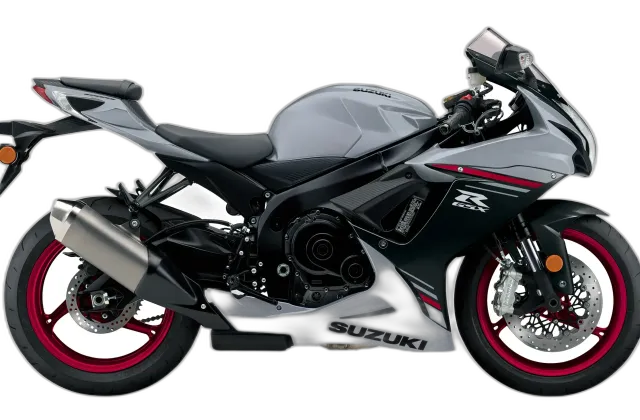
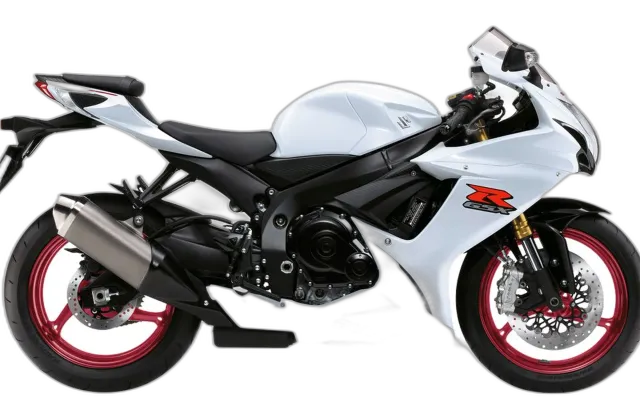
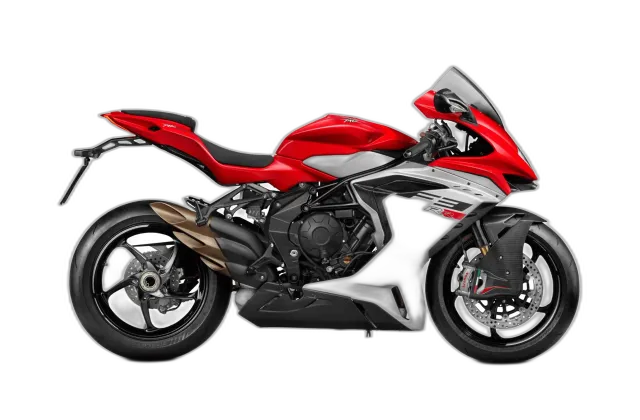
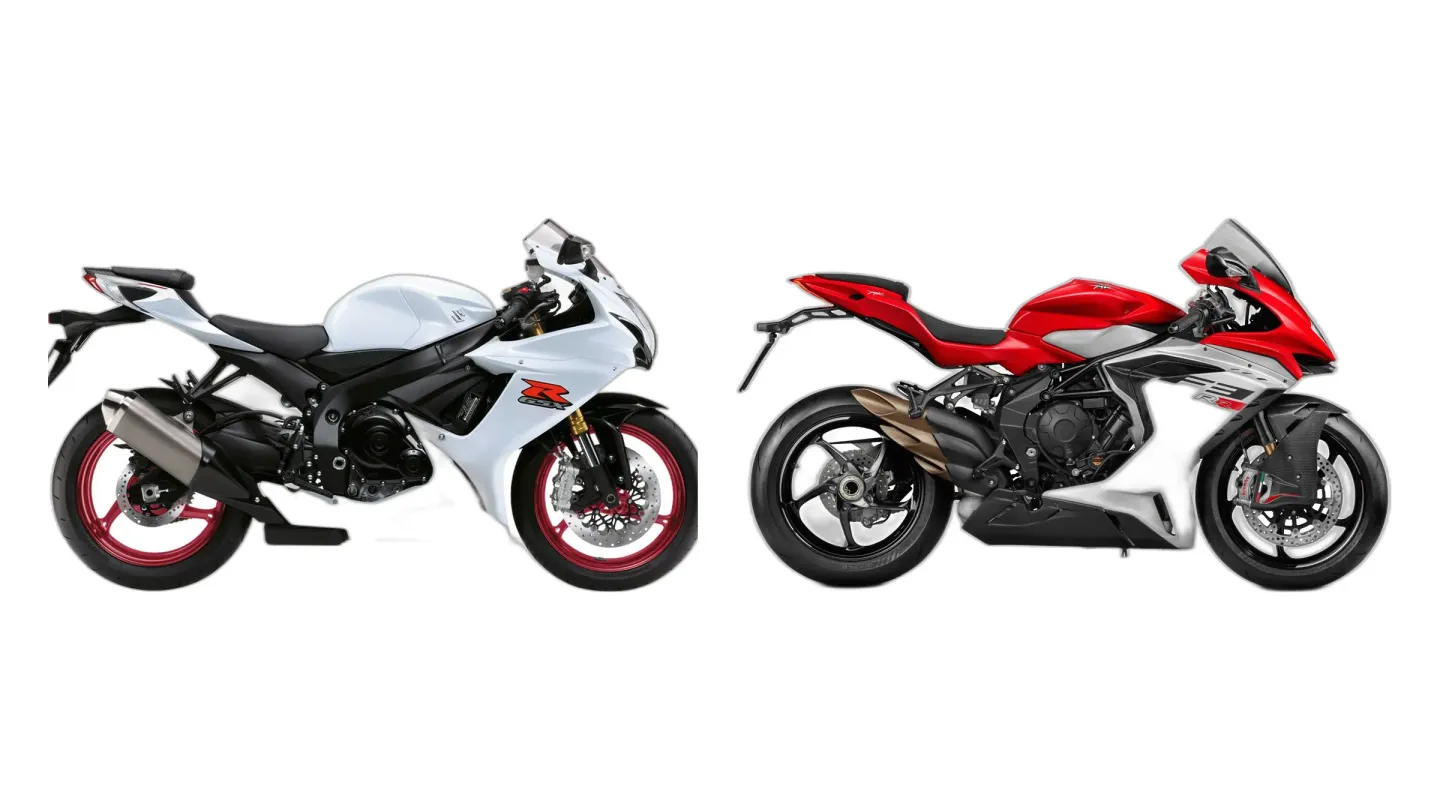
Suzuki GSX-R 750 (L1) vs MV Agusta F3 800 (MY2013-RR)
Suzuki GSX-R 750 vs MV Agusta F3 800: which one to buy for the riding you do.
Out of a slow exit, the Suzuki GSX-R 750 picks up clean off the throttle and won't really scream until you drop a gear. The MV Agusta F3 800's triple surges hard from the midrange.
So which one do you buy?
The GSX-R 750 has the edge if…
Keeping running costs low
A touch ahead: GSX-R 750
For the money you spend after the purchase, the GSX-R 750 nudges ahead. The gap is too small to plan a budget around.
Sporty riding on twisty roads
By a nose: GSX-R 750
Through a string of corners, the GSX-R 750 feels a little more eager. The gap is small, so ride both.
Racetrack use
Inches ahead: GSX-R 750
The GSX-R 750 pulls a nose ahead on track. Don't count on it doing the work for you.
Which one's the smarter buy
Money won't decide it
The price gap doesn't produce a clear winner. Neither bike is the clear better buy for the money.
What makes each one tick
GSX-R 750
There's no anger in the GSX-R 750's inline-four, just an eager rush toward redline that won't take the conversation away from you. There's a raw howl up top. Corner entry takes a light press on the bar, and the front end tells you what the tire's holding. Each shift snaps home, lap after lap.
Nils rode the GSX-R 750 in the Eifel in 2015, and in Andalusia in 2025 (NastyNils Testride).
F3 800
The F3 800's inline-three wails through its exhaust and doesn't stop pulling as the revs stack up. A bump mid-corner doesn't upset the chassis, and the bike holds the line you've chosen. It's never a handful. The Brembo lever bites harder the deeper you squeeze.
The Voice of Experience
What actually separates them
- The GSX-R 750 has the lower seat: 31.9 in (810 mm) vs 32.7 in (830 mm).
- The F3 800 has the larger engine: 798 cc vs 749 cc.
- ABS: standard on the F3 800, not offered on the GSX-R 750.
Which one for the way you ride
Comfortable long-distance riding
Not their thing
Hours in the saddle won't flatter either of these. They're happier on shorter runs.
Count commuting as a draw. The deal on the table and the condition of the bike matter more here.
Who each one is built for
What's good, and what you'll live with
GSX-R 750
Strengths
- Eager, never angry
- Commits on a light push
- Gearbox that just works
- Built for long, hard laps
- Bristling, free-revving engine character
Trade-offs
- Geared a notch too tall
- Stock brakes fade when hot
- Minimal electronic aids
- Firm suspension for road riding
F3 800
What owners say
Strengths
- Explosive yet refined triple engine
- Pin-sharp handling and stability
- Exotic Italian design and aero package
- Superb Brembo braking performance
Trade-offs
- Build quality slightly lags rivals
Known problems to check before you buy
GSX-R 750
- Mirror caps falling off The plastic mirror caps are held by fragile tabs that can break, causing the cap to detach while riding. Suzuki later supplied caps with longer tabs to fix the issue.
F3 800
No confirmed faults on file yet. That's not the same as fault-free.
What they cost used
These prices compare a 2-year-old GSX-R 750 with a 2-year-old F3 800.
- GSX-R 750
- about $12,000
- F3 800
- about $20,200
At two years old, the Suzuki GSX-R 750 sits around $12,000 while the MV Agusta F3 800 runs about $20,200. That's an $8,200 gap in the GSX-R 750's favor. These are US market estimates, not live listings.
What they share
- Cooling
- Liquid-cooled
- Gearbox
- 6-speed
- Final drive
- Chain
- Fork
- Upside-down (USD)
- Front tire
- 120/70-17
- Rear tire
- 180/55-17
Where the spec sheets split
| GSX-R 750 | F3 800 | |
|---|---|---|
| Seat height | 31.9 in (810 mm) | 32.7 in (830 mm) |
| Wet weight | 419 lb (190 kg) | 424 lb (192 kg) |
| GSX-R 750 | F3 800 | |
|---|---|---|
| Displacement | 749 cc | 798 cc |
| Engine | Inline-four | Inline-three |
| Power | 150 hp (110 kW) | 147 hp (108 kW) |
| Peak power at | 13,200 rpm | 13,000 rpm |
| Torque | 64 lb-ft (87 Nm) | 65 lb-ft (88 Nm) |
| Peak torque at | 11,200 rpm | 10,100 rpm |
| Top speed | 170 mph (274 km/h) | 149 mph (240 km/h) |
| GSX-R 750 | F3 800 | |
|---|---|---|
| Fuel economy | 44 mpg (US) / 5.35 L/100 km | 37 mpg (US) / 6.3 L/100 km |
| Fuel capacity | 4.5 US gal (17 L) | 4.4 US gal (16.5 L) |
| GSX-R 750 | F3 800 | |
|---|---|---|
| Front brake | 310 mm | 320 mm |
What comes fitted, what costs extra
| GSX-R 750 | F3 800 | |
|---|---|---|
| ABS | Not offered | Standard |
| Cornering ABS | Not offered | Standard |
| Traction Control | Not offered | Standard |
| Wheelie Control | Not offered | Standard |
| Launch Control | Not offered | Standard |
| Steering Damper | Standard | Option |
| Quickshifter | Not offered | Standard |
| TFT Display | Not offered | Standard |
| Smartphone Connectivity | Not offered | Standard |
| LED Headlight | Not offered | Standard |
Head to head, area by area
Both bikes on the same scale, one area at a time.