By NastyNils·
Motorcycle comparison · Supersport
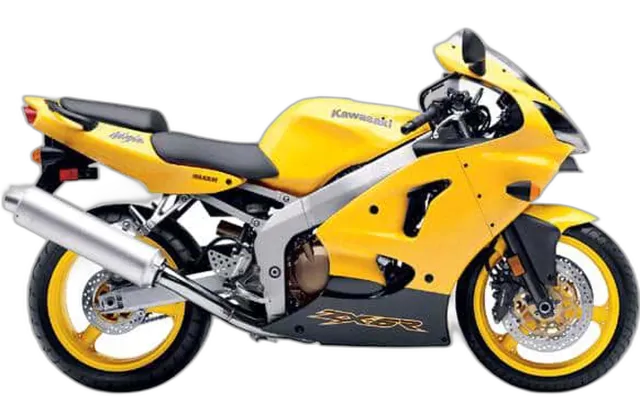
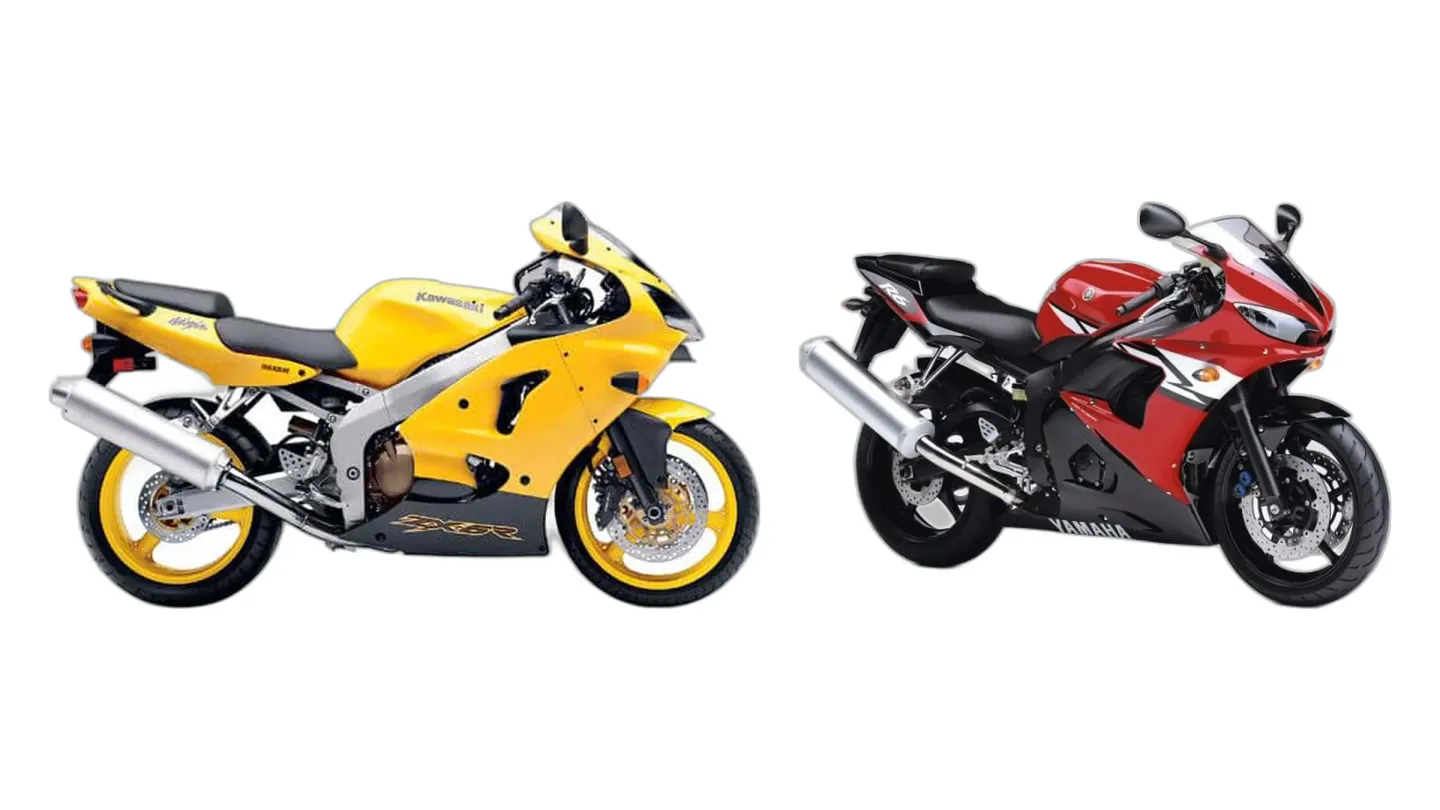
Kawasaki Ninja ZX-6R (ZX636A) vs Yamaha YZF-R6 (RJ 05)
Kawasaki Ninja ZX-6R vs Yamaha YZF-R6: which one to buy for the riding you do.
Roll on the throttle of the Kawasaki Ninja ZX-6R in a tall gear and it doesn't wait for a downshift: the midrange pulls you straight out. The Yamaha YZF-R6 doesn't wake up under the throttle until the tach swings high. Then it's screaming toward redline in one furious rush.
So which one do you buy?
The Ninja ZX-6R has the edge if…
Sporty riding on twisty roads
Nose ahead: Ninja ZX-6R
Back-road fun leans slightly toward the Ninja ZX-6R. It's a narrow call, so trust your test ride.
What makes each one tick
Ninja ZX-6R
There's real shove in the ZX-6R's engine from the middle of its rev range, and you'll rarely click down a cog to keep momentum. Low pegs meet tall bars. Corner entry runs through a chassis that's happier on a back road than on a racetrack. Off the apex, the engine does the hauling.
YZF-R6
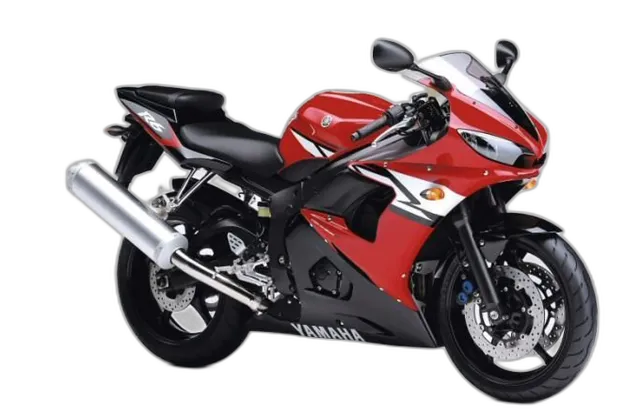
The YZF-R6 doesn't argue with a direction change: its aluminum Deltabox III frame swings 408 lb (185 kg) from one lean to the next. A mid-corner bump doesn't knock the front off the line it's holding. The street asks a lot. The frame reports every ripple in the tarmac.
The Voice of Experience

What actually separates them
- The YZF-R6 has the lower wet weight: 408 lb (185 kg) vs 430 lb (195 kg).
- The YZF-R6 makes more peak power: 125 hp (92 kW) vs 115 hp (84 kW).
- The Ninja ZX-6R has the larger engine: 636 cc vs 599 cc.
Which one for the way you ride
Comfortable long-distance riding
Both miss here
For all-day comfort, both fall short. Keep the rides short and you'll get on fine with either.
They come out level on track days, commuting, and running costs. The better-kept used example is the smarter money.
Who each one is built for
What's good, and what you'll live with
Ninja ZX-6R
What owners say
Strengths
- Strong mid-range torque
- Spacious old‑school riding position
Trade-offs
- Carburetor maintenance can be finicky
YZF-R6
What owners say
Strengths
- Exhilarating top-end power delivery
- Razor-sharp, agile handling
- Excellent value on the used market
What they share
- Seat height
- 32.3 in (820 mm)
- Engine
- Inline-four
- Cooling
- Liquid-cooled
- Peak torque at
- 12,000 rpm
- Gearbox
- 6-speed
- Final drive
- Chain
- Rear tire
- 180/55-17
Where the spec sheets split
| Ninja ZX-6R | YZF-R6 | |
|---|---|---|
| Wet weight | 430 lb (195 kg) | 408 lb (185 kg) |
| Ninja ZX-6R | YZF-R6 | |
|---|---|---|
| Displacement | 636 cc | 599 cc |
| Power | 115 hp (84 kW) | 125 hp (92 kW) |
| Peak power at | 12,500 rpm | 13,000 rpm |
| Torque | 51 lb-ft (69 Nm) | 50 lb-ft (68 Nm) |
| Ninja ZX-6R | YZF-R6 | |
|---|---|---|
| Fuel capacity | 4.8 US gal (18 L) | 4.5 US gal (17 L) |
| Ninja ZX-6R | YZF-R6 | |
|---|---|---|
| Fork | Upside-down (USD) | Telescopic |
| Front brake | 300 mm | 298 mm |
| Front tire | 120/65-17 | 120/60-17 |
| Wheelbase | 56.1 in (1425 mm) | 54.5 in (1385 mm) |
Head to head, area by area
Both bikes on the same scale, one area at a time.