By NastyNils· ·
Motorcycle comparison · Supersport vs Naked Bike
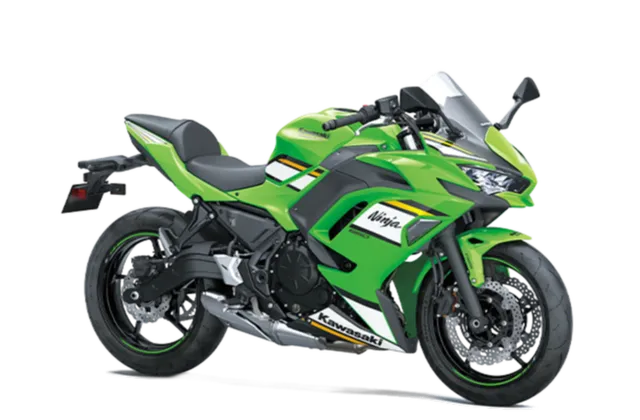
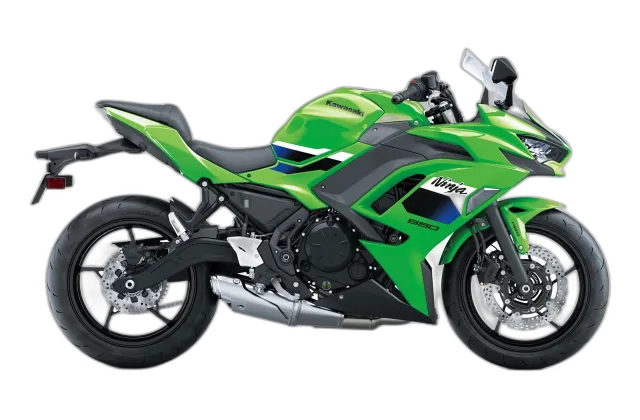
Kawasaki Ninja 650 (EX650P) vs Suzuki SV650 (WCX0)
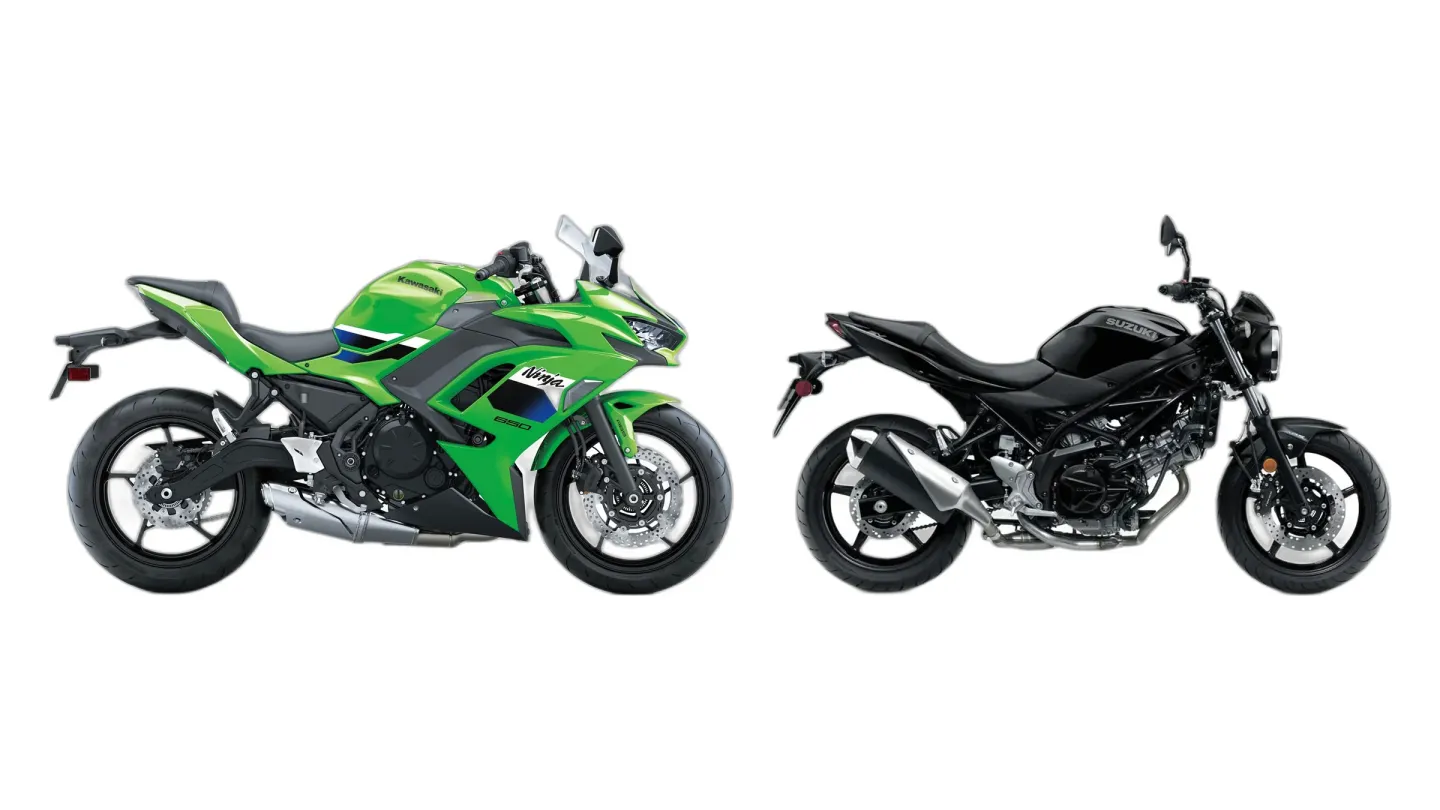
Kawasaki Ninja 650 vs Suzuki SV650: two kinds of bike, and who each one is for.
In stop-and-go traffic, the Kawasaki Ninja 650 tips into each turn with a light nudge, and it's easy to hold at a crawl. The Suzuki SV650's bars sit narrow, and that doesn't bother you in the crush.
So which one do you buy?
The Ninja 650 has the edge if…
Daily commuting & city riding
Inches ahead: Ninja 650
The Ninja 650 edges it for the daily grind. It's down to lighter steering. It's a small gap, not a reason on its own.
A confidence-building first motorcycle
By a nose: Ninja 650
The Ninja 650 is slightly friendlier for a newer rider. Slightly.
Sporty riding on twisty roads
Nose ahead: Ninja 650
Back-road fun leans slightly toward the Ninja 650. What tips it: more feel through the bars. It's a narrow call, so trust your test ride.
What makes each one tick
Ninja 650
Carrying 425 lb (193 kg) on a steel trellis frame, the Ninja 650 flicks from corner to corner and doesn't fight back at the grips. Off the brake lever, its parallel twin hauls cleanly from low revs and climbs in a straight line toward the exit. The riding position sits you upright, and long days don't grind you down. The windscreen splits the highway blast.
SV650
The SV650's 90-degree V-twin thumps out torque low in the revs and swells steadily as the needle rises, and its exhaust note's half the fun. On Back of the Dragon, the compact trellis frame steers into every bend without fuss and doesn't need a shove at the bar. Lap after lap, the brakes bite.
The Voice of Experience

What actually separates them
- The Ninja 650 has the lower wet weight: 425 lb (193 kg) vs 434 lb (197 kg).
- The SV650 makes more peak power: 76 hp (56 kW) vs 68 hp (50 kW).
- Traction Control: standard on the Ninja 650, not offered on the SV650.
Which one for the way you ride
Nothing splits them on long days and running costs. Ride both back to back and the decision usually makes itself.
Who each one is built for
What's good, and what you'll live with
Ninja 650
What owners say
Strengths
- Agile handling and lightweight feel
- Comfortable upright ergonomics with good wind protection
SV650
Strengths
- Brakes hold up well on the circuit
- Low seat makes it friendly for newer riders
- Narrow bars suit traffic fine
- Track-day grin machine despite modest output
- Characterful and Refined V-Twin Engine
Trade-offs
- Chassis feels a bit mushy at track pace
- Exhaust cover touches down early
- Gets passed on track, power is the limit
- Basic Suspension Limits Sporting Pretensions
Known problems to check before you buy
Ninja 650
No confirmed faults on file yet. That's not the same as fault-free.
SV650
- Front spark plug well corrosion Water running off the front cylinder head can block the drain hole and corrode the front spark plug/coil, especially after riding in rain. Fitting a longer front mudguard helps.
What they share
- Cooling
- Liquid-cooled
- Torque
- 47 lb-ft (64 Nm)
- Gearbox
- 6-speed
- Final drive
- Chain
- Fork
- Telescopic
- Front tire
- 120/70-17
- Rear tire
- 160/60-17
Where the spec sheets split
| Ninja 650 | SV650 | |
|---|---|---|
| Seat height | 31.1 in (790 mm) | 30.9 in (785 mm) |
| Wet weight | 425 lb (193 kg) | 434 lb (197 kg) |
| Ninja 650 | SV650 | |
|---|---|---|
| Displacement | 649 cc | 645 cc |
| Engine | Parallel twin | 90° V-twin |
| Power | 68 hp (50 kW) | 76 hp (56 kW) |
| Peak power at | 8,000 rpm | 8,500 rpm |
| Peak torque at | 6,700 rpm | 8,100 rpm |
| Ninja 650 | SV650 | |
|---|---|---|
| Fuel capacity | 4.0 US gal (15 L) | 3.8 US gal (14.5 L) |
| Ninja 650 | SV650 | |
|---|---|---|
| Front brake | 300 mm | 290 mm |
| Wheelbase | 55.5 in (1410 mm) | 56.9 in (1445 mm) |
What comes fitted, what costs extra
| Ninja 650 | SV650 | |
|---|---|---|
| Traction Control | Standard | Not offered |
| Slipper Clutch | Standard | Not offered |
| TFT Display | Standard | Not offered |
Head to head, area by area
Both bikes on the same scale, one area at a time.