By NastyNils·
Motorcycle comparison · Supersport
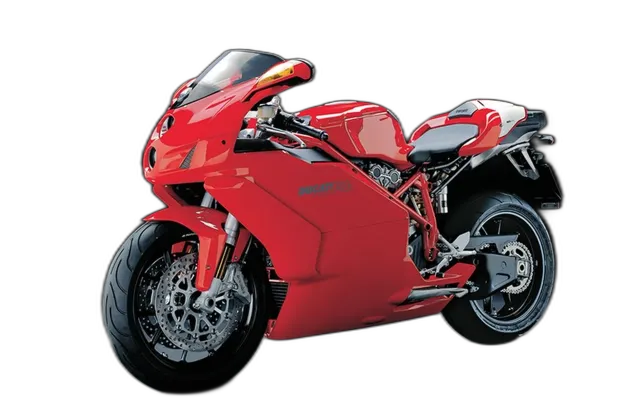
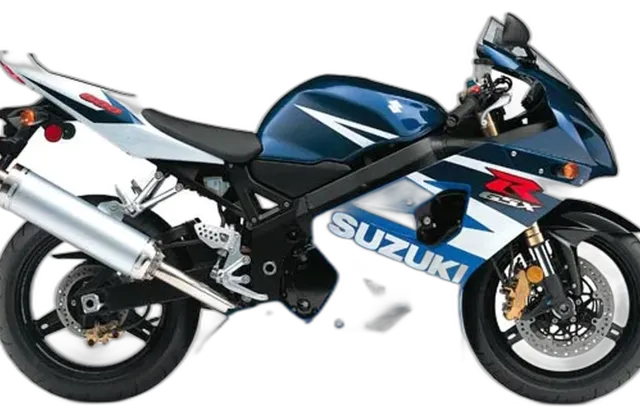
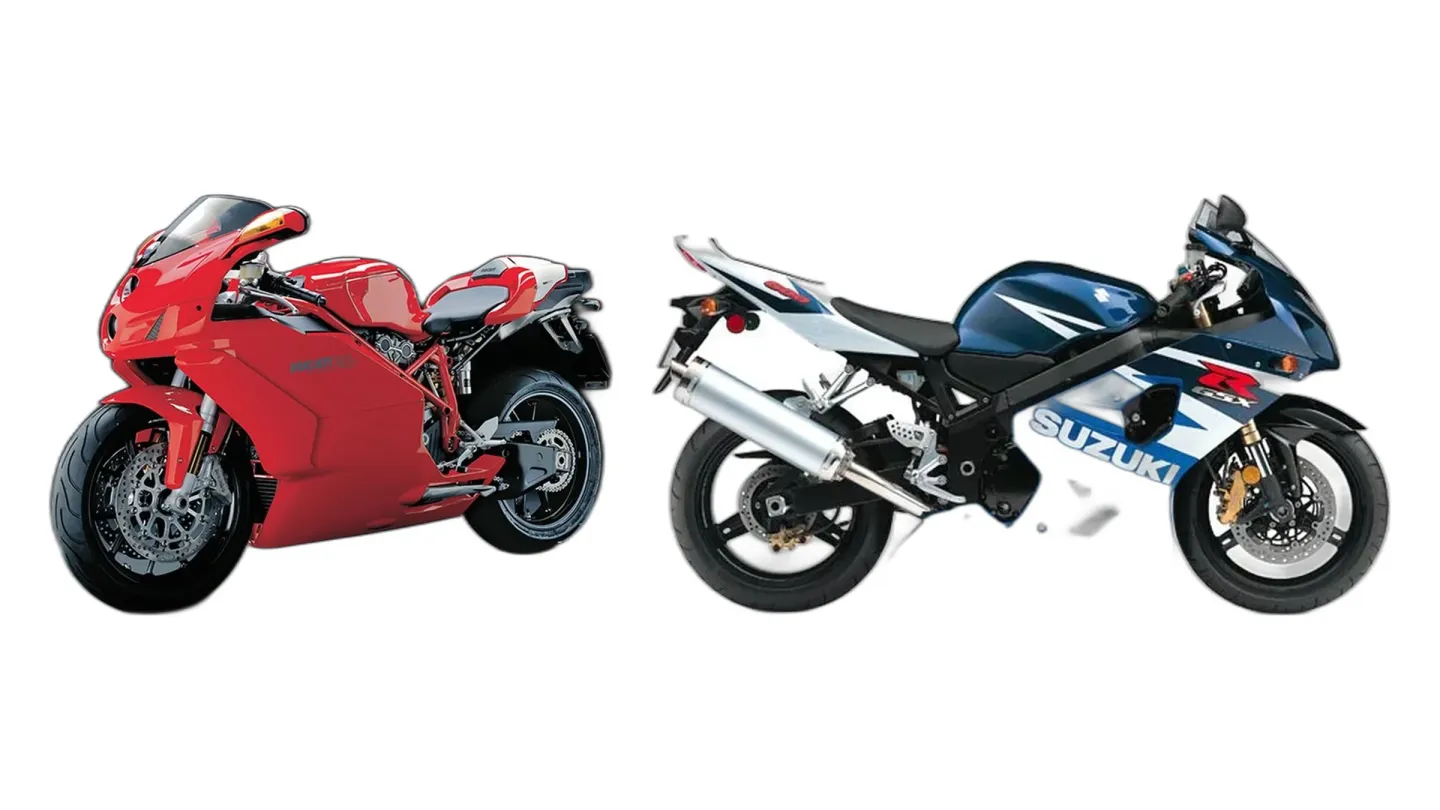
Ducati 749 (MY2005) vs Suzuki GSX-R 600 (K4)
Ducati 749 vs Suzuki GSX-R 600: one garage spot. Here's what should decide it.
You'll feel the Ducati 749's L-twin pull cleanly from the middle of the revs, its exhaust barking as you roll on. On the Suzuki GSX-R 600, the throttle pays off once you're willing to hold it open high up the tach. Up there it surges and keeps pulling.
So which one do you buy?
The 749 has the edge if…
Racetrack use
Small edge: 749
The 749 nudges ahead once you're on a closed course. Hardly a big enough gap to bank on.
Sporty riding on twisty roads
Inches ahead: 749
Through a string of corners, the 749 feels a little more eager. The gap is small, so ride both.
The GSX-R 600 has the edge if…
Keeping running costs low
Edges it: GSX-R 600
The GSX-R 600 comes out a little ahead on upkeep. Only a little.
Daily commuting & city riding
By a nose: GSX-R 600
The GSX-R 600 edges it for the daily grind. It's down to a smaller footprint. It's a small gap, not a reason on its own.
What makes each one tick
749
Low in the revs, the 749's Testastretta grunts with a soulful note, and there's a top-end rush waiting that eggs on hard riding. Corner entry is where the trellis frame earns its keep: the front tells you what it's gripping as the bike turns in. It thrives on commitment. Its red trellis frame keeps talking through the corner.
GSX-R 600
Titanium valves and lightened internals let the GSX-R 600's narrow four spin up like it's in a hurry. Its top-end rush comes to the rider who doesn't back off. The chassis steers with a razor edge, the sharpest any 600 had in its day. Shifts slot home without a hitch.
The Voice of Experience
What actually separates them
- The 749 has the lower seat: 30.7 in (780 mm) vs 32.5 in (825 mm).
- The GSX-R 600 has the lower wet weight: 419 lb (190 kg) vs 445 lb (202 kg).
- The GSX-R 600 makes more peak power: 120 hp (88 kW) vs 108 hp (79 kW).
Which one for the way you ride
Comfortable long-distance riding
Both fall short
Neither one is built for long-haul comfort. For big miles, look at a proper tourer or sport tourer.
Who each one is built for
What's good, and what you'll live with
749
What owners say
Strengths
- Charismatic Desmodromic V-twin Engine
GSX-R 600
What owners say
Strengths
- Strong high-RPM power delivery
Known problems to check before you buy
749
No confirmed faults on file yet. That's not the same as fault-free.
GSX-R 600
- Front brake master cylinder corrosion (NHTSA recall) Recall 13V449000 After long-term service without regular brake fluid changes, the master cylinder piston can corrode, generating gas that reduces braking power and increases stopping distances. A safety recall replaced the master cylinder with a redesigned unit and fresh fluid.
What they share
- Cooling
- Liquid-cooled
- Gearbox
- 6-speed
- Fork
- Upside-down (USD)
- Front tire
- 120/70-17
- Rear tire
- 180/55-17
Where the spec sheets split
| 749 | GSX-R 600 | |
|---|---|---|
| Seat height | 30.7 in (780 mm) | 32.5 in (825 mm) |
| Wet weight | 445 lb (202 kg) | 419 lb (190 kg) |
| 749 | GSX-R 600 | |
|---|---|---|
| Displacement | 748 cc | 599 cc |
| Engine | 90° V-twin | Inline-four |
| Power | 108 hp (79 kW) | 120 hp (88 kW) |
| Peak power at | 10,000 rpm | 13,000 rpm |
| Torque | 59 lb-ft (80 Nm) | 51 lb-ft (70 Nm) |
| 749 | GSX-R 600 | |
|---|---|---|
| Fuel capacity | 4.1 US gal (15.5 L) | 4.5 US gal (17 L) |
| 749 | GSX-R 600 | |
|---|---|---|
| Front brake | 320 mm | 300 mm |
Head to head, area by area
Both bikes on the same scale, one area at a time.