By NastyNils·
Motorcycle comparison · Supersport
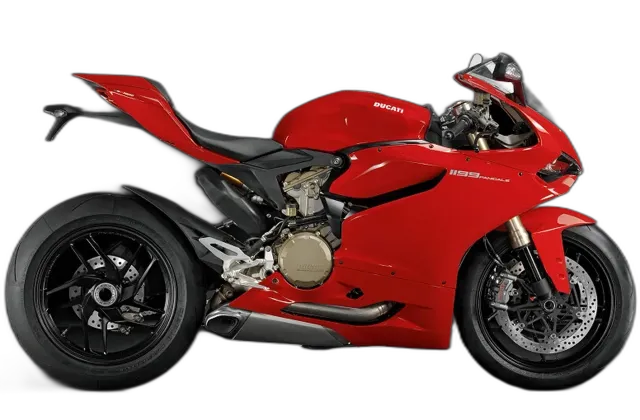
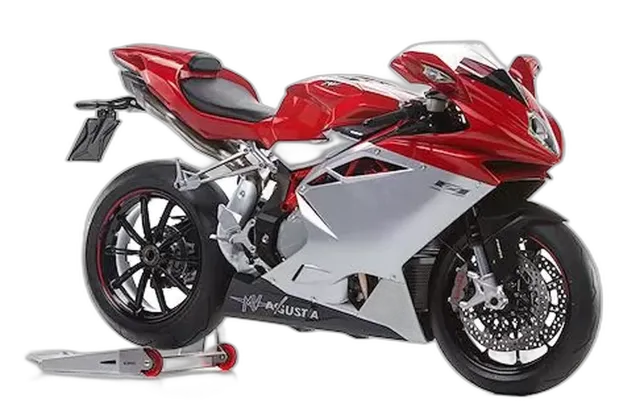
Ducati 1199 Panigale (H8) vs MV Agusta F4 1000 (MY2013)
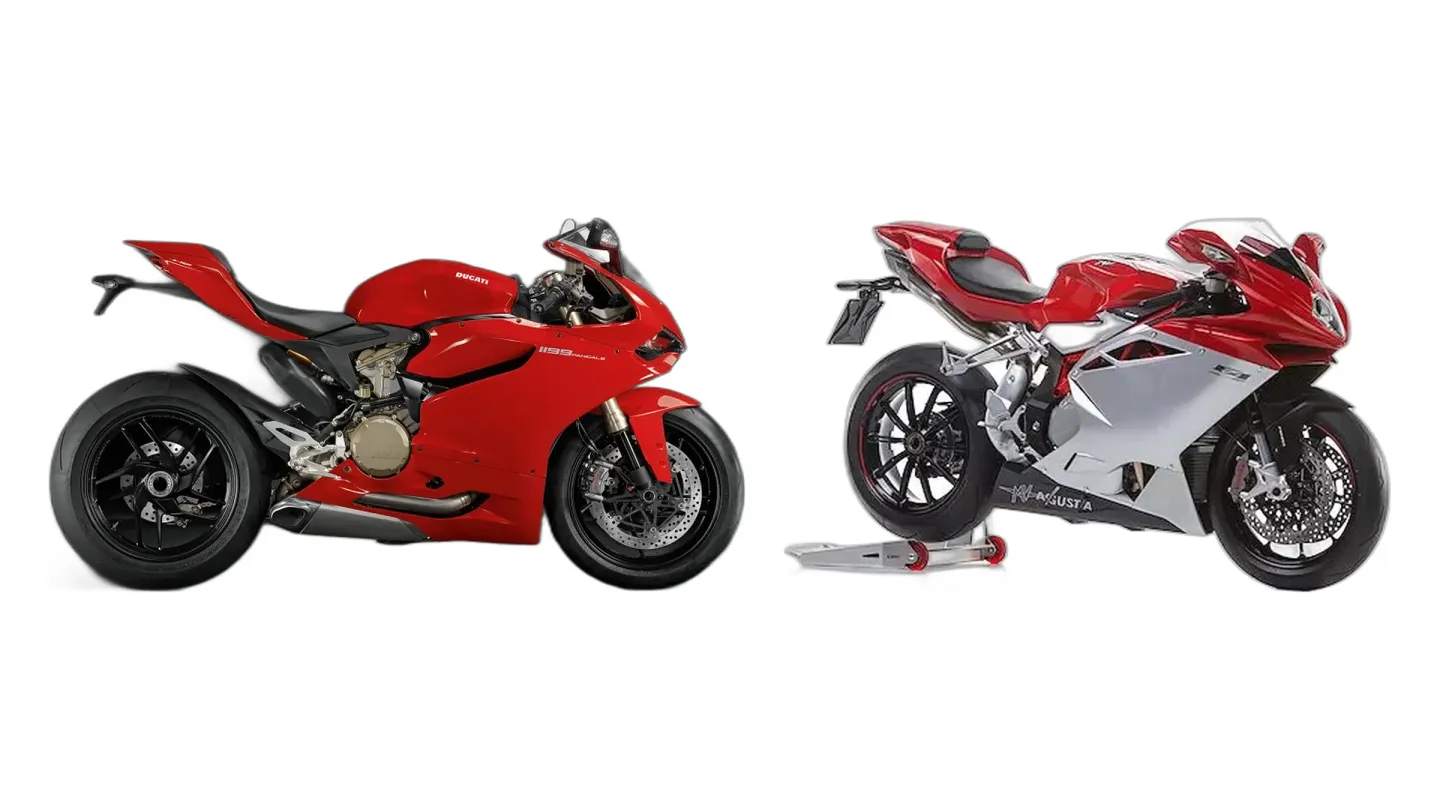
Ducati 1199 Panigale vs MV Agusta F4 1000: one garage spot. Here's what should decide it.
Roll on the Ducati 1199 Panigale and the V-twin's already pulling ferociously toward redline. The MV Agusta F4 1000's inline-four holds its fire for the top of the tach. Up there, it howls and rips.
So which one do you buy?
The 1199 Panigale has the edge if…
Daily commuting & city riding
Edges it: 1199 Panigale
For the ride to work, the 1199 Panigale noses ahead. Thank lighter steering for that. Don't let that alone make the call.
Racetrack use
Narrow edge: 1199 Panigale
On a closed course, the 1199 Panigale edges ahead. It's down to a sportier chassis and more lean clearance. Not by enough to settle it.
Sporty riding on twisty roads
Nose ahead: 1199 Panigale
Through a string of corners, the 1199 Panigale feels a little more eager. Credit more feel through the bars. The gap is small, so ride both.
Which one's the smarter buy
Money won't decide it
The F4 1000 costs less, but that doesn't make it the better buy. Neither is the clear winner on value alone. Your choice depends on what you want the bike to do.
What makes each one tick
1199 Panigale
The bars of the 1199 Panigale flick it from one lean to the next in an instant, because its compact aluminum monocoque doesn't leave much bike to haul around. At corner entry it turns in exactly where you aim and won't drift off its line. Higher in the revs, there's a hard surge from the Superquadro twin. The exhaust answers with a snarl.
Nils rode the 1199 Panigale in 2013 (NastyNils Testride).
F4 1000
Under the F4 1000 there's a widened steel trellis frame, and it keeps the bike settled through fast bends. Through the middle revs, flat spots and a ride-by-wire throttle that isn't always predictable can make smooth riding hard work. The cockpit folds you up tight. The Brembo lever bites hard and keeps its feel.
The Voice of Experience

What actually separates them
- The 1199 Panigale makes more peak torque: 97 lb-ft (132 Nm) vs 81 lb-ft (110 Nm).
- The 1199 Panigale has the larger engine: 1198 cc vs 998 cc.
- Wheelie Control: standard on the F4 1000, not offered on the 1199 Panigale.
Which one for the way you ride
Comfortable long-distance riding
Wrong job for both
Long-haul comfort is a weak spot for both. If you tour, shop with that in mind.
These two run dead level on running costs. Sit on both in the showroom and trust what your body says.
Who each one is built for
What's good, and what you'll live with
1199 Panigale
What owners say
Strengths
- Explosive engine performance
- Sharp, agile handling
- Advanced rider aids
Trade-offs
- Excessive heat buildup
F4 1000
What owners say
Strengths
- Breathtaking Tamburini styling
- Thrilling high-rpm engine
- Superb chassis and braking package
- Advanced electronics suite
Trade-offs
- Cramped riding position
- Limited dealer network and parts delays
- Non-linear power delivery
Known problems to check before you buy
1199 Panigale
- Swingarm shaft pivots loosen (recall) Recall 12V401000 The right and left swingarm shaft pivots can loosen, leading to loss of control. NHTSA Campaign 12V401000.
- Exhaust valve cable cover melting (recall) Recall 12V392000 The bowden cable cover on the exhaust butterfly valve can melt or burn due to excess heat from the catalytic converter. NHTSA Campaign 12V392000.
- Swingarm linkage incorrect screw (recall) Recall 12V270000 An incorrect screw used to retain the swingarm to the rear suspension linkage can detach, causing catastrophic suspension collapse. NHTSA Campaign 12V270000.
- Steering damper uniball slip (recall) Recall 12V399000 The Uniball bearing on the Öhlins steering damper rod eyelet can slip out of its seat, leading to detachment. NHTSA Campaign 12V399000.
- Steering damper screws fall out (recall) Recall 12V400000 Screws securing the steering damper to the steering head can fall out due to insufficient Loctite. NHTSA Campaign 12V400000.
- Left handlebar switch failure (recall) Recall 14V166000 The left handlebar switch may lose power, disabling the horn, high beam, right turn signals, and instrument display. NHTSA Campaign 14V166000 / RCL‑14‑001.
- Front brake master cylinder hose interference (recall) Recall 12V402000 The reservoir hose may contact the threading end of the retaining screw, damaging the hose and causing brake failure. NHTSA Campaign 12V402000.
- Hard starting when hot The emissions charcoal canister can fill with fuel, causing vapor lock and extended cranking when the engine is warm.
- Intermittent gear position sensor The gear position sensor can fail, disabling the quick shifter and causing fueling errors.
- Instrument cluster fogging Humidity can cause fogging inside the TFT display. Typically clears on its own but can be persistent in damp climates.
F4 1000
No confirmed faults on file yet. That's not the same as fault-free.
What they cost used
These prices compare a 13-year-old 1199 Panigale with a 13-year-old F4 1000.
- 1199 Panigale
- about $13,700
- F4 1000
- about $10,600
Thirteen years on, the Ducati 1199 Panigale sits around $13,700 while the MV Agusta F4 1000 lands near $10,600. That's a $3,100 gap in the F4 1000's favor. These are estimates from the used market, not live listings.
What they share
- Cooling
- Liquid-cooled
- Power
- 195 hp (143 kW)
- Fuel capacity
- 4.5 US gal (17 L)
- Gearbox
- 6-speed
- Final drive
- Chain
- Front tire
- 120/70-17
- Rear tire
- 200/55-17
Where the spec sheets split
| 1199 Panigale | F4 1000 | |
|---|---|---|
| Seat height | 32.5 in (825 mm) | 32.7 in (830 mm) |
| 1199 Panigale | F4 1000 | |
|---|---|---|
| Displacement | 1198 cc | 998 cc |
| Engine | L-twin | Inline-four |
| Peak power at | 10,750 rpm | 13,400 rpm |
| Torque | 97 lb-ft (132 Nm) | 81 lb-ft (110 Nm) |
| Peak torque at | 9,000 rpm | 9,600 rpm |
What comes fitted, what costs extra
| 1199 Panigale | F4 1000 | |
|---|---|---|
| Wheelie Control | Not offered | Standard |
Head to head, area by area
Both bikes on the same scale, one area at a time.