By NastyNils· ·
Motorcycle comparison · Supersport
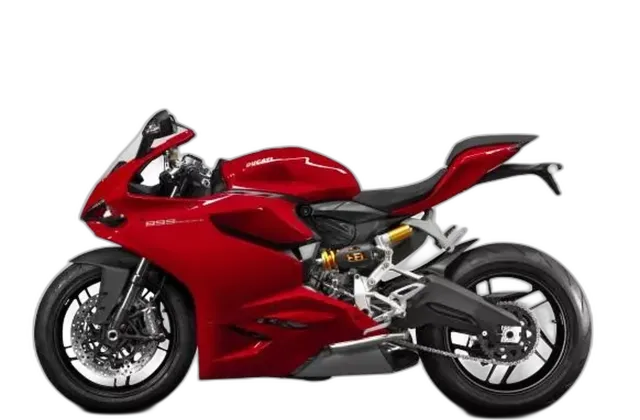
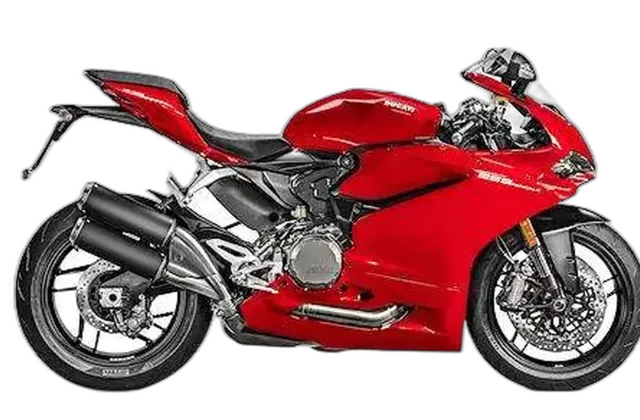
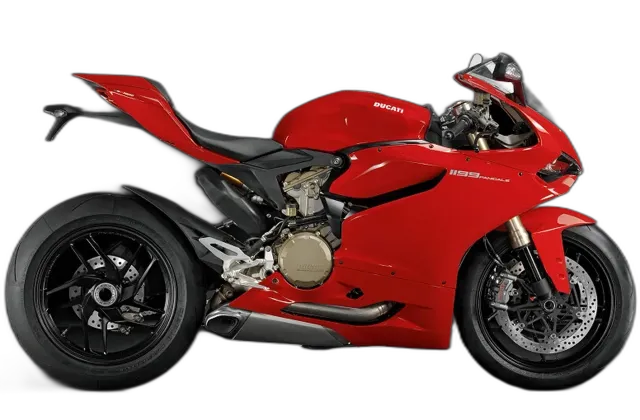
Ducati 1199 Panigale (H8) vs 1299 Panigale (MY2017)
Ducati 1199 Panigale vs 1299 Panigale: one garage spot. Here's what should decide it.
Roll on the Ducati 1199 Panigale's throttle and it's saving its fury for high revs, where it charges for redline with a howl. The Ducati 1299 Panigale's twin pulls hard from low revs.
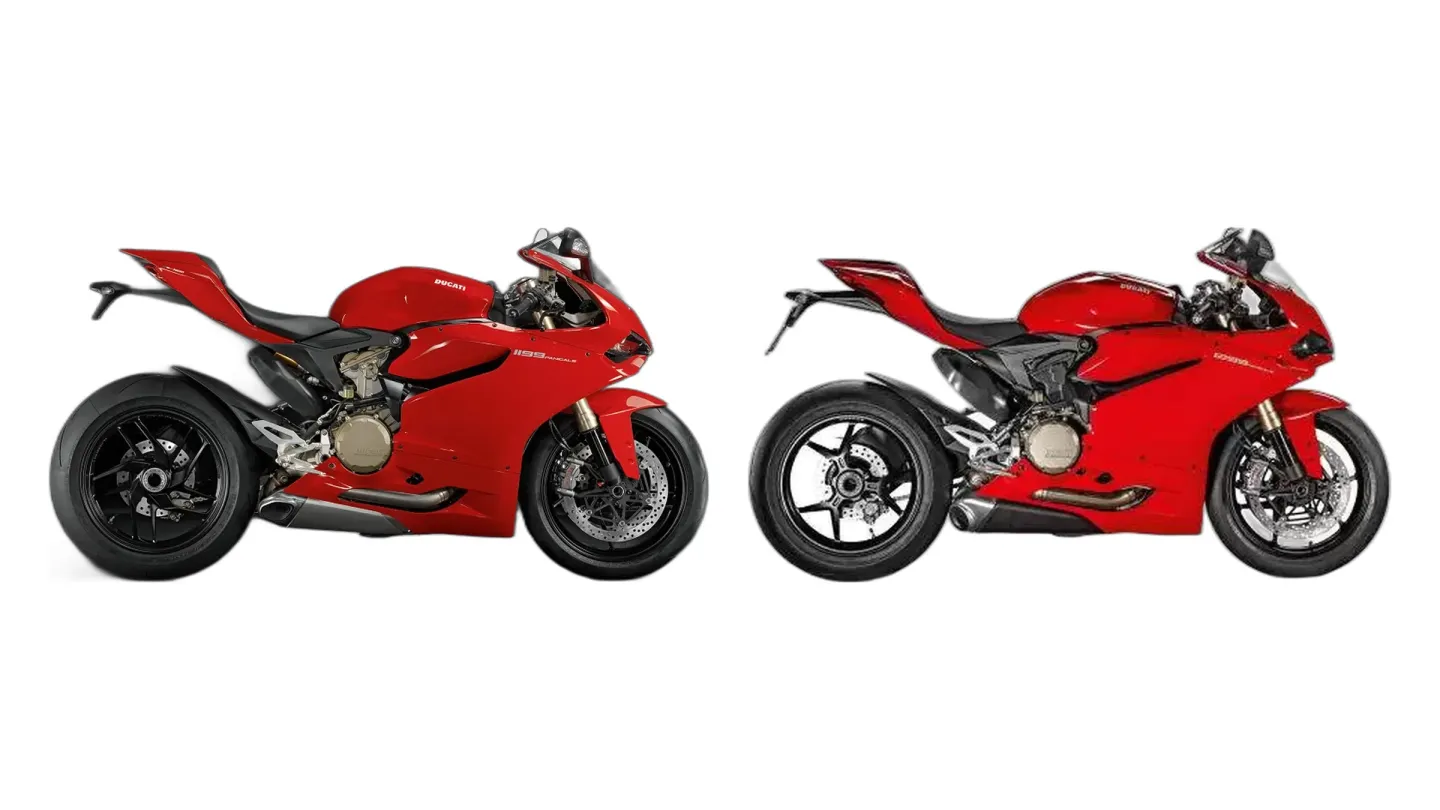
So which one do you buy?
The 1199 Panigale has the edge if…
Racetrack use
Small edge: 1199 Panigale
The 1199 Panigale nudges ahead once you're on a closed course. It's down to more suspension adjustment. Hardly a big enough gap to bank on.
What makes each one tick
1199 Panigale
Through a quick left-right, the 1199 Panigale's compact aluminum monocoque flicks over and then settles on its line like a race chassis. Under hard braking for a turn at Barber Motorsports Park, the chassis stays on the line you've picked. Once the tach needle swings past the middle of the dial, the Superquadro snaps forward and doesn't ease off. Up top, the exhaust sings.
Nils rode the 1199 Panigale in 2013 (NastyNils Testride).
1299 Panigale
There's thick torque from the bottom of the tach on the 1299 Panigale, and the shove keeps building in one even line. The shift lever gets a rest. Late in each gear, the engine still lunges.
The Voice of Experience

What actually separates them
- The 1299 Panigale makes more peak torque: 107 lb-ft (145 Nm) vs 97 lb-ft (132 Nm).
- The 1299 Panigale has the larger engine: 1285 cc vs 1198 cc.
- ABS: standard on the 1299 Panigale, option on the 1199 Panigale.
Which one for the way you ride
Comfortable long-distance riding
Neither one fits
For all-day comfort, both fall short. Keep the rides short and you'll get on fine with either.
They come out level on commuting, twisty roads, and running costs. The better-kept used example is the smarter money.
Who each one is built for
What's good, and what you'll live with
1199 Panigale
What owners say
Strengths
- Explosive engine performance
- Sharp, agile handling
- Advanced rider aids
Trade-offs
- Excessive heat buildup
1299 Panigale
What owners say
Strengths
- Confidence‑inspiring electronics package
- Monumental mid‑range punch
Known problems to check before you buy
1199 Panigale
- Swingarm shaft pivots loosen (recall) Recall 12V401000 The right and left swingarm shaft pivots can loosen, leading to loss of control. NHTSA Campaign 12V401000.
- Exhaust valve cable cover melting (recall) Recall 12V392000 The bowden cable cover on the exhaust butterfly valve can melt or burn due to excess heat from the catalytic converter. NHTSA Campaign 12V392000.
- Swingarm linkage incorrect screw (recall) Recall 12V270000 An incorrect screw used to retain the swingarm to the rear suspension linkage can detach, causing catastrophic suspension collapse. NHTSA Campaign 12V270000.
- Steering damper uniball slip (recall) Recall 12V399000 The Uniball bearing on the Öhlins steering damper rod eyelet can slip out of its seat, leading to detachment. NHTSA Campaign 12V399000.
- Steering damper screws fall out (recall) Recall 12V400000 Screws securing the steering damper to the steering head can fall out due to insufficient Loctite. NHTSA Campaign 12V400000.
- Left handlebar switch failure (recall) Recall 14V166000 The left handlebar switch may lose power, disabling the horn, high beam, right turn signals, and instrument display. NHTSA Campaign 14V166000 / RCL‑14‑001.
- Front brake master cylinder hose interference (recall) Recall 12V402000 The reservoir hose may contact the threading end of the retaining screw, damaging the hose and causing brake failure. NHTSA Campaign 12V402000.
- Hard starting when hot The emissions charcoal canister can fill with fuel, causing vapor lock and extended cranking when the engine is warm.
- Intermittent gear position sensor The gear position sensor can fail, disabling the quick shifter and causing fueling errors.
- Instrument cluster fogging Humidity can cause fogging inside the TFT display. Typically clears on its own but can be persistent in damp climates.
1299 Panigale
- Valve cover oil seepage Minor oil weeping from the valve cover gaskets shows up on a fair number of units, typically after moderate mileage and most often at the horizontal cylinder. It is not mechanically threatening, but it soils the engine and cases and eventually calls for a gasket replacement.
What they share
- Engine
- 90° V-twin
- Cooling
- Liquid-cooled
- Fuel capacity
- 4.5 US gal (17 L)
- Gearbox
- 6-speed
- Final drive
- Chain
- Fork
- Upside-down (USD)
- Front brake
- 330 mm
- Front tire
- 120/70-17
- Rear tire
- 200/55-17
- Wheelbase
- 56.6 in (1437 mm)
Where the spec sheets split
| 1199 Panigale | 1299 Panigale | |
|---|---|---|
| Seat height | 32.5 in (825 mm) | 32.7 in (830 mm) |
| Wet weight | 414 lb (188 kg) | 419 lb (190 kg) |
| 1199 Panigale | 1299 Panigale | |
|---|---|---|
| Displacement | 1198 cc | 1285 cc |
| Power | 195 hp (143 kW) | 197 hp (145 kW) |
| Peak power at | 10,750 rpm | 10,500 rpm |
| Torque | 97 lb-ft (132 Nm) | 107 lb-ft (145 Nm) |
| Peak torque at | 9,000 rpm | 8,750 rpm |
What comes fitted, what costs extra
| 1199 Panigale | 1299 Panigale | |
|---|---|---|
| ABS | Option | Standard |
| Cornering ABS | Not offered | Standard |
| Wheelie Control | Not offered | Standard |
Head to head, area by area
Both bikes on the same scale, one area at a time.