By NastyNils·
Motorcycle comparison · Supersport
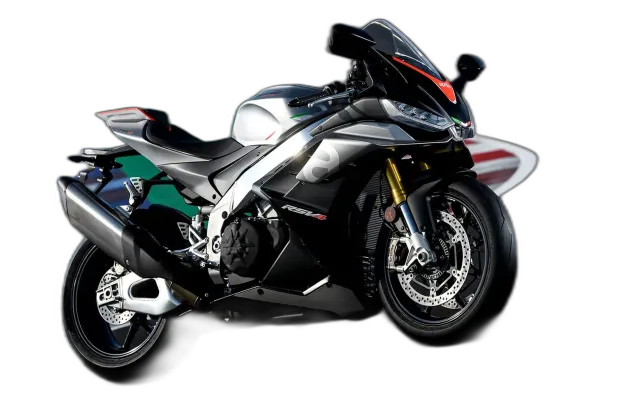
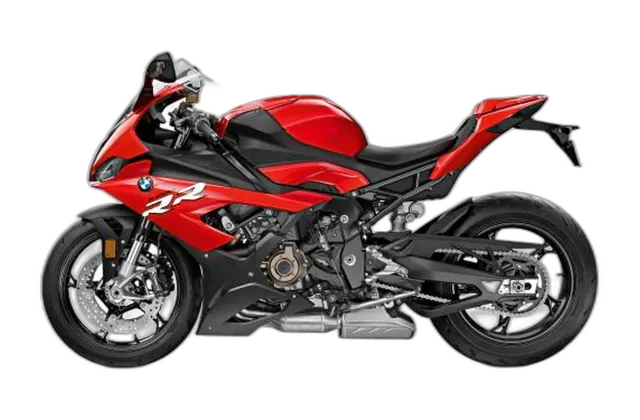
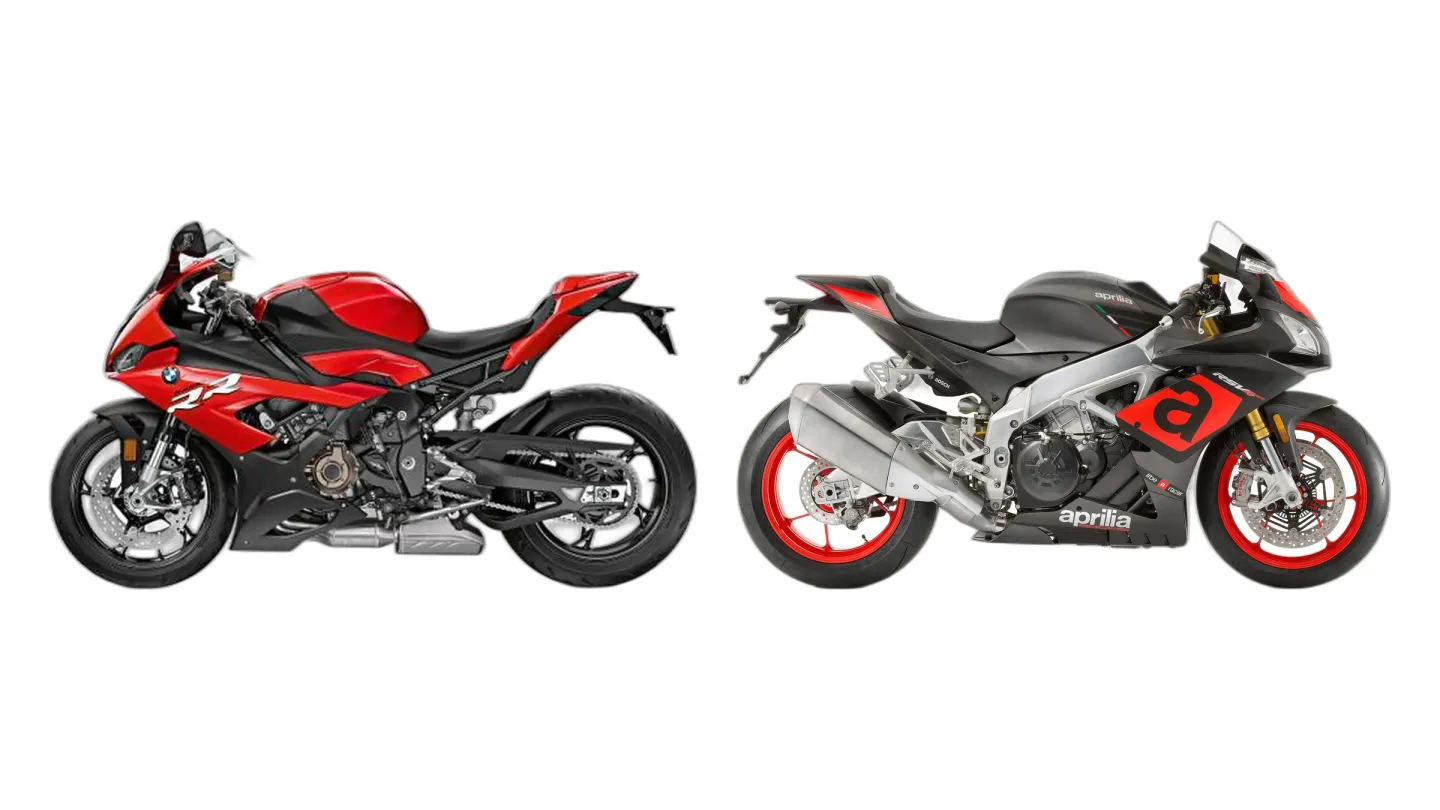
BMW S 1000 RR (K67) vs Aprilia RSV4 (MY2015)
BMW S 1000 RR vs Aprilia RSV4: fast is a given. What sets them apart isn't.
At the turn-in point, the BMW S 1000 RR tips in easily and doesn't spring surprises once it's leaned over. The Aprilia RSV4 feels compact beneath you there, and its front end keeps you posted through the turn. Its steering bites straight into the bend.
So which one do you buy?
The S 1000 RR has the edge if…
Keeping running costs low
Small edge: S 1000 RR
On running costs, the S 1000 RR edges it. Not by enough to bank on.
Daily commuting & city riding
Edges it: S 1000 RR
For the Monday-to-Friday grind, the S 1000 RR pulls a nose in front. The reason: simpler maintenance and lower running costs. Your own commute could easily flip it.
Sporty riding on twisty roads
Inches ahead: S 1000 RR
In the twisties, the S 1000 RR asks a bit less of you to go quickly. What tips it: better suspension and stronger brakes. Call it a modest edge.
Racetrack use
Slight edge: S 1000 RR
Track days lean slightly toward the S 1000 RR. The difference is more suspension adjustment. Count it as a small bonus.
Which one's the smarter buy
Value's a wash
The S 1000 RR and RSV4 sit close enough in price that neither is the clear better buy for the money.
What makes each one tick
S 1000 RR
A variable intake cam keeps the S 1000 RR's inline-four pulling through a fat midrange at road speeds, where it's less peaky than rivals. The throttle isn't as polite near idle in Dynamic or Race mode, where it can snatch in stop-and-go traffic. The tank catches long legs at the knee, and the forward riding position doesn't take long to tire you on the road. The brake lever stops a lightweight.
Nils rode the S 1000 RR in Andalusia in 2019 (NastyNils Testride).
RSV4
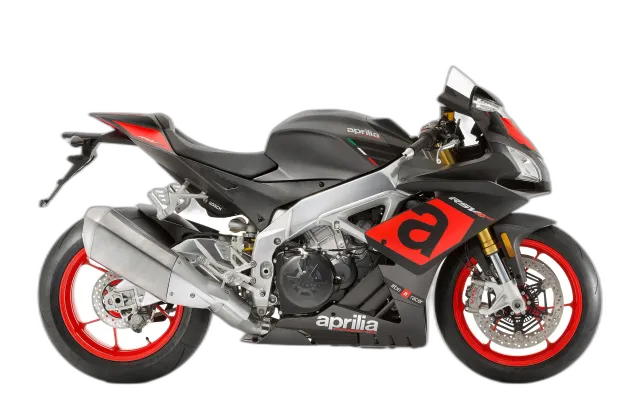
There's a track tool and a road bike in the RSV4's frame, because the suspension stays firm yet still gives. The throttle doesn't reach the engine's full 201 hp (148 kW) until 13,000 rpm. It flicks side to side.
Nils rode the RSV4 in Italy in 2015 (NastyNils Testride).
The Voice of Experience
What actually separates them
- The S 1000 RR has the lower seat: 32.4 in (824 mm) vs 33.3 in (845 mm).
- The S 1000 RR has the lower wet weight: 434 lb (197 kg) vs 450 lb (204 kg).
- The RSV4 has the larger fuel tank: 4.9 US gal (18.5 L) vs 4.4 US gal (16.5 L).
Which one for the way you ride
Comfortable long-distance riding
Not their thing
Hours in the saddle won't flatter either of these. They're happier on shorter runs.
Who each one is built for
What's good, and what you'll live with
S 1000 RR
What owners say
Strengths
- Broad, ShiftCam-flattened powerband
- Comprehensive IMU-based electronics package
- Flickable, neutral chassis
- Modern, high-resolution TFT dashboard
Trade-offs
- Cramped ergonomics for taller riders
- Fueling abruptness at very low rpm in Dynamic/Race modes
- Mirror visibility is limited
- Optional equipment can quickly inflate the price
- Heat from underslung exhaust at low speed
RSV4
What owners say
Strengths
- Sophisticated aPRC electronics
- Class-leading electronics package
- Supremely agile chassis
Known problems to check before you buy
S 1000 RR
- Brake recall — front brake caliper fluid leak (NHTSA 20V-476) Recall 20V476000 BMW recalled certain 2020 S 1000 RR units because the front brake calipers could leak brake fluid when parked, lowering reservoir volume and reducing braking performance; dealers replaced the affected calipers under warranty.
- Cam chain tensioner noise / wear on early MY2019–2020 units Some early K67 units exhibit a rattling noise at cold start and intermittent during operation, traced to the cam chain tensioner. BMW issued updated tensioner parts in service campaigns.
- Sidestand switch failure causing intermittent no-start The sidestand safety switch can fail or get fouled, leading to the bike refusing to start or cutting out at idle. Replacement of the switch resolves the issue.
- Chain adjuster bolt corrosion / seizing Owners in wet climates report the chain tensioner bolts corroding and becoming difficult to adjust without heat or penetrating lubricant.
- TFT display brightness / readability complaints in direct sunlight Some owners report the 6.5-inch TFT becoming difficult to read in direct sunlight at certain viewing angles, particularly on earlier MY units before software updates.
RSV4
- Front brake master cylinder failure (Recall) Recall 17V811000 2016-2017 models were recalled for a front brake master cylinder that may fail, causing loss of braking ability.
- Front brake pad delamination (Recall) Recall 17V811000 2017-2020 models were recalled for front brake pads that could delaminate, reducing braking efficiency.
- Front brake master cylinder may fail (2016-2017 models) Recall 17V811000 Certain 2016-2017 RSV4 1000 models were recalled because the Brembo front brake master cylinder could fail, leading to loss of front braking. NHTSA Campaign 17V811000.
- Front brake pad friction material detachment (2017-2020 models) Recall 20V245000 The front brake pads could suffer separation of the friction material from the backing plate, especially in corrosive environments. This reduced braking efficiency and prompted NHTSA recall 20V-245.
What they cost used
These prices compare a 6-year-old S 1000 RR with a 6-year-old RSV4.
- S 1000 RR
- about $11,700
- RSV4
- about $12,100
What they share
- Displacement
- 999 cc
- Cooling
- Liquid-cooled
- Gearbox
- 6-speed
- Final drive
- Chain
- Fork
- Upside-down (USD)
- Front brake
- 320 mm
- Front tire
- 120/70-17
- Rear tire
- 190/55-17
Where the spec sheets split
| S 1000 RR | RSV4 | |
|---|---|---|
| Seat height | 32.4 in (824 mm) | 33.3 in (845 mm) |
| Wet weight | 434 lb (197 kg) | 450 lb (204 kg) |
| S 1000 RR | RSV4 | |
|---|---|---|
| Engine | Inline-four | V4 |
| Power | 207 hp (152 kW) | 201 hp (148 kW) |
| Peak power at | 13,500 rpm | 13,000 rpm |
| Torque | 83 lb-ft (113 Nm) | 85 lb-ft (115 Nm) |
| Peak torque at | 11,000 rpm | 10,500 rpm |
| S 1000 RR | RSV4 | |
|---|---|---|
| Fuel capacity | 4.4 US gal (16.5 L) | 4.9 US gal (18.5 L) |
| S 1000 RR | RSV4 | |
|---|---|---|
| Wheelbase | 57.4 in (1457 mm) | 55.9 in (1420 mm) |
What comes fitted, what costs extra
| S 1000 RR | RSV4 | |
|---|---|---|
| Launch Control | Option | Standard |
| Smartphone Connectivity | Standard | Option |
Head to head, area by area
Both bikes on the same scale, one area at a time.