By NastyNils·
Motorcycle comparison · Sport Tourer
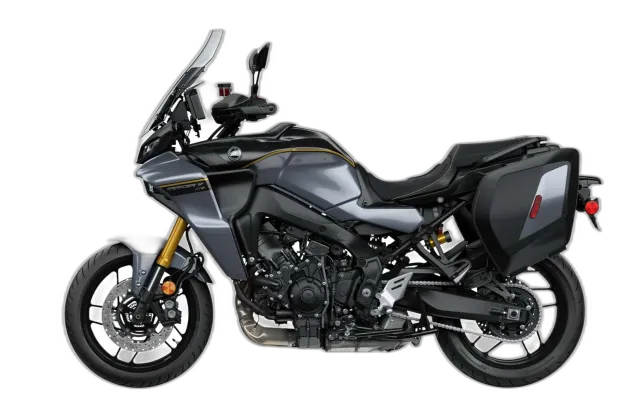
Yamaha Tracer 9 (MY2021-GT) vs Kawasaki Ninja 1100SX (ZX1100H-SE)
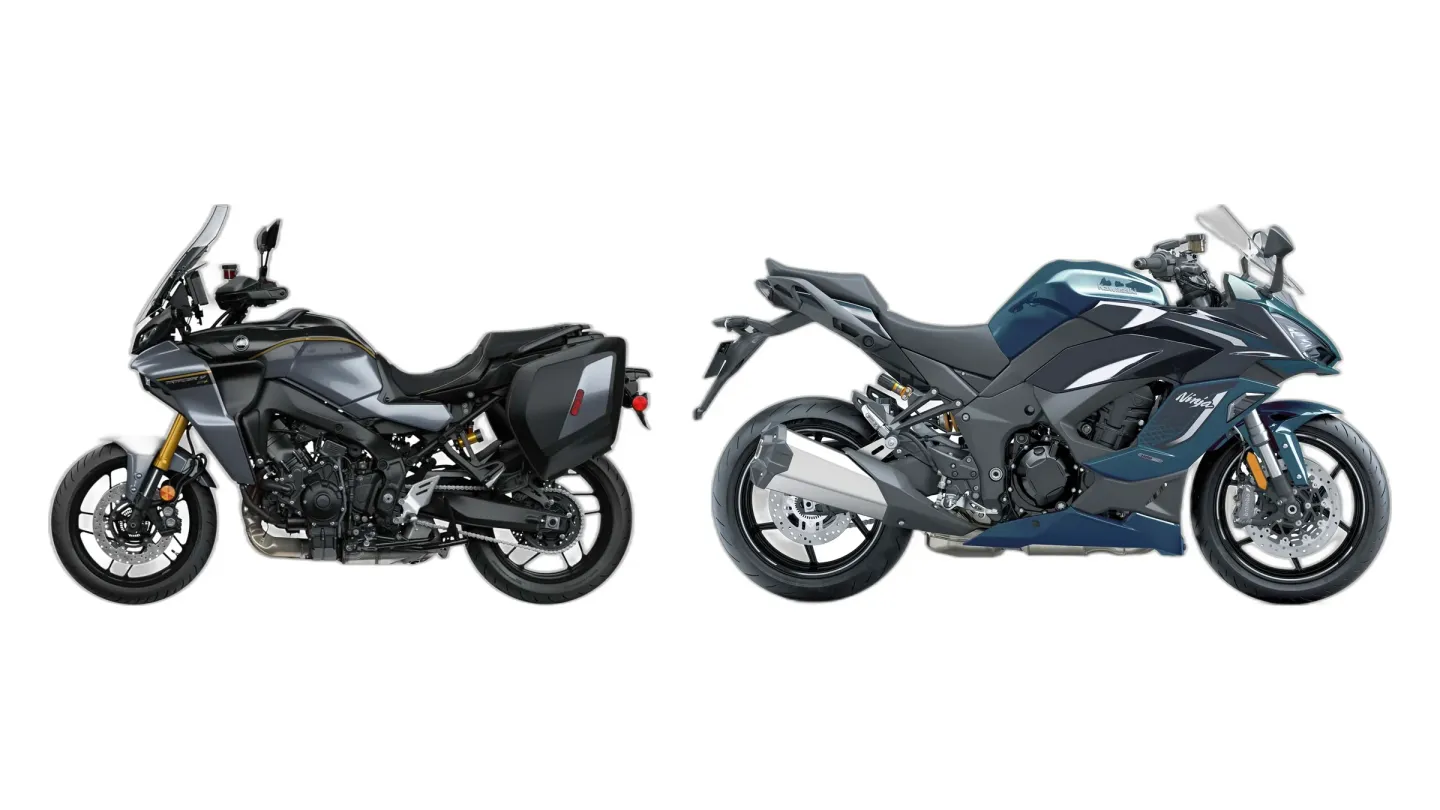
Yamaha Tracer 9 vs Kawasaki Ninja 1100SX: which one's easier to live with on a long trip.
You'll feel the Yamaha Tracer 9 drop into a corner the instant you ask, light at the bars and true to the line you picked. The Kawasaki Ninja 1100SX doesn't fuss at the bars as it rolls into the turn on a neutral front. Then the whole bike settles and holds its lean.
So which one do you buy?
The Tracer 9 has the edge if…
Comfortable long-distance riding
By a nose: Tracer 9
Hour after hour, the Tracer 9 feels a little kinder to you. It's a close-run thing, though.
The Ninja 1100SX has the edge if…
Sporty riding on twisty roads
Edges it: Ninja 1100SX
On a twisty road, the Ninja 1100SX edges ahead. Not by enough to settle it alone.
What makes each one tick
Tracer 9
The Tracer 9's triple doesn't choose between a twin's low-down grunt and a four's rush up top. There's real shove behind every twist of the throttle, building to a torque peak at 7,000 rpm. On the Blue Ridge Parkway, the chassis aims precisely into each bend and doesn't wander through it. The triple's snarl hooks you.
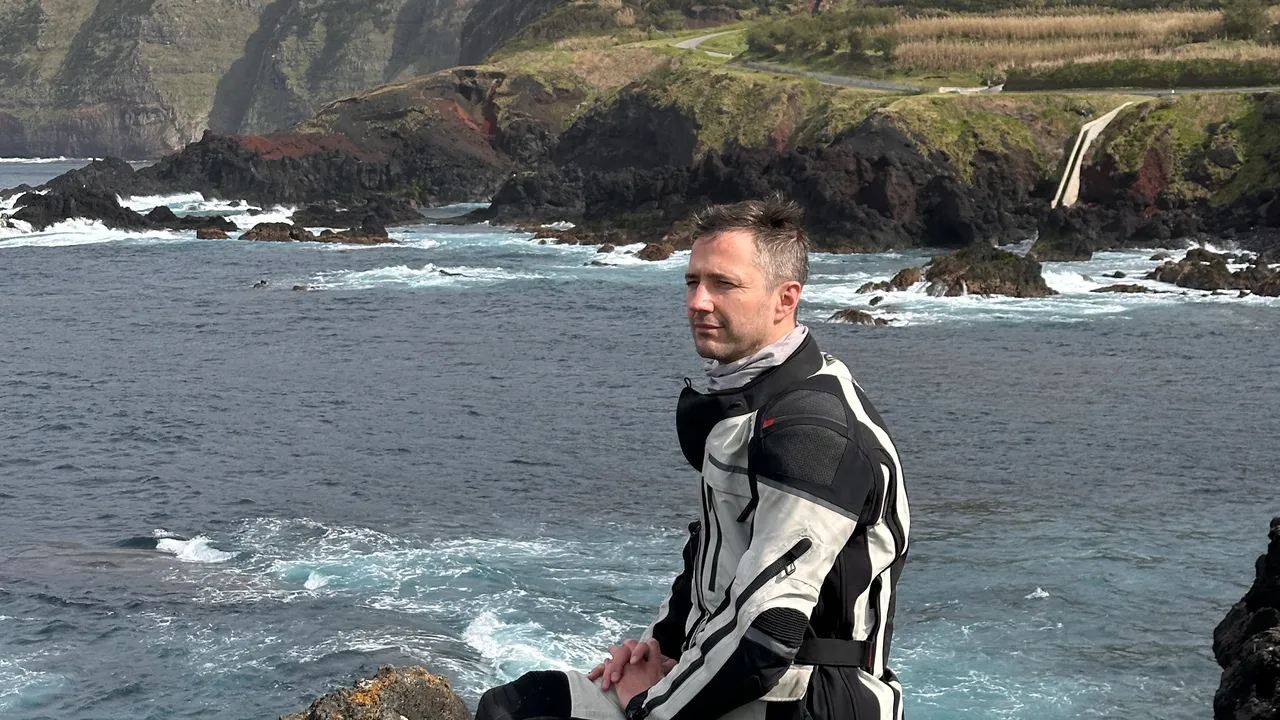
Nils rode the Tracer 9 in 2021 (NastyNils Testride).
Ninja 1100SX
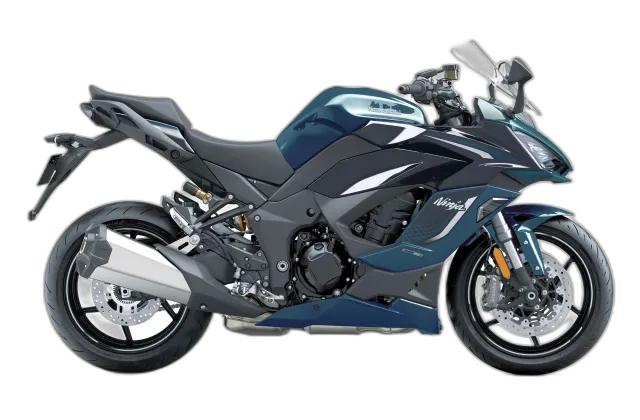
The Ninja 1100SX's inline-four spins up like silk, pulling cleanly from low revs on a fat spread of torque. You're upright enough for a full day, yet the riding position tips you forward to weight the nose in fast sweepers. On the SE, the brake lever squeezes radial Brembo calipers that bite with real feel as the bike sheds speed. Its aluminum frame stays planted mid-bend.
The Voice of Experience
What actually separates them
- The Tracer 9 has the lower seat: 31.9 in (810 mm) vs 32.9 in (835 mm).
- The Tracer 9 has the lower wet weight: 485 lb (220 kg) vs 516 lb (234 kg).
- The Ninja 1100SX makes more peak power: 136 hp (100 kW) vs 119 hp (88 kW).
Which one for the way you ride
A confidence-building first motorcycle
Look elsewhere
Neither one is where you should learn. Get a season on something gentler first.
Count commuting and running costs as a draw. The deal on the table and the condition of the bike matter more here.
Who each one is built for
What's good, and what you'll live with
Tracer 9
What owners say
Strengths
- Engine character — torquey, flexible CP3
- Excellent value — comprehensive standard kit
- Chassis precision and agility
- Functional semi-active KYB suspension
- Comprehensive electronics package
Trade-offs
- Wind buffeting and helmet noise
- Stock seat — slope and hardness
- Handlebar vibration zone 3.8–5.0k rpm
- Hard 1st-gear engagement and occasional false neutrals
- Two-screen TFT layout (GT only) — cluttered, daylight contrast
Ninja 1100SX
What owners say
Strengths
- Silky-smooth, torque-rich inline-four
- Refined electronics package
- Premium Öhlins & Brembo hardware
Trade-offs
- Peak power reduced vs predecessor
Known problems to check before you buy
Tracer 9
- Cruise control orange light flashes; cruise cannot be set or resumed The cruise control indicator flashes and the system refuses to set or resume. Cause traced in some cases to a sticky front-brake light switch or clutch-position switch (cruise interlocks) — sometimes resolved by an ignition cycle, sometimes requiring switch replacement; some owners report recurrence after dealer-replaced switches.
- Vibration through handlebar and footpegs in the 3,800–5,000 rpm range Owners report a buzz/numbness through the handlebar concentrated at approximately 3,800–5,000 rpm — a range that overlaps with 6th-gear highway cruising for many speeds. Smooths above approximately 5,000 rpm. Inherent to the long-stroke CP3 in this chassis.
- Front turn-signal mounting brackets work loose The front indicator stalks loosen at the bracket mounting point; light contact (e.g., a brush in the garage) can detach them. Refastening securely is difficult.
Ninja 1100SX
No confirmed faults on file yet. That's not the same as fault-free.
What they share
- Cooling
- Liquid-cooled
- Gearbox
- 6-speed
- Final drive
- Chain
- Front tire
- 120/70-17
Where the spec sheets split
| Tracer 9 | Ninja 1100SX | |
|---|---|---|
| Seat height | 31.9 in (810 mm) | 32.9 in (835 mm) |
| Wet weight | 485 lb (220 kg) | 516 lb (234 kg) |
| Tracer 9 | Ninja 1100SX | |
|---|---|---|
| Displacement | 890 cc | 1099 cc |
| Engine | Inline-three | Inline-four |
| Power | 119 hp (88 kW) | 136 hp (100 kW) |
| Peak power at | 10,000 rpm | 9,000 rpm |
| Torque | 69 lb-ft (93 Nm) | 83 lb-ft (113 Nm) |
| Peak torque at | 7,000 rpm | 7,600 rpm |
| Tracer 9 | Ninja 1100SX | |
|---|---|---|
| Fuel capacity | 4.8 US gal (18 L) | 5.0 US gal (19 L) |
| Tracer 9 | Ninja 1100SX | |
|---|---|---|
| Front brake | 298 mm | 300 mm |
| Rear tire | 180/55-17 | 190/50-17 |
What comes fitted, what costs extra
| Tracer 9 | Ninja 1100SX | |
|---|---|---|
| Electronic Suspension | Standard | Not offered |
| Smartphone Connectivity | Not offered | Standard |
| Navigation | Not offered | Standard |
| USB Charging Port | Option | Standard |
| Tire Pressure Monitoring (TPMS) | Option | Not offered |
| Electrically Adjustable Windscreen | Not offered | Standard |
| Luggage System | Standard | Option |
| Cornering Lights | Standard | Not offered |
Head to head, area by area
Both bikes on the same scale, one area at a time.