By NastyNils·
Motorcycle comparison · Sport Tourer vs Hyper Naked
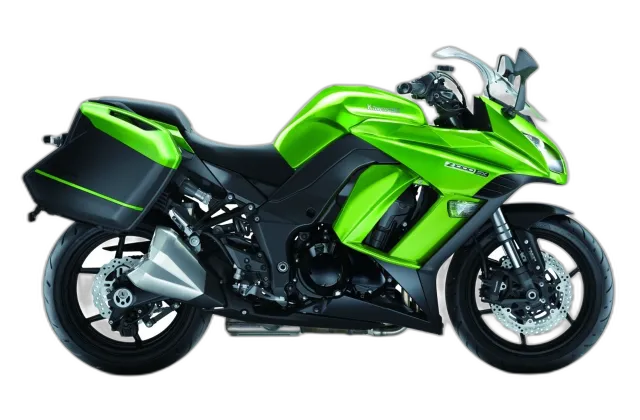
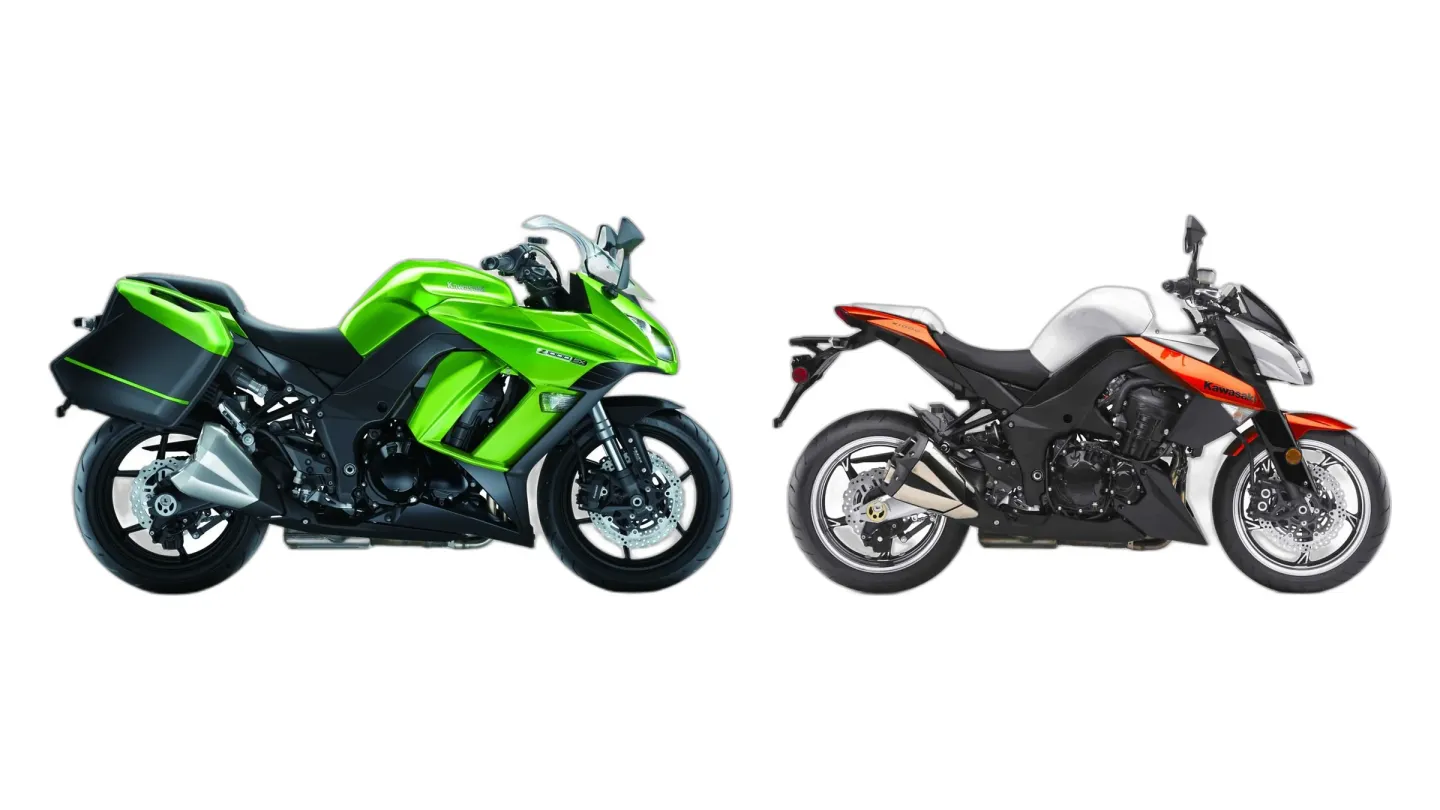
Kawasaki Z1000SX (ZXT00G) vs Z1000 (ZRT00D)
Kawasaki Z1000SX vs Z1000: different classes, one choice. Here's how to make it.
You'll feel the Kawasaki Z1000SX's suspension take a sharp bump and keep the bike settled under you. The Kawasaki Z1000's firmer suspension passes more of that hit up to you, and its stiffer frame doesn't flinch. Its chassis still keeps something in reserve.
So which one do you buy?
Buy the Z1000SX if…
Traveling with luggage
Strong pick: Z1000SX
The Z1000SX suits a life of luggage and long roads much better. Most of that is better wind protection and a better passenger seat. Plan the road trip around it.
What makes each one tick
Z1000SX
There's strong midrange pull from the Z1000SX's inline-four behind the full fairing, and it's smooth as it rushes on toward the top end. Corner entry doesn't turn into a fight despite the bike's weight. The aluminum frame holds it steady as the lean angle grows. Then a footpeg starts to scrape.
Z1000
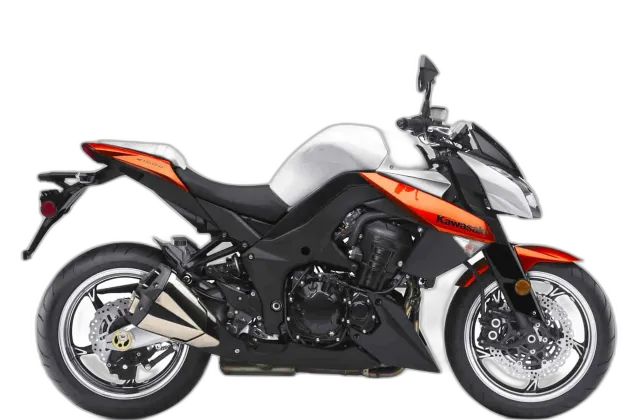
From the first crank, the Z1000's quad exhaust sends out a mechanical bark that the noise rules couldn't quite silence. Short gearing has the rear hooking up the instant the throttle cracks open, wherever the needle sits. In town, it'll hold any gear. The front lever bites hard from the first squeeze.
Nils rode the Z1000 in 2010 (NastyNils Testride).
The Voice of Experience

What actually separates them
- The Z1000 has the lower wet weight: 481 lb (218 kg) vs 503 lb (228 kg).
- The Z1000SX has the larger fuel tank: 5.0 US gal (19 L) vs 4.0 US gal (15 L).
- The Z1000SX has the higher top speed: 165 mph (266 km/h) vs 155 mph (250 km/h).
Which one for the way you ride
Comfortable long-distance riding
Sits this out: Z1000
There's no comfort verdict for the Z1000 here. Its job is somewhere else.
On commuting, twisty roads, and running costs, these two are a wash. That's where your budget and your inseam get the final say.
Who each one is built for
What's good, and what you'll live with
Z1000SX
What owners say
Strengths
- Powerful and flexible engine
- Agile handling despite weight
- Excellent build quality and reliability
- Strong brakes with good feel
Trade-offs
- Lack of electronic rider aids
Z1000
Strengths
- Reworked Drivetrain, Instant Drive
- Savage Pull, Stays Sovereign
- Raw, Unfiltered Exhaust Note
- Radial Brakes Bite Hard
- Finish Holds Up Close
Trade-offs
- Turn-In Not the Sharpest
- Comfort Pays for the Sport Tune
- Master Cylinder Seal Can Weep
- Buzzy at highway speed
- Poor original equipment tyres
What they share
- Displacement
- 1043 cc
- Engine
- Inline-four
- Cooling
- Liquid-cooled
- Power
- 138 hp (102 kW)
- Peak power at
- 9,600 rpm
- Torque
- 81 lb-ft (110 Nm)
- Peak torque at
- 7,800 rpm
- Gearbox
- 6-speed
- Final drive
- Chain
- Fork
- Upside-down (USD)
- Front brake
- 300 mm
- Front tire
- 120/70-17
- Rear tire
- 190/50-17
Where the spec sheets split
| Z1000SX | Z1000 | |
|---|---|---|
| Seat height | 32.4 in (822 mm) | 32.1 in (815 mm) |
| Wet weight | 503 lb (228 kg) | 481 lb (218 kg) |
| Z1000SX | Z1000 | |
|---|---|---|
| Top speed | 165 mph (266 km/h) | 155 mph (250 km/h) |
| Z1000SX | Z1000 | |
|---|---|---|
| Fuel economy | 31 mpg (US) / 7.63 L/100 km | 33 mpg (US) / 7.1 L/100 km |
| Fuel capacity | 5.0 US gal (19 L) | 4.0 US gal (15 L) |
Head to head, area by area
Both bikes on the same scale, one area at a time.