By NastyNils·
Motorcycle comparison · Sport Tourer
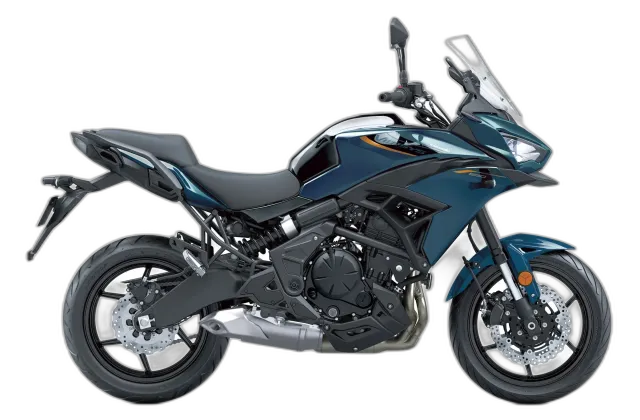
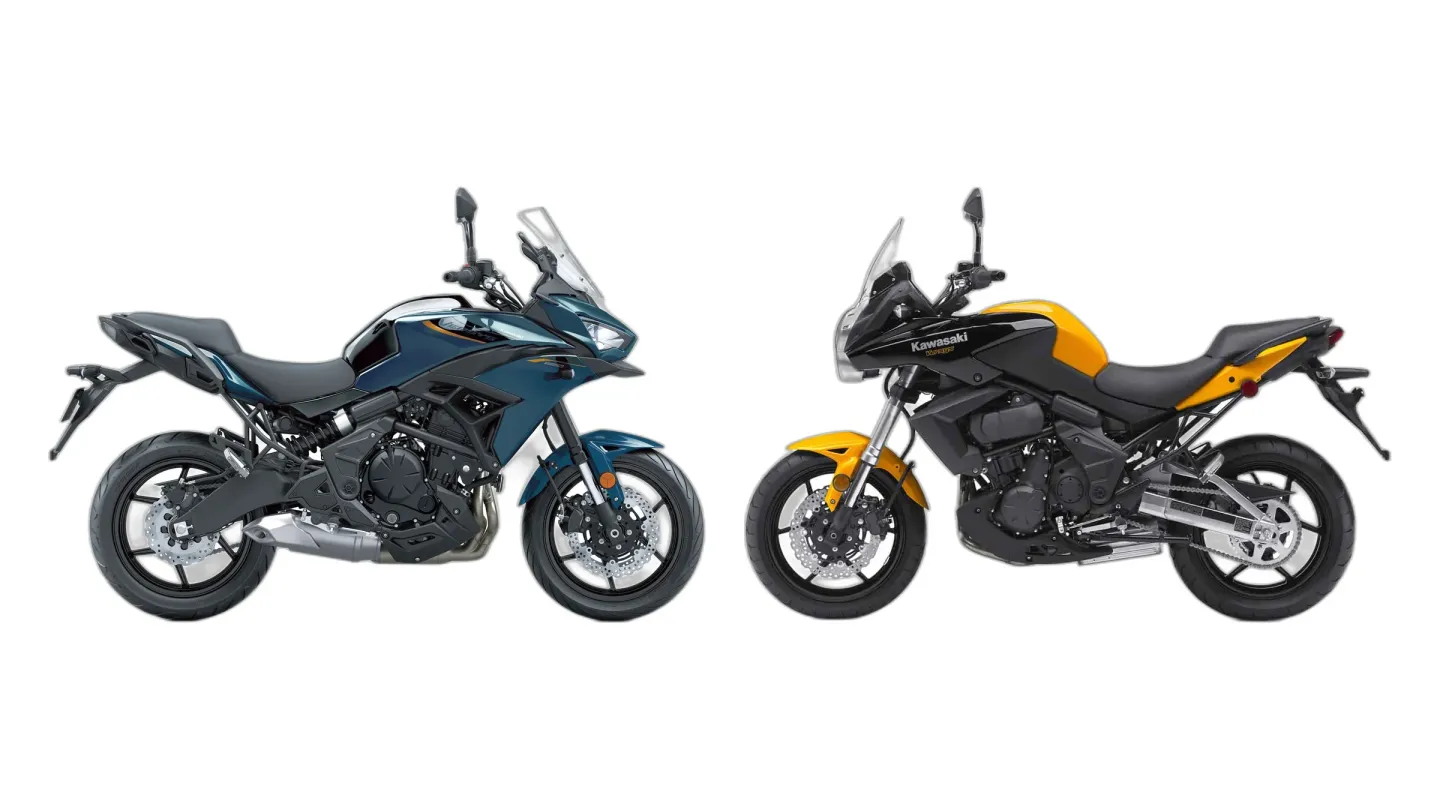
Kawasaki Versys 650 (LE E) vs Versys 650 (LE C)
You'll find the 2015 Kawasaki Versys 650 flicks into a bend and doesn't wander off its neutral line. The 2010 Kawasaki Versys 650 tips in light and tight.
What makes each one tick
2015 Versys 650
There's almost no buzz in the 2015 Versys 650's grips as its twin draws clean off low revs and spins smoothly up to the top. A broken patch of pavement doesn't upset the 2015 Versys 650, because its suspension soaks up the bump before the jolt reaches the bars. On the Blue Ridge Parkway, its chassis switches from curve to curve without a fight. Its seat cradles you till dusk.
Nils rode the 2015 Versys 650 in the Canary Islands in 2020 (NastyNils Testride).
2010 Versys 650
Parking-lot U-turns barely trouble the 2010 Versys 650, whose bar swings the front around in a turning circle that doesn't need much room. A crack of the throttle gets an eager shove from its twin, which keeps spinning freely toward the top. Its pull doesn't surprise you. The wide bar hauls it round back-road hairpins.
The Voice of Experience

What actually separates them
- The 2010 Versys 650 has the lower wet weight: 454 lb (206 kg) vs 476 lb (216 kg).
- The 2015 Versys 650 makes more peak power: 69 hp (51 kW) vs 64 hp (47 kW).
- The 2015 Versys 650 has the larger fuel tank: 5.5 US gal (21 L) vs 5.0 US gal (19 L).
Which one for the way you ride
There's no real gap on commuting, twisty roads, long days, running costs, and a first bike. Sit on both and let fit and price decide.
Who each one is built for
What's good, and what you'll live with
2015 Versys 650
What owners say
Strengths
- Agile, neutral handling
- Butter‑smooth power delivery
2010 Versys 650
What owners say
Strengths
- Lively, responsive parallel-twin engine
- Low-speed agility is excellent, with light steering and a tight turning circle
- Comfortable all-day ergonomics
Trade-offs
- Hard seat limits touring comfort
Known problems to check before you buy
2015 Versys 650
No confirmed faults on file yet. That's not the same as fault-free.
2010 Versys 650
- Stator failure at high mileage The stator can fail after approximately 31,000 mi (50,000 km), leading to charging system failure. Often preceded by dimming lights or battery warning; replacement is the fix.
- Regulator/rectifier failure The shunt-type regulator/rectifier can overheat and fail, often linked to stator problems. Replacing with a series-type unit is a common preventative measure.
- Front fork seal leakage Some owners report premature fork seal leaks. Not widespread but noted in long-term ownership.
What they share
- Displacement
- 649 cc
- Engine
- Parallel twin
- Cooling
- Liquid-cooled
- Gearbox
- 6-speed
- Final drive
- Chain
- Front brake
- 300 mm
- Front tire
- 120/70-17
- Rear tire
- 160/60-17
Where the spec sheets split
| 2015 Versys 650 | 2010 Versys 650 | |
|---|---|---|
| Seat height | 33.1 in (840 mm) | 33.3 in (845 mm) |
| Wet weight | 476 lb (216 kg) | 454 lb (206 kg) |
| 2015 Versys 650 | 2010 Versys 650 | |
|---|---|---|
| Power | 69 hp (51 kW) | 64 hp (47 kW) |
| Torque | 47 lb-ft (64 Nm) | 45 lb-ft (61 Nm) |
| 2015 Versys 650 | 2010 Versys 650 | |
|---|---|---|
| Fuel economy | 47 mpg (US) / 5.04 L/100 km | 40 mpg (US) / 5.9 L/100 km |
| Fuel capacity | 5.5 US gal (21 L) | 5.0 US gal (19 L) |
| 2015 Versys 650 | 2010 Versys 650 | |
|---|---|---|
| Fork | Upside-down (USD) | Telescopic |
What comes fitted, what costs extra
| 2015 Versys 650 | 2010 Versys 650 | |
|---|---|---|
| ABS | Standard | Option |
| Heated Grips | Option | Not offered |
| Luggage System | Option | Not offered |
Head to head, area by area
Both bikes on the same scale, one area at a time.