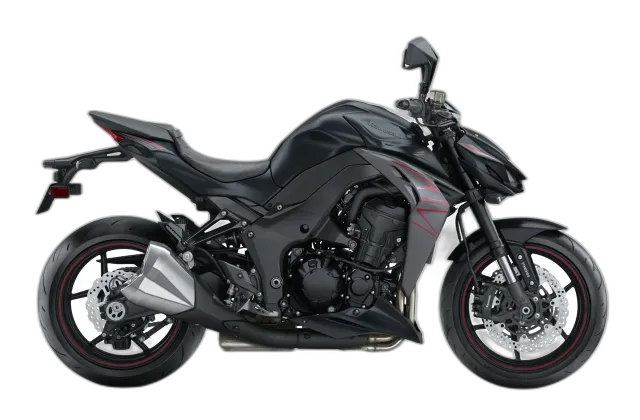
By NastyNils·
Motorcycle comparison · Sport Tourer vs Hyper Naked
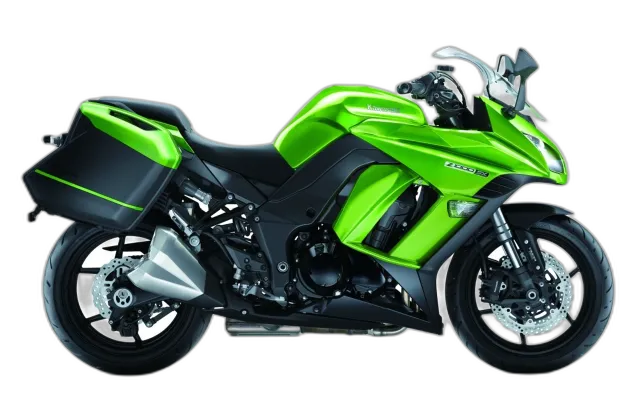
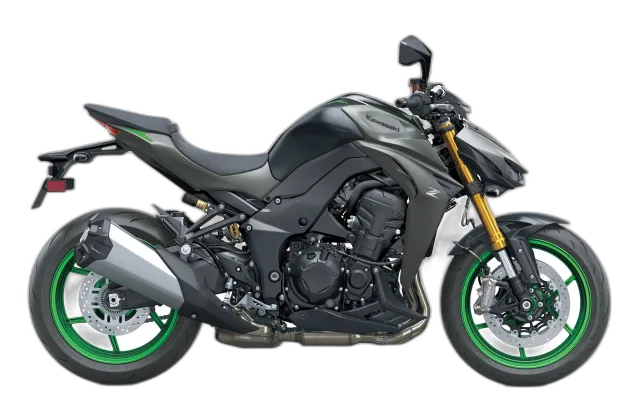
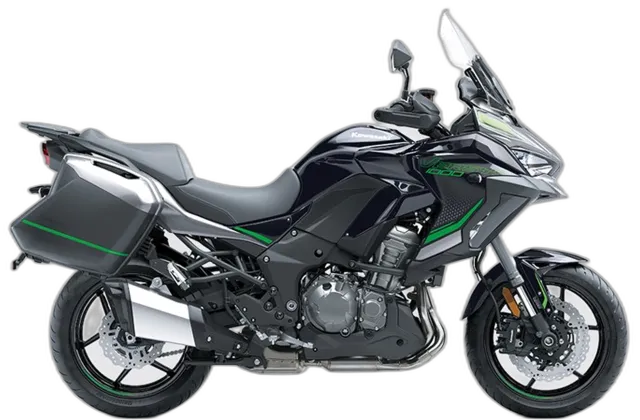
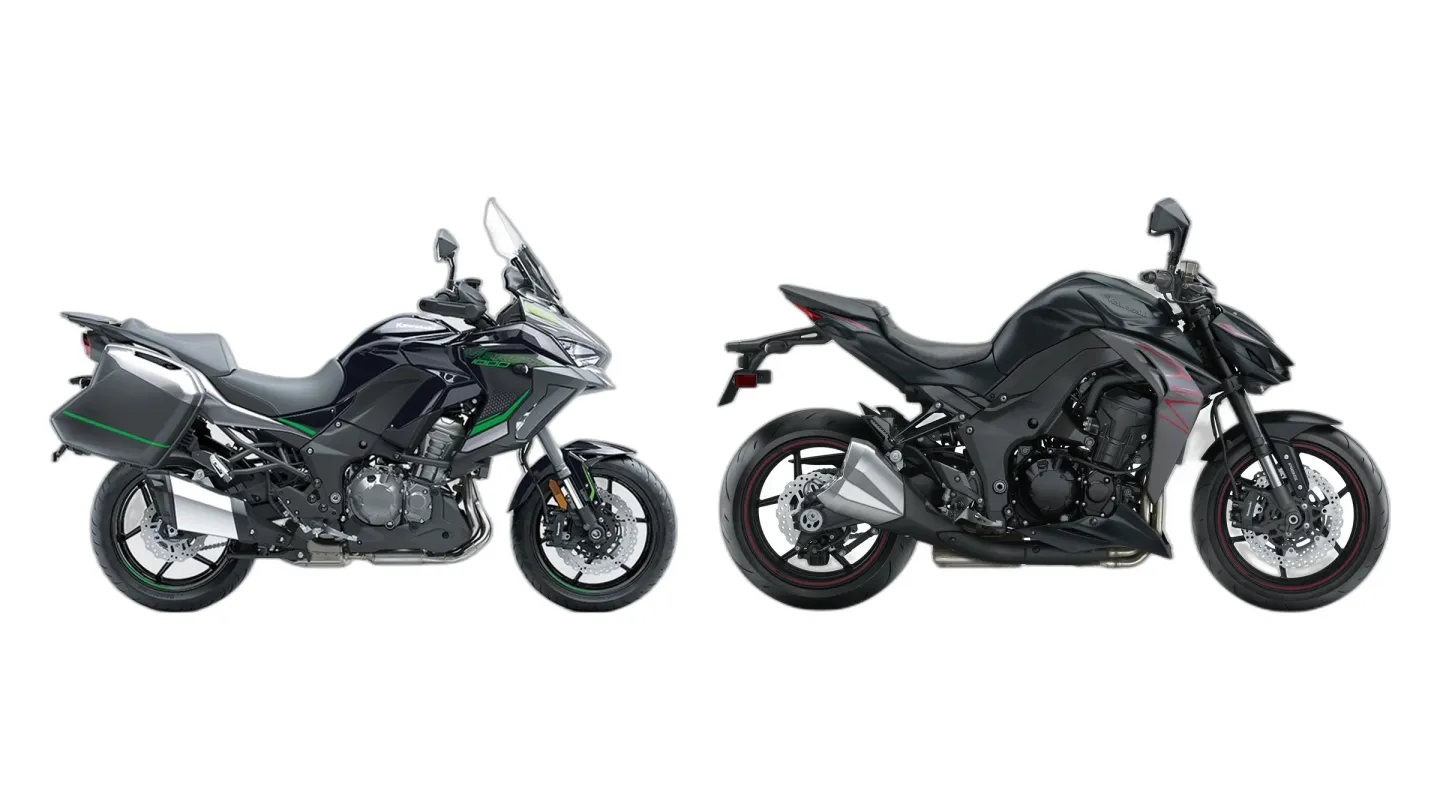
Kawasaki Versys 1000 (LZT00B) vs Z1000 (ZZRT00F)
Kawasaki Versys 1000 vs Z1000: different classes, one choice. Here's how to make it.
Tip the Kawasaki Versys 1000 into a bend and it's the wide bars that swing the front in, light and quick. The Kawasaki Z1000 doesn't push back on entry at all. Its chassis holds steady right through tight hairpins.
So which one do you buy?
Buy the Versys 1000 if…
Traveling with luggage
Easy call: Versys 1000
For multi-day trips with bags, the Versys 1000 makes far more sense. What tips it: better wind protection and a better passenger seat. Pack it up and go.
The Z1000 has the edge if…
Daily commuting & city riding
Small edge: Z1000
For the ride to work, the Z1000 noses ahead. The reason: lighter steering. Don't let that alone make the call.
Sporty riding on twisty roads
A touch ahead: Z1000
In the twisties, the Z1000 asks a bit less of you to go quickly. It's down to more feel through the bars and a sportier chassis. Call it a modest edge.
What makes each one tick
Versys 1000
The Versys 1000's four doesn't buzz through the pegs, and it's already pulling clean down low before a sporty rush arrives near the top of the tach. The throttle tells you exactly what the rear tire's getting.
Nils rode the Versys 1000 in Austria in 2015 (NastyNils Testride).
Z1000
The Z1000's rigid aluminum frame and horizontally mounted shock keep the whole bike tied together once you've aimed it at an apex. Thread it into a corner and there's no nervous push-back, no weight fighting you on entry. On the brake lever and a downshift, there's a physical weight to each blip from the flywheel's mass. A careful roll-on pulls in a steady surge, and the motor turns raw once it's pinned. It howls eagerly to the redline.
Nils rode the Z1000 in 2014 and 2025 (NastyNils Testride).
The Voice of Experience

What actually separates them
- The Z1000 has the lower seat: 32.1 in (815 mm) vs 33.1 in (840 mm).
- The Z1000 has the lower wet weight: 487 lb (221 kg) vs 551 lb (250 kg).
- The Z1000 makes more peak power: 142 hp (104 kW) vs 120 hp (88 kW).
Which one for the way you ride
Comfortable long-distance riding
Sits this out: Z1000
Long days on the highway aren't the Z1000's job, so there's no verdict for it here.
There's no real gap on running costs. Sit on both and let fit and price decide.
Who each one is built for
What's good, and what you'll live with
Versys 1000
From Nils' own saddle time
Strengths
- Swallows A Full Touring Load
- Built To Run Long
- 120 hp, Plenty In Reserve
- Controls You Stop Noticing
- Willing From Low Revs
Trade-offs
- No Cruise Control Fitted
- Fork Seals Can Weep
- Steering Head Bearings Wear
- Neutral Light Plays Tricks
Z1000
From Nils' own saddle time
Strengths
- Flywheel Mass You Actually Feel
- Linear, Then Genuinely Raw
- Motor Takes Real Mileage
- Composed Through Tight Corners
- Used Values Hold Up
Trade-offs
- Seat Gets Old In Hours
- No Wind Protection At All
- Stock Suspension Runs Firm
- No Traction Control Or Quickshifter
What they cost used
These prices compare an 8-year-old Versys 1000 with an 8-year-old Z1000.
- Versys 1000
- about $6,300
- Z1000
- about $6,400
At eight years old, the Kawasaki Versys 1000 sits around $6,300 while the Kawasaki Z1000 lands near $6,400. That's no meaningful gap between the two. These are estimates from the used market, not live listings.
What they share
- Displacement
- 1043 cc
- Engine
- Inline-four
- Cooling
- Liquid-cooled
- Gearbox
- 6-speed
- Final drive
- Chain
- Fork
- Upside-down (USD)
- Front brake
- 310 mm
- Front tire
- 120/70-17
Where the spec sheets split
| Versys 1000 | Z1000 | |
|---|---|---|
| Seat height | 33.1 in (840 mm) | 32.1 in (815 mm) |
| Wet weight | 551 lb (250 kg) | 487 lb (221 kg) |
| Versys 1000 | Z1000 | |
|---|---|---|
| Power | 120 hp (88 kW) | 142 hp (104 kW) |
| Peak power at | 9,000 rpm | 10,000 rpm |
| Torque | 75 lb-ft (102 Nm) | 82 lb-ft (111 Nm) |
| Peak torque at | 7,500 rpm | 7,300 rpm |
| Versys 1000 | Z1000 | |
|---|---|---|
| Fuel capacity | 5.5 US gal (21 L) | 4.5 US gal (17 L) |
| Versys 1000 | Z1000 | |
|---|---|---|
| Rear tire | 180/55-17 | 190/55-17 |
| Wheelbase | 59.8 in (1520 mm) | 56.5 in (1435 mm) |
What comes fitted, what costs extra
| Versys 1000 | Z1000 | |
|---|---|---|
| Traction Control | Standard | Not offered |
| Ride Modes | Standard | Not offered |
| Heated Grips | Option | Not offered |
Head to head, area by area
Both bikes on the same scale, one area at a time.