By NastyNils·
Motorcycle comparison · Sport Tourer
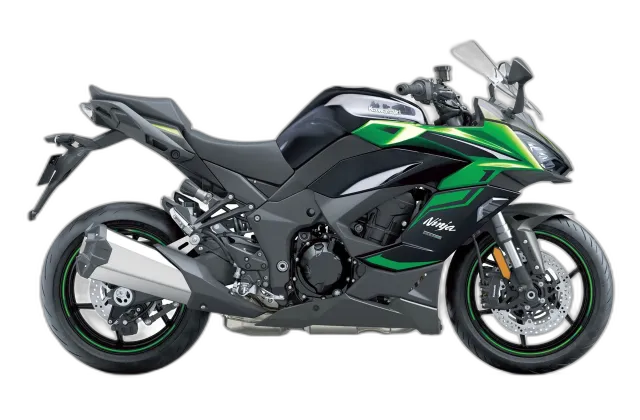
Kawasaki Ninja 1100SX (ZX1100H-SE) vs Yamaha Tracer 9 (MY2021)
Kawasaki Ninja 1100SX vs Yamaha Tracer 9: long days, loaded bags, one choice to make.
You'll feel the Kawasaki Ninja 1100SX pull clean and smooth from low revs as the throttle opens. Twist the Yamaha Tracer 9's grip and it's the intake roar you hear first. Then it rushes hard toward the top end.
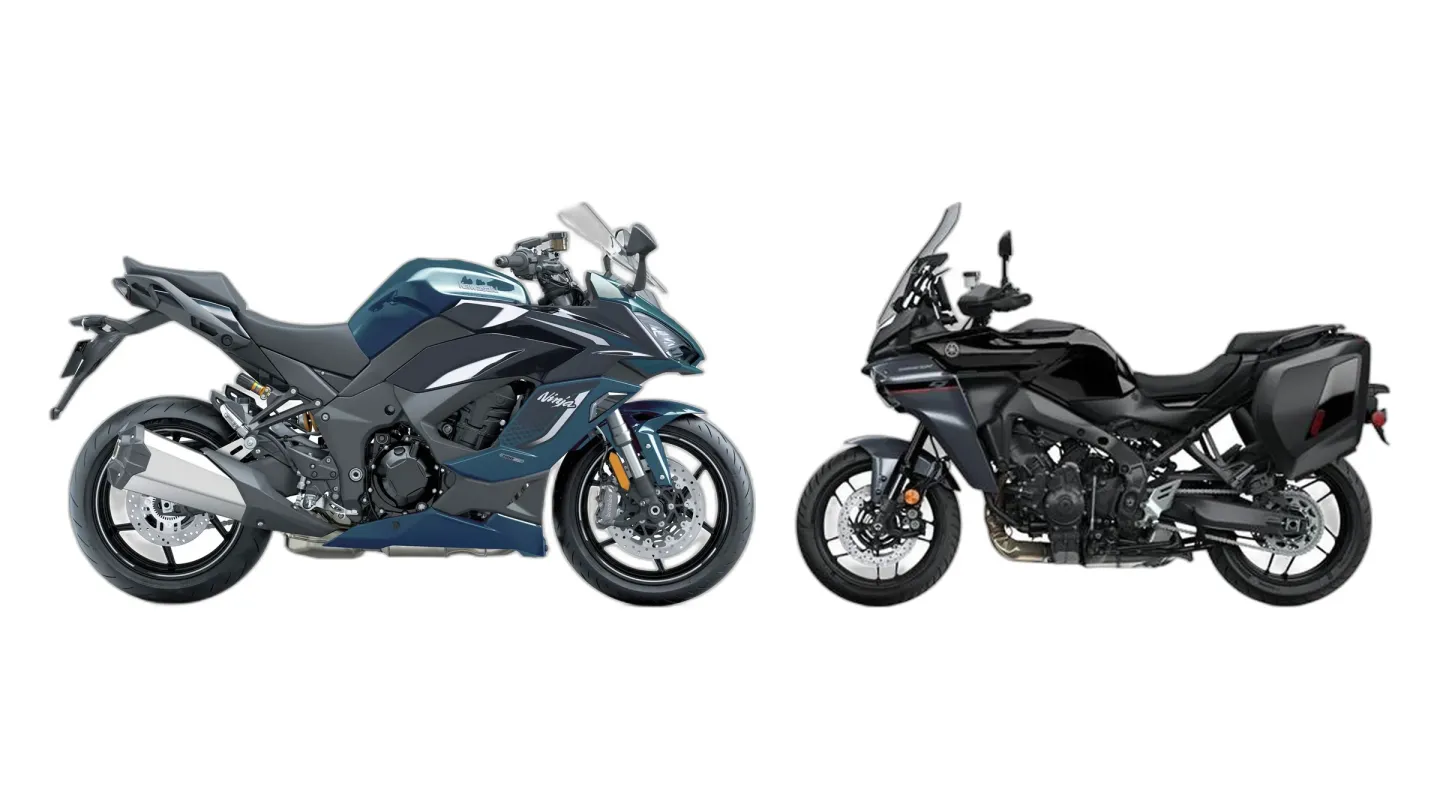
So which one do you buy?
Which one's the smarter buy
No clear advantage
The Ninja 1100SX costs less, but that gap doesn't make it the better buy. Neither bike is the clear winner on value.
What makes each one tick
Ninja 1100SX
Upright enough for a full day yet tipped forward over the bars, the Ninja 1100SX's riding position puts weight on the fork. At corner entry the bike doesn't fight the bar, and its twin-spar aluminum frame holds the line it picks. On the Blue Ridge Parkway's fast sweepers, the suspension won't let the chassis wander through the long arcs. The front tire keeps biting mid-arc.
Tracer 9
Behind its touring fairing, the Tracer 9's light chassis flicks from one lean to the next. There's little mass to haul down each time the brake lever comes in. You're sitting upright at the bar on a plush seat through long days. The pillion seat works all day.
The Voice of Experience

What actually separates them
- The Tracer 9 has the lower seat: 31.9 in (810 mm) vs 32.9 in (835 mm).
- The Tracer 9 has the lower wet weight: 463 lb (210 kg) vs 516 lb (234 kg).
- The Ninja 1100SX makes more peak power: 136 hp (100 kW) vs 119 hp (88 kW).
Which one for the way you ride
A confidence-building first motorcycle
Look elsewhere
If this is your first motorcycle, keep looking. Neither one makes learning easy.
Count commuting, twisty roads, long days, and running costs as a draw. The deal on the table and the condition of the bike matter more here.
Who each one is built for
What's good, and what you'll live with
Ninja 1100SX
What owners say
Strengths
- Silky-smooth, torque-rich inline-four
- Refined electronics package
- Premium Öhlins & Brembo hardware
Trade-offs
- Peak power reduced vs predecessor
Tracer 9
What owners say
Strengths
- Agile and lightweight handling
- Punchy CP3 triple engine
- All-day comfort for two
- Excellent value for money
What they cost used
These prices compare a 1-year-old Ninja 1100SX with a 1-year-old Tracer 9.
- Ninja 1100SX
- about $13,000
- Tracer 9
- about $14,600
At one year old, the Ninja 1100SX sits around $13,000 while the Tracer 9 runs about $14,600. That's a $1,600 gap in the Ninja's favor. These are US market estimates, not live listings.
What they share
- Cooling
- Liquid-cooled
- Gearbox
- 6-speed
- Final drive
- Chain
- Fork
- Upside-down (USD)
- Front tire
- 120/70-17
Where the spec sheets split
| Ninja 1100SX | Tracer 9 | |
|---|---|---|
| Seat height | 32.9 in (835 mm) | 31.9 in (810 mm) |
| Wet weight | 516 lb (234 kg) | 463 lb (210 kg) |
| Ninja 1100SX | Tracer 9 | |
|---|---|---|
| Displacement | 1099 cc | 890 cc |
| Engine | Inline-four | Inline-three |
| Power | 136 hp (100 kW) | 119 hp (88 kW) |
| Peak power at | 9,000 rpm | 10,000 rpm |
| Torque | 83 lb-ft (113 Nm) | 69 lb-ft (93 Nm) |
| Peak torque at | 7,600 rpm | 7,000 rpm |
| Ninja 1100SX | Tracer 9 | |
|---|---|---|
| Fuel capacity | 5.0 US gal (19 L) | 4.8 US gal (18 L) |
| Ninja 1100SX | Tracer 9 | |
|---|---|---|
| Front brake | 300 mm | 298 mm |
| Rear tire | 190/50-17 | 180/55-17 |
What comes fitted, what costs extra
| Ninja 1100SX | Tracer 9 | |
|---|---|---|
| Electronic Suspension | Not offered | Option |
| Manually Adjustable Front Suspension | Standard | Not offered |
| Quickshifter | Standard | Option |
| Smartphone Connectivity | Standard | Option |
| Navigation | Standard | Not offered |
| USB Charging Port | Standard | Not offered |
| Tire Pressure Monitoring (TPMS) | Not offered | Option |
| Heated Grips | Standard | Option |
| Electrically Adjustable Windscreen | Standard | Not offered |
Head to head, area by area
Both bikes on the same scale, one area at a time.