By NastyNils·
Motorcycle comparison · Sport Tourer vs Supersport
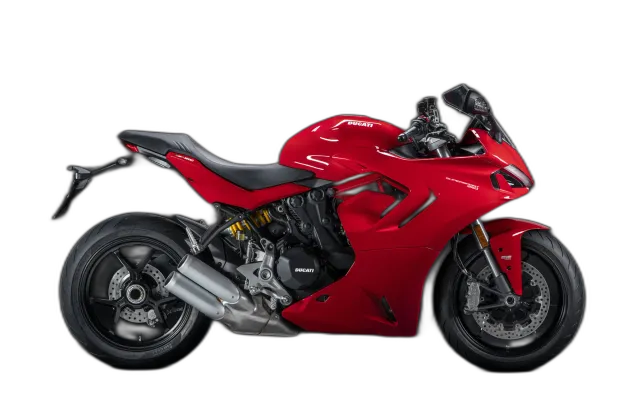
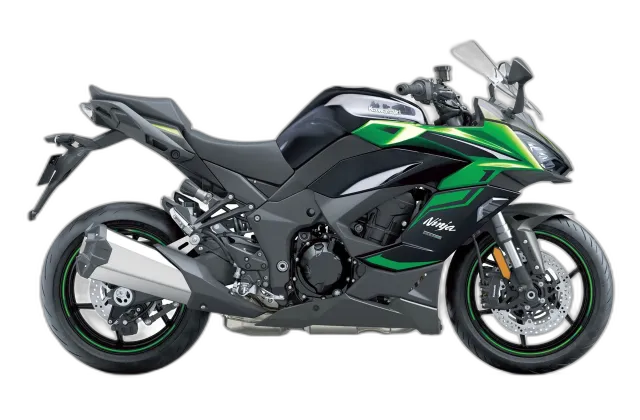
Kawasaki Ninja 1000 SX (MY2020) vs Ducati SuperSport (MY2017)
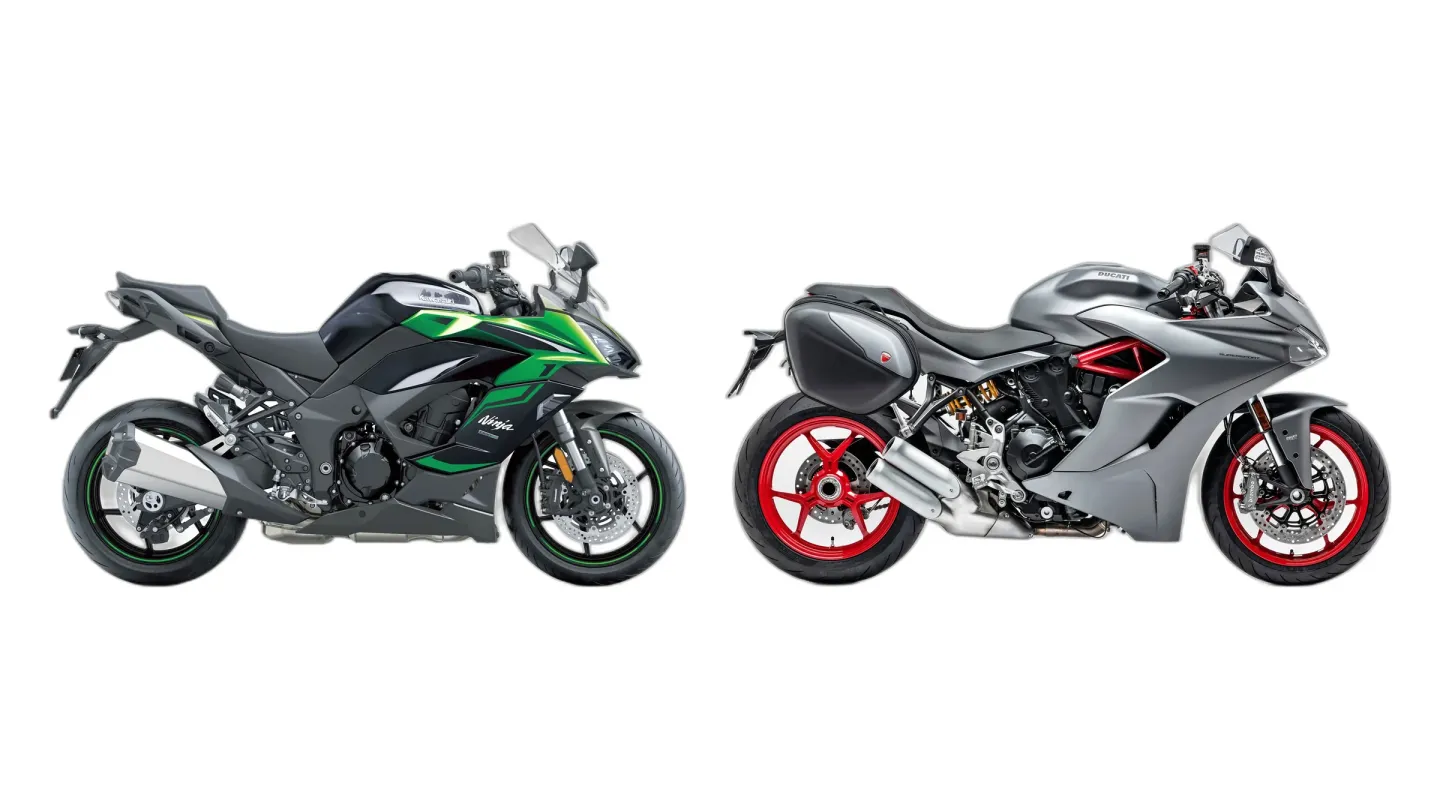
Kawasaki Ninja 1000 SX vs Ducati SuperSport: two kinds of bike, and who each one is for.
At a fresh roll of the throttle, the Kawasaki Ninja 1000 SX's inline-four pulls evenly from idle to redline and doesn't stumble anywhere. The Ducati SuperSport's L-twin meets the throttle with a broad shove that's strongest through the middle revs. It's thumping forward with every twist of the wrist.
So which one do you buy?
Buy the Ninja 1000 SX if…
Daily commuting & city riding
Clear winner: Ninja 1000 SX
The Ninja 1000 SX suits a daily commute clearly better. Thank easier everyday riding for that. In traffic, it's simply less work.
The Ninja 1000 SX has the edge if…
Keeping running costs low
By a nose: Ninja 1000 SX
On running costs, the Ninja 1000 SX edges it. Not by enough to bank on.
The SuperSport has the edge if…
Sporty riding on twisty roads
A touch ahead: SuperSport
The SuperSport nudges ahead once the pavement starts to wiggle. It's down to more feel through the bars. Don't expect a night-and-day difference.
Which one's the smarter buy
Apples and oranges
The Ninja 1000 SX and SuperSport cost about the same on the used market. They do different jobs, so neither is the clear better buy for the money.
What makes each one tick
Ninja 1000 SX
There's constant talk from the Ninja 1000 SX's front tire about grip, on dry pavement or wet. Corner entry on the Back of the Dragon doesn't take muscle at the bar, since the front tucks in eagerly at any pace. Leaned over, it holds its line.
SuperSport
Raised clip-ons set the SuperSport's rider in a relaxed position that's far milder than a superbike's. The steel trellis frame keeps the chassis planted when the brake lever comes in hard, and it still drops into the next bend eagerly. The plush seat keeps stints long.
The Voice of Experience

What actually separates them
- The SuperSport has the lower wet weight: 463 lb (210 kg) vs 518 lb (235 kg).
- The Ninja 1000 SX makes more peak power: 142 hp (104 kW) vs 110 hp (81 kW).
- The Ninja 1000 SX makes more peak torque: 82 lb-ft (111 Nm) vs 71 lb-ft (96 Nm).
Which one for the way you ride
Comfortable long-distance riding
Off its turf: SuperSport
Long days on the highway aren't the SuperSport's job, so there's no verdict for it here.
A confidence-building first motorcycle
Neither is a natural fit
Neither of these is a sensible first motorcycle. Learn on something smaller and lighter, then come back.
Who each one is built for
What's good, and what you'll live with
Ninja 1000 SX
What owners say
Strengths
- Exceptional value for money
- Smooth, linear power delivery
Trade-offs
- Seat comfort insufficient for long-distance touring
- No center stand option
- No electronic suspension
- Small, vibration-prone mirrors
- Windscreen causes buffeting at highest position
SuperSport
What owners say
Strengths
- Broad, usable powerband
- Surprisingly comfortable sport-tourer ergonomics
Trade-offs
- Modest top-end power for experienced riders
Known problems to check before you buy
Ninja 1000 SX
- KQS downshift function rough and unreliable below ~3,500 rpm The bidirectional quickshifter (KQS) works reliably for upshifts. Downshifts (auto-blip) are inconsistent: below approximately 3,500 rpm the system frequently fails to engage, throttle blips are uneven, and the system is sensitive to residual pedal contact between shift operations. Many owners routinely use the clutch for downshifts in urban riding. Multiple dealer visits have been reported without permanent resolution. The down-shift function is haphazard.
- TFT dashboard resets spontaneously — clock, trip, fuel consumption data lost The TFT dashboard resets without rider input: clock, fuel consumption values, lean angle log, trip data, and other parameters return to zero. Occurs primarily at ignition-on, occasionally during riding. In some cases, the display toggles spontaneously between light/dark mode. Kawasaki has not issued an official fix; dealer display replacements did not consistently resolve the issue. Suspected causes: voltage drops below ~10V during starting (weak/loose battery, loose ground connections), vibration at battery terminals. An Australian petition (103 signatures) documented the problem for MY2020–2022.
- Cruise control deactivates spontaneously or refuses to engage The electronic cruise control intermittently refuses to activate or deactivates spontaneously during riding. The most commonly identified root cause is a misadjusted rear brake light switch from the factory — the system interprets it as brake application and disengages. Additional reported causes: faulty wiring to left handlebar switch cluster (repaired under warranty in documented cases), intermittent switch failures.
- Noticeable vibrations in the engine's mid-range — mirrors blur, felt through footpegs and handlebars Pronounced vibrations show up in the engine's mid-range, blurring the mirrors and coming through the footpegs and handlebars. This is partly inherent to the inline-four configuration at these revs and partly amplified by fairing resonance. Kawasaki added foam pads at strategic locations as a factory mitigation. Switching from the stock Bridgestone S22 to alternative tires such as the Michelin Road 5 has eased the issue in some cases, pointing to additional contributing factors.
SuperSport
- Rear brake hose air ingress (recall) Recall 21V315000 Potential for air to enter the rear brake system, reducing braking effectiveness. Affects all 2017-2020 SuperSport models. Ducati issued recall SRV-RCL-21-006 (NHTSA 21V315) to replace rear brake hoses.
- Gear lever interference recall (2018 base model) Recall 18V835000 In 2018, base SuperSport models were recalled for interference between the gear lever and pivot pin, which could affect gear changes.
What they cost used
These prices compare a 6-year-old Ninja 1000 SX with a 6-year-old SuperSport.
- Ninja 1000 SX
- $10,000
- SuperSport
- $10,000
At six years old, the Kawasaki Ninja 1000 SX and Ducati SuperSport both sit around $10,000 in the US market. There's no meaningful price gap between them. They're figures pulled from earlier records, not live listings.
What they share
- Cooling
- Liquid-cooled
- Gearbox
- 6-speed
- Final drive
- Chain
- Fork
- Upside-down (USD)
- Front tire
- 120/70-17
Where the spec sheets split
| Ninja 1000 SX | SuperSport | |
|---|---|---|
| Seat height | 32.3 in (820 mm) | 31.9 in (810 mm) |
| Wet weight | 518 lb (235 kg) | 463 lb (210 kg) |
| Ninja 1000 SX | SuperSport | |
|---|---|---|
| Displacement | 1043 cc | 937 cc |
| Engine | Inline-four | L-twin |
| Power | 142 hp (104 kW) | 110 hp (81 kW) |
| Peak power at | 10,000 rpm | 9,000 rpm |
| Torque | 82 lb-ft (111 Nm) | 71 lb-ft (96 Nm) |
| Peak torque at | 8,000 rpm | 6,500 rpm |
| Ninja 1000 SX | SuperSport | |
|---|---|---|
| Fuel capacity | 5.0 US gal (19 L) | 4.2 US gal (16 L) |
| Ninja 1000 SX | SuperSport | |
|---|---|---|
| Front brake | 300 mm | 320 mm |
| Rear tire | 190/50-17 | 180/55-17 |
| Wheelbase | 56.7 in (1440 mm) | 58.2 in (1478 mm) |
What comes fitted, what costs extra
| Ninja 1000 SX | SuperSport | |
|---|---|---|
| Cornering ABS | Standard | Not offered |
| Wheelie Control | Standard | Not offered |
| Steering Damper | Not offered | Option |
| Cruise Control | Standard | Not offered |
| Quickshifter | Standard | Option |
| TFT Display | Standard | Not offered |
| Smartphone Connectivity | Standard | Option |
| USB Charging Port | Option | Not offered |
| LED Headlight | Standard | Not offered |
Head to head, area by area
Both bikes on the same scale, one area at a time.