By NastyNils·
Motorcycle comparison · Sport Tourer vs Tourer
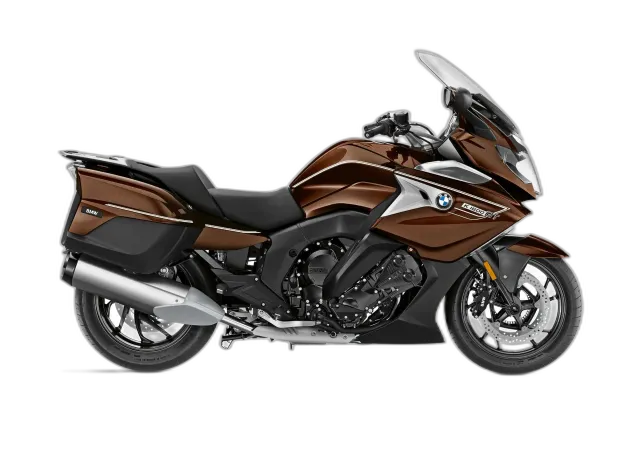
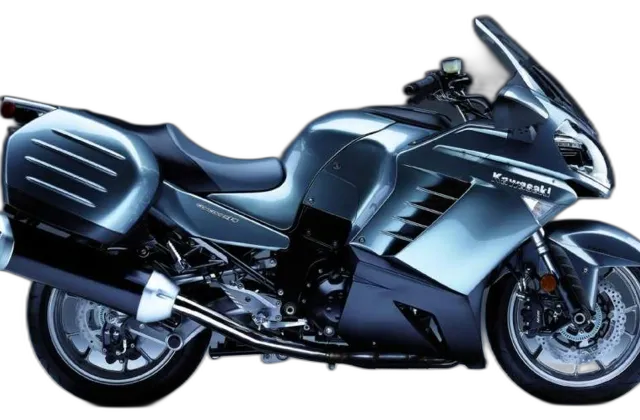
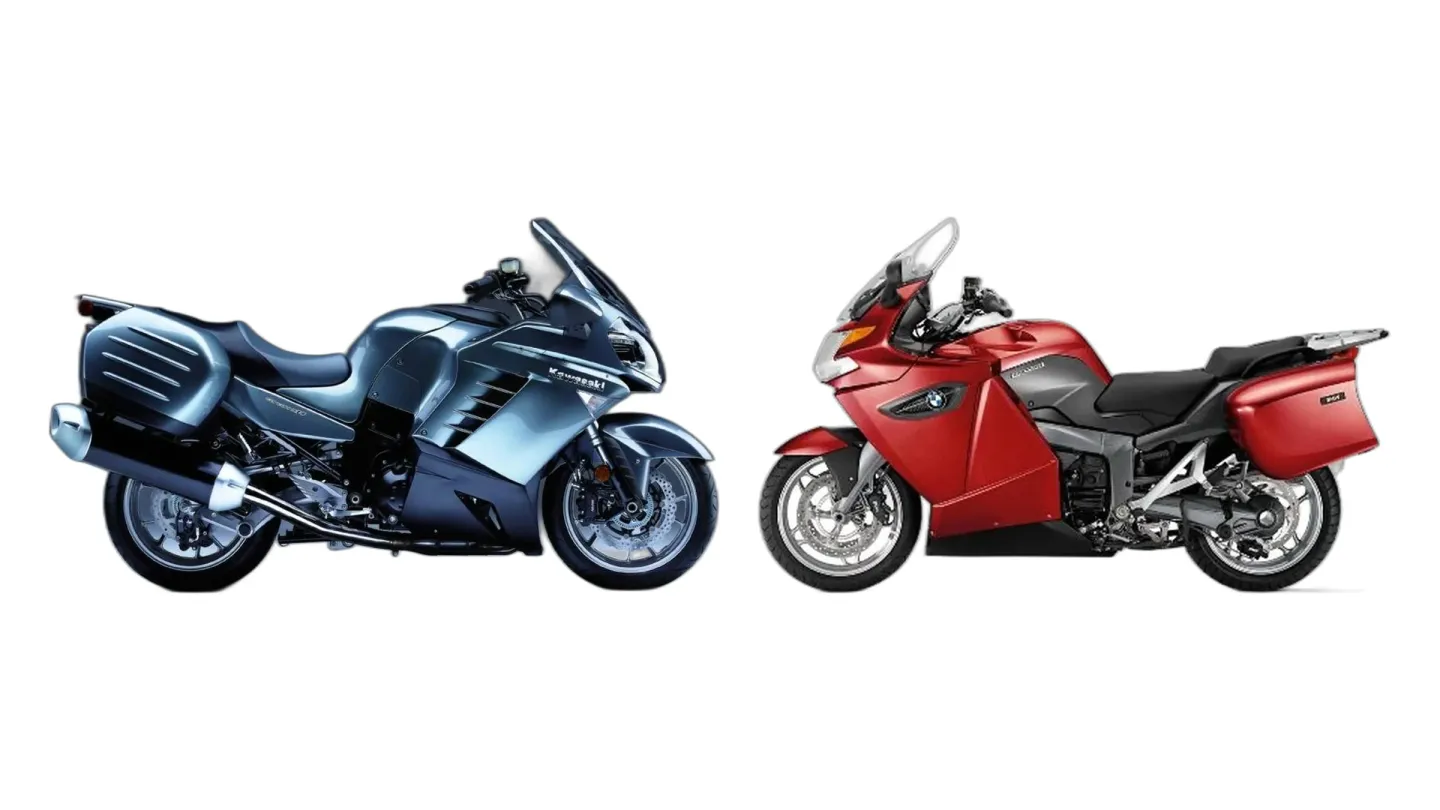
Kawasaki GTR 1400 (ZG1400-MY2007) vs BMW K 1300 GT (K44)
Kawasaki GTR 1400 vs BMW K 1300 GT: which one's easier to live with on a long trip.
Hit a broken patch on the Kawasaki GTR 1400 and you'll feel its plush suspension swallow the jolt before it reaches your spine. On the BMW K 1300 GT, you're flipping its suspension between Comfort and Sport as the surface turns. Rough sections roll under it without hammering through.
So which one do you buy?
The GTR 1400 has the edge if…
Keeping running costs low
Nose ahead: GTR 1400
The GTR 1400 should be a little cheaper to keep on the road. It's a small gap.
Comfortable long-distance riding
Narrow edge: GTR 1400
Hour after hour, the GTR 1400 feels a little kinder to you. Most of that is a better reliability record and a smoother engine. It's a close-run thing, though.
The K 1300 GT has the edge if…
Sporty riding on twisty roads
By a nose: K 1300 GT
In the twisties, the K 1300 GT asks a bit less of you to go quickly. Thank a sportier chassis and better suspension for that. Call it a modest edge.
What makes each one tick
GTR 1400
From low revs the GTR 1400's inline-four pulls smoothly, and it doesn't let up as the needle swings toward high rpm. Every squeeze of the brake lever has to haul down 661 lb (300 kg). Paddling it around takes muscle. In the twisties, the aluminum frame holds that mass on line.
K 1300 GT
Hours into the day, the K 1300 GT's rider still isn't worn out, and its ESA II damping is a big part of why. Once you've had electronically adjustable suspension, going back isn't really an option. In rapid back-to-back direction changes, the GT gives ground to sportier bikes. Corner entry is another matter, since the front holds whatever line you pick and doesn't go vague mid-bend. The Duolever talks before each bend.
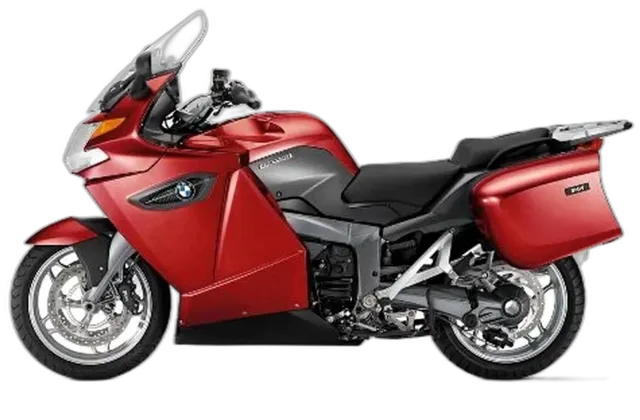
Nils rode the K 1300 GT in Apulia in 2009 (NastyNils Testride).
The Voice of Experience
What actually separates them
- The K 1300 GT has the lower wet weight: 635 lb (288 kg) vs 661 lb (300 kg).
- The K 1300 GT has the larger fuel tank: 6.3 US gal (24 L) vs 5.8 US gal (22 L).
- ABS: standard on the K 1300 GT, option on the GTR 1400.
Which one for the way you ride
A confidence-building first motorcycle
Both miss here
Neither of these is a sensible first motorcycle. Learn on something smaller and lighter, then come back.
Daily commuting & city riding
Not their thing
Stop-and-go traffic doesn't suit either one. They're happier somewhere with fewer red lights.
Who each one is built for
What's good, and what you'll live with
GTR 1400
What owners say
Strengths
- Mighty, class-leading engine
- All-day touring comfort
K 1300 GT
Strengths
- A wall of dead air
- Heated seat and grips
- ESA tunes the road out
- Outlasts the sport-bike crowd
- Controls that make sense
Trade-offs
- Mass shows in the chicanes
- Jerky low-speed fueling
- Cam chain tensioner failure risk
- Hot start issue
- Switchgear prone to failure
Known problems to check before you buy
GTR 1400
No confirmed faults on file yet. That's not the same as fault-free.
K 1300 GT
- Low-speed fueling jerkiness Many riders notice an abrupt on/off throttle transition, particularly in lower gears, making smooth riding in traffic challenging. Some attribute it to lean fuel mapping; aftermarket solutions like the BoosterPlug can improve response.
- Handlebar switch cluster failure Internal resin sealing the two PCBs in the switch housings can melt when the bike is left in direct sun on a hot day. This causes random failure of indicators, windscreen adjustment, cruise control, or engine start. The only permanent fix is switch replacement.
What they share
- Engine
- Inline-four
- Cooling
- Liquid-cooled
- Gearbox
- 6-speed
- Final drive
- Shaft
- Front tire
- 120/70-17
Where the spec sheets split
| GTR 1400 | K 1300 GT | |
|---|---|---|
| Seat height | 32.1 in (815 mm) | 32.3 in (820 mm) |
| Wet weight | 661 lb (300 kg) | 635 lb (288 kg) |
| GTR 1400 | K 1300 GT | |
|---|---|---|
| Displacement | 1352 cc | 1293 cc |
| Power | 155 hp (114 kW) | 160 hp (118 kW) |
| Torque | 100 lb-ft (136 Nm) | 100 lb-ft (135 Nm) |
| Top speed | 151 mph (243 km/h) | 155 mph (249 km/h) |
| GTR 1400 | K 1300 GT | |
|---|---|---|
| Fuel economy | 30 mpg (US) / 7.85 L/100 km | 32 mpg (US) / 7.43 L/100 km |
| Fuel capacity | 5.8 US gal (22 L) | 6.3 US gal (24 L) |
| GTR 1400 | K 1300 GT | |
|---|---|---|
| Fork | Telescopic | Duolever |
| Front brake | 310 mm | 320 mm |
| Rear tire | 190/50-17 | 180/55-17 |
What comes fitted, what costs extra
| GTR 1400 | K 1300 GT | |
|---|---|---|
| ABS | Option | Standard |
| Traction Control | Not offered | Option |
| Electronic Suspension | Not offered | Option |
| Cruise Control | Not offered | Standard |
| Quickshifter | Not offered | Option |
| Slipper Clutch | Standard | Not offered |
| Keyless System | Standard | Not offered |
| Tire Pressure Monitoring (TPMS) | Standard | Option |
| Heated Grips | Not offered | Standard |
| Luggage System | Option | Standard |
Head to head, area by area
Both bikes on the same scale, one area at a time.