By NastyNils·
Motorcycle comparison · Sport Tourer
BMW S 1000 XR (K69) vs Kawasaki Ninja H2 SX (MY2018)
BMW S 1000 XR vs Kawasaki Ninja H2 SX: which one's easier to live with on a long trip.
You'll feel the BMW S 1000 XR pull cleanly through the middle of the rev range, and it doesn't quit howling until redline. The Kawasaki Ninja H2 SX surges smoothly from low revs.
So which one do you buy?
The S 1000 XR has the edge if…
Sporty riding on twisty roads
Narrow edge: S 1000 XR
Through a string of corners, the S 1000 XR feels a little more eager. The gap is small, so ride both.
Comfortable long-distance riding
Inches ahead: S 1000 XR
Deep into a long ride, the S 1000 XR asks slightly less of your back and shoulders. A small margin, and seat fit can overrule it.
Daily commuting & city riding
Small edge: S 1000 XR
The S 1000 XR makes slightly more sense as a commuter. What tips it: easier maneuvering in tight spots and friendlier manners. Don't read much into a gap this small.
Which one's the smarter buy
No clear advantage
Neither bike is the clear better buy at these used prices. The S 1000 XR costs less, but that doesn't make it the smarter spend.
What makes each one tick
S 1000 XR
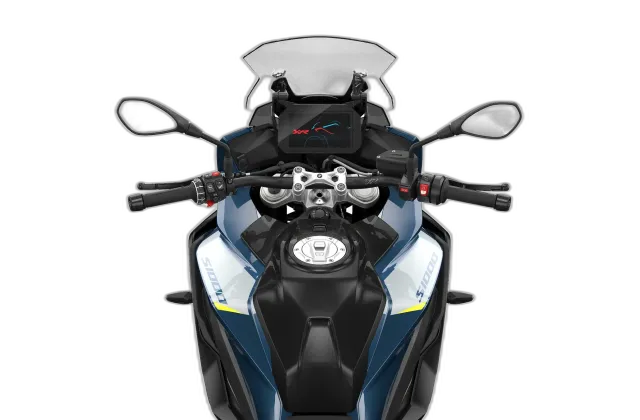
Tall as it sits, the S 1000 XR doesn't fight you between bends. Corner entry takes only a nudge at the bar, and the front doesn't hesitate before it tips in and holds its arc. Broken pavement jolts the firm suspension. The front brake bites hard and keeps its feel.
Nils rode the S 1000 XR in 2020, and in Andalusia in 2021 (NastyNils Testride).
Ninja H2 SX
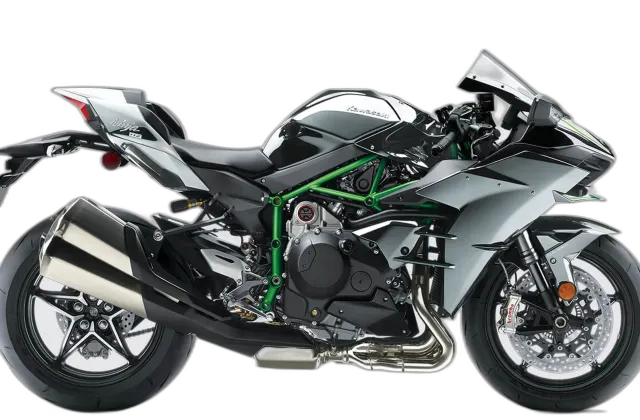
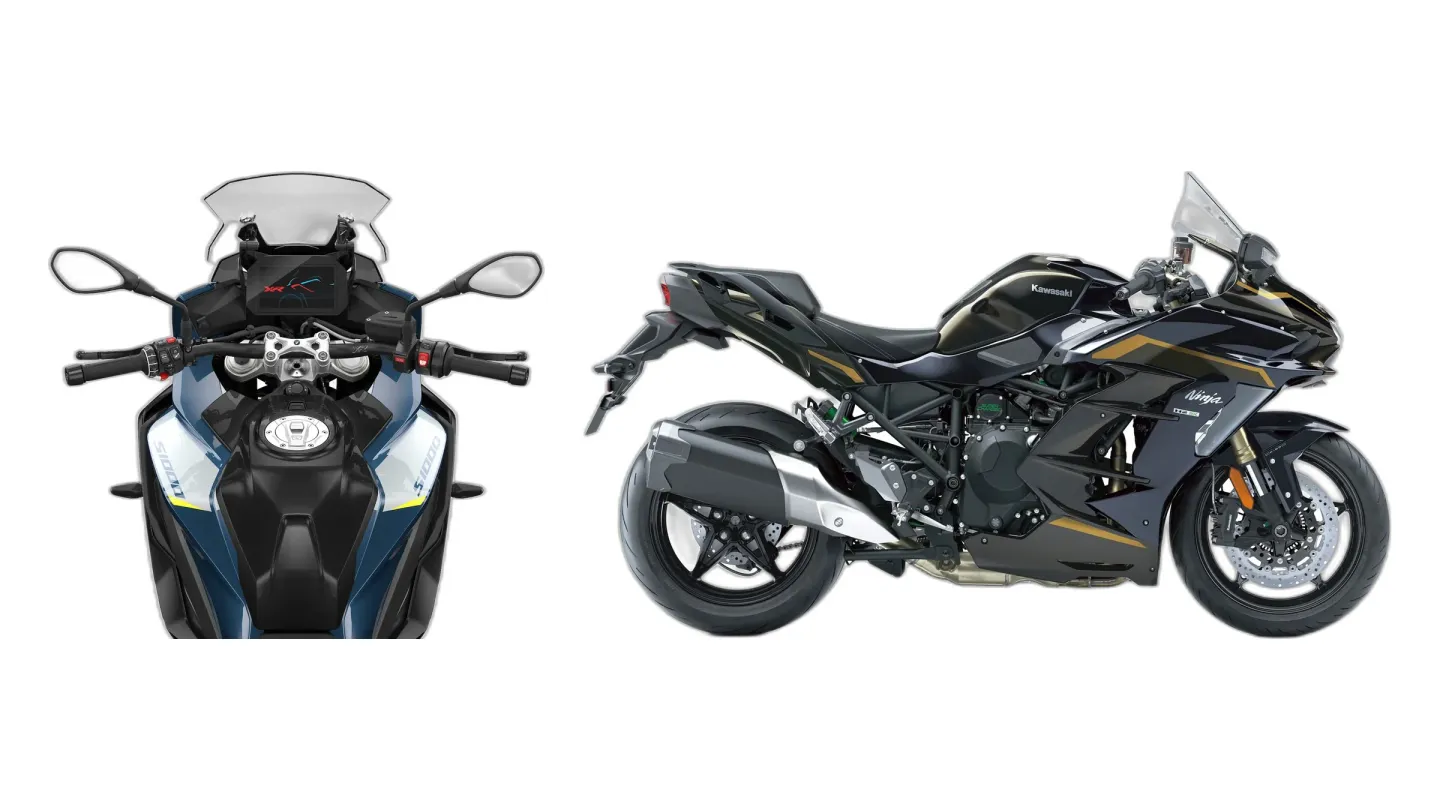
On the Ninja H2 SX, the supercharger chirps every time the throttle snaps shut. There's massive thrust from low down with no buzz in the grips. At triple-digit speeds the trellis frame stays planted, and the suspension takes a bump without fuss. The tall screen parts the windblast.
The Voice of Experience
What actually separates them
- The S 1000 XR has the lower wet weight: 498 lb (226 kg) vs 564 lb (256 kg).
- The Ninja H2 SX makes more peak power: 200 hp (147 kW) vs 165 hp (121 kW).
- The Ninja H2 SX makes more peak torque: 101 lb-ft (137 Nm) vs 84 lb-ft (114 Nm).
Which one for the way you ride
A confidence-building first motorcycle
Not their thing
A first bike should forgive mistakes, and these two don't do that well enough. Come back to them later.
Don't look for a gap on running costs: there isn't one. Go by how each one fits you.
Who each one is built for
What's good, and what you'll live with
S 1000 XR
What owners say
Strengths
- Superbike-level engine performance
- Agile and precise handling
- Comprehensive standard electronics
- Powerful and progressive braking
Trade-offs
- Firm suspension even in softer modes
- Ineffective stock wind protection
Ninja H2 SX
What owners say
Strengths
- Supercharged smooth power
- High-speed stability and touring comfort
Trade-offs
- Heavy weight impacts low-speed agility
Known problems to check before you buy
S 1000 XR
No confirmed faults on file yet. That's not the same as fault-free.
Ninja H2 SX
- Recall 20V676000: POWER TRAIN:MANUAL TRANSMISSION Recall 20V676000 Kawasaki Motors Corp., U.S.A. (KMC) is recalling certain 2018-2020 Ninja H2 SX, Ninja H2 SXSE, and 2019-2020 Ninja H2 SXSE+ motorcycles. In the event of a gear misengagement the engine electronic control unit (ECU) programming doesn't have the capability to suppress high RPM during transmission. If the transmission gears are not properly engaged while shifting into 4th or 5th gear, high engine RPM can cause the output gears of 4th or 5th to fracture when the gears re-engage.
What they cost used
These prices compare a 4-year-old S 1000 XR with a 4-year-old Ninja H2 SX.
- S 1000 XR
- about $14,900
- Ninja H2 SX
- about $18,000
At four years old, the BMW S 1000 XR sits around $14,900 while the Kawasaki Ninja H2 SX runs about $18,000. That's a $3,100 gap in the S 1000 XR's favor. These are US market estimates, not live listings.
What they share
- Engine
- Inline-four
- Cooling
- Liquid-cooled
- Peak power at
- 11,000 rpm
- Gearbox
- 6-speed
- Final drive
- Chain
- Fork
- Upside-down (USD)
- Front brake
- 320 mm
- Front tire
- 120/70-17
- Rear tire
- 190/55-17
Where the spec sheets split
| S 1000 XR | Ninja H2 SX | |
|---|---|---|
| Seat height | 33.1 in (840 mm) | 32.9 in (835 mm) |
| Wet weight | 498 lb (226 kg) | 564 lb (256 kg) |
| S 1000 XR | Ninja H2 SX | |
|---|---|---|
| Displacement | 999 cc | 998 cc |
| Power | 165 hp (121 kW) | 200 hp (147 kW) |
| Torque | 84 lb-ft (114 Nm) | 101 lb-ft (137 Nm) |
| Peak torque at | 9,250 rpm | 9,500 rpm |
| S 1000 XR | Ninja H2 SX | |
|---|---|---|
| Fuel economy | 38 mpg (US) / 6.2 L/100 km | 41 mpg (US) / 5.7 L/100 km |
| Fuel capacity | 5.3 US gal (20 L) | 5.0 US gal (18.9 L) |
| S 1000 XR | Ninja H2 SX | |
|---|---|---|
| Wheelbase | 61.1 in (1552 mm) | 58.3 in (1480 mm) |
What comes fitted, what costs extra
| S 1000 XR | Ninja H2 SX | |
|---|---|---|
| Electronic Suspension | Standard | Not offered |
| Cruise Control | Option | Standard |
| Adaptive Cruise Control | Not offered | Standard (from 2022) |
| Quickshifter | Option | Not offered |
| Heated Grips | Standard | Option |
| Adjustable Windscreen | Standard | Not offered |
| Luggage System | Option | Not offered |
| Cornering Lights | Option | Not offered |
Head to head, area by area
Both bikes on the same scale, one area at a time.