By NastyNils·
Motorcycle comparison · Scooter
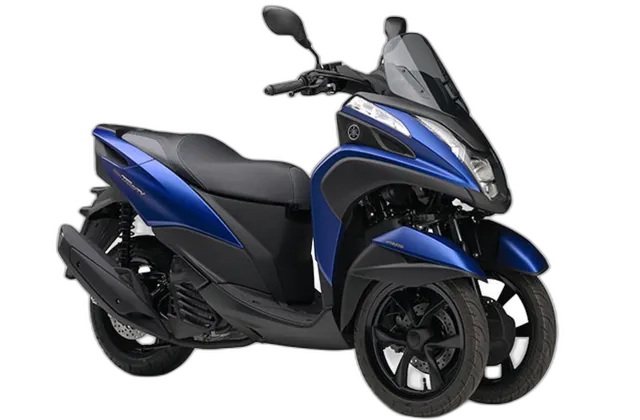
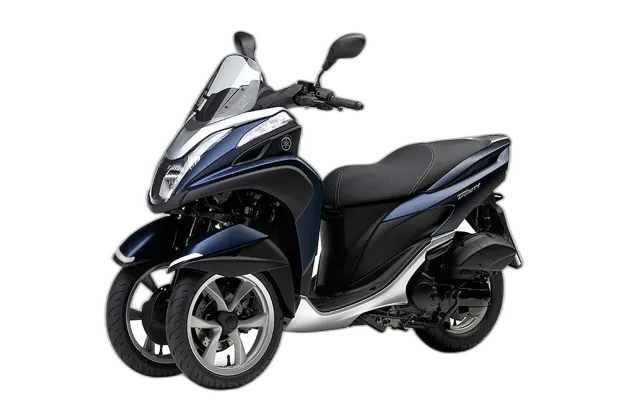
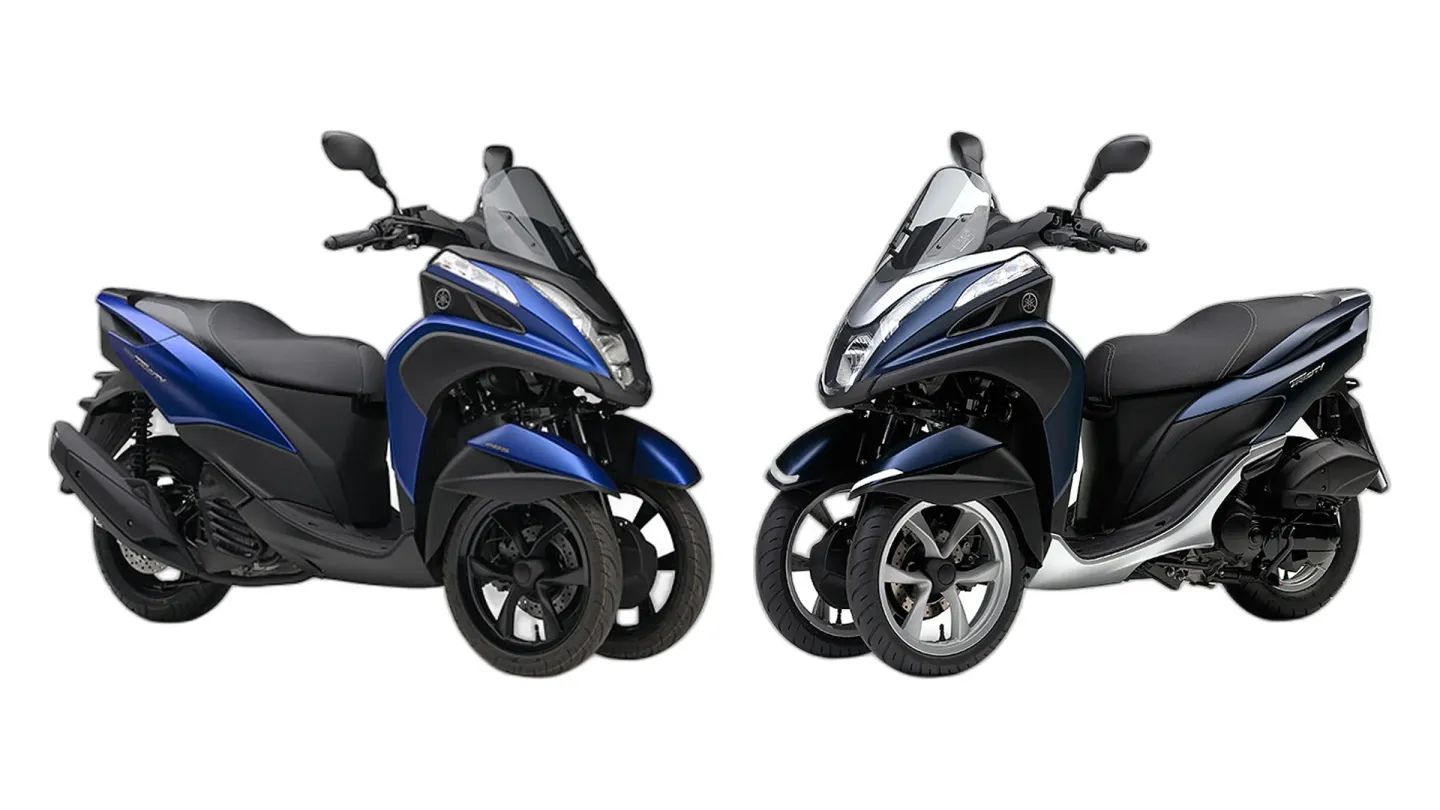
Yamaha Tricity 155 (MY2016) vs Tricity 125 (SEC2)
Yamaha Tricity 155 vs Tricity 125: which one to buy for your commute.
Roll the Yamaha Tricity 155 over broken pavement and its twin front wheels won't get knocked off line. Rain and grit across the lane don't loosen the Yamaha Tricity 125 under hard braking.
So which one do you buy?
The Tricity 125 has the edge if…
A confidence-building first motorcycle
Narrow edge: Tricity 125
For your first season, the Tricity 125 makes slightly more sense. The difference is easier controls. Fit and confidence at a standstill still come first.
Daily commuting & city riding
Inches ahead: Tricity 125
For the Monday-to-Friday grind, the Tricity 125 pulls a nose in front. Thank friendlier manners for that. Your own commute could easily flip it.
What makes each one tick
Tricity 155
Stability comes first on the Tricity 155, because a pair of independently sprung tires carries its nose. Into a corner, the bike leans over the way any scooter does, yet the nose doesn't wander once it's on its arc. Manhole covers don't upset it. Out back, the soft shocks soak up potholes.
Nils rode the Tricity 155 in Austria in 2016 (NastyNils Testride).
Tricity 125
Gray, wet days don't keep the Tricity 125 in the garage, its paired fork legs holding the nose steady. On wet pavement with grit washed across the road, you can brake hard and maneuver at lean without second-guessing yourself. Through town the single keeps up without fuss, but it's out of breath once the freeway comes into view. You'll squeeze the brake lever with real intent within a few stops, even on cobblestones or mid-corner. The planted nose just holds.
Nils rode the Tricity 125 in Austria in 2014 (NastyNils Testride).
The Voice of Experience

What actually separates them
- The Tricity 125 has the lower wet weight: 335 lb (152 kg) vs 364 lb (165 kg).
- The Tricity 155 makes more peak power: 15 hp (11 kW) vs 12 hp (9 kW).
- The Tricity 155 makes more peak torque: 10 lb-ft (14 Nm) vs 8 lb-ft (11 Nm).
Which one for the way you ride
Sporty riding on twisty roads
Both miss here
Both of these feel out of place on a tight, twisting road. Enjoy the view and leave the hero laps to other bikes.
They come out level on running costs. The better-kept used example is the smarter money.
Who each one is built for
What's good, and what you'll live with
Tricity 155
What owners say
Strengths
- Inspiring Stability and Handling
Tricity 125
From Nils' own saddle time
Strengths
- Shrugs off wet, gritty roads
- Brake hard almost anywhere
- Legs stay dry in rain
- Filters like a normal scooter
- The all-weather daily default
Trade-offs
- Runs out of puff up top
- Carries its weight off the line
- Sharp bumps reach your spine
- Right-side filtering gets awkward
What they share
- Seat height
- 30.7 in (780 mm)
- Engine
- Single-cylinder
- Cooling
- Liquid-cooled
- Fuel capacity
- 1.9 US gal (7.2 L)
- Fork
- Telescopic
- Front tire
- 90/80-14
Where the spec sheets split
| Tricity 155 | Tricity 125 | |
|---|---|---|
| Wet weight | 364 lb (165 kg) | 335 lb (152 kg) |
| Tricity 155 | Tricity 125 | |
|---|---|---|
| Displacement | 155 cc | 125 cc |
| Power | 15 hp (11 kW) | 12 hp (9 kW) |
| Peak power at | 8,000 rpm | 9,000 rpm |
| Torque | 10 lb-ft (14 Nm) | 8 lb-ft (11 Nm) |
| Peak torque at | 6,000 rpm | 5,500 rpm |
| Tricity 155 | Tricity 125 | |
|---|---|---|
| Rear tire | 130/70-13 | 110/90-12 |
What comes fitted, what costs extra
| Tricity 155 | Tricity 125 | |
|---|---|---|
| TFT Display | Not offered | Standard (from 2025) |
| Smartphone Connectivity | Not offered | Standard (from 2023) |
| Keyless System | Not offered | Standard |
| LED Headlight | Standard | Not offered |
Head to head, area by area
Both bikes on the same scale, one area at a time.