By NastyNils·
Motorcycle comparison · Scooter
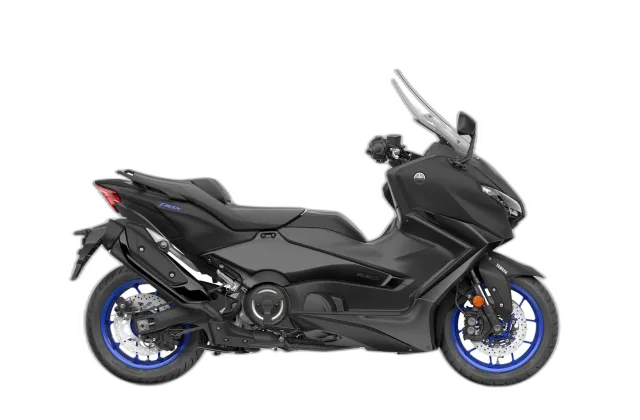
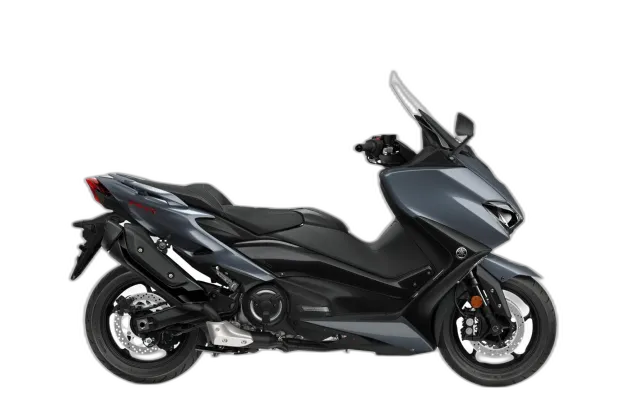
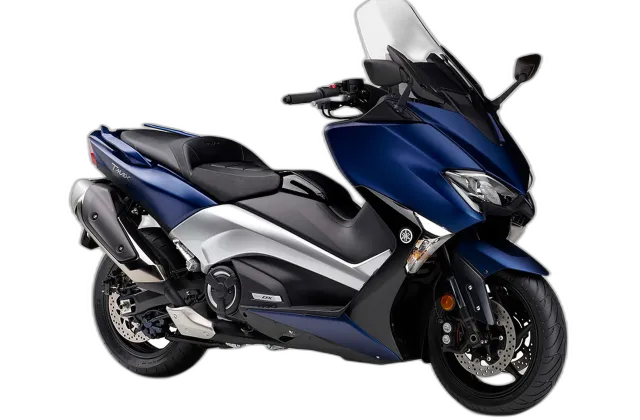
Yamaha TMAX DX (MY2017) vs TMAX 560 (MY2020)
Yamaha TMAX DX vs TMAX 560: traffic, parking, daily miles. Here's how to choose.
You'll feel the Yamaha TMAX DX's chassis carry the turn-in at a bend's entry, and it's the frame, not the motor, doing the work. The Yamaha TMAX 560 tips in precisely then holds steady.
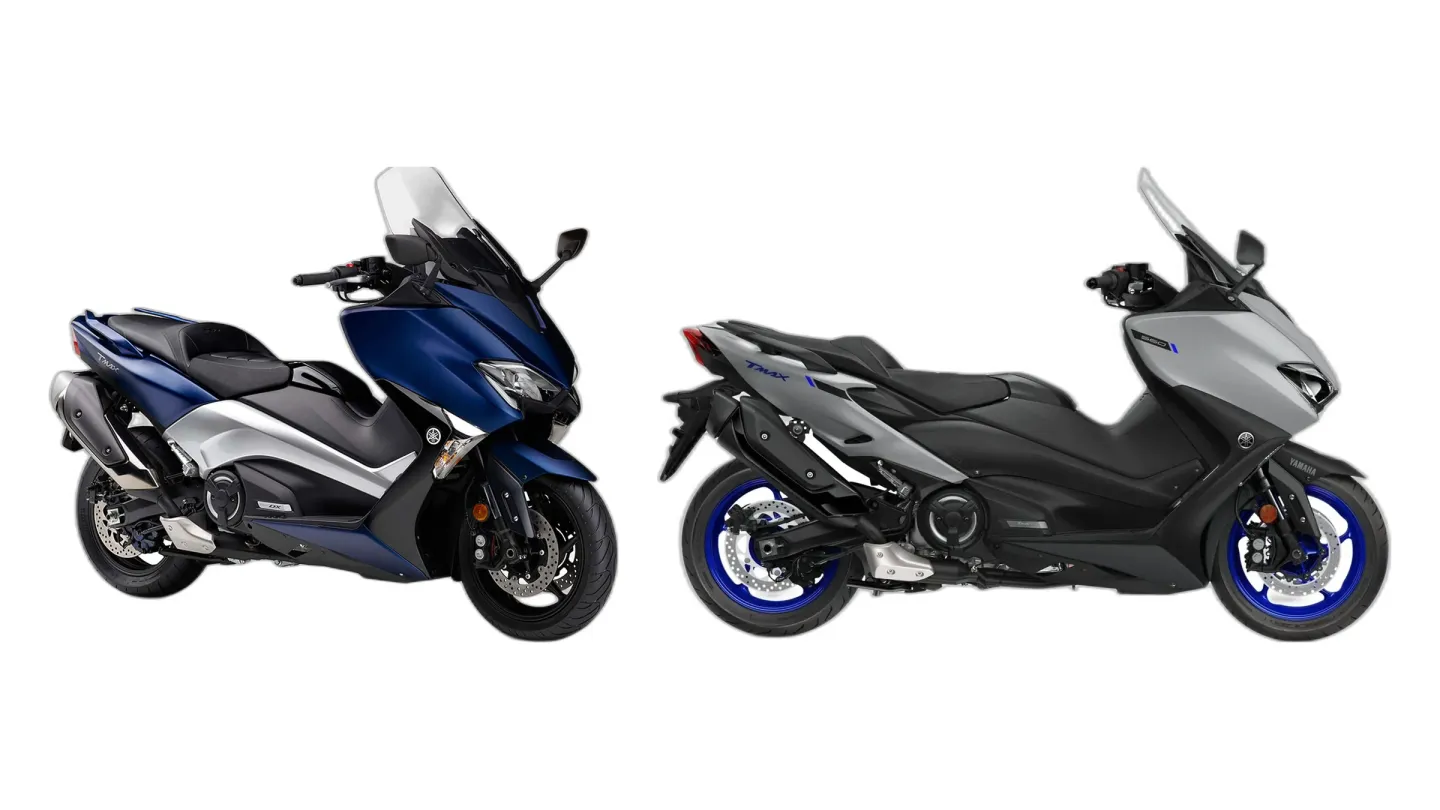
So which one do you buy?
The TMAX 560 has the edge if…
Traveling with luggage
Inches ahead: TMAX 560
The TMAX 560 carries a touring load slightly better. That comes from more range per tank and better wind protection.
Daily commuting & city riding
A touch ahead: TMAX 560
The TMAX 560 makes slightly more sense as a commuter. Don't read much into a gap this small.
Comfortable long-distance riding
Narrow edge: TMAX 560
Over a full day's ride, the TMAX 560 noses ahead on comfort. A long test ride could easily flip that.
Sporty riding on twisty roads
Small edge: TMAX 560
On a winding road, the TMAX 560 comes out a touch ahead. It's down to stronger brakes. You wouldn't bet much on a gap like that.
A confidence-building first motorcycle
By a nose: TMAX 560
Fresh off the training course, the TMAX 560 feels a bit more forgiving. Only by a small margin, though.
What makes each one tick
TMAX DX
There's a commuter and a sprinter living inside the TMAX DX, one mode switch apart. T-mode keeps the revs low, and the throttle doesn't flinch at half-awake inputs in stop-and-go traffic. S-mode snaps the throttle awake.
Nils rode the TMAX DX in South Africa in 2017 (NastyNils Testride).
TMAX 560
The TMAX 560's twin slings it off a green light hard enough to leave many manual bikes behind in a city sprint. There's no lag in the belt-driven CVT, and the drive comes through clean with no buzz in the grips. The bike keeps carving as the road knots up.
The Voice of Experience

What actually separates them
- The TMAX 560 has the larger engine: 562 cc vs 530 cc.
- Manually Adjustable Rear Suspension: standard on the TMAX DX, not offered on the TMAX 560.
- Smartphone Connectivity: standard on the TMAX DX, option on the TMAX 560.
Which one for the way you ride
Who each one is built for
What's good, and what you'll live with
TMAX DX
Strengths
- The Chassis Leads Its Class
- Throttle and Drive in Sync
- Two Machines in One
- Storage Fits Real Helmets
- Traction Control You Never Feel
Trade-offs
- S-Mode Twitches on Bumps
- Connect App Is Filler
- Watch the Drive Belt
- Front Fork Won't Adjust
- High purchase price
TMAX 560
What owners say
Strengths
- Strong acceleration off the line
- Surprisingly sporty handling for a scooter
- Excellent underseat storage
- Smooth and responsive CVT transmission
What they share
- Seat height
- 31.5 in (800 mm)
- Engine
- Parallel twin
- Cooling
- Liquid-cooled
- Peak torque at
- 5,250 rpm
- Fuel capacity
- 4.0 US gal (15 L)
- Final drive
- Belt
- Front brake
- 267 mm
- Front tire
- 120/70-15
- Rear tire
- 160/60-15
Where the spec sheets split
| TMAX DX | TMAX 560 | |
|---|---|---|
| Wet weight | 476 lb (216 kg) | 485 lb (220 kg) |
| TMAX DX | TMAX 560 | |
|---|---|---|
| Displacement | 530 cc | 562 cc |
| Power | 46 hp (34 kW) | 48 hp (35 kW) |
| Peak power at | 6,750 rpm | 7,500 rpm |
| Torque | 39 lb-ft (53 Nm) | 41 lb-ft (56 Nm) |
| TMAX DX | TMAX 560 | |
|---|---|---|
| Fuel economy | 39 mpg (US) / 6.01 L/100 km | 49 mpg (US) / 4.8 L/100 km |
| TMAX DX | TMAX 560 | |
|---|---|---|
| Fork | Telescopic | Upside-down (USD) |
What comes fitted, what costs extra
| TMAX DX | TMAX 560 | |
|---|---|---|
| Manually Adjustable Rear Suspension | Standard | Not offered |
| Smartphone Connectivity | Standard | Option |
| Heated Grips | Standard | Option |
Head to head, area by area
Both bikes on the same scale, one area at a time.