By NastyNils·
Motorcycle comparison · Scooter
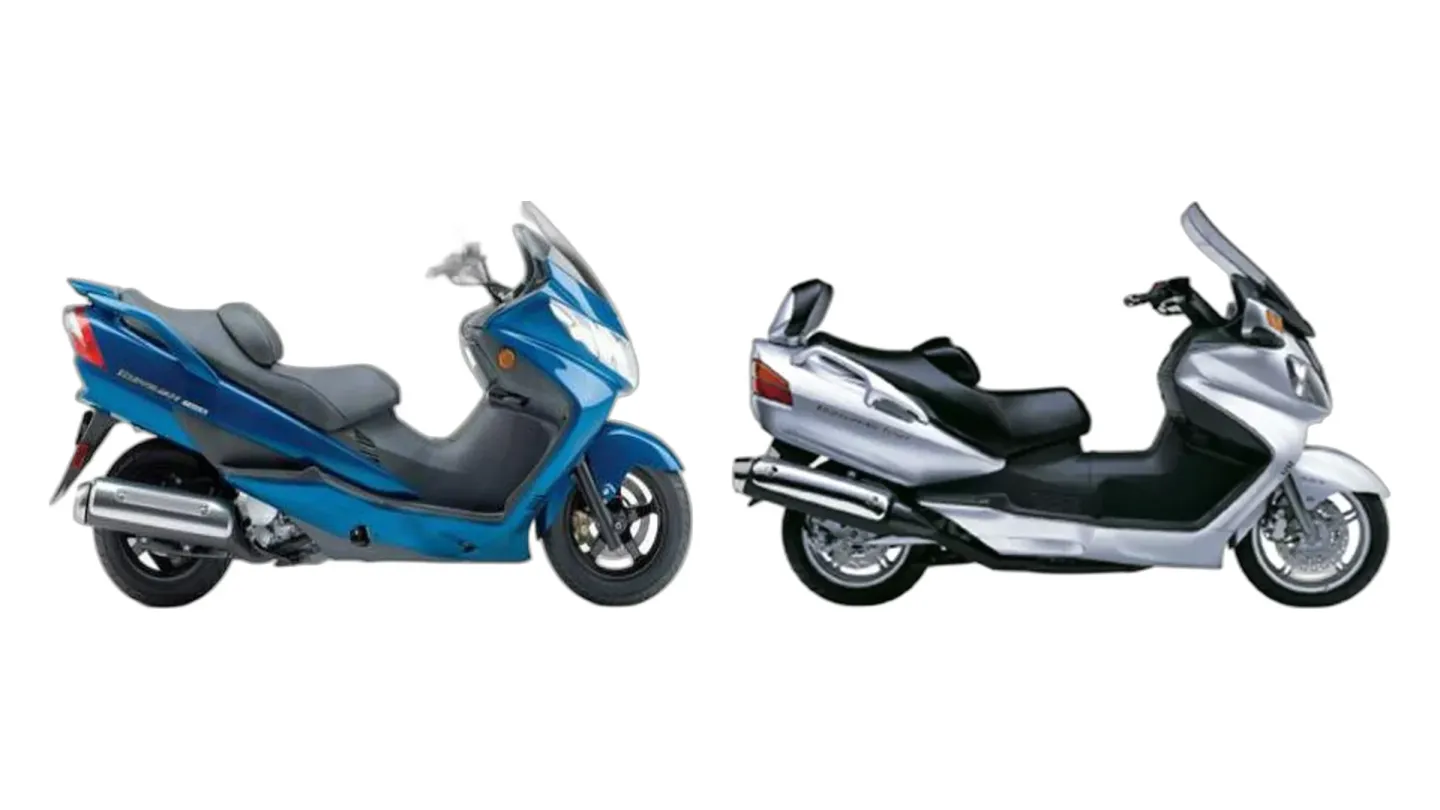
Suzuki Burgman 400 (AN400 B) vs Burgman 650 (MY2005)
Suzuki Burgman 400 vs Burgman 650: which one to buy for your commute.
Roll on the throttle from a stoplight and the Suzuki Burgman 400's twist-and-go automatic doesn't ask for a clutch or a single shift. The Suzuki Burgman 650's throttle wakes a parallel twin that's smooth from the first turn. It settles into a steady hum that won't tire you.
So which one do you buy?
The Burgman 400 has the edge if…
A confidence-building first motorcycle
Edges it: Burgman 400
For a learner on a small bike, the Burgman 400 is a touch easier to get along with. Sit on both anyway.
Daily commuting & city riding
Slight edge: Burgman 400
On the way to work, the Burgman 400 asks a little less of you. Thank friendlier manners for that. Close enough that the test ride should settle it.
What makes each one tick
Burgman 400
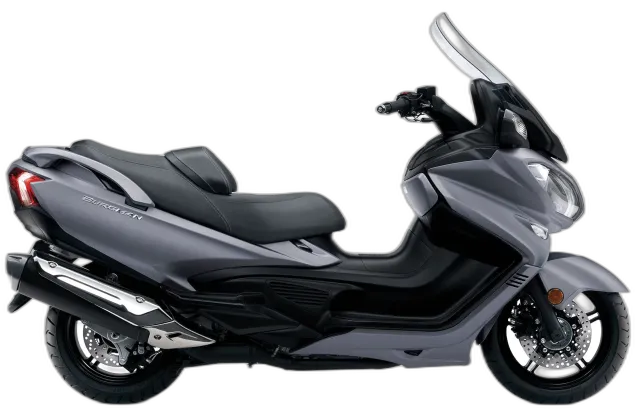
The Burgman 400 carries its 406 lb (184 kg) low and slips through city traffic in quick darts. On a Los Angeles freeway, it doesn't wander off its line, and its tall screen and broad fairing push wind and rain aside. There's a 260 mm front brake behind the lever to haul it down from freeway pace. Its trunk swallows two full-face helmets.
Burgman 650
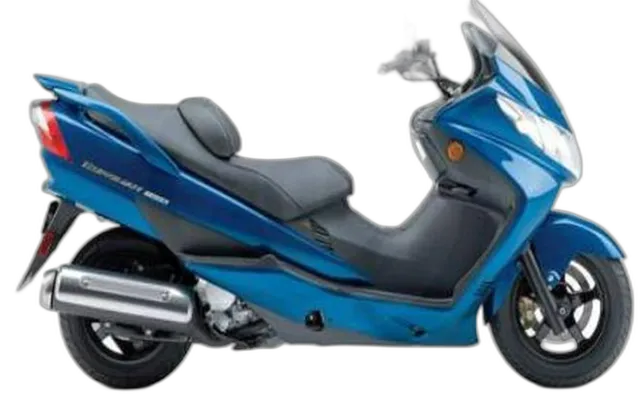
The Burgman 650 eats long freeway miles at an easy lope, and you'll stay fresh behind its wind protection hour after hour. Its 525 lb (238 kg) dry weight shows up in tight corners, where it won't flick in quickly. A broken patch of pavement fades into the plush seat before it reaches you. Its odometer just keeps climbing.
The Voice of Experience

What actually separates them
- The Burgman 400 has the lower seat: 27.4 in (695 mm) vs 29.5 in (750 mm).
- The Burgman 650 makes more peak power: 55 hp (40 kW) vs 33 hp (24 kW).
- The Burgman 650 makes more peak torque: 46 lb-ft (62 Nm) vs 24 lb-ft (32 Nm).
Which one for the way you ride
Look at twisty roads, long days, and running costs and you'll find two bikes doing the same job equally well. Fit is what breaks the tie.
Who each one is built for
What's good, and what you'll live with
Burgman 400
What owners say
Strengths
- Cavernous underseat storage
- Excellent weather protection
- User-friendly CVT automatic
- Good fuel economy
- Stable at highway speeds
Trade-offs
- Mediocre off-the-line acceleration
Burgman 650
What owners say
Strengths
- Comfortable and smooth highway tourer
- Generous underseat storage
- Reliable with high-mileage potential
Known problems to check before you buy
Burgman 400
- Ignition switch terminal case recall Recall 05V372000 Suzuki issued a US safety recall (NHTSA campaign 05V-372) covering certain 2004 Burgman 400 (AN400) scooters: an improperly manufactured ignition switch terminal case could make contact between the ignition switch contacts unstable and cause arcing, risking electrical failure and stalling. Dealers replace the ignition switch terminal case assembly free of charge.
- Starter button and key switch failure The starter button and ignition key switch contacts can wear or corrode, leading to intermittent starting issues or no-crank conditions.
Burgman 650
No confirmed faults on file yet. That's not the same as fault-free.
What they share
- Cooling
- Liquid-cooled
- Front brake
- 260 mm
Where the spec sheets split
| Burgman 400 | Burgman 650 | |
|---|---|---|
| Seat height | 27.4 in (695 mm) | 29.5 in (750 mm) |
| Dry weight | 406 lb (184 kg) | 525 lb (238 kg) |
| Burgman 400 | Burgman 650 | |
|---|---|---|
| Displacement | 385 cc | 638 cc |
| Engine | Single-cylinder | Parallel twin |
| Power | 33 hp (24 kW) | 55 hp (40 kW) |
| Torque | 24 lb-ft (32 Nm) | 46 lb-ft (62 Nm) |
| Burgman 400 | Burgman 650 | |
|---|---|---|
| Fuel capacity | 3.4 US gal (13 L) | 4.0 US gal (15 L) |
| Burgman 400 | Burgman 650 | |
|---|---|---|
| Front tire | 110/90-13 | 120/70-15 |
| Rear tire | 130/70-13 | 160/60-14 |
What comes fitted, what costs extra
| Burgman 400 | Burgman 650 | |
|---|---|---|
| ABS | Not offered | Option |
| Heated Grips | Option | Not offered |
Head to head, area by area
Both bikes on the same scale, one area at a time.