


·

Suzuki Burgman 400 (AN400 B) — Scooter
NastyNils / Suzuki Press

2004–2006 · Scooter · Buyer's Guide

Burgman 400 (AN400 B)

The Daily Grind Erased

The Machine's Character

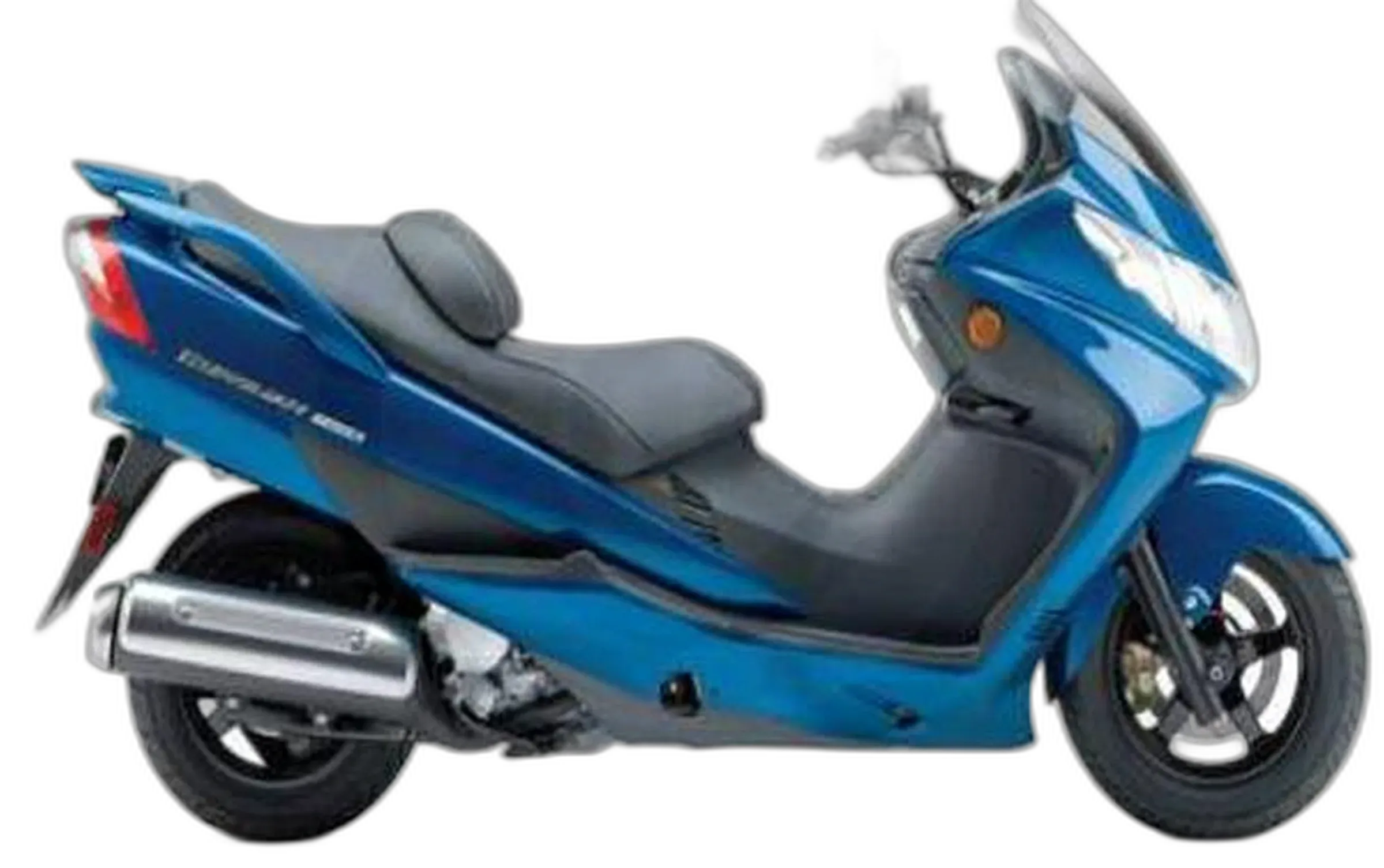
The Burgman 400 sits in that narrow space where a scooter stops being a city toy and starts being real transportation. The 385cc liquid-cooled single makes 33 hp and 24 lb-ft, routed through a CVT and a belt to the rear wheel, and that's enough to hold freeway speed without the whole machine feeling stressed about it. What sets this generation apart isn't any single number. It's the packaging: a body that actually shields you, a seat 27.4 in off the ground, storage under it that swallows a week of errands, and 13-inch wheels that make dense traffic feel navigable rather than hostile.

It rides like it was designed by someone who commutes. Twist and go, no shifting, no clutch, a low center of gravity that keeps it planted at walking pace. Our measured everyday usability came out at a flat 10.0, and city maneuverability at 9.5, which is about as clear a signal as this scoring system produces. It ages the way honest Suzukis tend to: mechanically solid, cosmetically less so. The real buyer is anyone whose riding is mostly measured in stoplights and parking spots, with the occasional highway stretch. The caveat is that nothing here adjusts. Fork and shock are fixed, and there's no ABS.

Hard Numbers

Spec sheets don't ride bikes, but they set the baseline.

Show full specs & equipment Hide specs & equipment
Key specifications
Power 33 hp (24 kW)
Torque 24 lb-ft (32 Nm)
Displacement 385 cc
Engine Single-cylinder
Cooling Liquid-cooled
Final drive Belt
Fork Telescopic
Front brake 260 mm
Front tire 110/90-13
Rear tire 130/70-13
Seat height 27.4 in (695 mm)
Fuel capacity 3.4 gal (13 L)

Equipment check

Comfort

  • Heated Grips Optional

The Voice of Experience

Portrait of NastyNils

The test ride

First thing you notice is how little the road reaches you. That fairing pushes air over your shoulders instead of into your chest, and at real commuting pace the noise drops to a level where you stop thinking about it. The single thrums rather than vibrates. You feel it through the floorboards more than the bars, and it never gets buzzy enough to numb your hands. Everything falls where it should: the grips, the levers, the switchgear, all of it reachable without repositioning your body. At 27.4 in the seat lets most riders flat-foot at a light, and that alone changes how you deal with traffic. Weather protection scored 9.0 on our sheet and it's earned. Ride it in a drizzle and you arrive dry from the waist down, which is the whole point of a machine like this.

Elevated aerial view of Seattle's downtown skyline looking toward the city core along a dense urban street canyon. A mix of glass-and-steel skyscrapers and mid-rise residential towers fills the frame. A construction crane is active on the left. The street below carries light vehicle traffic flanked by mature street trees.
Josh Hild / Pexels

The Truth on the Street

None of what follows comes off a spec sheet. It's what has accumulated over years of listening to riders: threads that start when something breaks, conversations at gas stops and in parking lots, and the notes people send me after they've put real miles on one. The Burgman 400 gets described the same way almost every time. Owners lead with what it hauls and how it shelters them, and their complaints land on its heft and its pace away from a stoplight.

What owners bring up first

Two things dominate. The underseat trunk comes up constantly, with riders describing two full-face helmets going in, or a full week of groceries, and they mention it for errands and for trips alike. Shelter is the other. The tall screen and wide fairing keep wind and rain off them, and owners say they can sit at highway speed all day and step off without feeling worked over. Right behind those is the automatic. No clutch, no shifting, and it's stop-and-go traffic where riders single it out most. The 385cc single has its own steady following, with owners reporting high mileage on nothing beyond regular maintenance. They see 50 to 65 mpg in mixed use, which stretches a tank a long way. On the freeway they call it planted and confidence-inspiring, holding a lane without drama. The front brake gets named specifically for its bite, in town and at speed both.

Where the grumbling starts

Weight tops the list. At over 400 lbs, owners find it awkward to push around a garage or manage at walking pace, though the same people note it settles down once it's rolling. The launch is next. Between the automatic and the moderate output, getaways from a standstill feel sluggish to riders who've been on sportier maxi-scooters. A smaller group flags oil consumption on long runs at 70-plus mph, enough that they check the level between changes. And some report intermittent trouble in the switches and connectors, the kind that shows up as an occasional no-start morning.

Known issues

  • Ignition switch terminal case recall

    electricsrareRecall

    Suzuki issued a US safety recall (NHTSA campaign 05V-372) covering certain 2004 Burgman 400 (AN400) scooters: an improperly manufactured ignition switch terminal case could make contact between the ignition switch contacts unstable and cause arcing, risking electrical failure and stalling. Dealers replace the ignition switch terminal case assembly free of charge.

  • Secondary throttle valve actuator (STVA) failure

    fuel systemoccasional

    The STVA motor on the throttle body can fail, causing erratic idle, poor throttle response, or a check engine light. Replacement of the actuator is required.

  • Clutch / variator squeal

    drivetrainoccasional

    A squealing noise from the CVT area during take-off, often attributed to glazed clutch shoes or variator belt slippage. Cleaning or replacing the clutch assembly usually resolves the issue.

  • Starter button and key switch failure

    electricsoccasional

    The starter button and ignition key switch contacts can wear or corrode, leading to intermittent starting issues or no-crank conditions. Cleaning or replacing the switch assembly is a common fix.

  • Premature rust on frame and underbody

    chassisoccasional

    In areas with high humidity or road salt, the chassis and lower body panels can develop rust prematurely. Regular cleaning and anti-corrosion treatment help mitigate the problem.

The Expert Benchmark

Where this Suzuki Burgman 400 pulls ahead of — or falls behind — its rivals on the numbers, and the typical bike in its class on character.

What kind of bike this is — character vs. the class

This bike Class average

Head-to-head: Suzuki Burgman 400 vs. its rivals

The 'Should I Buy It?' Score

Forget spec-sheet bragging. Here's who the Burgman 400 is actually built for.

Aerial photograph of downtown Austin, Texas, showing modern high-rise buildings against a clear blue sky. Urban infrastructure, highways, and parking structures visible in the foreground.
Thomas Balabaud / Pexels

Best scooter for NYC?

If your riding is stoplights, parking hunts, and short hops across town, this is close to the ideal tool. Storage, weather protection, and no clutch to manage, with enough engine to take the highway home.

Made for Austin · Los Angeles · Miami Beach / Miami
Best motorcycle for Bay Area?

It'll handle your city half honestly and hold freeway speed to get you out of town. But this is a machine built for utility, not for a photogenic run up a twisty ridge road.

Made for Bay Area Ridge Roads · San Francisco / Bay Area · Skyline Boulevard / Alice's Restaurant

Alternatives to the Suzuki Burgman 400

If this one isn't quite the fit, these are the bikes worth riding back-to-back against it.

Any price note compares both bikes at the same age — the youngest age both have on the used market — against this Suzuki Burgman 400. “cheaper/pricier” is what that bike costs second-hand, not how worn it is.