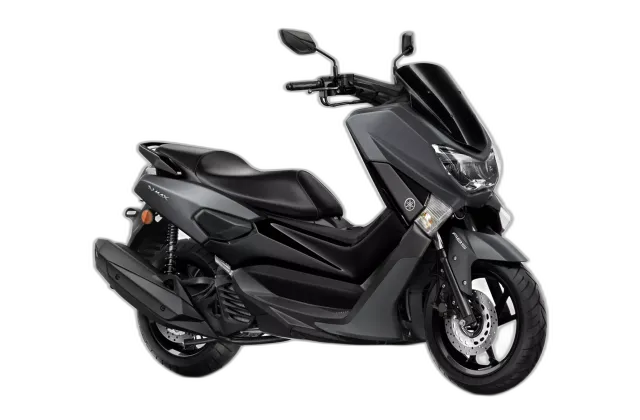
By NastyNils·
Motorcycle comparison · Scooter
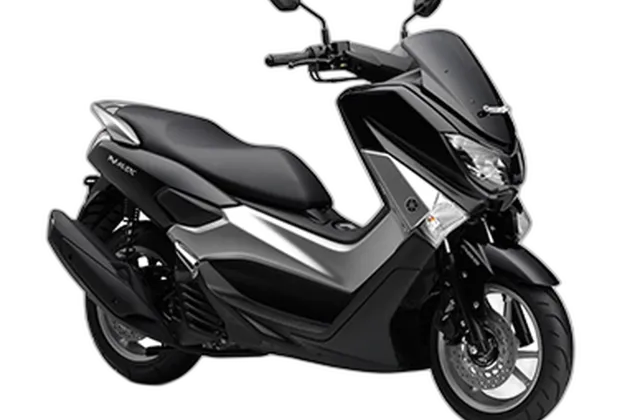
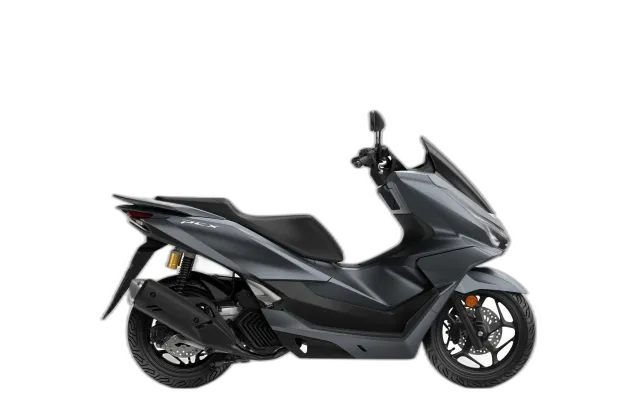
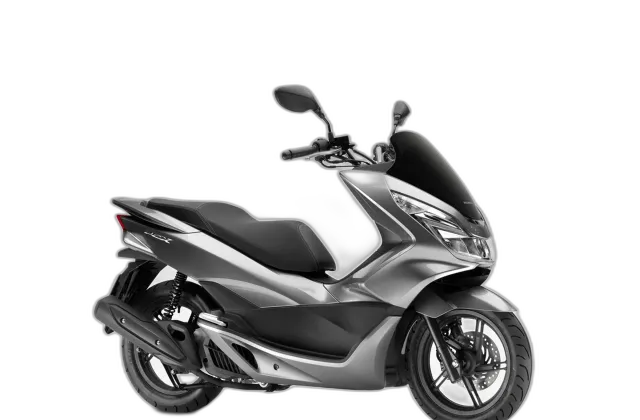
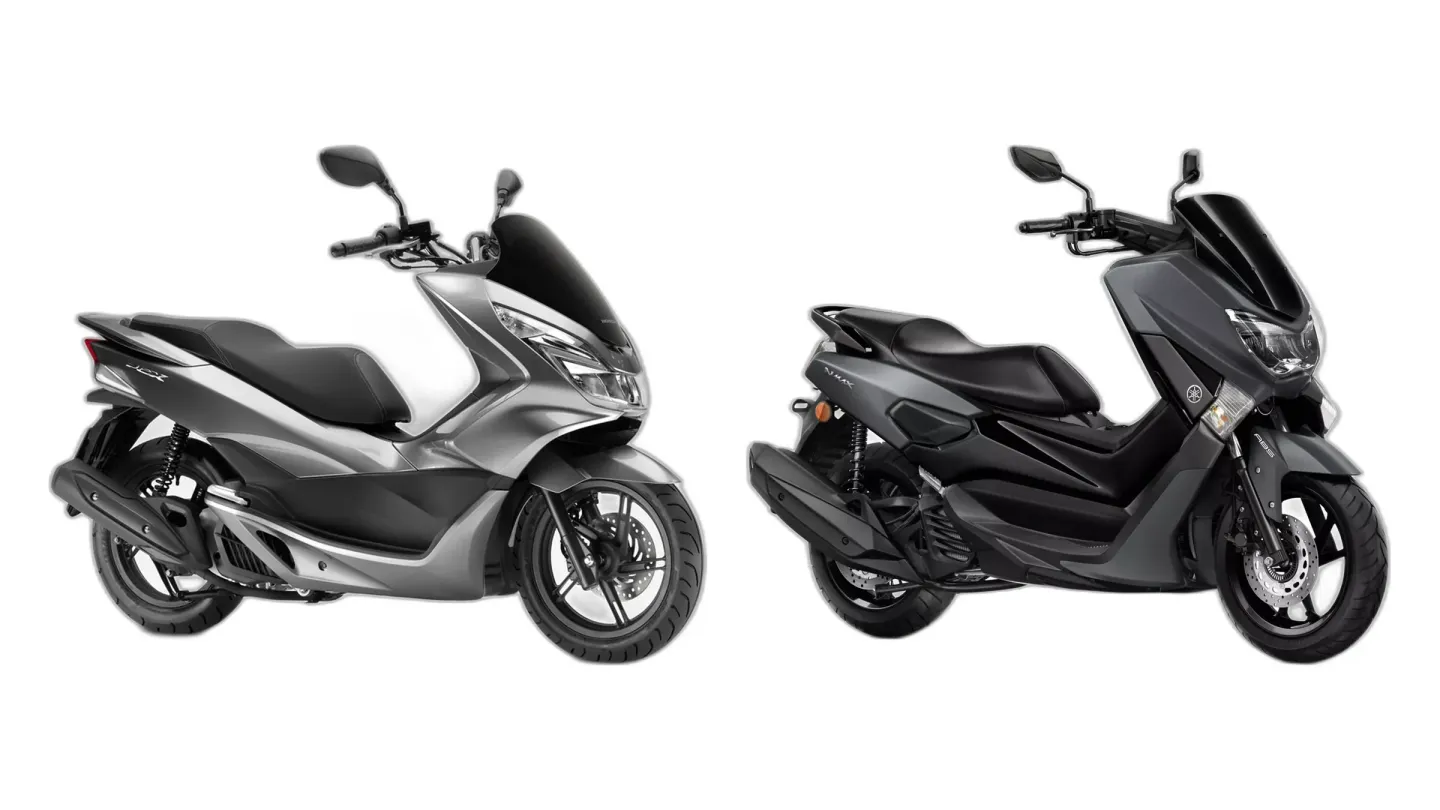
Honda PCX125 (JF 57) vs Yamaha NMAX 125 (SEC7)
Honda PCX125 vs Yamaha NMAX 125: traffic, parking, daily miles. Here's how to choose.
Roll on the Honda PCX125's throttle and the engine barely makes a sound, and it doesn't send a tremor through the bars. The Yamaha NMAX 125 wakes up from low revs with a firm pull instead. Then it's still surging as the speed climbs.
So which one do you buy?
The PCX125 has the edge if…
A confidence-building first motorcycle
Narrow edge: PCX125
For a new rider, the PCX125 noses ahead. How it fits you counts for more than this gap.
Daily commuting & city riding
Inches ahead: PCX125
For the Monday-to-Friday grind, the PCX125 pulls a nose in front. The difference is friendlier manners. Your own commute could easily flip it.
What makes each one tick
PCX125
There's hardly a click as the starter spins the PCX125's liquid-cooled single into life. The brake lever brings the bike to a halt at a red light while the motor idles without a shudder. The single just ticks over.
NMAX 125
Small wheels let the NMAX 125 dart through gaps in city traffic, and there's punch from its VVA single when a lane opens. Corner entry doesn't ask more than a nudge at the bar. The nose tucks right in. The front holds its line through suburban bends.
The Voice of Experience

What actually separates them
- The PCX125 has the larger fuel tank: 2.1 US gal (8 L) vs 1.7 US gal (6.6 L).
- ABS: standard on the NMAX 125, not offered on the PCX125.
- Heated Grips: option on the PCX125, not offered on the NMAX 125.
Which one for the way you ride
Sporty riding on twisty roads
Wrong job for both
For back-road fun, both fall short. There are sharper tools for that job.
Look at running costs and you'll find two bikes doing the same job equally well. Fit is what breaks the tie.
Who each one is built for
What's good, and what you'll live with
PCX125
What owners say
Strengths
- Refined and quiet engine
NMAX 125
What owners say
Strengths
- Strong and smooth VVA engine
- Excellent fuel economy
- High reliability and build quality
What they share
- Displacement
- 125 cc
- Engine
- Single-cylinder
- Cooling
- Liquid-cooled
- Torque
- 9 lb-ft (12 Nm)
- Final drive
- Belt
- Fork
- Telescopic
Where the spec sheets split
| PCX125 | NMAX 125 | |
|---|---|---|
| Seat height | 29.9 in (760 mm) | 30.1 in (765 mm) |
| Wet weight | 278 lb (126 kg) | 280 lb (127 kg) |
| PCX125 | NMAX 125 | |
|---|---|---|
| Power | 12 hp (8.6 kW) | 12 hp (9 kW) |
| Peak power at | 8,500 rpm | 7,500 rpm |
| Peak torque at | 5,000 rpm | 7,250 rpm |
| PCX125 | NMAX 125 | |
|---|---|---|
| Fuel capacity | 2.1 US gal (8 L) | 1.7 US gal (6.6 L) |
| PCX125 | NMAX 125 | |
|---|---|---|
| Front brake | 220 mm | 230 mm |
| Front tire | 90/90-14 | 110/70-13 |
| Rear tire | 100/90-14 | 130/70-13 |
What comes fitted, what costs extra
| PCX125 | NMAX 125 | |
|---|---|---|
| ABS | Not offered | Standard |
| Heated Grips | Option | Not offered |
| Luggage System | Option | Not offered |
Head to head, area by area
Both bikes on the same scale, one area at a time.