By NastyNils· ·
Motorcycle comparison · Retro Classic vs Naked Bike
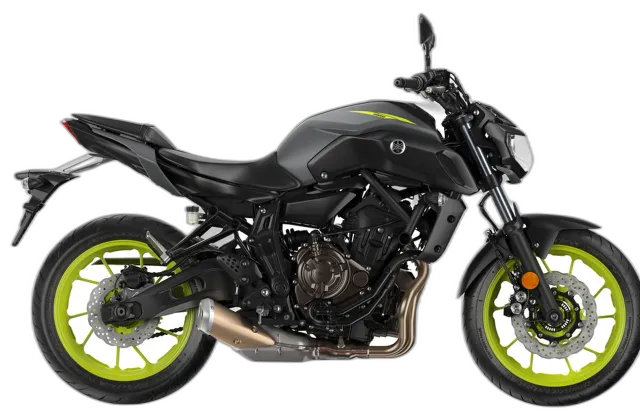
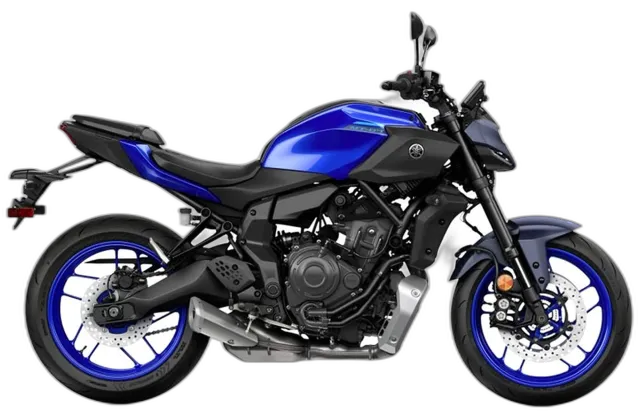
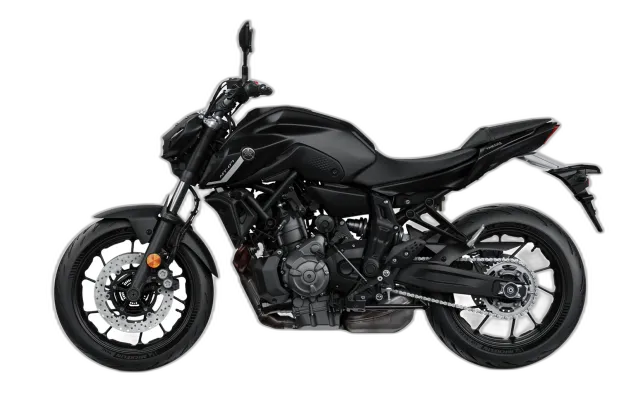
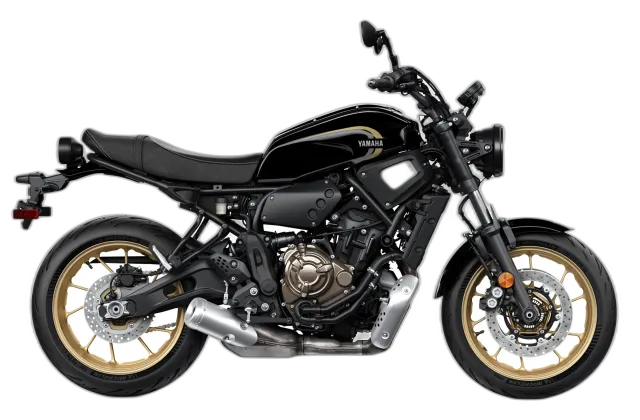
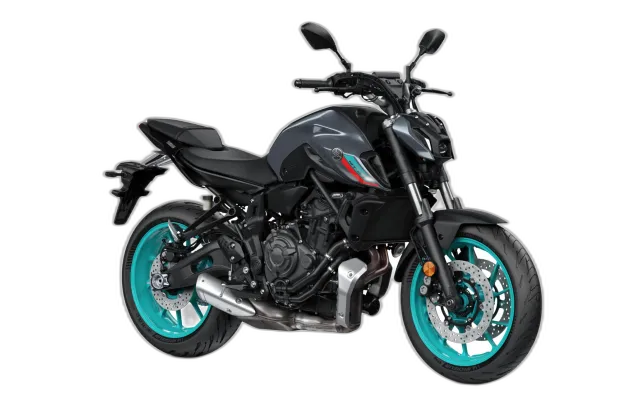
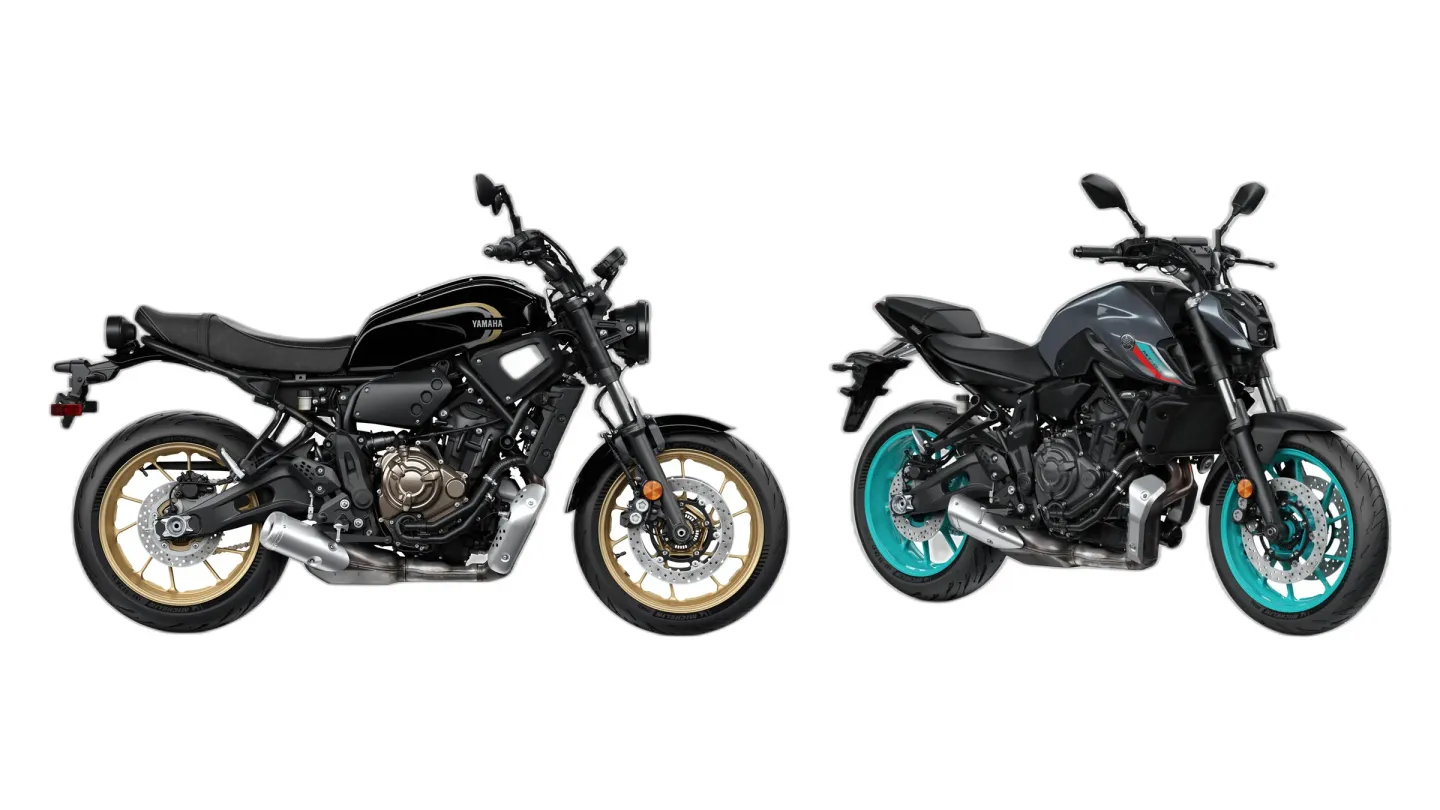
Yamaha XSR700 (MY2022) vs MT-07 (RM33)
Yamaha XSR700 vs MT-07: different classes, one choice. Here's how to make it.
You'll notice the Yamaha XSR700's tall, wide bar first, holding you upright with your feet set slightly back. On the Yamaha MT-07, your knees fold at an easy angle and your arms don't have to stretch. It puts real steering leverage right at your hands.
So which one do you buy?
Buy the XSR700 if…
Keeping running costs low
The pick: XSR700
The XSR700 costs clearly less to keep on the road. You'll notice it at every service.
The MT-07 has the edge if…
Sporty riding on twisty roads
Inches ahead: MT-07
Once the road starts to bend, the MT-07 noses ahead. Your own skill counts for more than a gap this size.
What makes each one tick
XSR700
Under the round headlight and teardrop tank, there's a parallel twin in the XSR700 that throbs like a V-twin and pulls hard from low rpm. Few electronic aids sit between that twin and the chain, and the bike doesn't hide its mechanical feel. On the Twisted Sisters, you'll feel that low-rpm shove carry the bike out of one bend and into the next. Parked, the teardrop tank draws stares.
MT-07
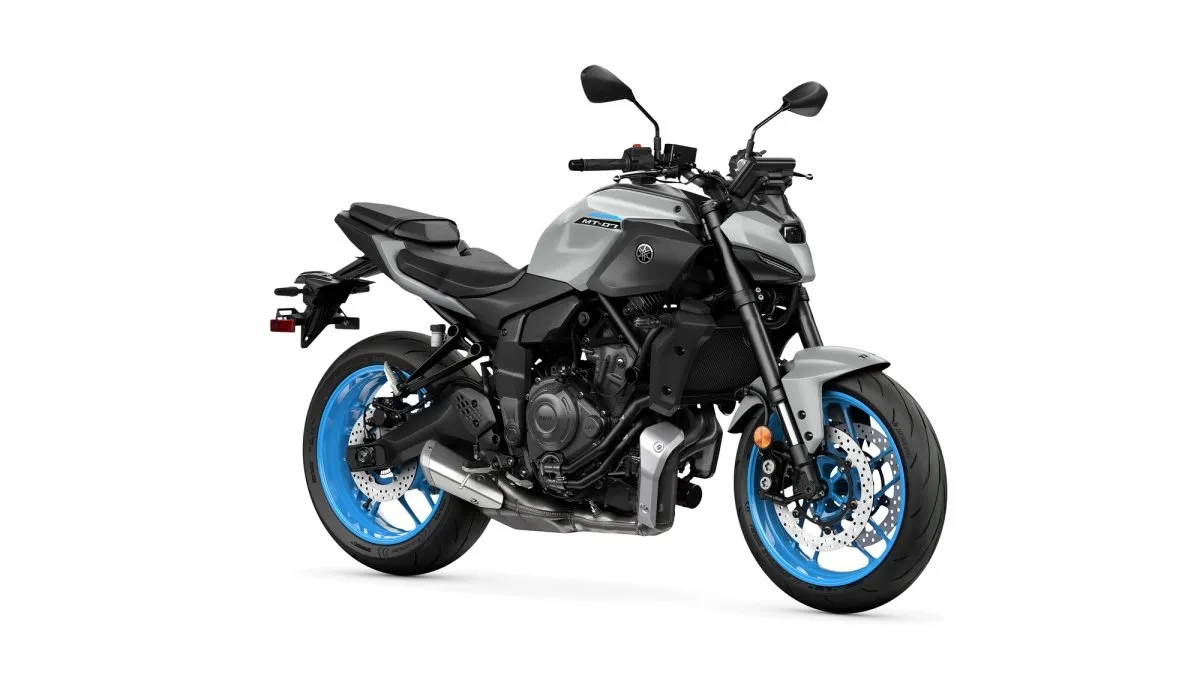
Light on its feet, the MT-07 snaps into a turn, and it'll hold a neutral line through it. Fast corners expose a chassis that's average at best on stability. Even at low rpm, there's strong torque on the throttle. The shove doesn't stall out either, it keeps building evenly from there. Hard engine braking can hop the rear. The front brake bites hard.
Nils rode the MT-07 in 2021, and in Austria in 2023 (1000PS test reports).
The Voice of Experience

What actually separates them
- The MT-07 has the lower seat: 31.7 in (805 mm) vs 32.9 in (835 mm).
- TFT Display: standard (from 2023) on the MT-07, not offered on the XSR700.
- Smartphone Connectivity: standard (from 2023) on the MT-07, not offered on the XSR700.
Which one for the way you ride
Comfortable long-distance riding
Not built for this
Big miles aren't where either one shines. You'll be watching for the next rest stop.
There's no real gap on commuting and a first bike. Sit on both and let fit and price decide.
Who each one is built for
What's good, and what you'll live with
XSR700
What owners say
Strengths
- Lively, characterful CP2 engine
- Comfortable, upright riding position
- Distinctive retro styling
MT-07
Strengths
- Engine With Real Character
- Begs You To Misbehave
- Flickable In Tight Turns
- Braking Is A Non-Issue
Trade-offs
- No Traction Control At All
- Fork Can't Be Adjusted
- Seat Quits After An Hour
- Rear Hops Under Engine Braking
- Build quality and surface finish
Known problems to check before you buy
XSR700
- Clutch may not disengage properly despite lever fully pulled A new clutch disc supplier (from December 2022) applied an anti-corrosive agent that mixes with worn friction plate material under heat, forming a viscous substance that causes plates to stick together. The motorcycle can unexpectedly move forward from a standstill with a gear engaged. Affects all CP2 platform models (MT-07, XSR700, Tracer 7, Ténéré 700) from the same production period.
- Fuel gauge reads inaccurately; erratic low-fuel warning The fuel gauge shows full for an extended period after refueling, then drops rapidly through the lower range. The low fuel warning light may flash prematurely or erratically. Caused by the tank shape (wide at top, narrow at bottom) combined with a float-type sender. Documented across all CP2 platform models (MT-07, XSR700, Tracer 7), confirming it is a platform-level design issue.
- Surface rust on swingarm (especially near welds and chain slider area) and frame Surface rust develops on the swingarm, particularly near welds and below the chain slider. The chain slider mounting design does not fully protect the swingarm from chain contact, causing paint damage that accelerates corrosion. Rust can also appear on frame sections. Attributed to thin/low-quality surface treatment. Documented across all MT-07 generations including 2021+ and across other CP2 platform models (XSR700).
- Coolant pipes: thin paint peels, exposing metal to corrosion The metal coolant pipes have thin/low-quality paint that peels or flakes, especially with wet riding. The exposed metal then rusts. Related to general cost-cutting on surface finishes. Also documented on XSR700 (same CP2 platform). Some owners have received warranty replacement for affected pipes.
MT-07
- Clutch may not disengage properly despite lever fully pulled A new clutch disc supplier (from December 2022) applied an anti-corrosive agent that mixes with worn friction plate material under heat, forming a viscous substance that causes plates to stick together. The motorcycle can unexpectedly move forward from a standstill with a gear engaged. Affects all CP2 platform models (MT-07, XSR700, Tracer 7, Ténéré 700) from the same production period.
- Yamaha OEM accessory lower engine guard can impair rear brake pedal travel The Yamaha original accessory "lower engine protection" (crash bar/engine guard) can restrict rear brake pedal travel after installation, reducing braking effectiveness. Primarily affects motorcycles used in driving schools where the accessory is commonly fitted.
- Non-adjustable front fork too soft; instability at pace The stock front fork is a non-adjustable damper-rod design. It is too soft for spirited riding, causing front-end dive under braking, instability at higher speeds, and lack of composure on rough surfaces. The most commonly reported complaint across professional reviews and owner forums. Aftermarket solutions (progressive springs, cartridge kits) are widely recommended.
- Stock seat causes discomfort beyond 60–90 minutes The stock rider seat is too firm and flat for rides exceeding approximately one hour. The pillion seat is small and inadequate. This significantly limits touring usability. Aftermarket comfort seats, gel pads, or sheepskin covers are common remedies.
- Front LED turn signals loosen from vibration The front indicator/turn signal lights can work loose from vibration or minor impacts. The rubber mounting piece can cave into the signal socket. Left side more commonly affected. Requires periodic retightening.
- Fuel gauge reads inaccurately; erratic low-fuel warning The fuel gauge shows full for an extended period after refueling, then drops rapidly through the lower range. The low fuel warning light may flash prematurely or erratically. Caused by the tank shape (wide at top, narrow at bottom) combined with a float-type sender. Documented across all CP2 platform models (MT-07, XSR700, Tracer 7), confirming it is a platform-level design issue.
- Noticeable vibration through handlebars and footpegs at sustained highway rpm The CP2 parallel twin produces vibrations that are transmitted through handlebars and footpegs, particularly at sustained cruising speeds around 6,000 rpm. Causes numbness in hands and feet on longer rides. Mirrors become blurry/unusable at higher speeds. Inherent engine characteristic of the parallel-twin layout. Bar-end weights and rubber-mounted mirrors are common aftermarket remedies.
- Surface rust on swingarm (especially near welds and chain slider area) and frame Surface rust develops on the swingarm, particularly near welds and below the chain slider. The chain slider mounting design does not fully protect the swingarm from chain contact, causing paint damage that accelerates corrosion. Rust can also appear on frame sections. Attributed to thin/low-quality surface treatment. Documented across all MT-07 generations including 2021+ and across other CP2 platform models (XSR700).
- Coolant pipes: thin paint peels, exposing metal to corrosion The metal coolant pipes have thin/low-quality paint that peels or flakes, especially with wet riding. The exposed metal then rusts. Related to general cost-cutting on surface finishes. Also documented on XSR700 (same CP2 platform). Some owners have received warranty replacement for affected pipes.
What they cost used
Both bikes priced used at the same age: 4 years old.
- XSR700
- about $7,000
- MT-07
- about $7,200
At four years old, the Yamaha XSR700 sits around $7,000 while the Yamaha MT-07 lands near $7,200. That small gap doesn't change the math. These are US market estimates, not live listings.
What they share
- Displacement
- 689 cc
- Engine
- Parallel twin
- Cooling
- Liquid-cooled
- Power
- 73 hp (54 kW)
- Peak power at
- 8,750 rpm
- Peak torque at
- 6,500 rpm
- Fuel capacity
- 3.7 US gal (14 L)
- Gearbox
- 6-speed
- Final drive
- Chain
- Fork
- Telescopic
- Front brake
- 298 mm
- Front tire
- 120/70-17
- Rear tire
- 180/55-17
Where the spec sheets split
| XSR700 | MT-07 | |
|---|---|---|
| Seat height | 32.9 in (835 mm) | 31.7 in (805 mm) |
| Wet weight | 410 lb (186 kg) | 406 lb (184 kg) |
| XSR700 | MT-07 | |
|---|---|---|
| Torque | 50 lb-ft (68 Nm) | 49 lb-ft (67 Nm) |
| XSR700 | MT-07 | |
|---|---|---|
| Wheelbase | 55.3 in (1405 mm) | 55.1 in (1400 mm) |
What comes fitted, what costs extra
| XSR700 | MT-07 | |
|---|---|---|
| TFT Display | Not offered | Standard (from 2023) |
| Smartphone Connectivity | Not offered | Standard (from 2023) |
Head to head, area by area
Both bikes on the same scale, one area at a time.