By NastyNils·
Motorcycle comparison · Naked Bike
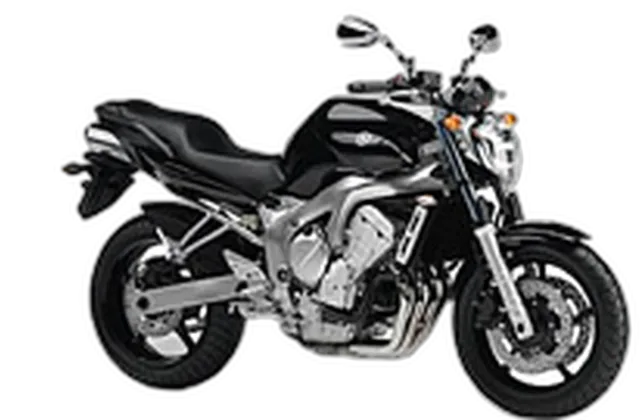
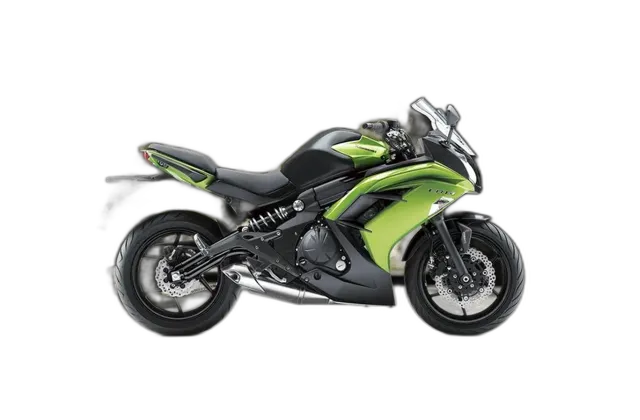
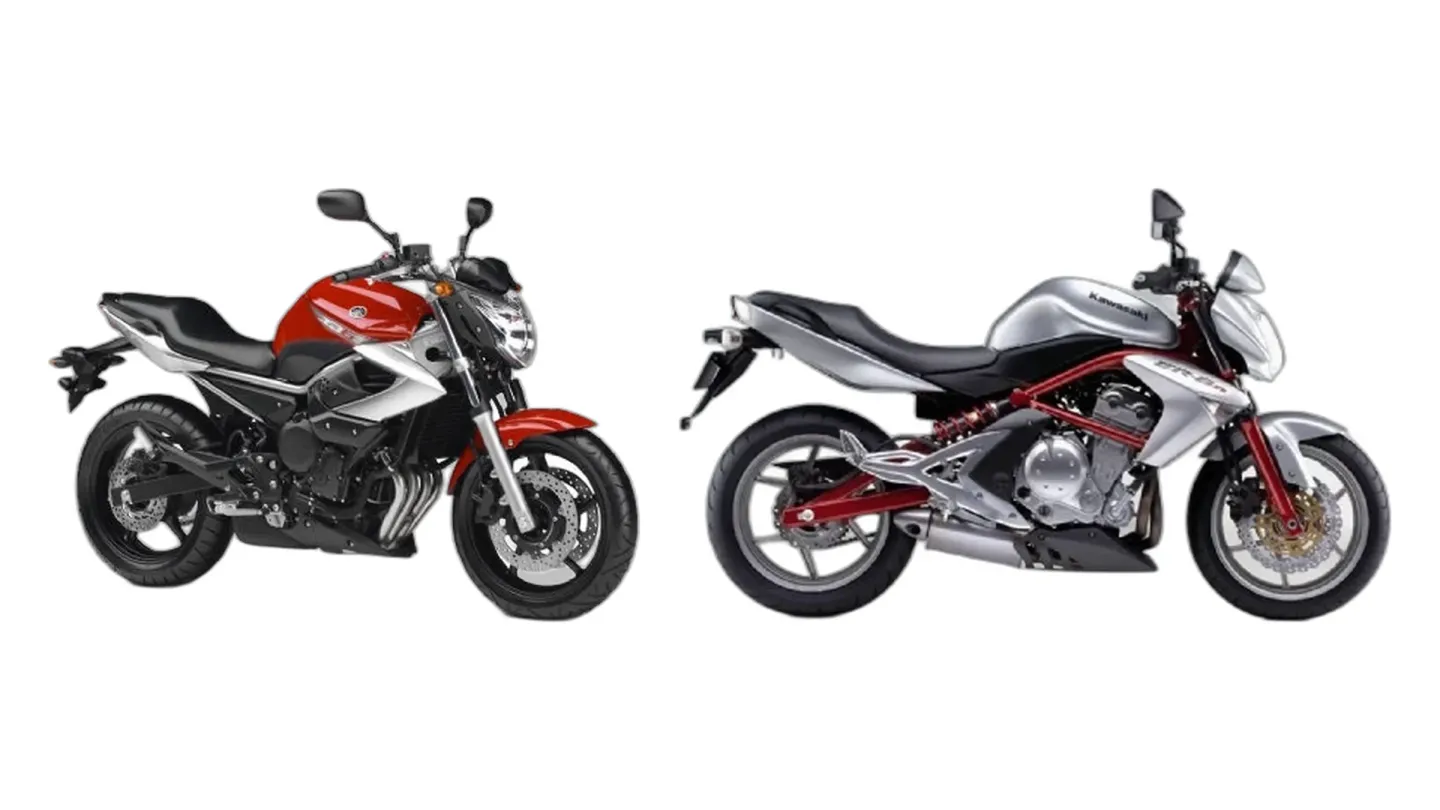
Yamaha XJ6 (MY2009) vs Kawasaki ER-6n (ER650 A)
Yamaha XJ6 vs Kawasaki ER-6n: no fairing, no excuses. Here's how to pick.
You'll hear the Yamaha XJ6 hum silkily as you roll on, but it doesn't pull hard until the needle's well up. The Kawasaki ER-6n's pulling the instant you crack it open.
So which one do you buy?
The XJ6 has the edge if…
Traveling with luggage
Narrow edge: XJ6
The XJ6 carries a touring load slightly better. Small edge.
Riding two-up with a passenger
Slight edge: XJ6
For riding with a partner, the XJ6 makes slightly more sense. A narrow gap, so take them along on the test ride.
The ER-6n has the edge if…
Daily commuting & city riding
By a nose: ER-6n
The ER-6n edges it for the daily grind. What tips it: lighter steering. It's a small gap, not a reason on its own.
Sporty riding on twisty roads
Inches ahead: ER-6n
On a winding road, the ER-6n comes out a touch ahead. Put it down to stronger brakes. You wouldn't bet much on a gap like that.
A confidence-building first motorcycle
Small edge: ER-6n
The ER-6n asks a little less of a rookie. That's a narrow edge, so sit on both before you decide.
What makes each one tick
XJ6
Smoothness runs through everything the XJ6's inline-four does, from its quiet exhaust note to a gearbox that won't find a false neutral. First gear lifts the front wheel. Keeping it up through second takes timing.
Nils rode the XJ6 in Australia in 2009 (NastyNils Testride).
ER-6n
The ER-6n's narrow body and bars slip it through gaps in stalled traffic, and you're sitting down inside it, not perched on top. Corner entry feels deliberate, because the seat parks you halfway between upright and a forward lean. The light chassis doesn't fight turn-in. It nearly swivels around inside one parking spot.
The Voice of Experience

What actually separates them
- The ER-6n has the lower wet weight: 432 lb (196 kg) vs 452 lb (205 kg).
- The XJ6 makes more peak power: 78 hp (57 kW) vs 72 hp (53 kW).
- The ER-6n makes more peak torque: 49 lb-ft (66 Nm) vs 44 lb-ft (60 Nm).
Which one for the way you ride
Who each one is built for
What's good, and what you'll live with
XJ6
Strengths
- Silky inline-four refinement
- Steel frame holds its line
- Fun beyond the power figure
- Smooth linear power delivery
Trade-offs
- Rear runs out two-up
- No windscreen on the highway
- Cheap-looking rear hardware
- Budget suspension limits sporting ambitions
ER-6n
From Nils' own saddle time
Strengths
- Exhaust note above its size
- Both feet flat at stops
- Spins around in its length
- Vibration you barely notice
- Slim enough to wear
Trade-offs
- Stock handlebar runs narrow
- Engine mount welds can crack
- Wiring loom is vulnerable
- Cooling fan struggles in traffic
Known problems to check before you buy
XJ6
No confirmed faults on file yet. That's not the same as fault-free.
ER-6n
- Engine mount weld cracking The welds around the right-hand engine mount can crack, potentially causing structural failure. Kawasaki initially attributed this to incorrectly fitted crash bobbins, but it is a known weak point on early models.
What they share
- Seat height
- 30.9 in (785 mm)
- Cooling
- Liquid-cooled
- Gearbox
- 6-speed
- Final drive
- Chain
- Fork
- Telescopic
- Front tire
- 120/70-17
- Rear tire
- 160/60-17
Where the spec sheets split
| XJ6 | ER-6n | |
|---|---|---|
| Wet weight | 452 lb (205 kg) | 432 lb (196 kg) |
| XJ6 | ER-6n | |
|---|---|---|
| Displacement | 600 cc | 649 cc |
| Engine | Inline-four | Parallel twin |
| Power | 78 hp (57 kW) | 72 hp (53 kW) |
| Peak power at | 10,000 rpm | 8,500 rpm |
| Torque | 44 lb-ft (60 Nm) | 49 lb-ft (66 Nm) |
| Peak torque at | 8,500 rpm | 7,000 rpm |
| XJ6 | ER-6n | |
|---|---|---|
| Fuel capacity | 4.5 US gal (17 L) | 4.1 US gal (15.5 L) |
| XJ6 | ER-6n | |
|---|---|---|
| Front brake | 298 mm | 300 mm |
Head to head, area by area
Both bikes on the same scale, one area at a time.