By NastyNils·
Motorcycle comparison · Naked Bike
Yamaha MT-09 (RN69) vs Kawasaki Z900 ABS (MY2022)
Yamaha MT-09 vs Kawasaki Z900 ABS: no fairing, no excuses. Here's how to pick.
You'll feel the Yamaha MT-09 drop into the bend before you've finished asking. The Kawasaki Z900 ABS rolls in and holds its line.
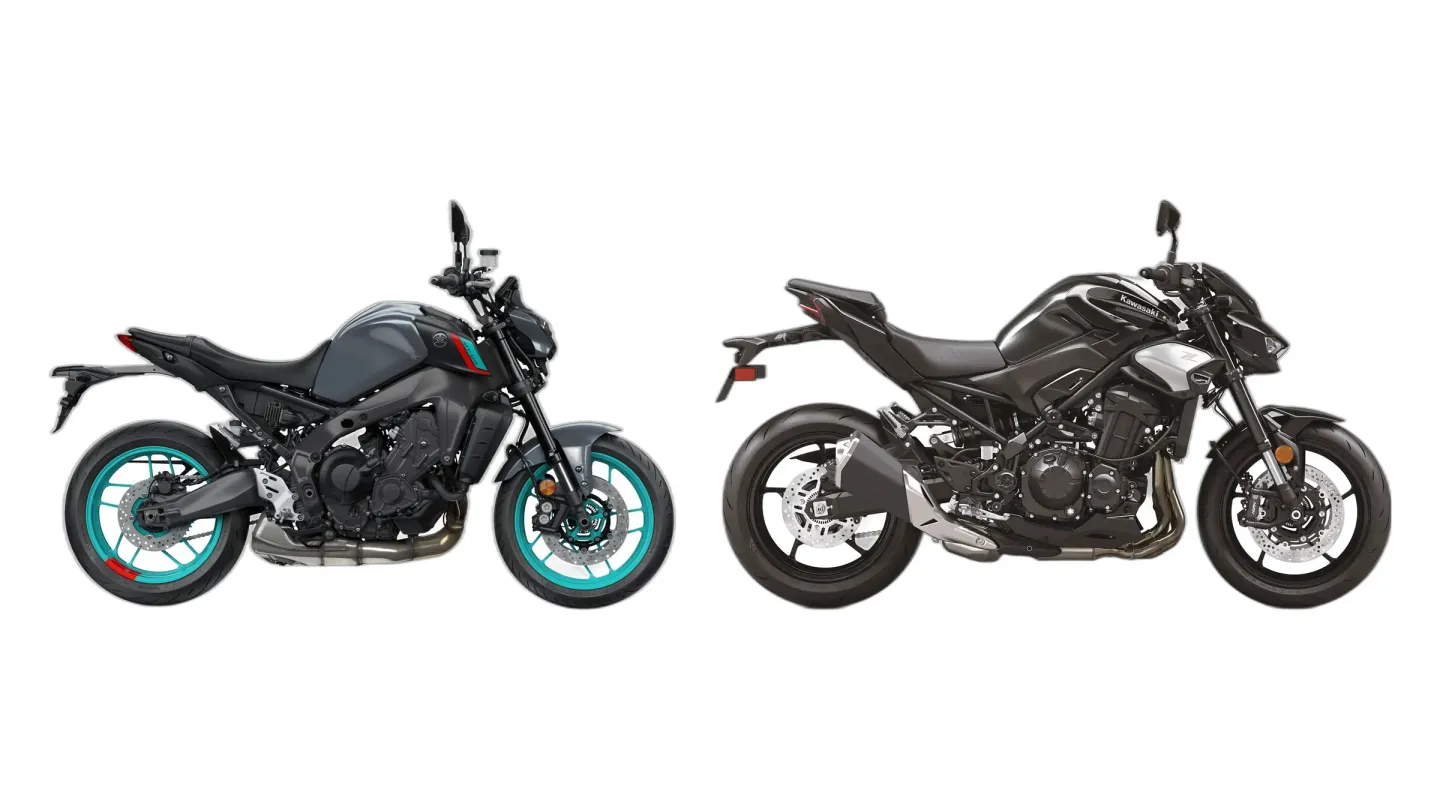
So which one do you buy?
Which one's the smarter buy
No clear winner on value
The price gap doesn't produce a clear winner. Neither bike is the clear better buy for the money.
What makes each one tick
MT-09
There's real torque in the MT-09's inline-three low in the rev range. A crack of the throttle brings a twin's thump off the bottom and a four's rush near the top. At 417 lb (189 kg), the bike doesn't wrestle you through traffic, and on the Angeles Crest Highway it flicks from switchback to switchback. The intake howls as revs build.
Nils rode the MT-09 in 2021 (NastyNils Testride).
Z900 ABS
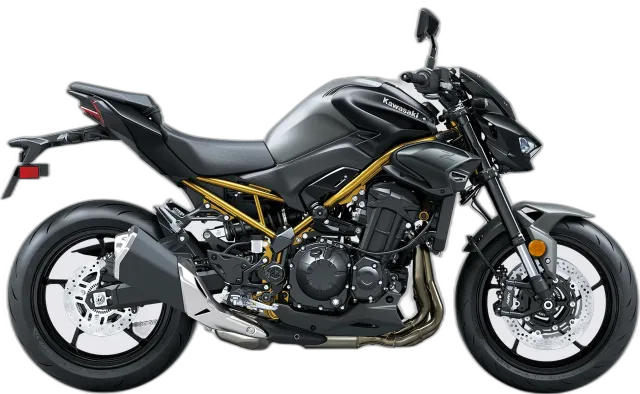
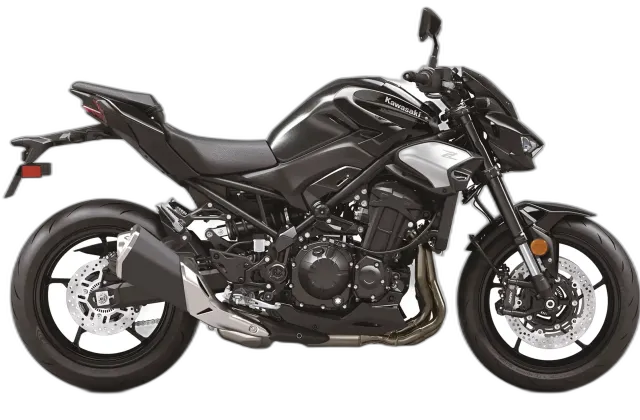
Past the low revs, the inline-four in the Z900 ABS builds torque in one unbroken pull. Over a sharp bump at a hard pace, the soft fork and shock don't keep up and can bottom out. The steel trellis frame keeps the bike settled from one corner to the next, and you'll read its next move early. The four spins clean up top.
The Voice of Experience

What actually separates them
- The MT-09 has the lower wet weight: 417 lb (189 kg) vs 467 lb (212 kg).
- The Z900 ABS makes more peak power: 125 hp (92 kW) vs 119 hp (88 kW).
- The Z900 ABS makes more peak torque: 73 lb-ft (99 Nm) vs 69 lb-ft (93 Nm).
Which one for the way you ride
Comfortable long-distance riding
Neither is a natural fit
Neither one is built for long-haul comfort. For big miles, look at a proper tourer or sport tourer.
A confidence-building first motorcycle
Not built for this
For a brand-new rider, both are the wrong place to start. Learn the basics on a smaller bike first.
On commuting, twisty roads, and trips with luggage, these two are a wash. That's where your budget and your inseam get the final say.
Who each one is built for
What's good, and what you'll live with
MT-09
What owners say
Strengths
- CP3 engine character
- Class-leading electronics package
- Light wet weight
- Reliability rating from owners
Trade-offs
- ABS abrupt under hard braking
- Cosmetic build niggles
- Mirror vibration above 6,000 rpm
- Mode 4 power cap effectively unusable
- Standard seat is firm and "slippery"
Z900 ABS
What owners say
Strengths
- Smooth, linear inline-four engine
- Reliability and Japanese build quality
- SE upgrade represents strong value
- Aggressive Sugomi visual presence
Trade-offs
- Missing modern electronics (MY2022–2024)
- STD suspension under-damped for spirited riding
- Snatchy throttle response at low RPM
- OEM Dunlop Sportmax Roadsport 2 tires criticized
- (SE) Öhlins S46 arrives soft from the factory
Known problems to check before you buy
MT-09
- Throttle Position Sensor (TPS) wear causing unstable idle/stalling (recall 25V-248) Recall 25V248000 Worn TPS due to excessive brush sliding from improper ECU programming leads to unstable idling, throttle hesitation, and stalling. Yamaha recall (NHTSA 25V-248) requires TPS replacement and ECU reflash for affected units.
- Engine stalling due to ECU programming (recall 22V-130) Recall 22V130000 Improper ECU programming can cause engine to stall unexpectedly, particularly when clutch lever not pulled fully or at small throttle openings from idle. Affects all 2021-2022 MT-09 models; Yamaha recall issued March 2022 for ECU reflash.
Z900 ABS
- STD KYB suspension soft / under-damped under spirited riding The standard suspension lacks sufficient damping, causing wallowing and reduced precision when riding aggressively.
- Stock Dunlop Sportmax Roadsport 2 tires lack wet-weather grip The original-equipment Dunlop tires offer limited grip on wet pavement and can feel slippery in the rain, which leads some owners to replace them early with better-performing rubber.
- Snatchy on/off throttle response at low RPM Abrupt fuel cut-on results in jerky behavior when transitioning from closed to open throttle in first and second gear.
- OEM final-drive chain shows wear at lower mileage than expected The original chain often needs replacement between 9,300–12,000 mi (15,000–20,000 km) due to accelerated stretch and rust.
- Mirror blur and mild handlebar vibration at certain RPM bands Vibrations around 4,000–6,000 rpm can blur the mirrors and cause hand numbness on longer rides.
- Bluetooth pairing failures with Rideology app on iOS; isolated TFT Bluetooth chip failures Owners using iPhones have had trouble pairing the bike with the Kawasaki Rideology smartphone app. The cause was how the app handled short pairing PIN codes. Kawasaki later released a software update that fixed this, so affected bikes should get the latest app and instrument-cluster software. In rare cases, the Bluetooth module inside the TFT instrument cluster has failed and the dealer had to replace the cluster.
What they cost used
These prices compare a 3-year-old MT-09 with a 3-year-old Z900 ABS.
- MT-09
- about $8,700
- Z900 ABS
- about $7,800
At three years old, the Yamaha MT-09 sits around $8,700 while the Kawasaki Z900 ABS lands near $7,800. That's a $900 gap in the Z900's favor. These are estimates from the used market, not live listings.
What they share
- Cooling
- Liquid-cooled
- Gearbox
- 6-speed
- Final drive
- Chain
- Front tire
- 120/70-17
- Rear tire
- 180/55-17
Where the spec sheets split
| MT-09 | Z900 ABS | |
|---|---|---|
| Seat height | 32.5 in (825 mm) | 32.3 in (820 mm) |
| Wet weight | 417 lb (189 kg) | 467 lb (212 kg) |
| MT-09 | Z900 ABS | |
|---|---|---|
| Displacement | 890 cc | 948 cc |
| Engine | Inline-three | Inline-four |
| Power | 119 hp (88 kW) | 125 hp (92 kW) |
| Peak power at | 10,000 rpm | 9,500 rpm |
| Torque | 69 lb-ft (93 Nm) | 73 lb-ft (99 Nm) |
| Peak torque at | 7,000 rpm | 7,700 rpm |
| Top speed | 143 mph (230 km/h) | 149 mph (240 km/h) |
| MT-09 | Z900 ABS | |
|---|---|---|
| Fuel economy | 47 mpg (US) / 5 L/100 km | 36 mpg (US) / 6.5 L/100 km |
| Fuel capacity | 3.7 US gal (14 L) | 4.5 US gal (17 L) |
| MT-09 | Z900 ABS | |
|---|---|---|
| Valve check interval | 24,855 mi (40,000 km) | 14,913 mi (24,000 km) |
| MT-09 | Z900 ABS | |
|---|---|---|
| Wheelbase | 56.3 in (1430 mm) | 57.3 in (1455 mm) |
What comes fitted, what costs extra
| MT-09 | Z900 ABS | |
|---|---|---|
| Quickshifter | Standard | Not offered |
| Smartphone Connectivity | Not offered | Standard |
| USB Charging Port | Not offered | Option |
Head to head, area by area
Both bikes on the same scale, one area at a time.