By NastyNils·
Motorcycle comparison · Naked Bike vs Supersport
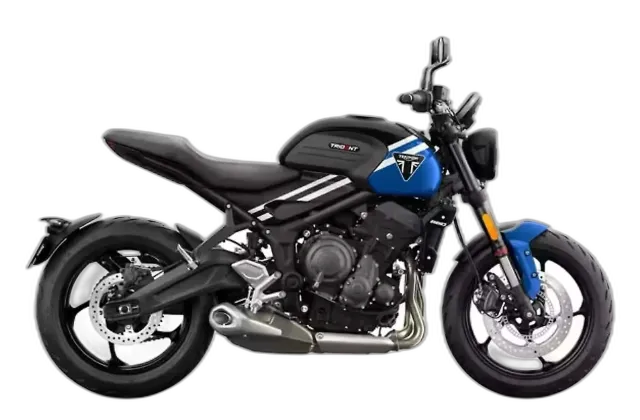
Triumph Trident 660 (MY2025) vs Daytona 660 (MY2024)
Triumph Trident 660 vs Daytona 660: different classes, one choice. Here's how to make it.
You'll feel the Triumph Trident 660 flick into a tight turn the instant you push on its bars. The Triumph Daytona 660's clip-ons don't stretch you far, and its plush seat lets you sit loose between corners. Its soft fork dives once you're pushing.
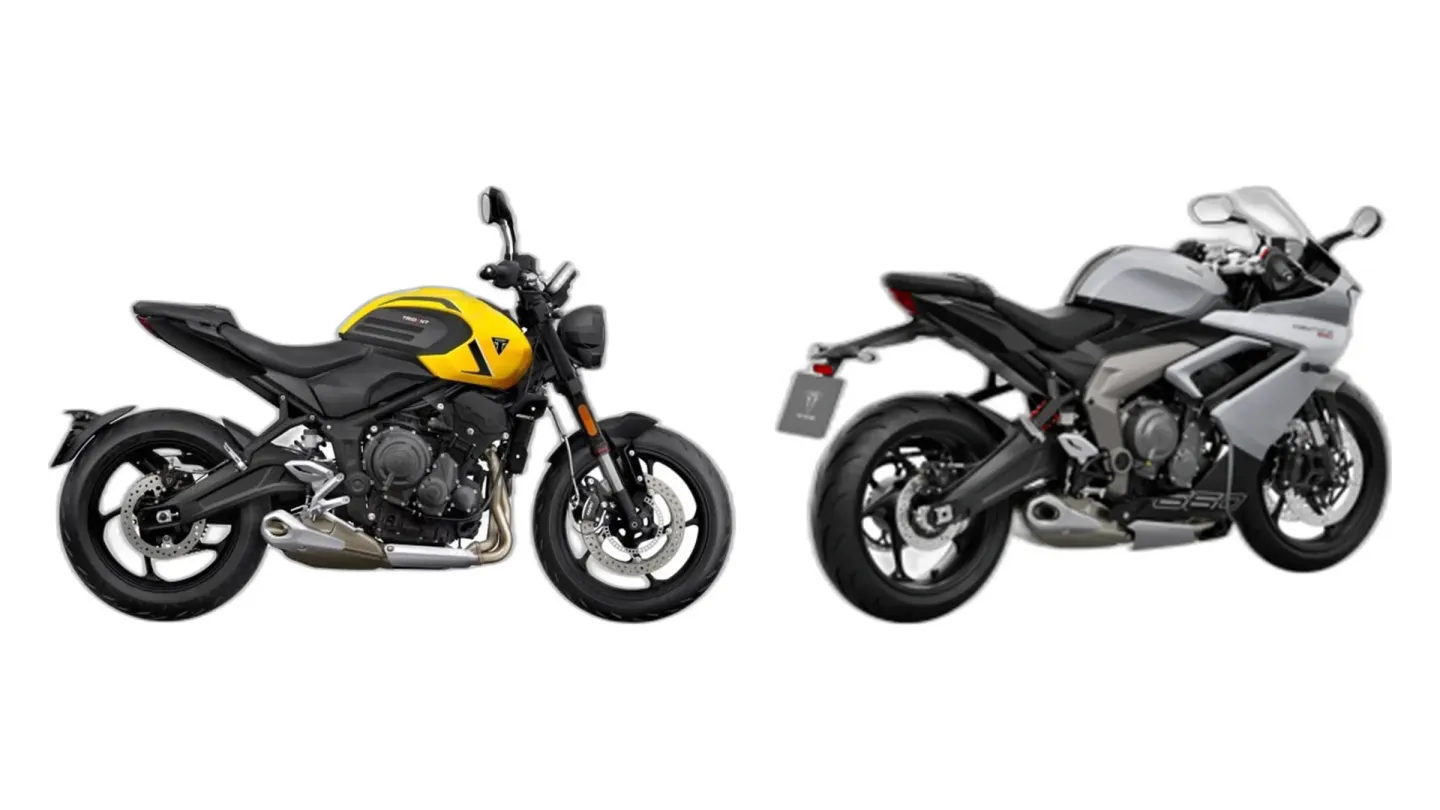
So which one do you buy?
Buy the Trident 660 if…
Daily commuting & city riding
Hands down: Trident 660
When the bike has to work for a living, the Trident 660 wins the commute clearly. What tips it: friendlier manners and lower running costs.
The Trident 660 has the edge if…
Keeping running costs low
Edges it: Trident 660
The Trident 660 is a touch easier on the wallet to run. Condition still matters more than the model.
A confidence-building first motorcycle
A touch ahead: Trident 660
Learning the ropes leans slightly toward the Trident 660. Your own comfort on it should come first.
The Daytona 660 has the edge if…
Sporty riding on twisty roads
Inches ahead: Daytona 660
The Daytona 660 is a touch more fun when the road starts bending. Just a touch.
What makes each one tick
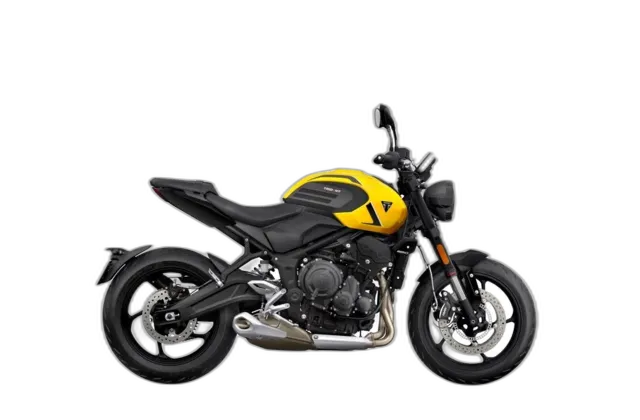
Trident 660
The Trident's triple doesn't snatch off a closed throttle, and its drive builds in a steady line until it's eager to be revved out. A bump's sting doesn't get past its Showa suspension. Through the switchbacks of Back of the Dragon, there's almost no effort in steering its 419 lb (190 kg) chassis. It snaps from lean to lean.
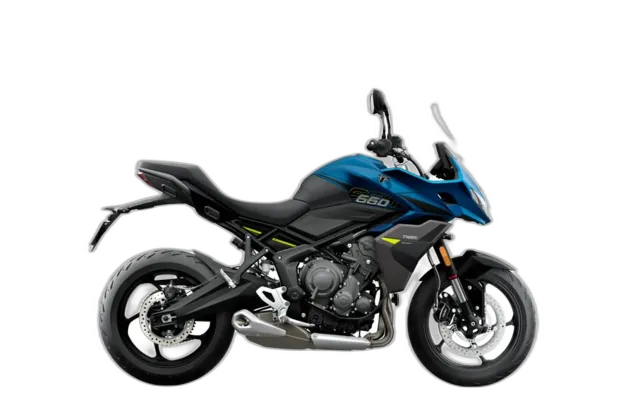
Daytona 660
The Daytona's triple pulls hard low in the revs and doesn't run out of breath toward the redline. Hard use of the brake lever at a spirited pace leaves the front end feeling vague, since the suspension isn't built to hold it up. Its mass blunts quick direction changes. Up top, the triple's howl fills your helmet.
The Voice of Experience

What actually separates them
- The Trident 660 has the lower wet weight: 419 lb (190 kg) vs 443 lb (201 kg).
- The Daytona 660 makes more peak power: 94 hp (70 kW) vs 80 hp (60 kW).
- The Daytona 660 makes more peak torque: 51 lb-ft (69 Nm) vs 47 lb-ft (64 Nm).
Which one for the way you ride
Comfortable long-distance riding
Wrong job for both
Hours in the saddle won't flatter either of these. They're happier on shorter runs.
Who each one is built for
What's good, and what you'll live with
Trident 660
What owners say
Strengths
- Lightweight and nimble handling
- Smooth and forgiving power delivery
Daytona 660
What owners say
Strengths
- Characterful triple-cylinder engine
- Comfortable and all-day friendly ergonomics
- Excellent value for money
Trade-offs
- Soft, underdamped suspension
- Heavier than some competitors
What they cost used
Both bikes priced used at the same age: 1 year old.
- Trident 660
- $7,200
- Daytona 660
- $7,500
At one year old, the Triumph Trident 660 sits around $7,200 while the Triumph Daytona 660 runs about $7,500. That's a $300 gap. They're recorded from the used market, not live prices.
What they share
- Displacement
- 660 cc
- Engine
- Inline-three
- Cooling
- Liquid-cooled
- Fuel capacity
- 3.7 US gal (14 L)
- Gearbox
- 6-speed
- Front tire
- 120/70-17
- Rear tire
- 180/55-17
Where the spec sheets split
| Trident 660 | Daytona 660 | |
|---|---|---|
| Seat height | 31.7 in (805 mm) | 31.9 in (810 mm) |
| Wet weight | 419 lb (190 kg) | 443 lb (201 kg) |
| Trident 660 | Daytona 660 | |
|---|---|---|
| Power | 80 hp (60 kW) | 94 hp (70 kW) |
| Peak power at | 10,250 rpm | 11,250 rpm |
| Torque | 47 lb-ft (64 Nm) | 51 lb-ft (69 Nm) |
| Peak torque at | 6,250 rpm | 8,250 rpm |
| Trident 660 | Daytona 660 | |
|---|---|---|
| Wheelbase | 55.2 in (1401 mm) | 56.1 in (1425 mm) |
What comes fitted, what costs extra
| Trident 660 | Daytona 660 | |
|---|---|---|
| Quickshifter | Standard | Option |
| Smartphone Connectivity | Standard | Option |
Head to head, area by area
Both bikes on the same scale, one area at a time.