By NastyNils·
Motorcycle comparison · Naked Bike
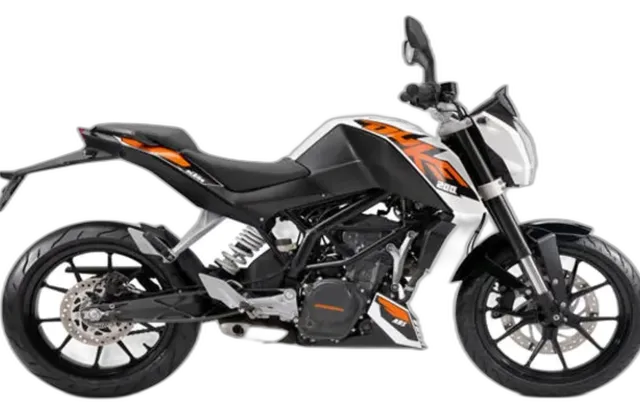
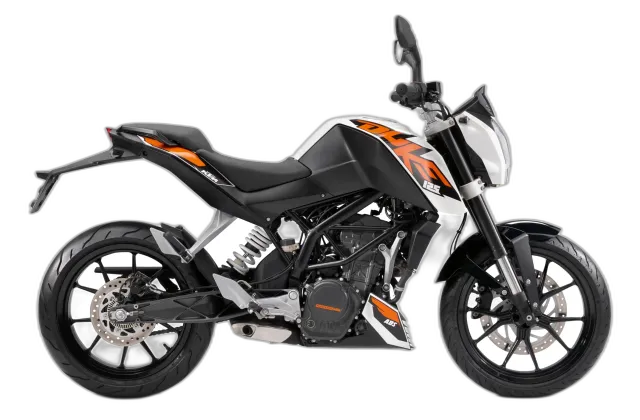
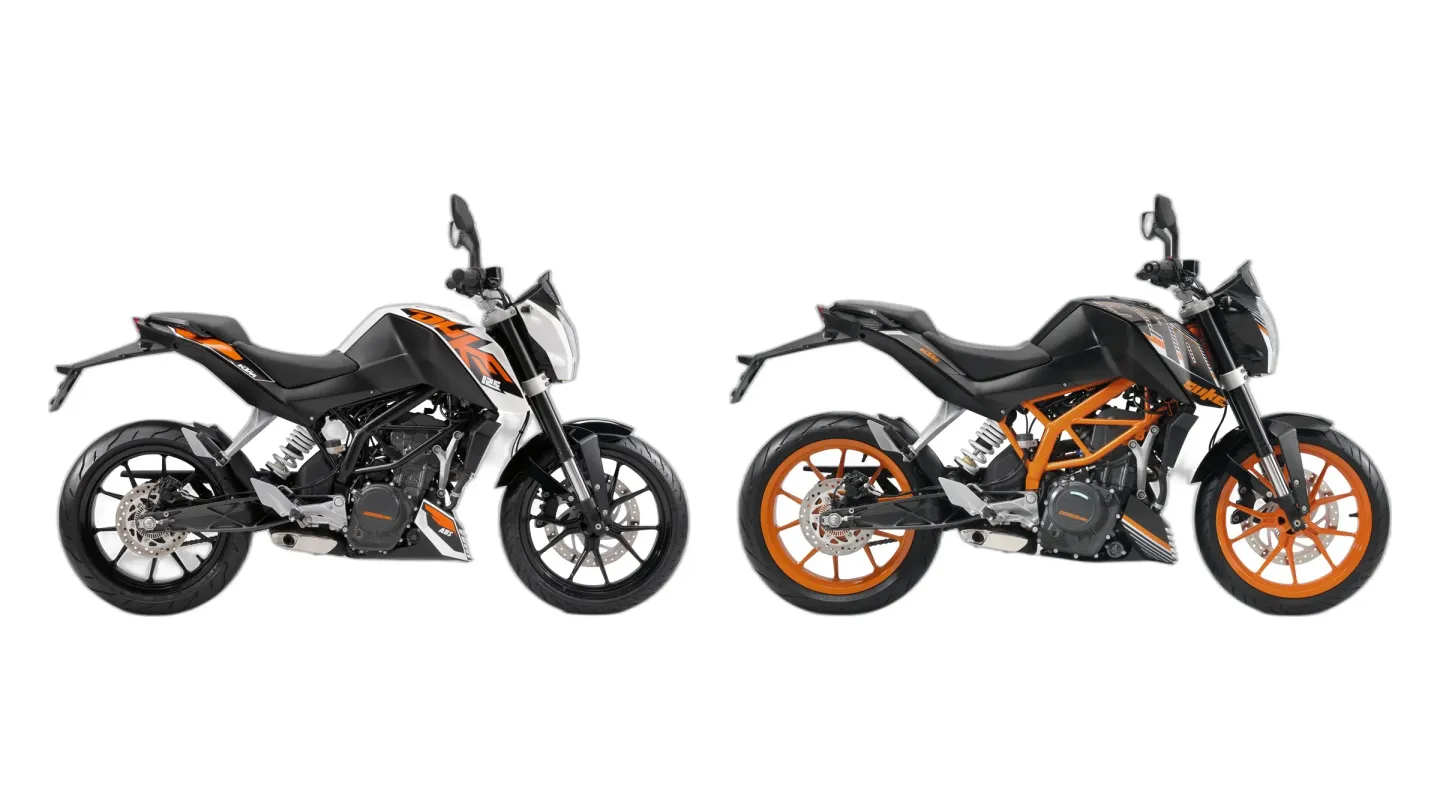
KTM 125 Duke (MY2013) vs 390 Duke (MY2013)
KTM 125 Duke vs 390 Duke: no fairing, no excuses. Here's how to pick.
At the first tight bend the KTM 125 Duke leans in light and steady, and it's chatty about every inch of grip. The KTM 390 Duke snaps in fast and doesn't bite.
What makes each one tick
125 Duke
Through the bar, the 125 Duke's upside-down fork reports every change in the tarmac. At 282 lb (128 kg) dry, it doesn't take more than a nudge at the pegs to flick it from one corner to the next. It won't wander off line. A sharp bump sinks into the WP suspension and fades.
390 Duke
From low revs in town, the 390 Duke's single pulls clean, and there's no stumble as the throttle opens. The engine wants revs. The chassis doesn't chase polish. At corner entry, the nose darts for the apex instantly.
Nils rode the 390 Duke in Salzburg State in 2013 (NastyNils Testride).
The Voice of Experience

What actually separates them
- The 390 Duke makes more peak power: 44 hp (32 kW) vs 15 hp (11 kW).
- The 390 Duke makes more peak torque: 26 lb-ft (35 Nm) vs 9 lb-ft (12 Nm).
- The 390 Duke has the larger engine: 373 cc vs 125 cc.
Which one for the way you ride
Comfortable long-distance riding
Not built for this
Neither one is built for long-haul comfort. For big miles, look at a proper tourer or sport tourer.
Traveling with luggage
Not their thing
If touring with luggage is the plan, keep looking. Neither one was built around it.
Nothing splits them on commuting, twisty roads, and a first bike. Ride both back to back and the decision usually makes itself.
Who each one is built for
What's good, and what you'll live with
125 Duke
What owners say
Strengths
- Agile and confident handling
Trade-offs
- Frequent reliability issues reported
390 Duke
Strengths
- Snaps Into Corners Without Punishing You
- The Motor Wants Revs
- Fueling Is Genuinely Good
- ABS That Actually Works
- Punchy single-cylinder engine
Trade-offs
- Knee Angle Cramps Tall Riders
- No Screen From The Factory
- Bolts Work Themselves Loose
- Questionable build quality and reliability
- Uncomfortable for longer rides
Known problems to check before you buy
125 Duke
- Excessive oil consumption Some owners report the engine using a noticeable amount of oil between services, potentially related to piston ring seal or valve stem seals.
390 Duke
- Overheating / fan problems Insufficient cooling led to fan failures and high engine temperatures in stop-go traffic, triggering limp mode.
- Electrical system glitches Various sensors and solenoids fail sporadically, leading to warning lights, intermittent starting issues, and erratic behavior. Some owners report complete electrical shutdowns.
- Stalling when hot or cold Difficult hot or cold starting, and occasional engine cut-outs while idling or at low speeds, possibly related to fueling.
What they share
- Engine
- Single-cylinder
- Cooling
- Liquid-cooled
- Fuel capacity
- 2.9 US gal (11 L)
- Gearbox
- 6-speed
- Final drive
- Chain
- Front tire
- 110/70-17
- Rear tire
- 150/60-17
Where the spec sheets split
| 125 Duke | 390 Duke | |
|---|---|---|
| Seat height | 31.9 in (810 mm) | 31.5 in (800 mm) |
| Dry weight | 282 lb (128 kg) | 342 lb (155 kg) |
| 125 Duke | 390 Duke | |
|---|---|---|
| Displacement | 125 cc | 373 cc |
| Power | 15 hp (11 kW) | 44 hp (32 kW) |
| Torque | 9 lb-ft (12 Nm) | 26 lb-ft (35 Nm) |
| Peak torque at | 8,000 rpm | 7,250 rpm |
| Top speed | 78 mph (126 km/h) | 100 mph (161 km/h) |
| 125 Duke | 390 Duke | |
|---|---|---|
| Fuel economy | 97 mpg (US) / 2.42 L/100 km | 50 mpg (US) / 4.71 L/100 km |
| 125 Duke | 390 Duke | |
|---|---|---|
| Fork | Upside-down (USD) | Telescopic |
Head to head, area by area
Both bikes on the same scale, one area at a time.