By NastyNils·
Motorcycle comparison · Naked Bike vs Supersport
Kawasaki Z e-1 (MY2024) vs Ninja e-1 (MY2024)
Kawasaki Z e-1 vs Ninja e-1: different classes, one choice. Here's how to make it.
Rolling away from a city light, the Kawasaki Z e-1 doesn't hesitate on the throttle, and there's no buzz in the bars as it pulls. On the Kawasaki Ninja e-1, the grip draws the bike forward in one smooth line, and you're never reaching for a clutch. Speed keeps climbing without a single shift.
So which one do you buy?
Buy the Z e-1 if…
Daily commuting & city riding
Gets the nod: Z e-1
When the bike has to work for a living, the Z e-1 wins the commute clearly.
The Ninja e-1 has the edge if…
A confidence-building first motorcycle
Nose ahead: Ninja e-1
The Ninja e-1 asks a little less of a rookie. That's a narrow edge, so sit on both before you decide.
Sporty riding on twisty roads
Slight edge: Ninja e-1
On a winding road, the Ninja e-1 comes out a touch ahead. The reason: more feel through the bars. You wouldn't bet much on a gap like that.
Which one's the smarter buy
Apples and oranges
A naked bike and a supersport do different jobs, so neither is the clear better buy for the money.
What makes each one tick
Z e-1
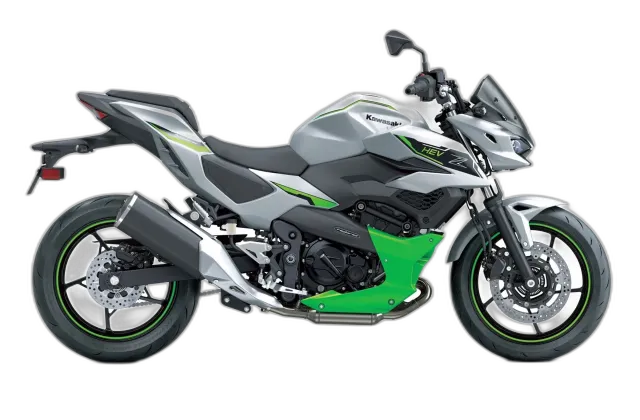
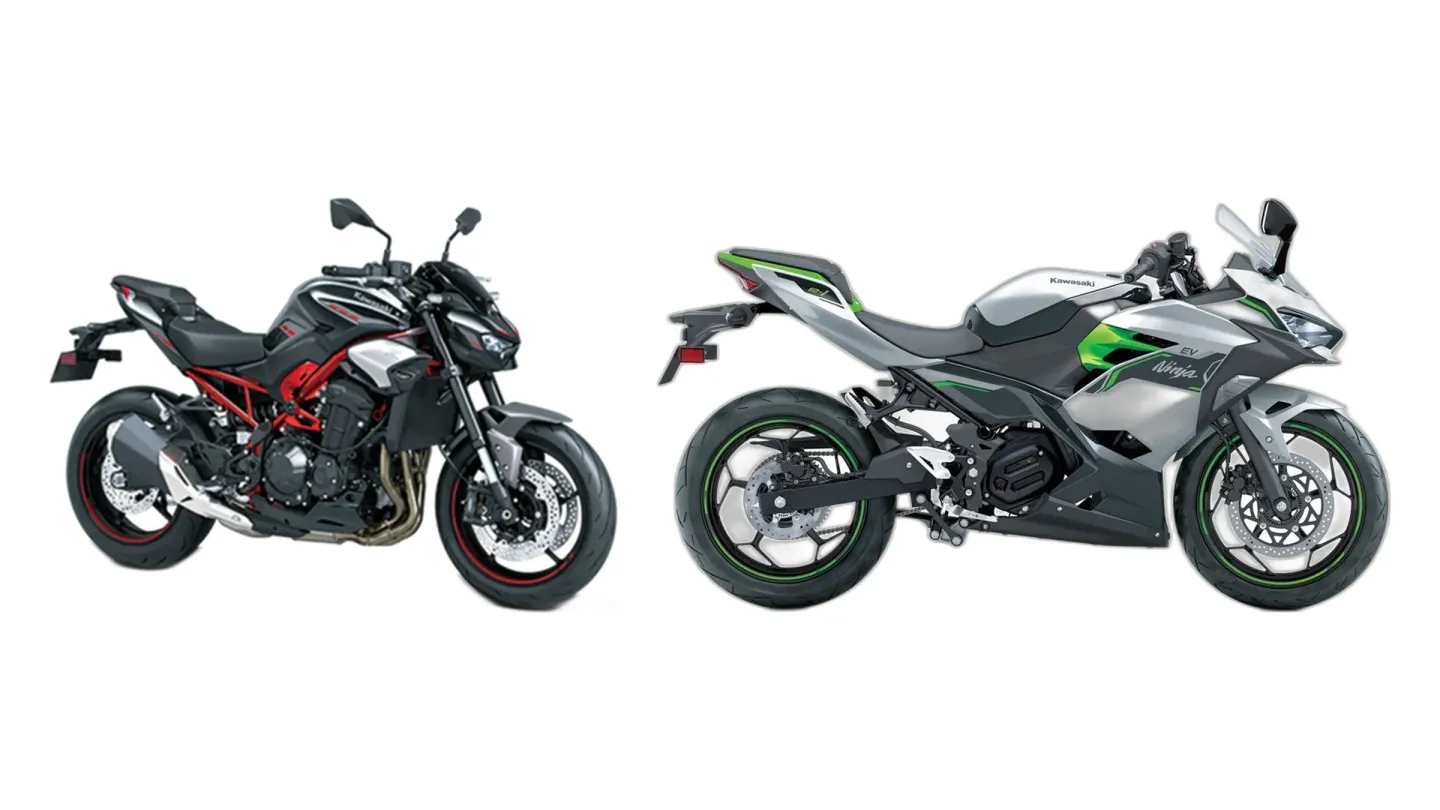
The Z e-1 slots into gaps in traffic on a compact chassis that tips over with barely a nudge at the handlebar. Its brake lever has only 298 lb (135 kg) to haul down, and the low-slung chassis stays level as the bike stops. There's no lag and no vibration as the motor's torque comes in. Neighbors barely hear it hum past.
Ninja e-1
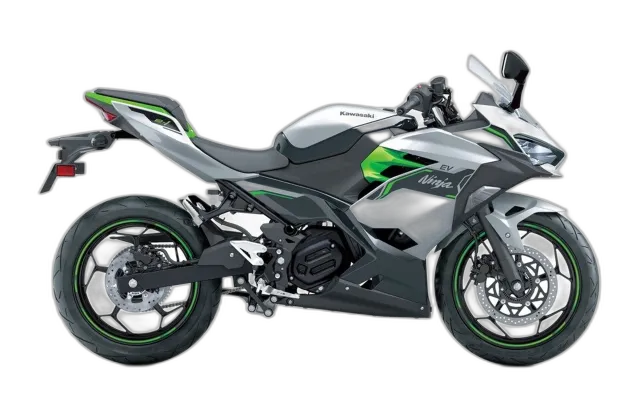
The Ninja e-1 doesn't hide its family: a full fairing and rider-focused ergonomics wrap around the electric motor. Over a pothole, the fork and steel trellis frame keep the steering agile within city limits. There's no lever to work as the motor builds pace in one even surge. Passes start at the e-Boost button.
The Voice of Experience

What actually separates them
- The Z e-1 has the lower wet weight: 298 lb (135 kg) vs 309 lb (140 kg).
- Traction Control: standard on the Z e-1, not offered on the Ninja e-1.
- The Ninja e-1 has the higher top speed: 65 mph (105 km/h) vs 61 mph (98 km/h).
Which one for the way you ride
Who each one is built for
What's good, and what you'll live with
Z e-1
What owners say
Strengths
- Smooth and instant electric power
Trade-offs
- Limited top speed
- Short real-world range
- High purchase price for the segment
Ninja e-1
What owners say
Strengths
- Instant and smooth electric power delivery
- Convenient removable battery packs
Trade-offs
- Very limited range
- Insufficient top speed for highways
- Limited peak power
- Long recharge times
Known problems to check before you buy
Z e-1
- NHTSA recall: battery terminal anchor failure Recall 25V118000 Missing battery terminal anchor may cause the connection between the battery pack and motorcycle to fail, leading to sudden loss of power. Affects 2024 Z e-1 ABS built before October 19, 2023. Kawasaki issued a 'do not ride' notice and recall MC25-03.
Ninja e-1
- Drive battery terminal failure causing sudden power loss Recall 25V118000 Improper manufacturing of the drive battery connector can cause the terminal to cave in, leading to intermittent connection and potential motor stall. This was subject to NHTSA recall 25V-118, requiring inspection and possible replacement of battery packs.
What they cost used
These prices compare a 2-year-old Z e-1 with a 2-year-old Ninja e-1.
- Z e-1
- $5,100
- Ninja e-1
- $4,400
Two-year-old Kawasaki Z e-1 units run about $5,100, while the Kawasaki Ninja e-1 sits near $4,400. That's a $700 gap in the Ninja e-1's favor. These figures come from earlier market records, not live listings.
What they share
- Seat height
- 30.9 in (785 mm)
- Engine
- Electric
- Cooling
- Air-cooled
- Power
- 12 hp (8.8 kW)
- Torque
- 30 lb-ft (40 Nm)
- Gearbox
- 1-speed
- Front tire
- 100/80-17
- Rear tire
- 130/70-17
- Wheelbase
- 53.9 in (1369 mm)
Where the spec sheets split
| Z e-1 | Ninja e-1 | |
|---|---|---|
| Wet weight | 298 lb (135 kg) | 309 lb (140 kg) |
| Z e-1 | Ninja e-1 | |
|---|---|---|
| Top speed | 61 mph (98 km/h) | 65 mph (105 km/h) |
What comes fitted, what costs extra
| Z e-1 | Ninja e-1 | |
|---|---|---|
| Traction Control | Standard | Not offered |
Head to head, area by area
Both bikes on the same scale, one area at a time.