By NastyNils·
Motorcycle comparison · Electric Motorcycle vs Naked Bike
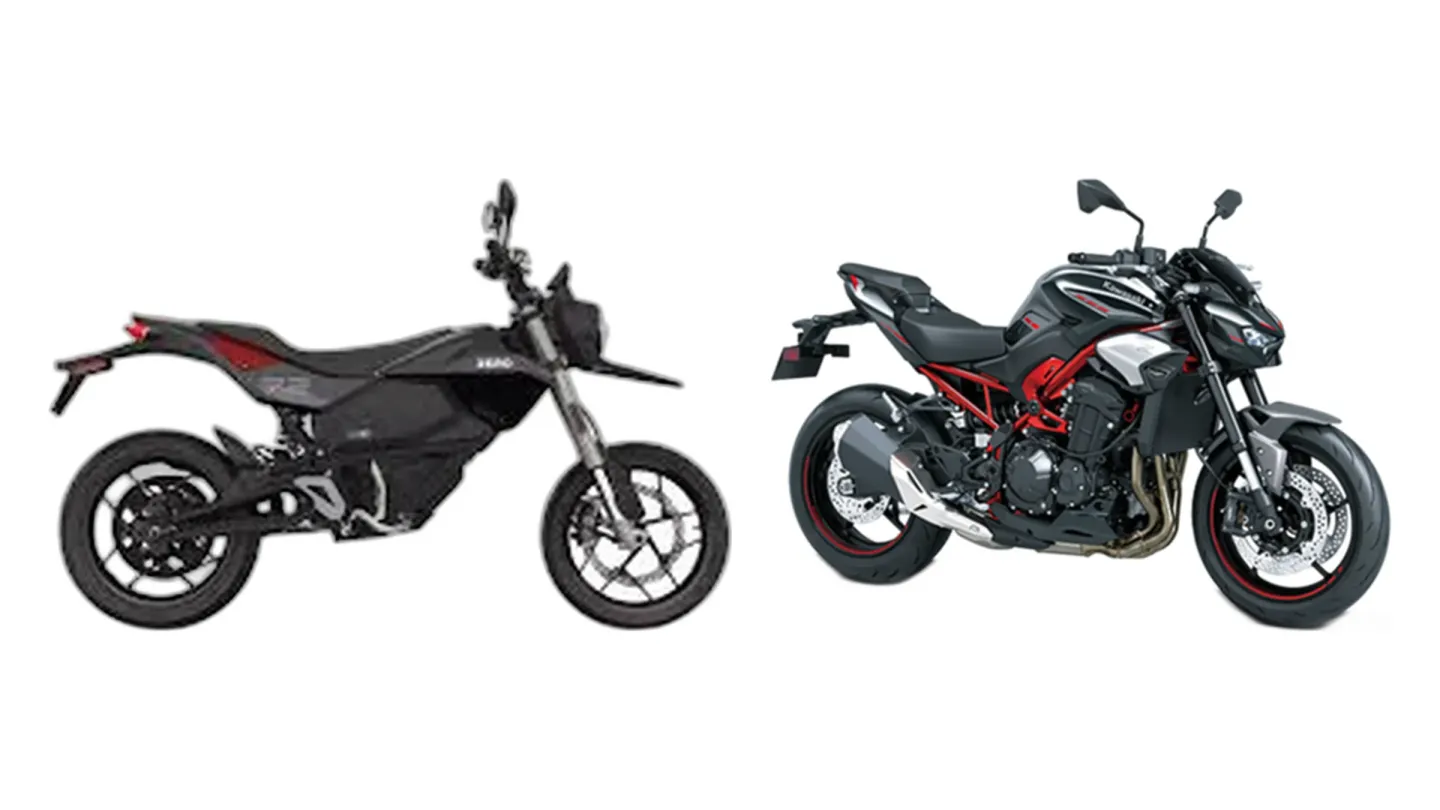
Zero FXE (MY2023) vs Kawasaki Z e-1 (MY2024)
Zero FXE vs Kawasaki Z e-1: different classes, one choice. Here's how to make it.
Roll off the Zero FXE's throttle and the regen's just there, and picking it back up never jerks the chassis. The Kawasaki Z e-1 pulls the instant your wrist turns.
So which one do you buy?
Buy the FXE if…
Daily commuting & city riding
The pick: FXE
The FXE earns its keep in weekday traffic better than the other one. For a daily commuter, it's the clear choice.
The Z e-1 has the edge if…
Sporty riding on twisty roads
Edges it: Z e-1
On a twisty road, the Z e-1 edges ahead. The difference is more feel through the bars. Not by enough to settle it alone.
Which one's the smarter buy
Apples and oranges
The Zero FXE and Kawasaki Z e-1 do different jobs, so neither is the clear better buy for the money.
What makes each one tick
FXE
The FXE's motor meters out torque precisely, steady from the first crack of the grip to the exit of a bend. Corner entry's quick, and the bars flick it straight into the next bend of a tight sequence. There's room on the upright seat to move around and see over traffic. The motor holds power all session.
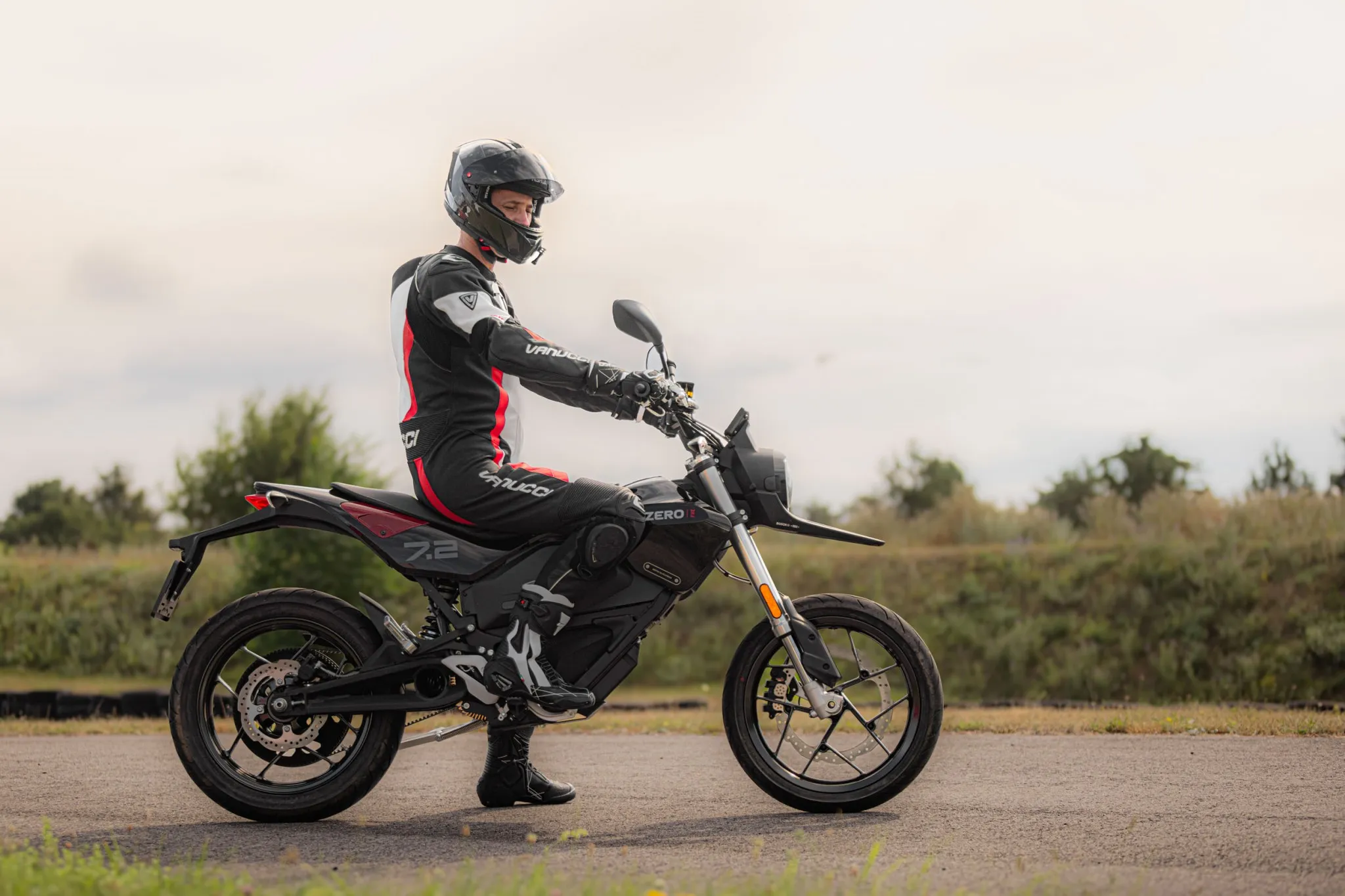
Nils rode the FXE in Austria in 2024 (NastyNils Testride).
Z e-1
The Z e-1's motor hums along almost unheard, and there's no vibration coming up through the bars. It's just as quiet when the brake lever brings it to a stop. The bars steer light. Its compact frame threads tight city gaps.
The Voice of Experience

What actually separates them
- The Z e-1 has the lower seat: 30.9 in (785 mm) vs 32.9 in (836 mm).
- The FXE makes more peak power: 43 hp (32 kW) vs 12 hp (8.8 kW).
- The FXE makes more peak torque: 78 lb-ft (106 Nm) vs 30 lb-ft (40 Nm).
Which one for the way you ride
Comfortable long-distance riding
Not built for this
Both of these get tiring on a long day. A proper tourer will treat you better on big miles.
Traveling with luggage
Neither one fits
Neither is a natural luggage carrier, so a trip with bags means a compromise either way.
Look at a first bike and you'll find two bikes doing the same job equally well. Fit is what breaks the tie.
Who each one is built for
What's good, and what you'll live with
FXE
From Nils' own saddle time
Strengths
- Torque Dosing Beats Combustion
- Regen You Never Notice
- Light, Nimble, Instantly Fun
- Seating Built For City Traffic
- Motor Shrugs Off Track Heat
Trade-offs
- Nose-Heavy Under Braking
- Suspension Pitches And Squats
- Sidestand Cuts Left-Hand Lean
- Range Tight, Charging Slow
Z e-1
What owners say
Strengths
- Smooth and instant electric power
Trade-offs
- Limited top speed
- Short real-world range
- High purchase price for the segment
What they cost used
These prices compare a 2-year-old FXE with a 2-year-old Z e-1.
- FXE
- about $8,300
- Z e-1
- about $5,100
Two years on, the Zero FXE sits around $8,300 while the Kawasaki Z e-1 lands near $5,100. That's a $3,200 gap in the Z e-1's favor. These are US market estimates, not live listings.
What they share
- Wet weight
- 298 lb (135 kg)
- Engine
- Electric
- Cooling
- Air-cooled
- Gearbox
- 1-speed
Where the spec sheets split
| FXE | Z e-1 | |
|---|---|---|
| Seat height | 32.9 in (836 mm) | 30.9 in (785 mm) |
| FXE | Z e-1 | |
|---|---|---|
| Power | 43 hp (32 kW) | 12 hp (8.8 kW) |
| Torque | 78 lb-ft (106 Nm) | 30 lb-ft (40 Nm) |
| Top speed | 85 mph (137 km/h) | 61 mph (98 km/h) |
| FXE | Z e-1 | |
|---|---|---|
| Final drive | Belt | Chain |
| Front tire | 110/70-17 | 100/80-17 |
| Rear tire | 140/70-17 | 130/70-17 |
| Wheelbase | 56.0 in (1422 mm) | 53.9 in (1369 mm) |
What comes fitted, what costs extra
| FXE | Z e-1 | |
|---|---|---|
| Traction Control | Not offered | Standard |
Head to head, area by area
Both bikes on the same scale, one area at a time.