By NastyNils·
Motorcycle comparison · Naked Bike
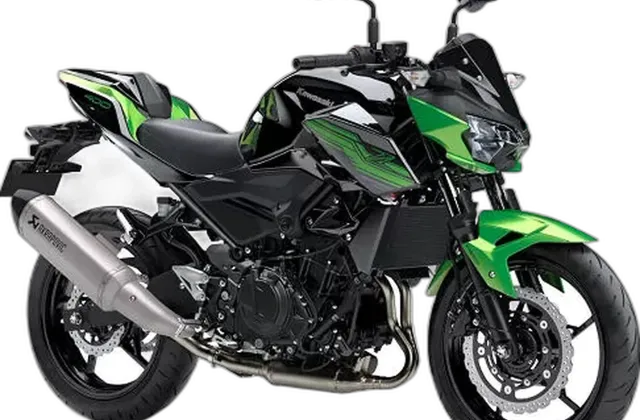
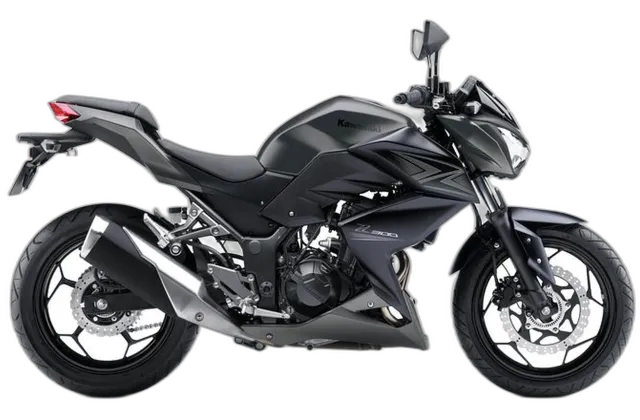
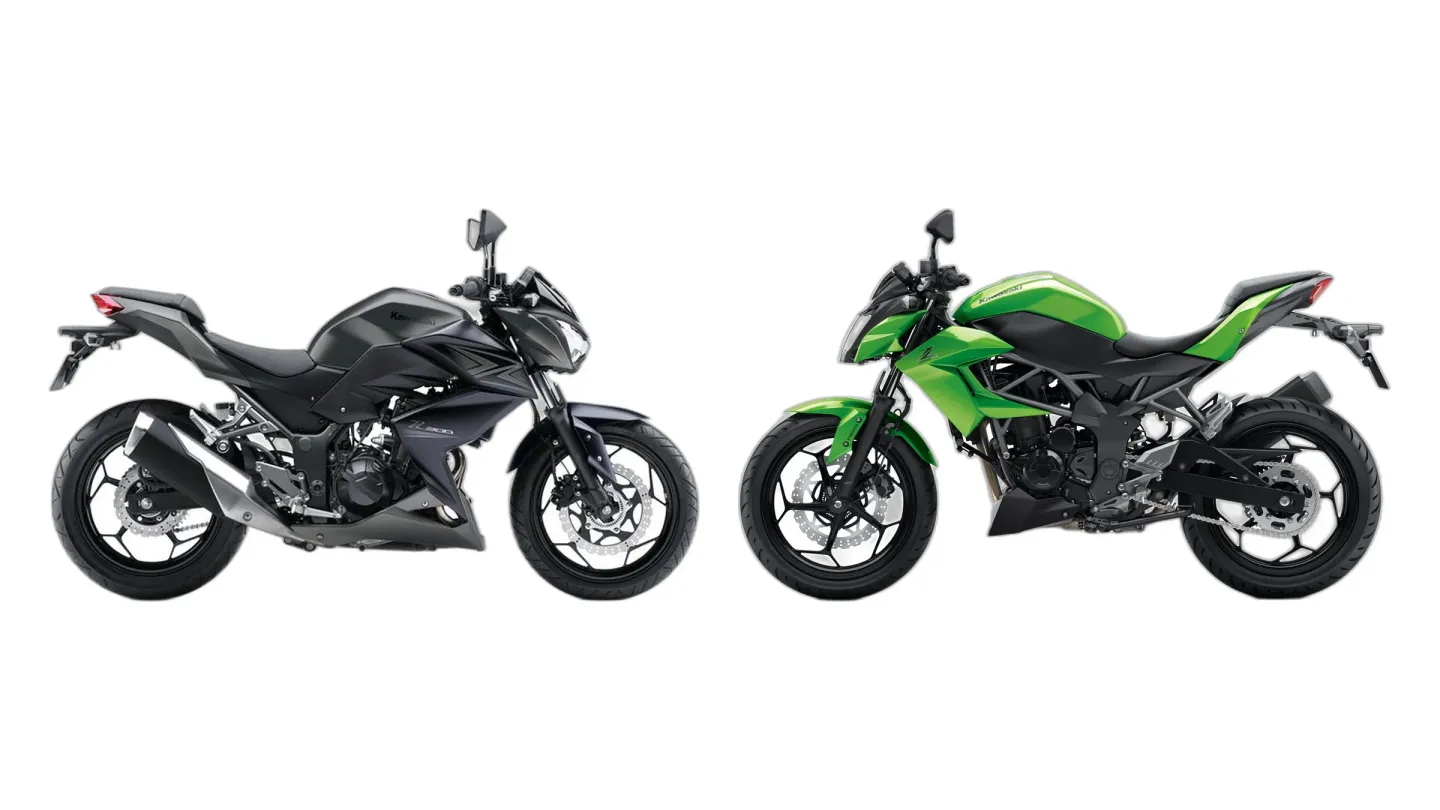
Kawasaki Z 300 (MY2015) vs Z250SL (MY2015)
Kawasaki Z 300 vs Z250SL: no fairing, no excuses. Here's how to pick.
Tip the Kawasaki Z 300 into a bend and it doesn't argue: the chassis flicks it straight onto your line. The Kawasaki Z250SL's wide bars sit on a stiff trellis frame, and it's light enough to steer in with a thought. Its front tips in at the slightest nudge.
So which one do you buy?
The Z 300 has the edge if…
Daily commuting & city riding
Narrow edge: Z 300
Through rush hour, the Z 300 is a little easier to live with. Only a little.
Sporty riding on twisty roads
A touch ahead: Z 300
In the twisties, the Z 300 asks a bit less of you to go quickly. Call it a modest edge.
A confidence-building first motorcycle
Slight edge: Z 300
Fresh off the training course, the Z 300 feels a bit more forgiving. Credit easier controls. Only by a small margin, though.
What makes each one tick
Z 300
With its torque peaking at 10,000 rpm, the Z 300's twin keeps the gear lever clicking. Down low, the throttle gets little back from the motor. Up top, the twin's finally pulling hard.
Z250SL
From low revs to the limiter, the Z250SL's single spins eagerly, and its balancer shaft doesn't let much buzz reach the grips. A squeeze of the brake lever brings strong stopping power, with plenty of feel coming back through it. Trail-braking into a turn doesn't unsettle the bike. Firm suspension keeps that tire dug in.
The Voice of Experience

What actually separates them
- The Z250SL has the lower wet weight: 324 lb (147 kg) vs 375 lb (170 kg).
- The Z 300 makes more peak power: 39 hp (29 kW) vs 28 hp (21 kW).
- The Z 300 makes more peak torque: 20 lb-ft (27 Nm) vs 17 lb-ft (23 Nm).
Which one for the way you ride
Comfortable long-distance riding
Neither is a natural fit
Hours in the saddle won't flatter either of these. They're happier on shorter runs.
Traveling with luggage
Both fall short
For a week on the road with gear, both fall short. A proper tourer will carry it with far less fuss.
Who each one is built for
What's good, and what you'll live with
Z 300
What owners say
Strengths
- Agile and fun handling in the urban jungle
- Legendary reliability on a proven platform
Trade-offs
- Peaky power delivery demands high revs
Z250SL
What owners say
Strengths
- Smooth, rev‑happy engine
- Superlight and agile handling
- Excellent build quality and reliability
- Powerful, communicative brakes
What they share
- Seat height
- 30.9 in (785 mm)
- Cooling
- Liquid-cooled
- Gearbox
- 6-speed
- Final drive
- Chain
- Fork
- Telescopic
Where the spec sheets split
| Z 300 | Z250SL | |
|---|---|---|
| Wet weight | 375 lb (170 kg) | 324 lb (147 kg) |
| Z 300 | Z250SL | |
|---|---|---|
| Displacement | 296 cc | 249 cc |
| Engine | Parallel twin | Single-cylinder |
| Power | 39 hp (29 kW) | 28 hp (21 kW) |
| Peak power at | 11,000 rpm | 9,700 rpm |
| Torque | 20 lb-ft (27 Nm) | 17 lb-ft (23 Nm) |
| Peak torque at | 10,000 rpm | 8,200 rpm |
| Z 300 | Z250SL | |
|---|---|---|
| Fuel capacity | 4.5 US gal (17 L) | 2.9 US gal (11 L) |
| Z 300 | Z250SL | |
|---|---|---|
| Front tire | 110/70-17 | 100/80-17 |
| Rear tire | 140/70-17 | 130/70-17 |
What comes fitted, what costs extra
| Z 300 | Z250SL | |
|---|---|---|
| ABS | Standard (from 2016) | Option |
Head to head, area by area
Both bikes on the same scale, one area at a time.