By NastyNils·
Motorcycle comparison · Naked Bike vs Tourer
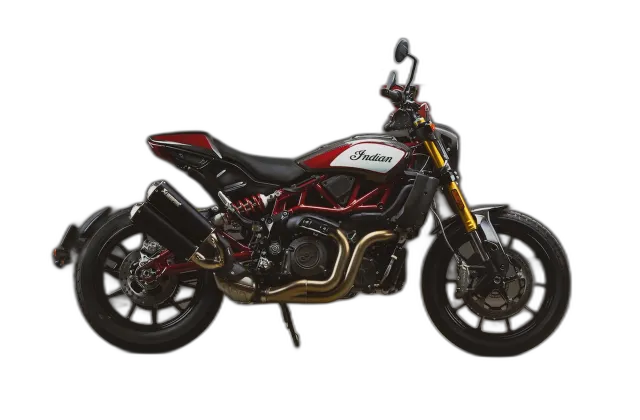
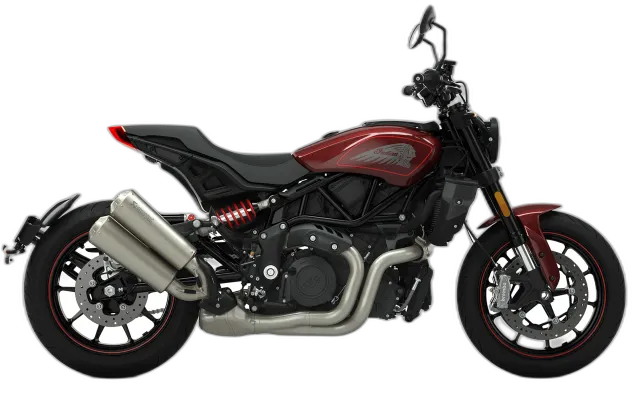
Indian FTR S (MY2021) vs Challenger (MY2020)
Indian FTR S vs Challenger: where they split, and which one to buy.
Rolling into a tight bend, the Indian FTR S's sticky sport tires hook up and it's already tipping toward the apex. The Indian Challenger's stiff chassis doesn't flex as it turns in. Its suspension settles and the bike holds its line.
So which one do you buy?
The FTR S has the edge if…
Keeping running costs low
Small edge: FTR S
Day to day, the FTR S works out slightly cheaper to own. The saving is small.
Sporty riding on twisty roads
Slight edge: FTR S
Back-road fun leans slightly toward the FTR S. Most of that is a sportier chassis. It's a narrow call, so trust your test ride.
Which one's the smarter buy
Two different jobs
The FTR S and Challenger sit in different classes, so value is a trade-off. Neither is the obvious better buy for the money.
What makes each one tick
FTR S
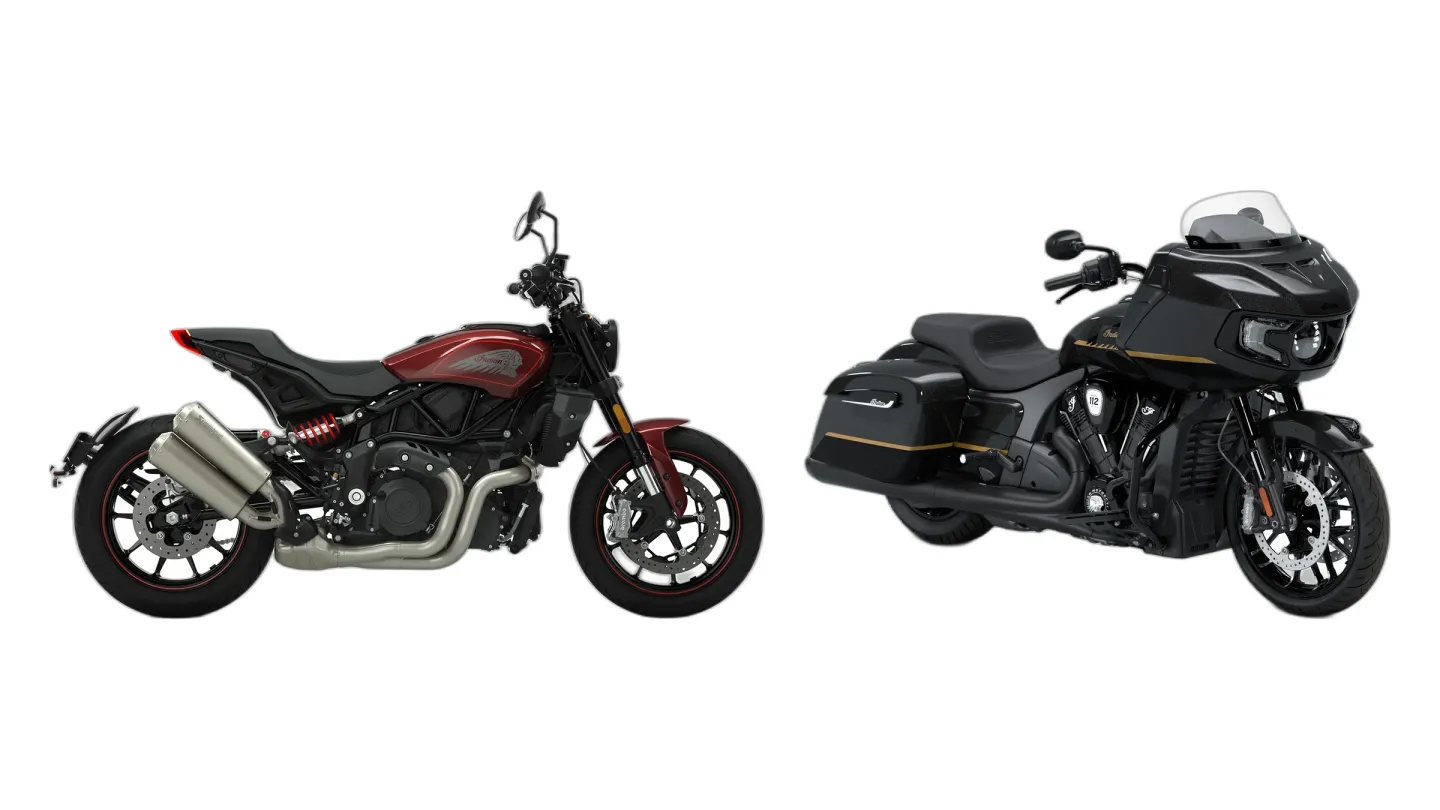
A light push on the bar is all the FTR S needs to swap from one side to the other. There's instant drive behind every twist of the throttle, and the Akrapovic mufflers bark right along with it. The twin doesn't wait for revs. It pulls just as hard near the top.
Challenger
Immediate thrust from the PowerPlus twin shoves all 842 lb (382 kg) of the Challenger forward, and it doesn't fade as the revs climb. On Iron Mountain Road, the Challenger carves through each curve with nimble steering. The riding position stays relaxed behind the electric screen, which keeps the wind blast off you. The plush seat goes the distance.
The Voice of Experience

What actually separates them
- The Challenger has the lower seat: 26.5 in (673 mm) vs 30.7 in (780 mm).
- The FTR S has the lower wet weight: 510 lb (232 kg) vs 842 lb (382 kg).
- The Challenger makes more peak torque: 128 lb-ft (174 Nm) vs 89 lb-ft (121 Nm).
Which one for the way you ride
Daily commuting & city riding
Wrong tool: Challenger
There's no daily-ride verdict for the Challenger. Getting to work isn't its job.
Comfortable long-distance riding
Not its job: FTR S
The FTR S gets left out of the long-distance question. It's built for a different kind of day.
A confidence-building first motorcycle
Not their thing
Neither one is where you should learn. Get a season on something gentler first.
Who each one is built for
What's good, and what you'll live with
FTR S
What owners say
Strengths
- Charismatic, torque‑rich V‑twin
- Distinctive flat‑track styling
- Transformed handling with 17‑inch wheels
- High‑quality Brembo brakes
Trade-offs
- Tiny fuel tank limits range
Challenger
What owners say
Strengths
- Mighty PowerPlus engine torque
- All-day touring comfort
- Premium feature set
- Surprisingly agile handling
Known problems to check before you buy
FTR S
No confirmed faults on file yet. That's not the same as fault-free.
Challenger
- Display freezing and random glitches The digital display may freeze, enter a loading loop, reset ride data, or switch between day/night mode erratically. A restart usually resolves the issue.
- Premature battery failure The OEM battery may develop a dead cell after the first full season, even when kept on a tender. The bike also struggles to start in very cold weather.
What they cost used
These prices compare a 5-year-old FTR S with a 5-year-old Challenger.
- FTR S
- about $12,500
- Challenger
- about $19,000
At five years old, the Indian FTR S sits around $12,500 while the Indian Challenger runs about $19,000. That's a $6,500 gap in the FTR S's favor. These are US market estimates, not live listings.
What they share
- Engine
- 60° V-twin
- Cooling
- Liquid-cooled
- Gearbox
- 6-speed
Where the spec sheets split
| FTR S | Challenger | |
|---|---|---|
| Seat height | 30.7 in (780 mm) | 26.5 in (673 mm) |
| Wet weight | 510 lb (232 kg) | 842 lb (382 kg) |
| FTR S | Challenger | |
|---|---|---|
| Displacement | 1203 cc | 1768 cc |
| Power | 123 hp (92 kW) | 122 hp (91 kW) |
| Torque | 89 lb-ft (121 Nm) | 128 lb-ft (174 Nm) |
| FTR S | Challenger | |
|---|---|---|
| Fuel capacity | 3.4 US gal (13 L) | 6.0 US gal (22.7 L) |
| FTR S | Challenger | |
|---|---|---|
| Front tire | 120/70-17 | 130/60-19 |
| Rear tire | 180/55-17 | 180/60-16 |
What comes fitted, what costs extra
| FTR S | Challenger | |
|---|---|---|
| Manually Adjustable Front Suspension | Standard | Not offered |
| Keyless System | Not offered | Standard |
| Tire Pressure Monitoring (TPMS) | Not offered | Option |
| Electrically Adjustable Windscreen | Not offered | Standard |
| Luggage System | Option | Standard |
Head to head, area by area
Both bikes on the same scale, one area at a time.