

Indian FTR (MY2019-Carbon) — Naked Bike
Indian press archive

2020 · Naked Bike · A variant of the FTR

FTR Carbon (MY2019-Carbon)

Differences between the standard FTR and the Carbon

3.5 / 5 NastyNils Rating · against its class

Flat-Track Fury, Street Legal

The Machine's Character

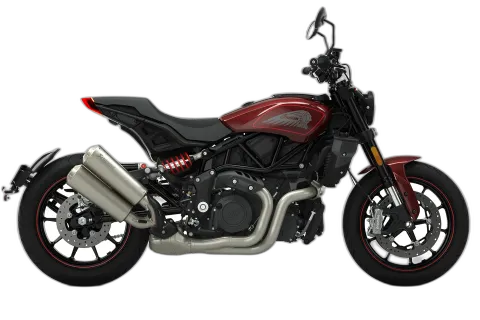
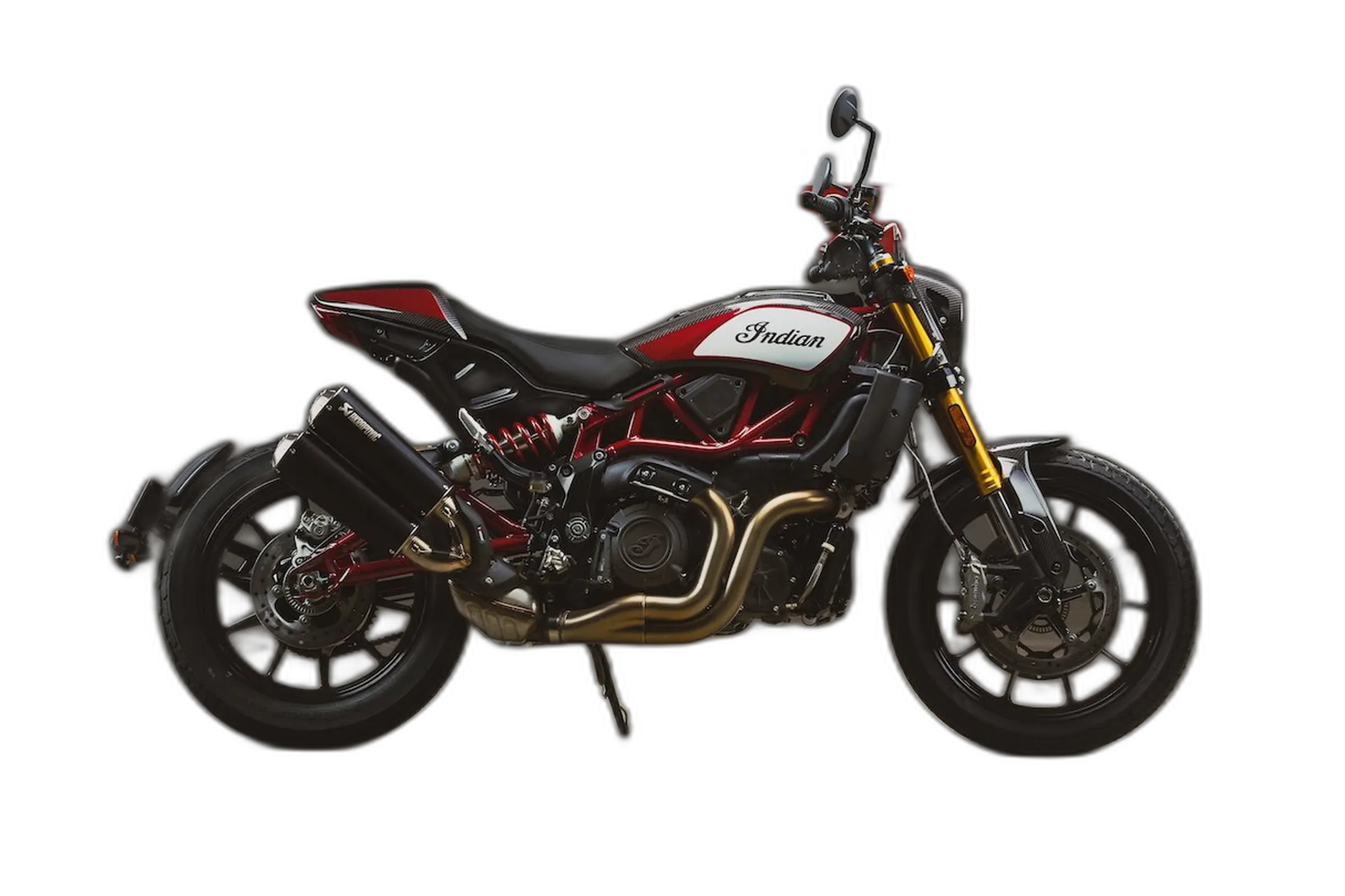
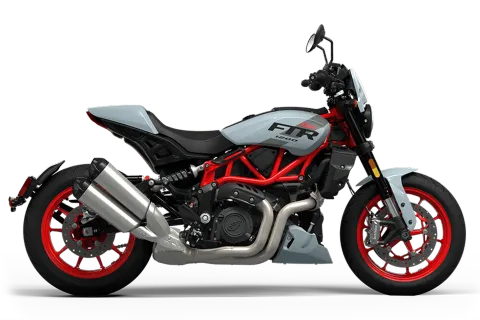
Forget what you think an Indian is. The FTR Carbon is a flat-track-flavored naked built around a liquid-cooled 1203 cc 60° V-twin with 123 hp and 89 lb-ft, hung in a steel trellis frame and rolling on a 19-inch front and an 18-inch rear. That tire pairing sounds odd on paper and works on the road. The Carbon trim dresses it in genuine carbon-fiber bodywork and builds on the standard bike with ride modes, traction control, adjustable front suspension, a TFT display and smartphone connectivity. Nothing else in the naked class commits this hard to a flat-track personality. It's a genuine outlier.

On the road it's a demanding bike, and that's the appeal. The motor pulls hard from low down, then hits with a sustained kick up top, and two of the three maps make no effort to soften it: only Rain is mellow. It tracks straight until you tell it otherwise, so it suits experienced riders who want involvement over ease. Go into ownership with open eyes too: there are recalls for a coolant junction leak (NHTSA 22V636) and for an ABS software error that can light the brake lamp on its own (NHTSA 24V-069). Check that both are done. Then enjoy it!

Hard Numbers

Spec sheets don't ride bikes, but they set the baseline.

Show full specs & equipment Hide specs & equipment
Key specifications
Power 123 hp (92 kW)
Torque 89 lb-ft (120 Nm)
Displacement 1203 cc
Engine 60° V-twin
Cooling Liquid-cooled
Gearbox 6-speed
Final drive Chain
Front tire 120/70-19
Rear tire 150/80-18
Wet weight 518 lb (235 kg)
Fuel capacity 3.4 gal (12.9 L)

Equipment check

Chassis

  • Front Suspension Adjustable Standard
  • Rear Suspension Adjustable Standard

Connectivity

  • TFT Display Standard
  • Smartphone Connectivity Standard
  • USB Charging Port Standard

Lighting

  • LED Headlight Standard

Safety

  • ABS Standard
  • Traction Control Standard
  • Ride Modes Standard

The Voice of Experience

Portrait of NastyNils

The test ride

Thumb the starter and the V-twin settles into a deep, hard-edged beat that gets angrier as the revs climb. It sounds like an Indian, just in a much worse mood. Cold, it needs patience: it can stall shortly after starting and take a moment to idle cleanly, and the gearbox asks for a firm, deliberate foot going into second and sixth. You sit more relaxed than the aggressive stance suggests, with the wind doing its usual naked-bike job of making legal speeds feel fast. Hold a steady speed and the throttle can surge a little, so the standard cruise control is welcome on the boring stretches. The USB port in the cockpit keeps your phone alive, and with 3.4 gal (12.9 L) in the tank you'll plan your fuel stops. Every shift goes through the clutch lever. It keeps you busy.

What the FTR Carbon Adds — Differences vs the Standard FTR

The FTR Carbon (MY2019-Carbon) builds on the standard FTR: the upgraded hardware, the key spec changes and where its character shifts. The full ride, specs, scoring and verdict are all right here on this page.

Equipment the Carbon adds vs the standard FTR

Now standard
Ride ModesSmartphone ConnectivityTraction Control

Premium hardware the Carbon brings

  • Suspension Front Suspension Adjustable Fully adjustable forks to dial in preload and damping, where the standard front end is preset.
  • Display TFT Display A full-colour TFT instrument display in place of the standard's simpler dash.

Hard spec differences

SpecStandard FTRCarbonΔ
Torque 85 lb-ft 89 lb-ft +4 lb-ft
Wet weight 507 lb 518 lb +11 lb

Rated point by point — where it earns its keep

My own 0–100 score for this bike against the class, area by area — the marker on each bar is the class average.

Indian put its flat-track racing experience into this chassis, and I could tell: it's stable when the pace is high and still game for tight corners. What it won't do is fall into a turn for you. I had to steer it with intent at every change of direction, and if you come from a neutral-handling bike you'll need to recalibrate. In really slow, tight hairpins it lost some of its composure under me. Once I knew to expect that, I could manage it. Tough school!

I felt this motor's eagerness before I could put it into words. Crack the throttle and it responds exactly as hard as you asked, then keeps climbing through the revs into a rush at the top that had my full concentration every single time. That's the charisma I want from a naked bike engine, but it comes without a soft side. I rode all three maps, and two of them are flat-out aggressive with no pretense of manners. Rain is the single setting that takes the edge off. What told me the most was the traction control: on slick or dirty pavement it was working constantly. It does the job, and the amount of work it has to do shows you how fierce this engine gets once grip runs out. Respect it!

Nothing in Indian's catalog prepared me for this bike. There's no predecessor to measure it against, and that's exactly why it exists. The machines people name as alternatives are all more forgiving and less committed, and I mean that as a description, not an insult. The FTR asks you to adapt to it first. Once I had, I didn't want to go back.

Day to day, the electronics package is well sorted and simply does what it should. The USB socket in the cockpit is a small touch that turned out to be really useful. There's no quickshifter fitted, and with a spec sheet this thorough I expected one. That's my single complaint here.

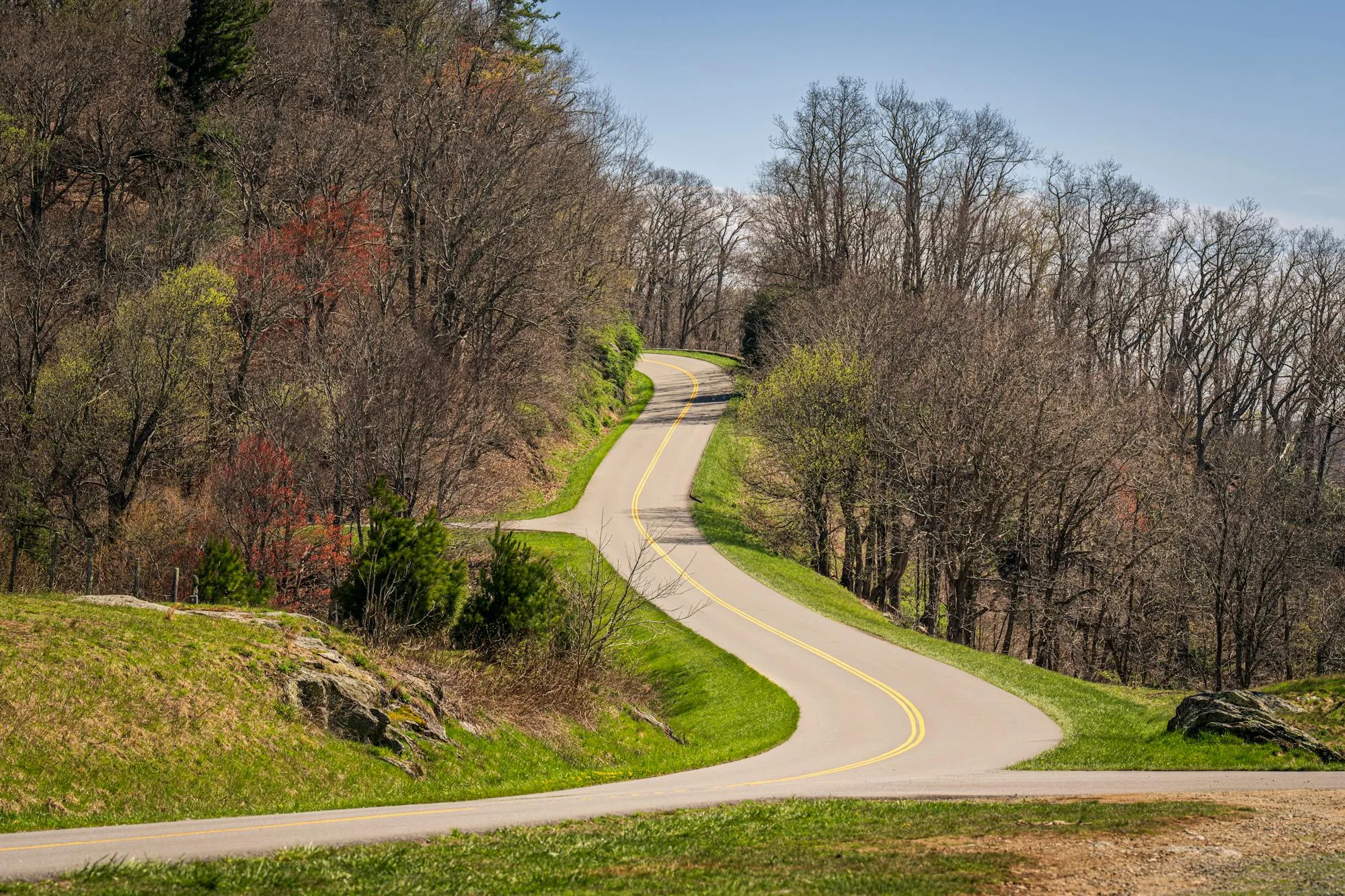
A winding asphalt road descending through the Appalachian Mountains, likely the famous Tail of the Dragon section in Tennessee and North Carolina. Multiple technical right-hand and left-hand curves are visible in this aerial perspective, surrounded by deciduous forest in spring foliage. Clear sunny conditions, well-maintained asphalt with yellow center lines marking the curves.
Mark Stebnicki / Pexels

The Truth on the Street

I've spent years listening to FTR riders: in the paddock, at club nights, in owner chats, and in the emails and messages that land in my inbox. For this bike the picture is remarkably consistent. Riders rave about the engine, the looks and the way the bike eggs them on, and they grumble about fueling, range and the original wheel sizes.

The V-twin that starts trouble

The engine comes up first in almost every conversation. Riders describe strong torque across a broad powerband and call it one of the most characterful motors in the class, exciting and still usable. Right behind that comes the hooligan side: owners say the FTR encourages wheelies and aggressive riding, mixing American muscle with sharp cornering. They also report precise, confidence-inspiring handling, well-sorted suspension and an upright position that's more comfortable than the looks suggest. The styling gets its own praise: the high exhaust and number-plate-style side panel turn heads wherever the bike is parked. Some owners add that the Brembo brakes deliver strong stopping power with good feel. Pure entertainment!

Fueling that owners end up fixing

The recurring complaint is the factory fueling. Riders call the original mapping lean and abrupt, and they notice it most in low-speed maneuvers. Owners say a factory calibration update takes care of part of it, and plenty of them go on to an aftermarket tune to smooth things out. Some also report notchy shifting in the lower gears, though that isn't universal. Not every bike does it.

Short range, awkward tire sizes

Range is the other regular gripe. Owners talk about a thirsty engine and a real-world range of around 93 to 106 miles (150 to 170 km), which limits touring. Some riders criticize the original wheel sizes too: tire choice is narrow, the Dunlop DT3-R tires get called fashion over function, and they report less cornering confidence than with the 17-inch setup on later models. A few mention that the bike feels substantial and takes effort in tight corners, even if the low center of gravity masks some of the mass. You'll hear that one less often.

Known issues

  • Coolant junction leak

    cooling occasional Recall

    Hot coolant may leak from the coolant junction, potentially spraying onto the rider or rear tire, creating injury and crash hazards. Affected models recalled (NHTSA 22V636).

  • ABS software error

    electrics occasional Recall

    The ABS module may incorrectly illuminate the brake lights during certain riding conditions, confusing following drivers and increasing crash risk. Recall I-24-03 / NHTSA 24V-069.

  • Cold start stalling and rough idle

    engine common

    Engine frequently stalls shortly after cold start, requiring multiple restart attempts. Poor fuel mapping contributes to inconsistent idle and ride-by-wire snatchiness. An OEM calibration update is available.

  • Difficult 1-2 and 5-6 upshifts

    drivetrain occasional

    Some owners report difficult engagement on 1-2 and 5-6 upshifts, especially when cold, requiring deliberate shift action.

  • Throttle surging on constant speed

    engine occasional

    When trying to maintain a constant speed, the throttle can surge, causing an uneven ride due to poor fuel mapping.

  • Notchy gear engagement, especially 1-2 and 5-6 upshifts

    drivetrain occasional

    A number of owners have reported a clunky or stiff feel when shifting, particularly when upshifting into 2nd or 6th gear. The cause is not clearly defined and may vary between bikes; some find the transmission smooths out with mileage or use of the clutch.

The Expert Benchmark

Where this Indian FTR pulls ahead of — or falls behind — its rivals on the numbers, and the typical bike in its class on character.

What kind of bike this is — character vs. the class

This bike Class average

The shape of the Indian FTR — numbers and character vs. the average Naked Bike

Head-to-head: Indian FTR vs. its rivals

The 'Should I Buy It?' Score

Forget spec-sheet bragging. Here's who the FTR is actually built for.

A scenic view of Angeles Crest Highway winding through rugged Southern California canyon terrain. Rocky mountainsides with golden earth tones frame the asphalt road with tight sweeping curves. Double yellow center line visible, sparse vegetation along the shoulders, clear blue sky with white clouds. Daylight, dry conditions. Iconic location for canyon-road enthusiasts.
Josh Sorenson / Pexels

Best motorcycle for Tail of the Dragon?

If you ride for technique, the FTR gives you plenty to work on: it needs firm input at the bars and feels unsettled in very slow, tight hairpins. Rewarding once you've adapted, never easy.

Made for Tail of the Dragon · Back of the Dragon · Blue Ridge Parkway
Best motorcycle for Angeles Crest?

You'll love the hard top-end kick and the stability at speed on fast canyon roads. You'll miss a quickshifter, and you have to steer it on purpose. Experienced hands only.

Made for Angeles Crest Highway · Coronado Trail / US 191 · Highway 1 / Big Sur